What's inside
As an Amazon Associate I earn from qualifying purchases. This post may contain affiliate links at no extra cost to you.
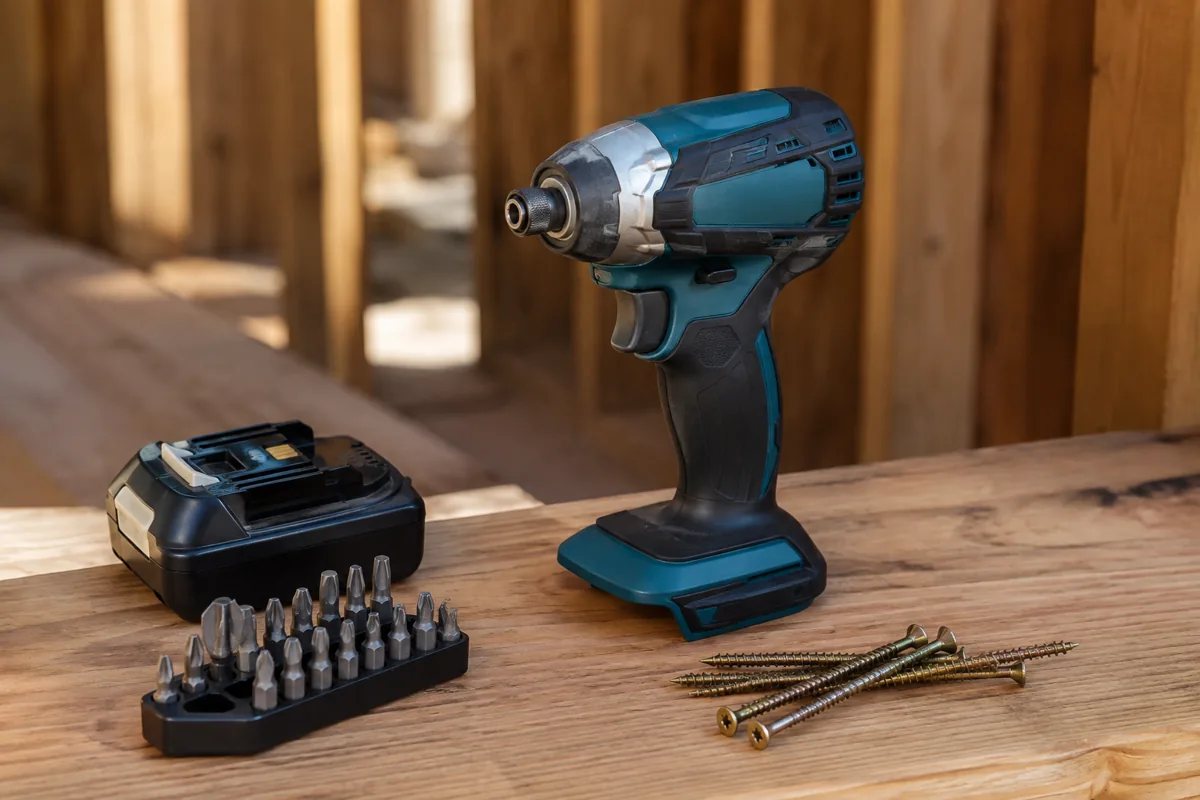
A cordless impact driver can sink a screw quickly, but speed is exactly what makes it easy to damage the head, the workpiece, or both. Stripping usually happens when the bit slips out of the recess while the driver keeps turning. The fix is not simply buying a more powerful tool: bit fit, pressure, speed, and stopping at the right moment matter more.
Why screws strip
Most stripped heads come down to a poor match between the bit and the screw, too little downward pressure, or too much speed near the end of the drive. A worn or undersized bit can ride up the screw head; once it slips, each impact rounds the recess a little more. The screw may still turn, but the bit has less to grip with every strike.
Impact drivers deliver rotation in short bursts, which helps drive long fasteners but can make the final turns abrupt. A small trim screw in soft pine needs a different touch from a long structural screw in framing lumber. Using full trigger on both is a common way to overdrive or damage the smaller fastener.
Choose the right bit and keep it fresh
Use the exact drive type and size specified for the screw: a Phillips bit is not a substitute for a Pozidriv bit, and a bit that nearly fits is not a good fit. Seat the bit fully in the recess before pulling the trigger. If it rocks, sits shallow, or cams out during a test turn, stop and try another size or type.
Bits wear gradually, so inspect the tip when a screw starts slipping. Rounded edges, a polished tip, or visible chips are reasons to replace it. A fresh bit is inexpensive compared with extracting a damaged screw or filling a ruined hole. For regular driver use, consider a set of impact-rated driver bits with the sizes and drive types you actually use.
Set up the driver for control
Use a speed or assist mode if your tool has one. Lower speed makes it easier to start the screw straight and stop before the head is buried. If there is no mode selector, ease onto the trigger rather than squeezing it fully. Keep the driver aligned with the screw; an angled bit is more likely to slip out of the recess.
Many cordless impact drivers accept standard 1/4-inch hex-shank bits, but confirm that the bit is impact-rated if you drive fasteners often. Impact-rated bits are designed to handle repeated torsional shock; they can still wear or break, but ordinary bits may fail sooner under that use. A basic impact driver is fine for occasional household repairs, provided you use a sound bit and control the trigger.
Drive in stages, then stop
Start the screw slowly and make sure it enters straight. Keep steady pressure behind the tool—not enough to strain your wrist, but enough to hold the bit firmly in the recess. Once the screw is established, increase speed if needed. As the head approaches the surface, ease off and finish with short trigger pulls. Stop as soon as the head is seated; extra impacts can strip the head or bury it below the surface.
For delicate work, use a drill/driver with its clutch set low, or finish with a hand screwdriver. A clutch stops applying torque at a chosen resistance, which is useful when screws need consistent depth. An impact driver generally does not offer the same predictable cutoff, even if it has an electronic mode. For cabinet hardware or small hinges, that control may matter more than driving speed.
Match the tool to the fastener
| Job | Practical choice | Main trade-off |
|---|---|---|
| Long screws in framing or decking | Impact driver, impact-rated bit, controlled trigger | Fast, but easy to overdrive the last turns |
| Small screws in furniture or hardware | Drill/driver with clutch, or hand screwdriver | Slower, but easier to limit torque |
| Occasional mixed household work | Existing cordless drill/driver and a good bit | May be slower on long screws; no need to buy an impact driver just to avoid stripping |
If you are choosing a tool, compare control features and battery compatibility with tools you already own. A cordless drill/driver with an adjustable clutch is often the better buy for light assembly and small fasteners. If you routinely drive long screws, an impact driver is more efficient; a cordless impact driver kit makes sense if you also need its battery and charger. Staying within a battery platform you already own can avoid paying for another charger and pack.
Prepare the wood and screw
Hardwood, dense material, and screws near board ends need more care than a long screw in softwood. Drill a pilot hole when the screw manufacturer recommends one, when the wood is prone to splitting, or when a screw must enter hardwood near an edge. The pilot hole should be sized for the screw and material; an oversized hole can weaken the hold. For very long screws, a clearance hole through the first piece can reduce friction and help draw the joint together.
Wax or a suitable screw lubricant can reduce driving resistance in some wood applications, but do not use it where the fastener maker or project instructions prohibit it. More resistance means more impacts and more heat, which can increase the chance of a stripped head or broken screw. If the driver is working unusually hard, back the screw out and check for a pilot-hole, alignment, or fastener problem rather than forcing it.
If a screw starts to strip
Stop as soon as the bit slips once or twice. Continuing usually makes the recess worse. Remove the screw while the bit can still grip: press firmly, use a fresh correctly sized bit, and run the driver slowly in reverse. If the head is already damaged, try a hand screwdriver with strong downward pressure before moving to an extractor or other removal method.
Before restarting, inspect the screw and replace it if the recess is rounded. Check the bit, adjust the angle, and correct any pilot-hole or alignment issue. If the screw must finish flush, make the final adjustment by hand or with a clutch-equipped drill/driver. That last controlled turn is often the simplest way to protect both the fastener and the workpiece.
Related guides
- Longest Lasting Lawn Mower Battery: AGM vs Lithium vs Flooded Lifespan and Cost per Season
- Duralast Gold Lawn Mower Battery Review: U1 Fit, CCA and When to Pay for AGM
- Greenworks Pro 80V 21-Inch Mower Review: Runtime Math, Push vs Self-Propelled and Yard Fit
- Bosch High Pressure Washer Gun Replacement: Fittings, Adapters and What Fits Your Model