
What's inside
- Contents
- What a cordless angle grinder does at home
- Disc sizes compared
- Switch types and why they matter
- Motor, battery and runtime
- Useful features and what to skip
- Choosing discs and accessories
- Safety rules that prevent injuries
- Common mistakes
- Who should choose what
- Buying checklist
- Frequently asked questions
- Conclusion
As an Amazon Associate I earn from qualifying purchases. This post may contain affiliate links at no extra cost to you.
Short answer: for most households, the best cordless angle grinder is a small-to-mid-size model that takes the common disc size for your region, has a guard you can adjust without tools, a paddle or slide switch that stops the disc when you let go, and runs on a battery platform you already own. Brushless motors are worth having if you grind often. Larger discs bring more power and more risk, so choose the smallest grinder that does your jobs. Whatever you buy, the discs, the guard and your protective gear matter as much as the tool itself.
Contents
- What a cordless angle grinder does at home
- Disc sizes compared
- Switch types and why they matter
- Motor, battery and runtime
- Useful features and what to skip
- Choosing discs and accessories
- Safety rules that prevent injuries
- Common mistakes
- Who should choose what
- Buying checklist
- Frequently asked questions
- Conclusion
What a cordless angle grinder does at home
An angle grinder is a spinning-disc tool with a right-angle head. Swap the disc and the same machine can cut a bolt, remove rust from a gate, smooth a weld, sharpen a spade, cut a tile, shape stone or strip paint from a metal railing. That versatility is why it is one of the most commonly borrowed tools in a neighbourhood, and also why it deserves respect: the disc spins very fast, throws sparks and debris, and can grab suddenly.
The cordless version removes the cable, which is a real advantage. You do not drag a cord across sparks, you can work in a garden, driveway or allotment without an extension lead, and you can’t cut through your own cable by mistake. The trade-offs are runtime and, in some cases, weight. A battery grinder is ideal for short, intermittent jobs, which describes most home use. If you plan to grind for hours at a time, a corded tool may suit you better.
Disc sizes compared
Disc diameter is the first decision, because it determines weight, power, cut depth and the range of discs you can buy. Sizes are commonly sold in inches or millimetres depending on the country, and the three classes below cover nearly every home need.
| Class | Approximate disc diameter | Best for | Strengths | Trade-offs |
|---|---|---|---|---|
| Small | Roughly 100 to 115 mm (about 4 to 4.5 in) | Light cutting, rust removal, deburring, tight spaces | Light, easy to control, gentle on batteries | Shallow cut depth; slower on thick steel |
| Medium | Roughly 125 mm (about 5 in) | General home and garden work | Best balance of power and handling; widest disc range | Heavier than small models, still manageable |
| Large | Roughly 180 mm (about 7 in) and up | Thick steel, masonry, heavy cutting | Deep cuts, high output | Heavy, harder to control, demanding on batteries, higher kickback force |
For most homeowners the medium class is the practical sweet spot, simply because disc choice is vast and the tool is controllable. If you mainly clean rust, do small repairs and cut the occasional bolt, a small grinder is lighter, safer for beginners and often easier on a modest battery. Large cordless grinders exist and suit people doing demolition or heavy fabrication, but they are not a good first grinder for home use.
Whatever size you choose, check the arbor (the centre hole) and the maximum disc size stated by the manufacturer. Never fit a disc larger than the guard and the tool are rated for.
Switch types and why they matter
The switch design is a safety feature disguised as a convenience. It decides what happens when you lose control of the grinder or drop it.
Paddle (dead-man) switch
You hold a paddle to run the tool, and releasing it switches the grinder off. If the tool slips from your hands or you are startled by kickback, it stops spinning, even if it takes time to wind down. For beginners and anyone using a grinder occasionally, a paddle switch is the safer choice.
Slide switch
A slide switch locks on after you press it and stays running until you slide it off. This is comfortable for long cuts and grinding sessions because you are not squeezing continuously, but it keeps running if you drop the tool. Some designs require a deliberate two-step action to turn on, which helps prevent accidental starts.
Trigger with lock-on
Some grinders use a trigger, similar to a drill, with an optional lock. Check that the lock is easy to release with your thumb or finger in an emergency.
| Switch type | Stops when released? | Comfort on long jobs | Good for |
|---|---|---|---|
| Paddle | Yes | Moderate; grip fatigue on long runs | Beginners, short jobs, safety-first users |
| Slide | No, keeps running until switched off | High | Experienced users doing prolonged work |
| Trigger with lock | Yes unless locked | Moderate to high | Users who like a familiar drill-style feel |
Motor, battery and runtime
Grinding is one of the most demanding jobs you can give a battery. A grinder draws high current and runtime on a small pack can be short, especially when cutting or heavy grinding. Several factors determine how well a cordless grinder performs.
- Brushless motor. Brushless motors run more efficiently and generate less heat, which helps battery life. If you plan to use the grinder regularly, brushless is a sensible upgrade. For a few jobs a year, a brushed motor may be enough.
- Battery capacity. A larger-capacity pack gives longer working time and delivers current more comfortably under load. Very small packs may cause the tool to cut out during heavy grinding.
- Voltage system. Higher-voltage systems generally offer more power headroom, but the best choice is usually the platform you already own.
- Bare tool or kit. If you already have batteries and a charger, buy a bare tool. Otherwise, a kit is cheaper than buying parts separately.
- Spare battery. If you plan a project that involves many cuts, keep a second charged pack ready.
Disc type affects runtime. Thin cutting discs remove little material and draw less power than thick grinding wheels, so a battery will usually do more cuts than grinding. A worn disc also demands more power. Replace discs that are glazed or worn rather than forcing them.
Battery safety and charging
- Use only the manufacturer’s charger for that battery system.
- Do not charge or use a battery that is damaged, swollen or leaking.
- Allow hot packs to cool before charging, and charge in a dry area away from sparks, flammable dust and cluttered surfaces.
Useful features and what to skip
- Tool-free adjustable guard. A guard you can rotate without a spanner makes it far more likely you will set it correctly for each job. Never remove the guard.
- Side handle. A threaded handle that fits either side improves control and is essential for two-handed use. Choose a grinder with a solid mount and keep the handle fitted.
- Spindle lock. Holds the spindle still while you loosen the nut, so disc changes are quick and safe. Always remove the battery first.
- Restart protection. Some grinders will not restart on their own when a battery is inserted while the switch is engaged. This protects against surprise starts.
- Overload and temperature protection. The electronics cut power before the motor or battery overheats. This is useful, though it should not encourage you to force the cut.
- Variable speed. Helpful for polishing, sanding or working with materials that are sensitive to heat. For cutting and heavy grinding you will normally want full speed.
Choosing discs and accessories
Discs are consumables, and the right disc for the task determines both results and safety. Buy discs that match the diameter and arbor size of your grinder, and make sure the disc’s maximum permitted speed is at least as high as the grinder’s no-load speed, which is printed on the tool. Discs rated for a lower speed than the grinder can break apart in use.
| Disc type | Used for | Notes |
|---|---|---|
| Thin cutting disc (metal) | Cutting bar, bolts, pipe and sheet steel | Cut only with the disc edge; never use the side for grinding |
| Thick grinding disc | Smoothing welds, removing material, shaping | Designed for the face of the disc; use the angle recommended by the maker |
| Flap disc | Blending, light stock removal, finishing | Gentler than a grinding disc and leaves a smoother surface |
| Wire cup or wheel brush | Rust, paint and scale removal | Loose wires can fly off, so wear a face shield |
| Diamond blade | Tile, stone, concrete, paving | Produces large quantities of harmful dust; use dust control and a respirator |
| Sanding or polishing pad | Surface finishing | Use a pad intended for the tool and its speed |
Inspect every disc before fitting it. Do not use a disc that is cracked, chipped, warped, damp, or has been dropped. Some bonded discs have an expiry date printed on them, so check it. Store them flat and dry. After fitting, let the grinder run at full speed for a short time with the guard between you and the disc and everyone else standing clear. If the disc is damaged, this is when it will fail.
Useful extras include a face shield, a set of assorted grinder discs, a vice or sturdy clamps to hold work, a hard case and a wrench or spanner if your model does not include one.
Safety rules that prevent injuries
Angle grinders cause serious injuries every year, from disc fragments, kickback, flying sparks and noise. Most are preventable with the habits below.
Protective equipment
- A full face shield worn over safety glasses, not instead of them.
- Hearing protection suited to prolonged loud noise.
- A dust mask or respirator that suits the material, particularly when cutting masonry, tile or painted surfaces.
- Gloves that fit closely and resist heat and abrasion, with no loose cuffs.
- Long sleeves and trousers of natural or flame-resistant fabric. Synthetic fabrics can melt onto skin from hot sparks.
- Sturdy closed footwear, and tied-back hair with no dangling jewellery or drawstrings.
Setting up the work area
- Clear flammable materials, rags, solvents and sawdust from the area. Sparks can travel several metres.
- Keep a fire extinguisher or a bucket of sand or water within reach.
- Clamp the workpiece. Never hold small parts by hand while cutting them.
- Check that bystanders and pets are well out of the line of sparks and debris.
- Check that nothing behind the work, such as gas lines, wiring or fuel containers, is in the path of sparks.
Using the grinder
- Remove the battery before changing discs or adjusting the guard.
- Fit the guard so that it sits between you and the disc.
- Hold the grinder with both hands, with the side handle in place, and a firm stance.
- Start the grinder away from the work and let it reach full speed before contact.
- Keep sparks pointing away from your body and any flammable material.
- Do not apply side pressure to a cutting disc, because it is not designed for it and can shatter.
- Let the disc stop completely before putting the grinder down. Remove the battery before leaving it.
Kickback occurs when the disc binds or catches in the cut and the grinder is thrown violently. Avoid it by not forcing the cut, not twisting the disc in a narrow slot, supporting both sides of the workpiece so the cut does not close, and keeping the cut in line with the disc.
Common mistakes
- Removing the guard. It is the main barrier between you and a broken disc.
- Using the wrong disc. Cutting with a thick grinding wheel, or grinding with the side of a cutting disc, is dangerous.
- Buying too large a grinder. A heavier tool is harder to control and is rarely necessary for home projects.
- Working without a face shield. Glasses alone do not protect against fragments or hot sparks to the face.
- Forcing the tool. Pressing hard does not speed up the job; it overloads the motor and increases the risk of binding.
Who should choose what
| Home user | Suggested setup | Reason |
|---|---|---|
| Occasional DIYer fixing a gate or cutting a bolt | Small or medium grinder, paddle switch, bare tool on an existing platform | Light, safer and economical |
| Allotment or garden owner sharpening tools and cutting stakes | Medium grinder, spare battery, flap and cutting discs | Handles varied tasks without a cable |
| Home renovator cutting tile and pavers | Medium grinder with diamond blade, dust control and respirator | Versatile, but dust management is essential |
| Hobby metalworker | Medium brushless grinder, high-capacity batteries, full accessory kit | Frequent use makes efficiency and runtime important |
| Someone new to power tools | Small grinder with paddle switch, and a walkthrough of the manual | Lower power and automatic shut-off improve safety |
Buying checklist
- Choose a disc size that matches your tasks and the discs you can easily buy.
- Prefer a paddle switch if you are inexperienced.
- Confirm the grinder includes a guard and a side handle.
- Check which battery platform you already own, and buy a bare tool if it fits.
- Choose brushless if you expect regular use.
- Read the maximum disc size and the no-load speed in the manual.
- Buy a face shield, safety glasses, hearing protection, gloves and a respirator suited to your materials.
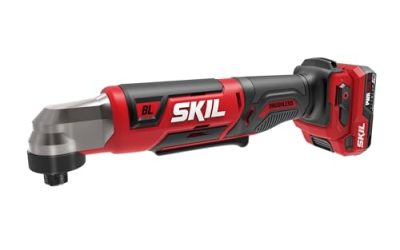
- Browse cordless angle grinders and compare the listed disc size, switch type and whether a battery is included.
- Buy discs that match the job, and do not mix up cutting and grinding types.
Frequently asked questions
Is a cordless angle grinder powerful enough for home use?
For most home tasks, yes. Cutting bolts, removing rust, light grinding and trimming steel bar are well within the range of a good cordless model. Heavy daily fabrication or long masonry cutting is where corded tools still have the edge.
What disc size should I buy first?
A medium size gives the broadest range of discs and a good balance of power and control. If you prefer something lighter and mostly clean or deburr, a small model is a good alternative.
Can I use the same grinder for cutting tile and metal?
Yes, with the correct disc for each material, and with fresh attention to safety. Tile and stone produce harmful dust, so use dust control and a respirator, and avoid using a diamond blade on metal.
Why does my battery drain so quickly?
Grinding draws high current. Worn discs, pressing too hard, a small battery or a cold battery can all shorten runtime. Use a larger pack, a sharp disc and a lighter touch.
Can I use a grinder to sharpen my mower blade?
Many people do, with a proper grinding disc and the blade held securely. Remove the blade from the mower first, keep the original angle, avoid overheating the edge and balance the blade afterwards. If you are unsure, use a file or have it sharpened professionally.
How do I know when to replace a disc?
Replace it when it is cracked, chipped, noticeably worn down, glazed, damp, or past its printed expiry date, or if it has been dropped. A disc that cuts slowly and glows or smokes is often worn or the wrong type.
Is it safe to use a grinder on a ladder?
It is best avoided. A grinder needs a stable stance and both hands. If you must work at height, use a platform designed for the job and consider an alternative tool.
Where should I store my grinder and discs?
Keep the grinder in a case or on a shelf, with the battery removed and stored separately. Keep discs flat, dry and away from impact so that they do not crack.
Conclusion
The best cordless angle grinder for home use is the smallest one that handles your regular jobs, with a switch that stops the disc when released, a guard that adjusts easily and a battery that fits the tools you already own. Spend a little extra on proper discs and personal protective equipment, and learn the safe habits before the first cut. Used carefully, a cordless grinder is one of the most versatile tools you can keep in the shed.
Disclosure: As an Amazon Associate, loapowertools.com earns from qualifying purchases made through links on this page, at no extra cost to you.
Related guides
More from Amazon
Programs that pair well with the guide above. Offers and eligibility are set by Amazon and may change.
A free business account with business pricing and bulk-buying tools for work, shop or home office.
Create a business accountFree shipping on eligible items, Prime Video and more. Eligible new members can start with a free trial.
Start a Prime free trialAudiobooks and podcasts to listen to on the go. Eligible new members can start with a free trial.
Try Audible freeAd-free music streaming. Eligible new subscribers can start with a free trial.
Try Music Unlimited freeAs an Amazon Associate we earn from qualifying purchases.

Write Your Review
No reviews yet. Be the first to share your experience!