What's inside
As an Amazon Associate I earn from qualifying purchases. This post may contain affiliate links at no extra cost to you.
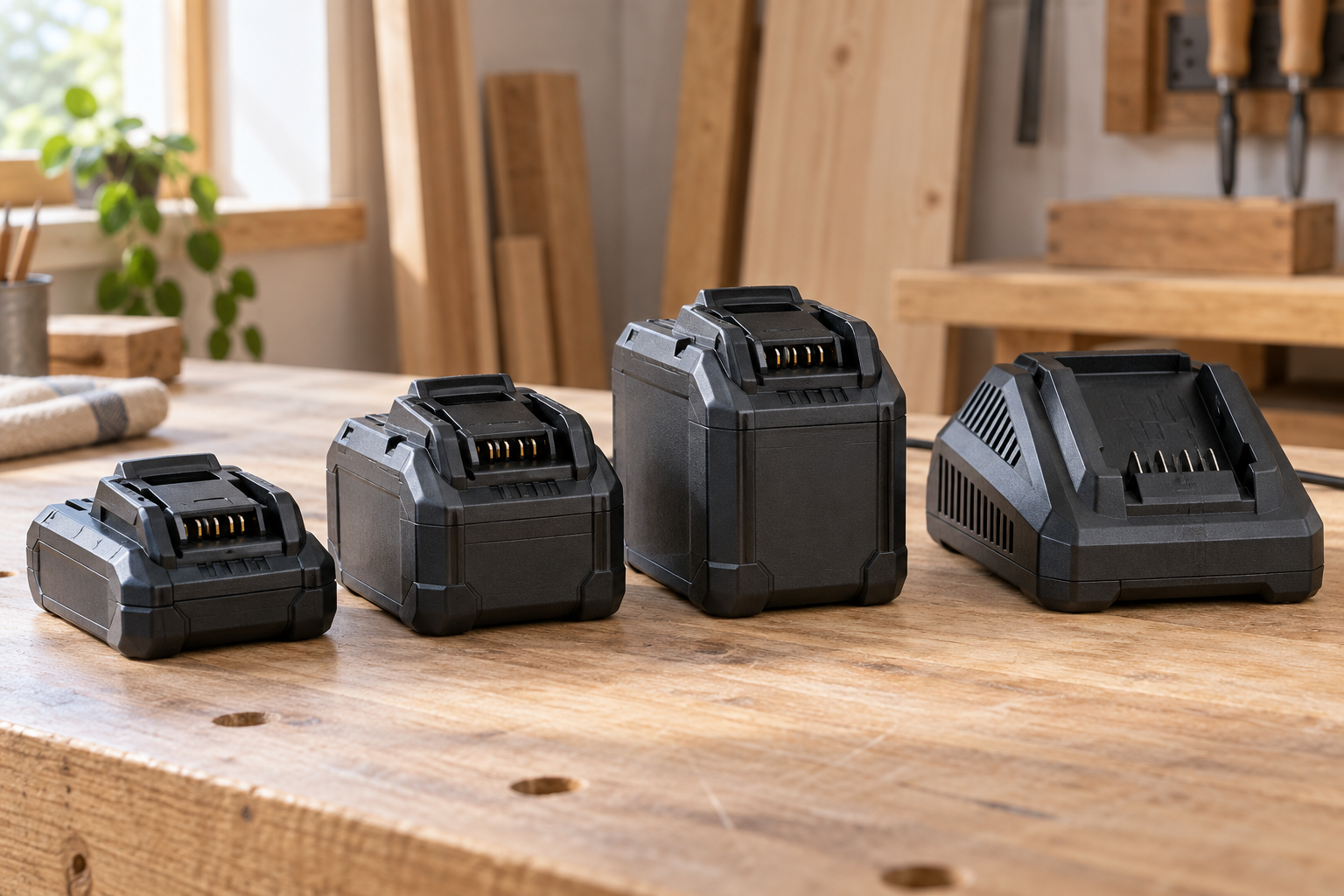
Fast charging can shorten a cordless tool battery’s service life, but it does not automatically ruin a pack. The main issue is heat: charging quickly pushes more current into the cells, and heat accelerates the chemical wear that gradually reduces capacity. A well-designed charger manages that risk by monitoring temperature and slowing or stopping the charge when needed.
For most people, the practical difference is smaller than the effect of storing batteries hot, leaving them fully charged for long periods, or repeatedly running them until the tool shuts off. Choose a fast charger for uptime, not because it makes batteries last longer. If you use tools intermittently, a standard charger is usually the better value.
What counts as fast charging?
“Fast” is relative to the battery’s capacity and the charger’s output. A charger rated at 4 amps delivers more charging current than one rated at 2 amps, but the actual rate changes during the charge. Chargers typically start at a higher rate and reduce current as the pack approaches full.
A rough comparison: a 5 amp-hour battery charged at a steady 2 amps would take at least 2.5 hours in an ideal calculation; at 4 amps, at least 1.25 hours. Real charging takes longer because charging is not perfectly efficient and the charger tapers current near full. Pack voltage, temperature and the charger’s design all affect the result.
Compare charging time for the same battery size, not just the charger’s amp rating. A high-output charger may offer little benefit with a small pack or a battery that cannot accept the higher rate.
How charging affects battery life
Most current cordless tool batteries use lithium-ion cells. Repeated charging and discharging gradually reduce the amount of energy those cells can hold. Higher temperatures speed up that aging, and fast charging can create more heat in both the cells and the pack.
That does not mean every fast charge causes noticeable damage. A compatible charger is designed for its battery platform and should monitor pack conditions. Some chargers use a fan; others pause or reduce charging when a battery is too hot or cold. Those controls reduce risk, though they cannot stop normal aging.
Temperature is a key failure mode. Charging a pack immediately after a demanding cut, or in a hot vehicle or shed, can keep it hotter for longer. Likewise, a cold pack may charge slowly or refuse to charge until it warms. Let a hot battery cool to room temperature before charging, and follow the manufacturer’s temperature guidance rather than trying to bypass a charger’s warning.
Other habits often matter more than choosing between two compatible chargers. Leaving a pack in a hot car, storing it fully charged for months, or routinely running it down until the tool cuts out can all add stress. For storage, follow the brand’s instructions; many lithium-ion packs are best kept cool and partially charged rather than full or empty for long periods.
Standard charger or fast charger?
| Option | Best for | Trade-off |
|---|---|---|
| Standard charger | Occasional DIY use and overnight charging | Longer waits between jobs; often cheaper |
| Fast charger | Frequent work when a battery must return to service quickly | Costs more; may generate more heat during charging |
| Extra battery | Keeping a tool running while another pack charges | Higher upfront cost, but avoids relying on one pack |
A standard charger is often fine for a homeowner who drills a few holes, assembles furniture or trims a small yard every few weeks. Charge the pack after use and leave it ready for the next job. The extra wait is unlikely to matter, and a premium charger may sit unused most of the year.
For a contractor or frequent user, a faster charger can reduce downtime when only one or two packs are available. Compare the cost of the charger with the cost of another battery: a spare pack can keep the tool working while the first charges, though it is a larger purchase. If you need that option, compare cordless tool battery-and-charger kits within your existing platform.
How to choose and charge wisely
Check compatibility before buying. Chargers are generally tied to a battery platform, and a charger that physically fits is not necessarily approved for every pack. Use the manufacturer’s compatibility list, especially when mixing batteries of different voltages or generations. Avoid unapproved adapters and bargain chargers without clear temperature and charge controls.
Look at the charging time for the battery sizes you actually own. If your 5 amp-hour pack takes most of a work break to recharge, a faster compatible charger may be useful. If you use small packs and can charge overnight, a standard platform battery charger is a reasonable place to save money.
After heavy use, let the pack cool before charging. Keep the charger on a hard, ventilated surface and do not cover its vents. Stop using a battery that is swollen, cracked, leaking, unusually hot, or giving off an odor; do not try to charge it. Recycle damaged packs through an appropriate battery collection program rather than putting them in household trash.
Do not leave a pack on a charger indefinitely unless the manufacturer says that is acceptable. Many modern chargers stop active charging when a battery is full, but that does not make a hot or damp storage spot suitable. Store packs somewhere dry and away from direct sun, heaters and freezing conditions.
The practical answer
Fast charging can add heat-related wear, but a compatible, well-managed charger used under normal conditions is unlikely to be the main reason a tool battery wears out. Buy one if charging downtime interrupts paid work or scheduled jobs. For occasional use, the standard charger is cheaper and usually good enough.
To get the most life from either setup, avoid charging hot packs, keep batteries out of extreme temperatures, and follow the platform’s storage guidance. Those simple habits are more useful than worrying that every fast charge is damaging the pack.
FAQ
What counts as fast charging?
Related guides
- Longest Lasting Lawn Mower Battery: AGM vs Lithium vs Flooded Lifespan and Cost per Season
- Duralast Gold Lawn Mower Battery Review: U1 Fit, CCA and When to Pay for AGM
- Greenworks Pro 80V 21-Inch Mower Review: Runtime Math, Push vs Self-Propelled and Yard Fit
- Bosch High Pressure Washer Gun Replacement: Fittings, Adapters and What Fits Your Model