What's inside
As an Amazon Associate I earn from qualifying purchases. This post may contain affiliate links at no extra cost to you.
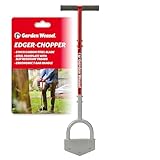
The Yard Butler step edger is a good, inexpensive tool for cutting a crisp new edge along flower beds, walkways and tree rings, especially if you only have a few dozen feet of edge and want something quiet that never needs fuel or a battery. It is a manual, foot-powered edger: a long steel shaft with a T-style grip, a curved half-moon style steel blade and a wide step on top of the blade so you can drive it into the soil with your body weight. It is not a replacement for a powered edger if you maintain hundreds of feet of sidewalk every couple of weeks. This review covers what it is designed to do, how it compares with other edging options, and how to get the cleanest line from it.
As an Amazon Associate we earn from qualifying purchases at no extra cost to you.



What the Yard Butler step edger is (and is not)
Yard Butler makes a range of manual lawn tools, including core aerators, rotary edgers and this step-on edger. The step edger works like a sharpened half-moon spade: you place the blade on your line, step on the tread and rock the handle to slice through turf and roots. Exact dimensions vary by production run, so the figures below are typical for this style of tool rather than a guaranteed spec sheet.
| Feature | Typical for Yard Butler-style step edger | Why it matters |
|---|---|---|
| Overall length | About 38-42 in | Lets most adults work upright without hunching |
| Blade width | About 8-9 in | Each step cuts roughly this much edge |
| Cutting depth | About 3-4 in | Deep enough to sever grass runners and shallow roots |
| Blade and shaft | Steel, painted or powder-coated | Stiff enough for compacted soil; paint wears off the edge with use |
| Grip | T-handle, cushioned | Two-handed leverage for rocking the blade |
| Weight | About 3-5 lb | Light enough to carry around the yard all afternoon |
| Typical price | About $25-$50 | A fraction of any powered edger |
Manual step edger vs other edging tools
The best tool depends on how much edge you have and whether you are creating a new line or maintaining an existing one.
| Tool | Speed (ft per 10 min, maintained edge) | Cost | Noise | Best for |
|---|---|---|---|---|
| Step edger (Yard Butler type) | 20-40 ft | $25-$50 | Silent | New bed lines, curves, short edges |
| Rotary manual edger (star wheel) | 40-80 ft | $30-$60 | Silent | Trimming grass overhang along concrete |
| Flat garden spade | 15-30 ft | $25-$70 | Silent | Occasional edging if you already own one |
| String trimmer turned vertical | 100-200 ft | Uses existing trimmer | Loud (gas) / moderate (battery) | Quick touch-ups, less crisp line |
| Battery or gas stick edger | 150-300 ft | $150-$450 | Moderate to loud | Regular sidewalk and driveway edging |
The step edger’s biggest advantage over a powered edger is control. Because you place each cut by hand, you can follow a garden hose laid out as a guide and create smooth curves that a wheeled or stick edger tends to straighten.
Who should buy it
- Gardeners shaping new beds. Cutting a fresh line through established turf is where a step edger excels.
- Small lots and townhouses with under about 100 feet of edge.
- Anyone who wants a quiet tool for early mornings or noise-restricted neighborhoods.
- Owners of a powered edger who need something for tree rings and tight curves the power tool cannot reach.
Who should skip it
- Homeowners with long sidewalks and driveways who edge every couple of weeks; a powered edger will save hours each season.
- Anyone with knee, back or hip problems that make repeated stepping and levering uncomfortable.
- Yards with very rocky or heavy clay soil, where a manual blade bounces off more than it cuts.
How to get a clean edge with a step edger
- Mark the line. Lay a garden hose or string between stakes for curves and straight lines. Mark it with spray paint if you will work over several sessions.
- Water the day before. Moist (not soggy) soil cuts far more easily than dry, hard ground.
- Stand on the bed side. Place the blade on the line with the flat face toward the lawn so the turf side ends up vertical.
- Step and rock. Push the blade down with your foot to full depth, then rock the handle slightly side to side; do not pry hard backwards, which bends shafts.
- Overlap cuts. Move about three-quarters of a blade width each time so there are no uncut gaps.
- Remove the sod strip. Use a flat spade or your hands to lift the cut turf, then bevel the bed side so mulch sits below the grass line.
- Maintain. Re-cut every four to eight weeks in the growing season; a maintained edge takes a fraction of the effort of the first cut.
Durability and maintenance
The parts that wear on any step edger are predictable:
- The blade edge dulls with soil abrasion and stones. A few passes with a mill file every season restores it; file only the beveled side at roughly the factory angle.
- The paint wears off the blade quickly. Wipe the blade clean after use and give it a light coat of oil before storage to prevent rust.
- The shaft-to-blade joint is the main stress point. Prying sideways against roots or rocks is the most common way manual edgers bend; rock gently and cut roots with loppers when needed.
- The grip foam can tear over time; a wrap of grip tape fixes it.
| Task | How often | Time |
|---|---|---|
| Wipe blade, remove soil | After every use | 1 min |
| File the cutting edge | Once or twice a season | 5-10 min |
| Oil blade for storage | End of season | 2 min |
| Check shaft for bends or cracks | Start of season | 1 min |
Safety notes
Wear sturdy shoes with a firm sole, since the step plate concentrates your weight on a small area. Call your local utility locate service before cutting new lines near where buried cables, irrigation lines or gas lines could run, even though a 3 to 4 inch cut is shallow. Keep the sharpened blade covered or hung up so it is not left lying in the grass.
Bottom line
The Yard Butler step edger does one job well: cutting clean, controlled edges along beds and paths without noise, fuel or batteries. For under $50 it is an easy addition to a tool shed, and it pairs nicely with a powered edger for the curves and tree rings the machine cannot handle. If your main job is long stretches of sidewalk, put your budget into a stick edger instead.
Related guides
- Longest Lasting Lawn Mower Battery: AGM vs Lithium vs Flooded Lifespan and Cost per Season
- Duralast Gold Lawn Mower Battery Review: U1 Fit, CCA and When to Pay for AGM
- Greenworks Pro 80V 21-Inch Mower Review: Runtime Math, Push vs Self-Propelled and Yard Fit
- Bosch High Pressure Washer Gun Replacement: Fittings, Adapters and What Fits Your Model