What's inside
As an Amazon Associate I earn from qualifying purchases. This post may contain affiliate links at no extra cost to you.
Bosch 12V and 18V tools are built around two different priorities. The 12V system is smaller, lighter, and easier to control in tight spaces. The 18V system delivers substantially more torque, runtime, and tool variety, but the batteries and tools add noticeable weight.
The right choice depends less on the voltage printed on the battery than on the work you actually do. Cabinet installation, electrical work, and light household repairs often suit 12V tools. Deck building, structural fastening, drilling masonry, and repeated cutting are better served by 18V.
As an Amazon Associate we earn from qualifying purchases at no extra cost to you.


Voltage and battery capacity
Bosch’s 12V Professional tools use compact lithium-ion packs, commonly sold in capacities from roughly 2.0Ah to 4.0Ah. The older 10.8V label refers to the same nominal battery class; Bosch and other manufacturers commonly market these packs as 12V based on their maximum charged voltage.
The 18V platform uses larger packs, often ranging from about 2.0Ah to 8.0Ah or more. Capacity is measured in amp-hours, but it is not directly comparable across voltage platforms without considering watt-hours. A rough calculation is voltage multiplied by amp-hours:
A 12V, 3.0Ah battery stores about 36 watt-hours. An 18V, 4.0Ah battery stores about 72 watt-hours. In practical terms, the 18V pack has roughly twice the stored energy, although tool efficiency, load, temperature, and battery age affect actual runtime.
| Factor | Bosch 12V | Bosch 18V |
|---|---|---|
| Typical battery energy | About 24–48Wh | About 36–144Wh |
| Tool and battery weight | Lowest | Higher, especially with high-capacity packs |
| Best suited to | Installation, trim, light drilling, service work | Construction, cutting, heavy drilling, repeated fastening |
| Maximum capability | Limited by compact motors and batteries | Much broader tool and performance range |
| Battery cost per unit of work | Often reasonable for light use | Better value for demanding, sustained work |
Handling, balance, and control
The biggest advantage of 12V tools is not simply that they weigh less. They are also shorter and easier to position. A compact 12V drill can fit between cabinet sides, inside a service panel, or behind plumbing where an 18V drill feels awkward. Less weight at the front of the tool also reduces wrist fatigue during overhead work.
For example, driving dozens of small screws into hinges or drawer hardware is usually more comfortable with a 12V drill or impact driver. The lower output makes accidental overdriving less likely, though clutch settings and operator control still matter.
18V tools are heavier, but the extra mass can be useful. It helps stabilize a saw, rotary hammer, or high-torque drill when the tool is working hard. The trade-off becomes obvious during long periods of ladder work or overhead fastening. A large 18V battery can turn a manageable drill into a tiring tool after an hour.
Battery choice changes handling significantly. A compact 18V 2.0Ah pack may be acceptable for installation work, while a high-output 6.0Ah or 8.0Ah pack can make the same tool feel front- or bottom-heavy. Buy the smallest pack that gives enough runtime for the job rather than using the largest battery everywhere.
Drilling and fastening performance
A 12V drill is well suited to pilot holes, wood screws, cabinet hardware, small brad-point bits, and occasional drilling in thin metal. It can handle many household tasks, but it is easier to stall when a large bit catches or when driving long structural screws.
An 18V drill has more reserve power and usually a stronger chuck and gearbox. That matters with large twist bits, hole saws, spade bits, and long screws. It also recovers faster after a heavy load. If the motor repeatedly slows or the battery protection cuts out, the tool is being pushed beyond its comfortable range; changing brands or batteries will not turn a compact 12V drill into a framing drill.
For an everyday 12V drill driver kit, choose a model with a two-speed gearbox, a usable clutch, and at least two batteries. A 12V impact driver is useful for longer screws, but it is not automatically safer for delicate work because the impact mechanism can strip small fasteners if used without care.
Cutting, grinding, and heavy work
The 18V platform is the clear choice for cordless circular saws, reciprocating saws, angle grinders, rotary hammers, and high-demand multitools. These tools draw much more current than a drill. A small 12V battery may shut down under load, overheat, or provide only a few minutes of useful cutting.
That does not make 12V useless for cutting. Compact 12V saws can be excellent for small trim pieces, plastic pipe, thin plywood, and light service work. They are easier to control and often produce less damage when working near finished surfaces. They are simply not a replacement for an 18V saw when cutting 2-by lumber, thick sheet goods, or masonry.
For users who need one cordless platform for construction, an Bosch 18V brushless tool kit offers the safer long-term investment. Brushless motors generally use battery energy more efficiently and are better suited to sustained loads, although the tool may cost more initially.
Chargers, batteries, and platform limits
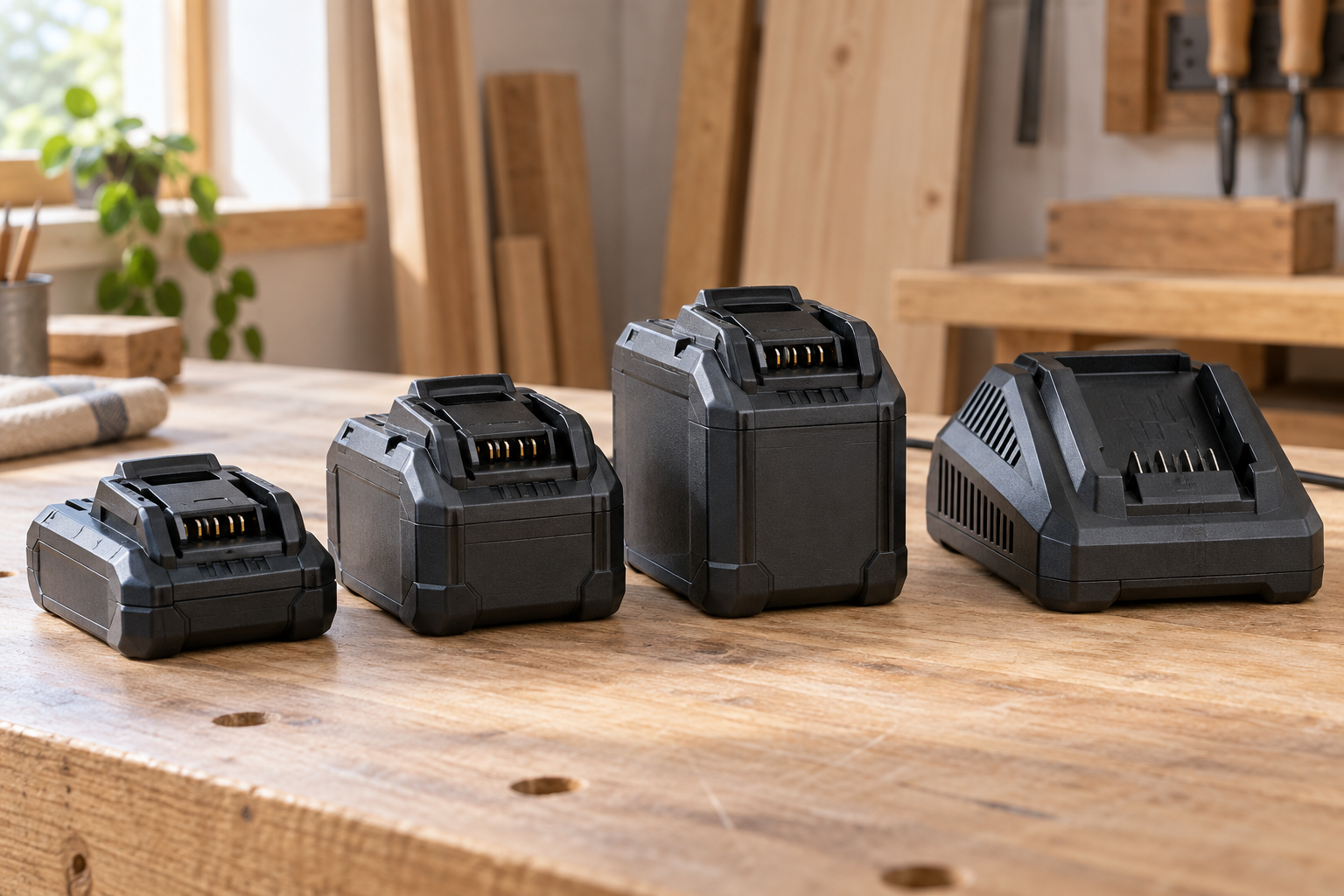
12V and 18V Bosch batteries are separate systems. A 12V battery will not power an 18V tool, and an 18V battery will not fit a 12V tool. Chargers are also platform-specific, so check compatibility before buying bare tools or adding batteries from a different kit.
This separation affects the total cost. A single 12V drill may be inexpensive, but adding a saw, light, and spare batteries can cost more than expected. Conversely, an 18V kit may cost more upfront while giving access to a much larger selection of outdoor, workshop, and construction tools.
Do not leave lithium-ion batteries in a hot vehicle or store them fully discharged. Cold batteries deliver less power temporarily, while heat accelerates permanent capacity loss. If a battery repeatedly triggers thermal or overload protection during normal work, let it cool and inspect the bit or blade. Continuing to force the tool can damage the battery, motor, or gearbox.
Which system makes sense?
Choose 12V if your work is mostly furniture assembly, cabinetry, electrical service, trim installation, small repairs, or drilling in confined spaces. It is also the better option when low weight matters more than maximum output. The cheaper 12V choice is entirely sensible for occasional home maintenance.
Choose 18V if you will build decks, remodel rooms, drill masonry, cut lumber, grind metal, or use several tools for long periods. It costs more and weighs more, but the additional power and battery energy reduce stalled tools, slow cuts, and frequent battery changes.
If you are undecided, start with the platform that matches your most demanding likely job, not your most common light task. A 12V kit can complement an 18V system later, but neither platform replaces the other. For compact installation work, consider a compact Bosch 12V tool kit; for a broader workshop or construction setup, begin with an Bosch 18V battery and charger kit and add bare tools as needed.
FAQ
Which system makes sense?
Related guides
- Longest Lasting Lawn Mower Battery: AGM vs Lithium vs Flooded Lifespan and Cost per Season
- Duralast Gold Lawn Mower Battery Review: U1 Fit, CCA and When to Pay for AGM
- Greenworks Pro 80V 21-Inch Mower Review: Runtime Math, Push vs Self-Propelled and Yard Fit
- Bosch High Pressure Washer Gun Replacement: Fittings, Adapters and What Fits Your Model