What's inside
As an Amazon Associate I earn from qualifying purchases. This post may contain affiliate links at no extra cost to you.
Milwaukee M18 and Makita 18V LXT are both mature 18-volt platforms with broad ranges of cordless tools. For a new kit, the cost comparison is not simply one battery against another: it is the price of the first tools, enough batteries to keep working, a charger, and any extra batteries needed as the collection grows. The cheaper starting bundle may not be the cheaper system if it leaves you short on runtime.
As an Amazon Associate we earn from qualifying purchases at no extra cost to you.


What the platform cost includes
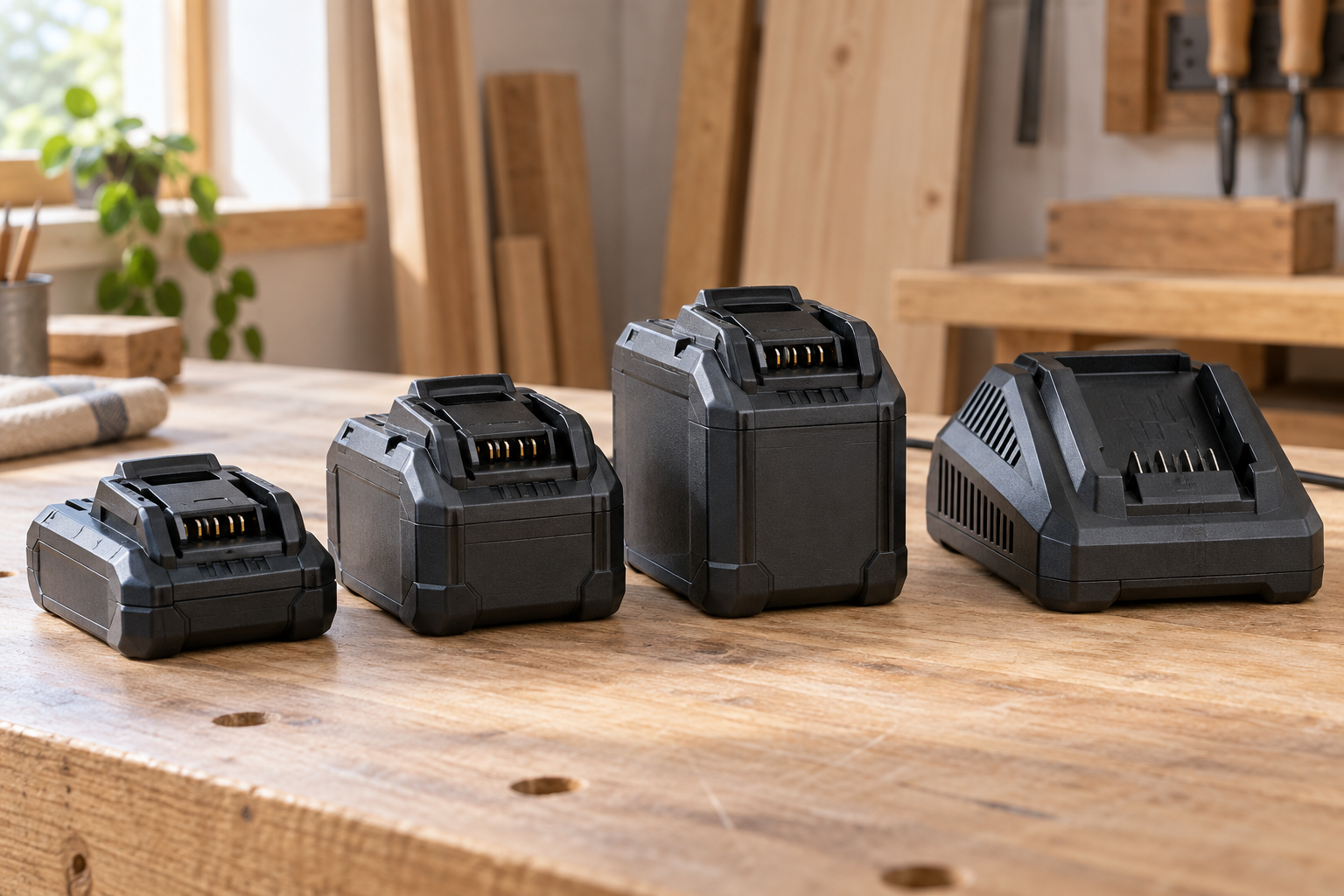
Compare kits with similar tools and battery capacity. A drill kit with two compact batteries is not directly comparable to one with a single high-capacity pack, even if the sticker prices look close. Battery capacity is stated in amp-hours (Ah); a 5.0Ah battery stores more energy than a 2.0Ah battery, but adds size and weight. Actual runtime depends on the tool, material, and workload.
For a small home kit, one charger and two batteries are often enough: one in the tool and one charging or ready to swap. For regular cutting, grinding, or outdoor work, two compact packs can feel inadequate. A third battery or a larger pack reduces interruptions, but raises the purchase cost and the weight carried on the tool.
M18 vs 18V LXT at a glance
| Cost factor | Milwaukee M18 | Makita 18V LXT |
|---|---|---|
| Platform voltage | 18V-class system | 18V-class system |
| Battery choice | Multiple capacities and performance tiers; check compatibility for the specific tool | Multiple capacities; batteries are designed for the LXT 18V platform |
| Starter-kit value | Varies widely by tool, battery count, and sale | Varies widely by tool, battery count, and sale |
| Cost of expanding | Depends on bare-tool pricing and whether you need higher-capacity packs | Depends on bare-tool pricing and whether you need higher-capacity packs |
| Main buying check | Confirm the battery fits the tool and suits its power demand | Compare kit contents, battery capacity, and current tool availability |
Neither brand is reliably cheaper across the board. Promotions change, and a kit discount can matter more than a modest difference in the price of a spare battery. Compare the same kind of tool, the same number of batteries, and similar battery capacity. Also check whether the kit includes a charger; some bare-tool deals assume you already own one.
Battery cost and runtime trade-offs
A compact battery is usually the sensible choice for a drill, impact driver, or light-duty work where low tool weight matters. On a circular saw or grinder, a small pack may run down quickly or limit how long you can work between swaps. A larger battery can help with sustained, demanding work, but it costs more and makes overhead or one-handed tasks tiring sooner.
Do not assume that a high Ah rating guarantees the best performance in every tool. Battery design and the tool’s power demand also matter. If a saw bogs down during repeated cuts, the cause could be a dull blade, a difficult material, a small or depleted battery, or the tool itself. Buying a larger pack may help with runtime, but it will not fix a dull blade or an unsuitable tool.
Before buying extra batteries, price the kit you actually need. A drill-and-impact-driver set with two batteries can be better value than buying each tool separately, even if the bare tools look affordable. If you need only one additional tool for occasional use, a bare tool may be cheaper than another full kit. Compare current Milwaukee M18 drill kits with two batteries and Makita 18V LXT drill kits with two batteries using the included capacities and charger, not just the headline price.
Chargers, compatibility, and hidden costs
A charger is a one-time platform cost unless you want a second charging location or a faster way to rotate packs. For occasional DIY work, the standard charger included in a kit is usually adequate. For a workday with several batteries in rotation, charging speed and the number of chargers matter more. Check the manufacturer’s stated charging times for the exact battery and charger combination; a charger’s claimed speed on one pack may not apply to another.
Battery compatibility is another place to avoid assumptions. Stay within the named platform and check the tool’s listing before buying a pack, especially when a brand offers different battery families or performance tiers. Third-party adapters can appear to make batteries interchangeable, but they may not provide the intended protection or fit. A failure can leave a tool without power, damage equipment, or complicate warranty support. For a new kit, the small saving usually is not worth building around an adapter.
Which platform makes sense for your kit?
If you already own working M18 or LXT batteries and a charger, the cheapest sensible expansion is usually a compatible bare tool from that platform. Starting over means paying for duplicate chargers and batteries, not just the first tool. If you own neither, compare the specific tool bundles available in your area and choose the platform that covers the next few tools you are likely to buy.
For an occasional user who needs a drill, driver, and perhaps a light, a discounted two-battery kit from either brand is generally enough. Pay extra for more capacity only if your work regularly drains the smaller packs or involves tools with sustained high power demand. A spare battery is useful; a shelf full of batteries that sit unused ties up money and will age whether you use them or not.
For frequent use, make a short list of the next three tools before committing. Check whether each is available as a bare tool, what battery size it will realistically need, and whether the kit’s charger can keep up with your work. That comparison is more useful than choosing a brand on a broad claim about ecosystem size or battery life.
FAQ
Which platform makes sense for your kit?
Related guides
- Longest Lasting Lawn Mower Battery: AGM vs Lithium vs Flooded Lifespan and Cost per Season
- Duralast Gold Lawn Mower Battery Review: U1 Fit, CCA and When to Pay for AGM
- Greenworks Pro 80V 21-Inch Mower Review: Runtime Math, Push vs Self-Propelled and Yard Fit
- Bosch High Pressure Washer Gun Replacement: Fittings, Adapters and What Fits Your Model