What's inside
As an Amazon Associate I earn from qualifying purchases. This post may contain affiliate links at no extra cost to you.
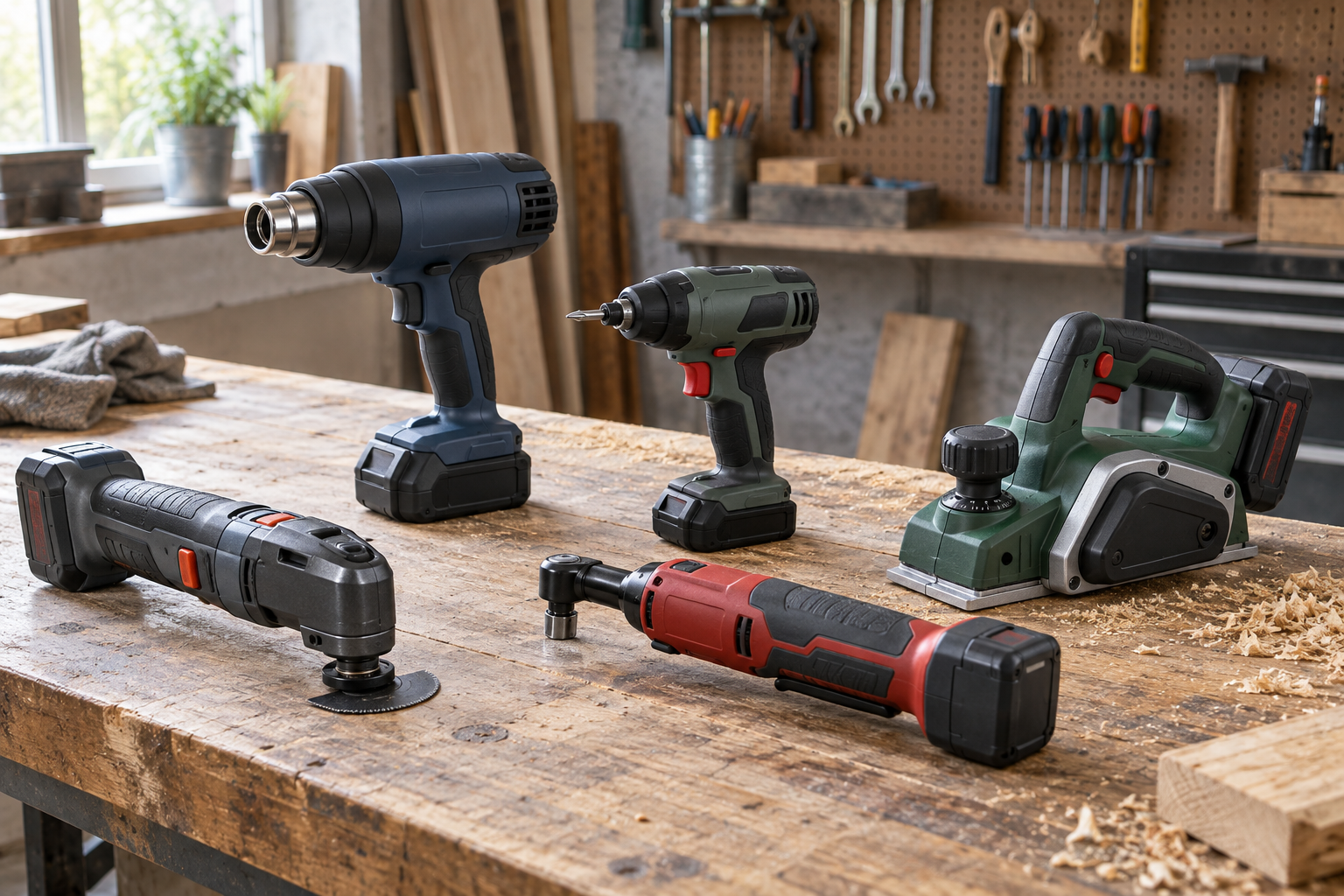
Cordless heat guns are useful when a power cord is more trouble than the heating job: shrinking electrical tubing, loosening adhesive, softening vinyl, thawing small frozen fittings, and removing labels or decals. They are not a universal replacement for a corded 1,500-watt heat gun, though. Most battery models trade maximum heat and sustained airflow for portability and compatibility with batteries you already own.
The best choice is usually the one that matches your existing tool platform. Buying a bare tool can be reasonable; buying a new battery, charger, and heat gun for occasional use usually is not. Before choosing, check the temperature range, warm-up time, nozzle options, and whether the tool shuts down under continuous use.
As an Amazon Associate we earn from qualifying purchases at no extra cost to you.



Best cordless heat gun options by battery platform
| Platform | Typical heat range | Best use | Main trade-off |
|---|---|---|---|
| Milwaukee M18 | About 875°F maximum | Electrical work, service calls, general jobsite use | Bulky with larger batteries; expensive if you do not own M18 |
| DeWalt 20V Max | About 990°F maximum | Heat-shrink tubing, adhesive, light fabrication | Shorter working time with small batteries |
| Makita 18V LXT | About 1,022°F maximum | Controlled heating and trim work | Less useful for large-area heating |
| Bosch 18V | About 930°F maximum | Compact professional repair work | Tool and battery availability varies by region |
| Ryobi 18V ONE+ | Roughly 1,000°F maximum | Homeowner jobs and occasional DIY use | Less refined controls and balance than premium tools |
Best for M18 owners: Milwaukee M18 heat gun
Milwaukee’s M18 cordless heat gun is a practical service tool with a fast warm-up and a maximum temperature around 875°F. It is designed for jobs such as heat-shrink connectors, removing decals, softening threadlocker, and loosening adhesive. The two-position trigger and lock-on control are useful when you need one hand free, although the tool still gets hot quickly around the metal nozzle.
A compact 2.0Ah battery keeps the tool relatively manageable but will not provide long continuous runtime. A 5.0Ah pack lasts longer, at the cost of a heavier rear end. Expect cordless heat guns to be used in short bursts rather than for heating a large surface continuously. If you already have several M18 batteries and need a rugged jobsite tool, look for the Milwaukee M18 heat gun as a bare tool.
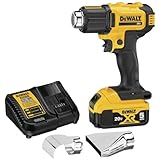
Best for DeWalt 20V Max owners: DeWalt DCE530
The DeWalt 20V Max DCE530 reaches approximately 990°F and has two temperature settings. It is a strong fit for electricians and installers who mostly need controlled heat on small workpieces. The built-in LED light and lock-on button help in cabinets, crawlspaces, and other awkward locations.
Its main limitation is airflow. This is a focused heat gun, not a cordless replacement for a high-output corded model used to strip paint from doors or heat large plastic panels. A 1.5Ah or 2.0Ah battery makes it easier to handle overhead, while a 5.0Ah pack is the better choice for repeated work. The tool also remains hot after shutdown, so allow several minutes of cooling before putting it in a tool bag. The DeWalt 20V Max heat gun is the sensible buy if your batteries and charger are already on hand.
Best for controlled heating: Makita 18V LXT
Makita’s 18V LXT heat gun is notable for a high stated maximum temperature, commonly listed around 1,022°F, and a compact body. It is well suited to heat-shrink work, bending plastic, loosening adhesive, and warming fittings without dragging an extension cord around.
High maximum temperature does not mean it heats faster than every competitor. The workpiece, nozzle distance, and airflow matter more than the headline number. Hold the nozzle too close and you can scorch insulation, blister paint, or deform plastic before noticing. Makita’s large LXT battery range is useful, but this tool makes the most sense for people already invested in the platform rather than buyers starting from zero.
Bosch and Ryobi: when the cheaper option is enough
A Bosch 18V heat gun is a good compact choice for professional users who already own Bosch batteries. It offers the expected cordless advantages and is appropriate for connector sleeves, labels, adhesives, and light repair work. Bosch batteries and tools are less universally stocked than DeWalt, Milwaukee, or Ryobi, so confirm availability before committing to the platform.
Ryobi’s 18V ONE+ heat gun is often the better value for homeowners. The ONE+ battery system includes many inexpensive tools, and a starter kit can cost less than a premium bare heat gun. For occasional heat-shrink tubing, craft work, or removing stickers, it is usually sufficient. The cheaper option is fine when you work in short bursts and do not need the fastest warm-up or the best trigger feel. It is a poor substitute for a corded gun when stripping paint or heating broad surfaces.
If you need an inexpensive platform tool, compare current Ryobi ONE+ cordless heat guns with bare-tool prices. Include the battery cost in the calculation if you do not already own ONE+ equipment.
What to check before buying
Temperature control: Two settings are adequate for most electrical and adhesive work. Variable temperature is better for plastics, shrink film, and painted surfaces because you can reduce scorching and distortion.
Nozzles: A reflector nozzle helps heat-shrink tubing evenly. A concentrator nozzle directs heat into a narrow area. Do not assume every platform includes both; replacement nozzles may be proprietary or sold separately.
Runtime: Battery capacity is measured in amp-hours, but runtime varies with temperature and airflow. A 5.0Ah pack generally lasts substantially longer than a 2.0Ah pack, but adds weight. Keep a second charged battery nearby for field work.
Safety: Keep at least several inches between the nozzle and combustible material unless the instructions specify otherwise. Never leave the gun resting on its side while hot. Heat can travel through metal nozzles and ignite rags, cardboard, insulation, or dust. For heat-shrink tubing, rotate the wire or move the nozzle continuously; concentrating heat in one spot can damage the insulation or seal.
Choose the platform you already use, then select the smallest battery that provides acceptable balance for short jobs. If you need long, high-output heating, a corded heat gun remains the better tool.
Related guides
- Longest Lasting Lawn Mower Battery: AGM vs Lithium vs Flooded Lifespan and Cost per Season
- Duralast Gold Lawn Mower Battery Review: U1 Fit, CCA and When to Pay for AGM
- Greenworks Pro 80V 21-Inch Mower Review: Runtime Math, Push vs Self-Propelled and Yard Fit
- Bosch High Pressure Washer Gun Replacement: Fittings, Adapters and What Fits Your Model