What's inside
As an Amazon Associate I earn from qualifying purchases. This post may contain affiliate links at no extra cost to you.
What cordless threading can—and cannot—do
For conduit and pipe work, “cordless threading tool” can mean two different things: a power drive that turns a manual die, or a machine that cuts threads with a dedicated head. The first is a compact way to speed up occasional work. The second is for repeated, controlled threading and usually costs more, weighs more, and needs compatible heads and dies.
Neither type replaces checking the pipe, die, and thread standard. Electrical conduit often uses different threading requirements from plumbing pipe; verify the specification before cutting. Poorly supported stock, a dull die, or a crooked start can ruin threads regardless of battery size.
As an Amazon Associate we earn from qualifying purchases at no extra cost to you.


Choose by workload, not voltage
For a few short runs of rigid conduit, a cordless drill and suitable threading adapter may be enough. The tool is relatively inexpensive and useful for other jobs, but it relies heavily on operator control. Keep the speed low, hold the work securely, and use the correct adapter and die. A drill is not a substitute for a purpose-built pipe threader on larger pipe or repetitive work.
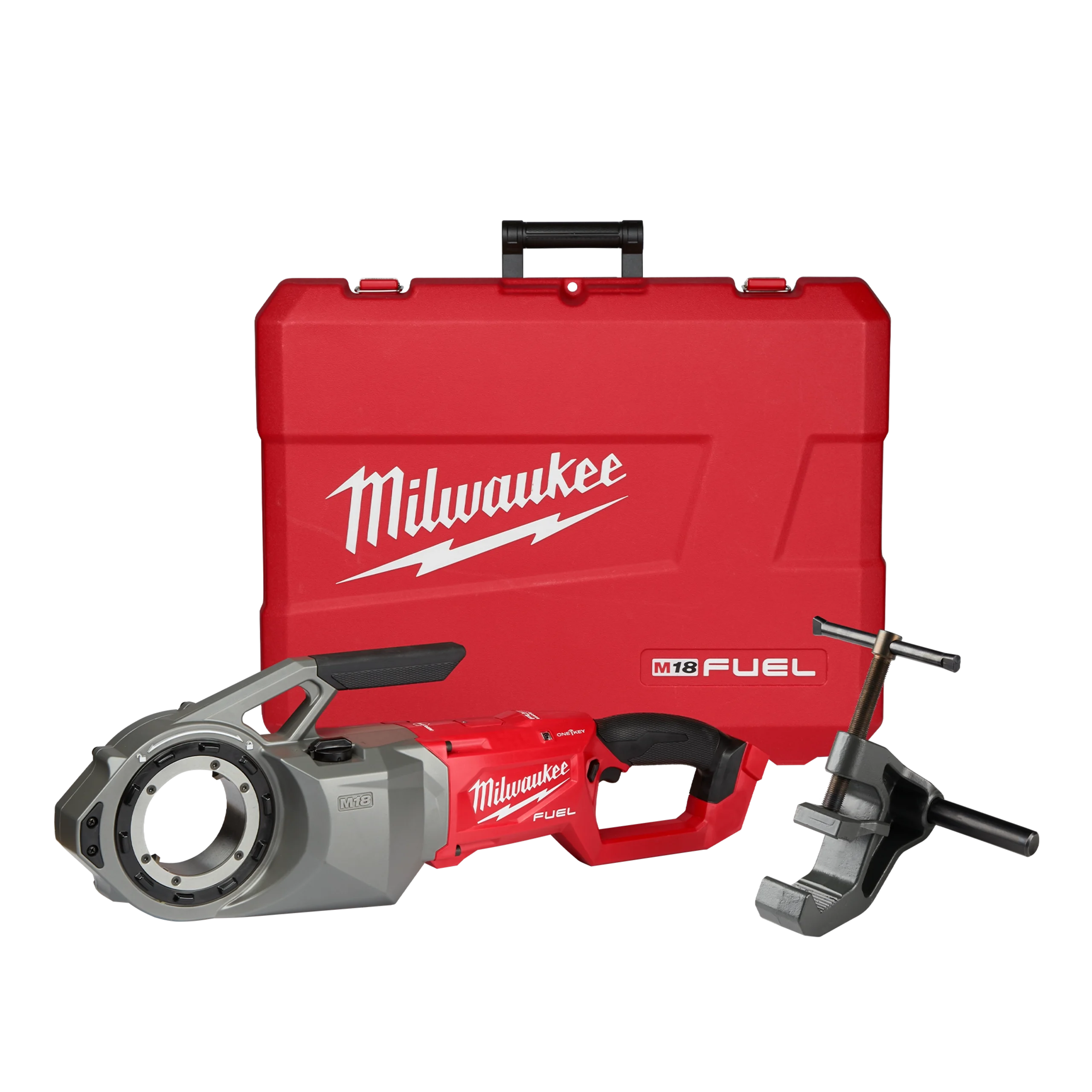
For regular threading, look at a dedicated cordless pipe threader with compatible heads, dies, and support equipment. Check the manufacturer’s stated pipe-size range and approved materials; capacity varies by tool. A tool advertised for pipe threading may not be intended for every conduit type or thread standard. If the job involves large-diameter stock, long runs, or all-day production, compare a corded machine too. Cordless convenience does not automatically outweigh the cost of extra batteries and downtime.
Browse cordless pipe threaders if you need a dedicated machine, but confirm die and head compatibility before buying.
Tool options at a glance
| Option | Best fit | Main trade-off |
|---|---|---|
| Cordless drill with threading adapter | Occasional, small-scale work when the adapter and die are rated for the task | More operator-dependent; easier to start crooked or stall |
| Dedicated cordless pipe threader | Repeated threading where portability matters | Higher upfront cost; check battery, head, and die compatibility |
| Corded threading machine | Shop work or sustained production near power | Needs an outlet and is less convenient to move |
This is a workflow comparison, not a claim that any one option fits every pipe size. Follow the tool maker’s capacity chart and the requirements of the job.
Battery platform and runtime
Choose a machine on a battery platform you already own only if the threader is compatible with the batteries and charger you have. A battery that physically fits may still be unsupported, and some high-draw tools perform best with specified packs. Check the manual rather than assuming every pack in a brand family is suitable.
Threading is a high-load task. A small battery may be lighter but can run down quickly or trigger thermal protection sooner; a larger pack adds weight and can make a handheld setup tiring. There is no reliable universal number of threads per charge: pipe diameter, material, die condition, cutting oil, ambient temperature, and operator technique all change consumption. For a day of work, two compatible batteries and a charger are more useful than relying on a single pack. A rapid charger helps between tasks, but it cannot make an overheated battery immediately ready.
When comparing bare tools and kits, price the battery and charger separately. If you already have suitable packs, a bare tool may be the cheaper choice. If you are starting a platform, compare the full kit price and the availability of replacement batteries in your area.
Features worth checking before purchase
Prioritize the supported pipe-size range, included accessories, and how the tool is held or restrained. A reaction arm or other specified restraint matters: high torque can twist the housing into the operator’s hand or strike nearby surfaces. Do not improvise a restraint unless the manufacturer allows it.
Check whether dies are included, sold separately, or proprietary to a particular head. A low tool price can become less attractive if the necessary head, dies, oil, and case are extra. Also check the tool’s weight with a battery installed, especially if you will work overhead or in a crowded enclosure. A lighter drill setup can be easier to position, while a dedicated machine is generally the more appropriate choice for frequent threading.
For a modest, occasional job, a cordless drill threading adapter can be a reasonable lower-cost route—provided its rating, die, and intended use match the work. Do not choose it just because the drill has a high torque figure.
Avoid common threading failures
Secure the pipe in an appropriate vise or support before starting. Keep the die square to the end, use cutting oil approved for the material, and follow the tool maker’s speed and operating instructions. A crooked start often produces a thread that binds or leaks; forcing the tool harder usually makes the damage worse. Stop if the tool stalls, chatters, or the battery protection trips repeatedly. Investigate the setup, die condition, and material instead of continuing to lean on the tool.
Inspect the finished thread for clean, even crests and remove chips before assembly. Test the fit using the correct mating part and standard. If the thread is visibly torn, tapered incorrectly, or too short, cut it back and try again rather than relying on sealant to disguise a bad thread. Keep hands clear of rotating stock and never hold the pipe by hand while threading.
A practical buying decision
For occasional conduit work, start with a compatible drill adapter only when the maker permits the application and the pipe size is within its rating. For recurring jobs, multiple sizes, or production work, buy a dedicated threader whose heads and dies cover the exact specification you need. Compare its complete working cost—including batteries, charger, restraint, dies, and oil—not just the bare-tool price. If the machine will run continuously in a shop, a corded threader may be the better value.
Related guides
- Longest Lasting Lawn Mower Battery: AGM vs Lithium vs Flooded Lifespan and Cost per Season
- Duralast Gold Lawn Mower Battery Review: U1 Fit, CCA and When to Pay for AGM
- Greenworks Pro 80V 21-Inch Mower Review: Runtime Math, Push vs Self-Propelled and Yard Fit
- Bosch High Pressure Washer Gun Replacement: Fittings, Adapters and What Fits Your Model