What's inside
As an Amazon Associate I earn from qualifying purchases. This post may contain affiliate links at no extra cost to you.
Milwaukee’s M18 XC and REDLITHIUM High Output batteries share the same M18 connection, but they are not interchangeable in every practical sense. High Output packs are built to supply more current to demanding tools and manage heat better under heavy loads. That can mean faster work or less slowdown—not automatically longer runtime. Pack capacity, tool choice, and how hard you work matter more.
As an Amazon Associate we earn from qualifying purchases at no extra cost to you.


What XC and High Output mean
XC means “extended capacity.” It describes a compact-style M18 battery with more capacity than a slim CP pack. XC batteries come in different amp-hour ratings, so an XC 5.0 pack does not have the same runtime as an XC 8.0 pack.
REDLITHIUM High Output is a battery line designed to deliver more power and reduce heat in high-demand applications. Common examples include High Output 6.0 and 8.0 packs. Milwaukee’s published comparisons describe certain High Output batteries as delivering more power than specified older M18 batteries, but that does not mean every tool gains the same amount. Tool electronics, temperature, and workload affect the result.
Check the label before comparing packs: amp-hours (Ah) indicate capacity, while voltage identifies the battery platform. A larger Ah rating usually means more stored energy, but pack design also affects how effectively a battery can deliver that energy under load.
At a glance
| Factor | M18 XC | M18 REDLITHIUM High Output |
|---|---|---|
| Best fit | General M18 use and moderate-demand tools | High-demand tools and sustained heavy work |
| Runtime | Depends on Ah rating and tool load | Depends on Ah rating and tool load; higher output does not guarantee longer runtime |
| Power under load | Can slow or heat sooner in demanding applications | Designed to deliver more current and manage heat better in compatible applications |
| Size and weight | Varies by pack; smaller XC packs are easier to carry | Often bulkier than a compact pack, especially in higher-capacity versions |
| Price | Often the better-value choice, particularly when already owned | Usually costs more; worthwhile when the tool can use the added output |
Runtime: compare amp-hours, then consider the tool
For the same kind of work, a higher-capacity pack generally runs longer than a lower-capacity one. In a simple, steady load, a 6.0 Ah pack has about 20% more nominal capacity than a 5.0 Ah pack. Actual runtime will not always scale neatly: a saw cutting dense material or a grinder working hard can draw much more current than a drill driving small screws.
High Output is most useful when a tool is pulling hard for extended periods. If an ordinary XC battery becomes hot, triggers thermal protection, or causes the tool to slow under a heavy cut, a High Output pack may help maintain performance. If the tool is a light-duty drill or impact driver used intermittently, upgrading the battery may make little difference to the job. A larger-capacity pack may extend runtime, but that is a capacity benefit rather than a special High Output runtime guarantee.
For occasional work, the M18 XC battery range is often the sensible place to start, especially if you already own compatible packs. Look at the exact Ah rating and the tool’s demands rather than buying on the XC label alone.
Size, weight, and balance
Battery size matters when you hold a tool overhead, work on a ladder, or make repeated cuts. A high-capacity pack can add noticeable weight and make a compact tool feel tail-heavy. That trade-off is often unimportant on a bench or a large saw, but it can be tiring on an impact driver used all day.
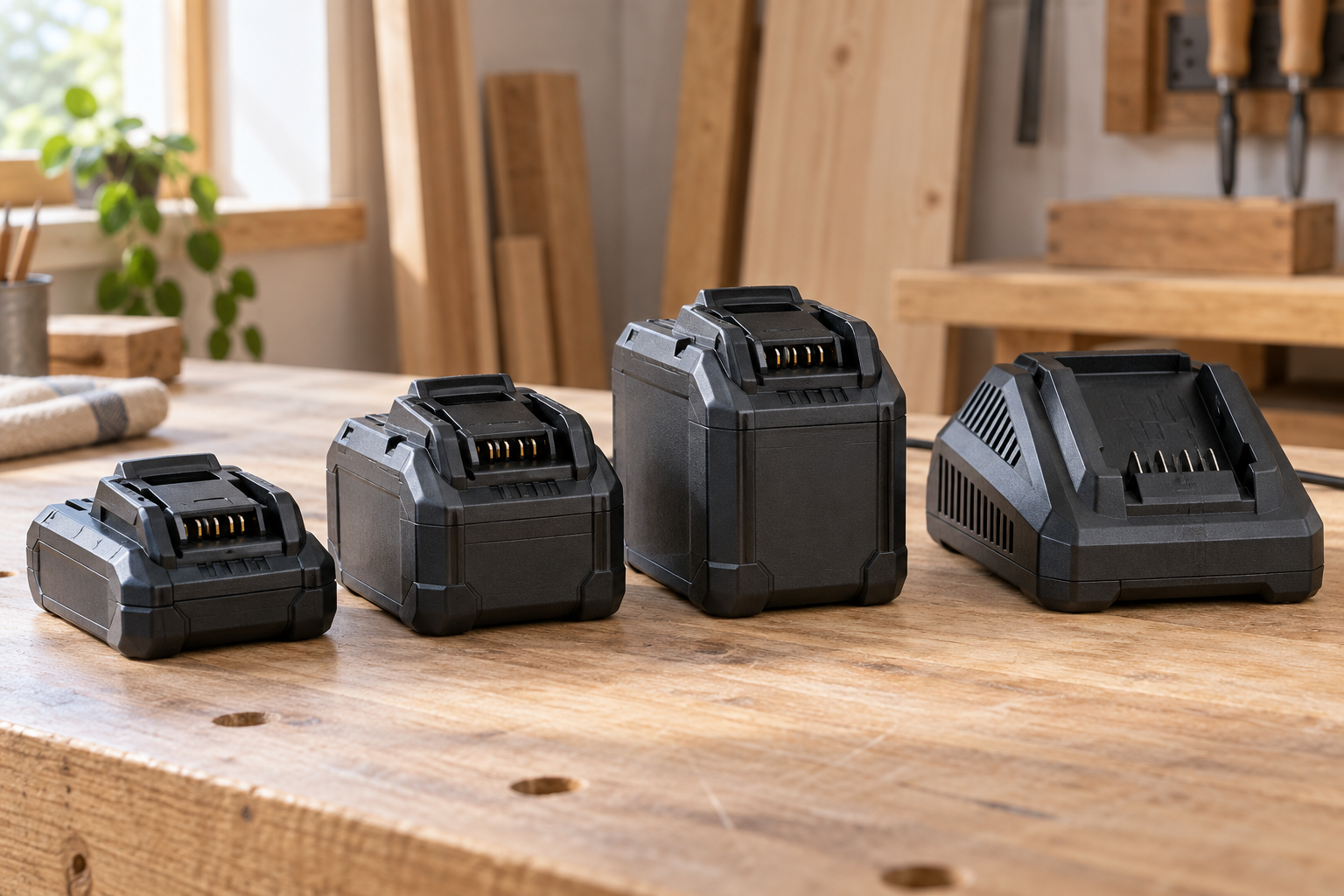
Compare the physical pack, not just its Ah number. High Output packs are not all the same size, and a smaller High Output battery may be a better fit for a demanding compact tool than the largest pack available. Keep a smaller battery on a drill for balance, then use a higher-capacity High Output pack on a saw or grinder when the load justifies it.
Tool performance and compatibility
M18 batteries are made for M18 tools, but an M18 tool does not necessarily benefit equally from every battery generation. The battery supplies power; the tool’s motor and electronics determine what it can do with it. High Output cannot turn a lower-demand tool into a more powerful model, and it will not fix a worn blade, dull bit, or overloaded cut.
Use High Output for sustained, demanding applications such as cutting thick stock, grinding, or running other power-hungry tools where a standard pack consistently bogs down or overheats. For a general-purpose kit, a mix can work well: compact XC packs for light tools and M18 High Output batteries for heavy tools.
Heat remains a failure mode with any battery. A hot pack may pause or reduce output to protect itself; forcing it back into service without letting it cool can interrupt work again. Let batteries cool naturally, use the proper M18 charger, and avoid storing or charging packs in extreme heat. If a pack repeatedly cuts out in a tool that used to run normally, check for blocked airflow, a damaged battery, or an unusually heavy workload before assuming the battery type is the only cause.
Which one should you buy?
Choose XC when cost, tool balance, and everyday versatility matter more than maximum output. It is a good fit for drilling, fastening, and lighter tasks, and a serviceable XC pack is not worth replacing just because High Output exists. If your work is intermittent and the tool does not slow down or overheat, put the money toward another battery or a useful charger instead.
Choose High Output when you regularly run demanding M18 tools, notice performance dropping under load, or need to reduce heat-related interruptions. Match capacity to the job: a larger pack helps when runtime is the priority, while a more compact pack is easier to handle. Before buying, check the exact battery’s weight and dimensions against the tool you use most. The right choice is the pack that supplies enough runtime and power without making the tool awkward to carry.
FAQ
Which one should you buy?
Related guides
- Longest Lasting Lawn Mower Battery: AGM vs Lithium vs Flooded Lifespan and Cost per Season
- Duralast Gold Lawn Mower Battery Review: U1 Fit, CCA and When to Pay for AGM
- Greenworks Pro 80V 21-Inch Mower Review: Runtime Math, Push vs Self-Propelled and Yard Fit
- Bosch High Pressure Washer Gun Replacement: Fittings, Adapters and What Fits Your Model