
What's inside
As an Amazon Associate I earn from qualifying purchases. This post may contain affiliate links at no extra cost to you.
Milwaukee M18 High Output batteries are designed to deliver more power under heavy load and to manage heat better than standard M18 packs. They are not a universal upgrade: on a drill driving small screws or a light, the difference may be hard to notice, while on a high-demand saw or grinder it can affect speed, runtime, and heat-related slowdowns.
For most buyers, the practical question is not “Which battery is best?” but “Which tool and job justify the extra cost and weight?” Battery capacity, pack design, tool demand, and how long you work between charges all matter.
As an Amazon Associate we earn from qualifying purchases at no extra cost to you.
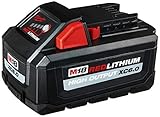


What “High Output” means
High Output is Milwaukee’s M18 battery line built around higher-current cells and a redesigned pack intended to reduce electrical resistance and heat. Under demanding loads, that can let a compatible tool sustain more output than it can with a standard M18 pack. It does not mean every tool will run dramatically faster, nor does it change a tool’s basic capabilities.
Capacity is still measured in amp-hours (Ah). A 6.0Ah pack stores less energy than a 12.0Ah pack, all else being equal, but Ah alone does not tell you how well a battery handles a sustained heavy load. A compact standard pack can be easier to carry than a large High Output battery; a big pack can run longer but add noticeable weight and bulk.
High Output batteries work across the M18 platform, but the largest performance gains show up in tools that draw substantial current. Actual results vary with the tool, battery charge, temperature, material, and accessory. Milwaukee’s stated power figures are not a guarantee of the same increase in every tool or application.
Where High Output helps most
Start with demanding cutting and grinding. Circular saws, rear-handle saws, reciprocating saws, and angle grinders can pull hard for extended periods. A High Output pack may help a compatible tool maintain cutting speed, particularly in thick stock, dense material, or repeated cuts. It can also reduce the chance that the battery’s temperature protection pauses work during a run of heavy cuts.
Large impact wrenches and high-torque drills can benefit when the job involves repeated, hard fastening or drilling rather than occasional bursts. Think lug nuts, structural fasteners, large hole saws, or long auger work—not a few cabinet screws. A more capable battery cannot overcome a dull blade, wrong bit, excessive feed pressure, or a tool that is itself the limiting factor.
For extended work away from a charger, capacity matters alongside output. A larger High Output pack may be useful on a saw or grinder used throughout the day, but it adds weight at the tool. If you work overhead or on ladders, a lighter pack with a spare ready to swap can be a better setup than one heavy battery.
Where a standard M18 battery is enough
Standard packs are sensible for drills and impact drivers used for ordinary assembly, smaller fasteners, and intermittent tasks. They are also a good fit for lights, radios, and other lower-draw tools, where paying extra for high-current performance usually brings little practical benefit. On light-duty work, a High Output battery may feel like more weight and cost without a noticeable improvement.
Standard batteries are also useful as compact spares. A smaller pack balances well in a drill and can make a long day less tiring. If your tool rarely bogs down, overheats, or triggers a battery shutdown, upgrading the pack is unlikely to fix a problem you do not have.
For buyers comparing standard M18 batteries and High Output packs, compare the same capacity where possible. Otherwise, differences in runtime and weight may reflect capacity rather than High Output design.
High Output vs. standard at a glance
| Factor | High Output | Standard M18 |
|---|---|---|
| Best fit | High-demand saws, grinders, and repeated heavy fastening | Drilling, light assembly, intermittent work, and lower-draw tools |
| Under sustained load | More likely to maintain output and resist heat-related interruptions in compatible tools | May slow or shut down sooner when pushed hard, depending on conditions |
| Weight and handling | Larger-capacity versions can make a tool heavier and less balanced | Compact packs are often easier to use overhead or as spares |
| Value | Worth considering when heavy-tool performance or fewer interruptions matter | Often the better buy if the tool is not power-limited by its battery |
Signs you may need an upgrade
A battery upgrade is worth testing if a high-draw tool repeatedly slows under load, stops with a hot-battery warning, or needs frequent pack changes during a job. First rule out simpler causes: check that the pack is fully charged, use a sharp and suitable accessory, avoid forcing the tool, and allow hot batteries to cool. Cold packs can also perform poorly; do not assume a larger battery will immediately solve a cold-weather slowdown.
If a standard pack cuts out during a long run but works normally after cooling, a High Output battery may help, especially if the tool and workload are demanding. If the tool stalls instantly in a tough material, the cause may instead be excessive feed pressure, a jam, a dull blade, or a job beyond that tool’s capacity. Batteries do not repair mechanical or technique problems.
Buying and charging considerations
Choose a battery around the tools you use most, not the most powerful tool you own but rarely take out. A practical kit might use a larger pack for a saw or grinder and lighter standard packs for drills and overhead tasks. If one battery has to serve every tool, consider whether the heavier pack is comfortable in your most frequent use.
Check compatibility and charging time before buying. M18 packs fit the M18 platform, but charger speed depends on the charger and battery; a larger-capacity pack generally takes longer to recharge. If the workday depends on continuous use, a second battery can matter more than choosing the biggest single pack. See current M18 High Output battery options and compare capacity, dimensions, weight, and price rather than relying on Ah alone.
Which should you choose?
Choose High Output for regular, sustained work with demanding M18 tools—especially when battery heat or loss of speed is disrupting the job. Choose a standard pack for light and intermittent use, compact handling, or tools that already perform well on your current battery. If you are unsure, try a High Output pack on the one tool that struggles most before replacing every battery in your kit. That keeps the upgrade targeted and avoids paying for performance your other tools may never use.
FAQ
Which should you choose?
Related guides
- Longest Lasting Lawn Mower Battery: AGM vs Lithium vs Flooded Lifespan and Cost per Season
- Duralast Gold Lawn Mower Battery Review: U1 Fit, CCA and When to Pay for AGM
- Greenworks Pro 80V 21-Inch Mower Review: Runtime Math, Push vs Self-Propelled and Yard Fit
- Bosch High Pressure Washer Gun Replacement: Fittings, Adapters and What Fits Your Model