Our Top Picks

What's inside
- 1. Milwaukee M18 FUEL: buy this first if carpentry pays your bills
- 2. DeWalt 20V MAX XR: the best power tool brand for carpenters who cut on site
- 3. Makita 18V LXT: the finish carpenter’s answer
- 4. Ridgid 18V: the value pick that makes sense for a reason
- What to skip
- How to actually commit to a platform
- FAQ
- Related Guides
- 1. Milwaukee M18 FUEL: buy this first if carpentry pays your bills
- 2. DeWalt 20V MAX XR: the best power tool brand for carpenters who cut on site
- 3. Makita 18V LXT: the finish carpenter’s answer
- 4. Ridgid 18V: the value pick that makes sense for a reason
- What to skip
- How to actually commit to a platform
- FAQ
- Related Guides
As an Amazon Associate I earn from qualifying purchases. This post may contain affiliate links at no extra cost to you.
Most carpenters do not get burned by choosing a bad drill. They get burned by choosing a battery platform, buying nine tools on it, and then discovering the one tool they actually need every day is the weakest thing in that lineup. That is the real cost of picking wrong, and it compounds for a decade. So the question of the best power tool brand for carpenters is not really about which brand wins a torque test. It is about which system carries you from framing through finish work without forcing you to buy a second charger ecosystem.
This is a ranking, ordered by what to commit to first for general carpentry, not by price and not by marketing budget. Each placement gets a reason and the specific job it unlocks. There is also a what-to-skip section at the bottom, because half of buying well is refusing to buy the wrong thing twice.
| Brand | Strongest for carpenters | Weakest link | Who should commit |
|---|
| Brand | Strongest for carpenters | Weakest link | Who should commit |
|---|---|---|---|
| DeWalt (20V MAX / XR, FlexVolt) | Cordless miter saws, framing nailers, huge tool count | Some entry kits use older brushed tools | Trim and remodel carpenters who want the widest cordless saw lineup |
| Milwaukee (M12 / M18 FUEL) | Impact drivers, one-key theft tracking, M12 for tight work | Premium pricing across the board | Pro carpenters who bill hours and want the deepest two-battery system |
| Makita (18V LXT / 40V XGT) | Track saws, finish sanders, low-vibration ergonomics | Two competing high-voltage platforms | Finish carpenters and cabinet installers chasing cut quality |
| Ridgid (18V) | Lifetime service agreement on registered tools | Thinner specialty tool selection | Budget-conscious carpenters buying their first full kit |
| Ryobi (ONE+) | Enormous accessory range, cheapest entry into cordless | Not built for daily production abuse | Homeowners, weekend remodelers, punch-list backup tools |
| Bosch (18V, 12V) | Routers, jigsaws, laser levels | Smaller US cordless catalog than the big three | Carpenters who value precision tools over platform breadth |
1. Milwaukee M18 FUEL: buy this first if carpentry pays your bills
Milwaukee earns the top slot for one unglamorous reason: the tools a carpenter touches most often are the ones Milwaukee builds best. The FUEL impact driver and hammer drill combo is the daily workhorse, and Milwaukee pairs it with M12, a genuinely useful subcompact platform for installing hardware, drilling in cabinet boxes, and driving screws in a stud bay where a full-size tool will not fit. That two-tier setup is the thing competitors approximate but do not match in the US market.
The job it unlocks: all-day driving and fastening without arm fatigue or a cord, plus tool-tracking and lockout on a crew where tools walk. If you run a small crew, that last part is not a gimmick.
Where Milwaukee is honest-to-goodness expensive is bare tools and batteries. High-output packs cost real money, and you will need more than two. Budget for the batteries first and the tools second, because a great tool on a tired battery is a mediocre tool.
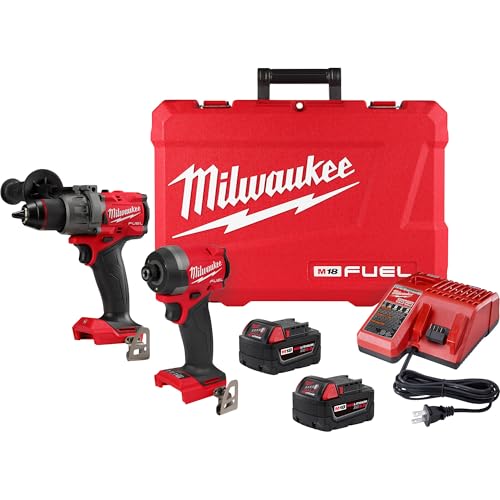
Milwaukee M18 FUEL drill and impact driver combo kit
If you are committing to one platform for the next decade of carpentry, start with a FUEL brushless drill and impact pair, then add batteries before you add tools. Look for kits that ship with at least one higher-capacity pack rather than two small compacts, since the small packs sag fastest under saw and nailer loads.
2. DeWalt 20V MAX XR: the best power tool brand for carpenters who cut on site
DeWalt takes second only because Milwaukee edges it on the drill-and-driver core. On saws, DeWalt is arguably ahead. The cordless miter saw lineup and the FlexVolt system, where a single battery steps up its voltage for high-draw tools, is what makes a truly cordless cut station realistic. You can show up to a trim job with a miter saw, a circular saw, a recip saw, and a nailer running off one battery family and never plug in a cord.
The job it unlocks: a full cut station in a garage bay, an unfinished second floor, or a driveway with no power. That is the difference between waiting on the electrician and getting paid.
Availability matters more than carpenters admit. DeWalt yellow sits on shelves at big box stores, hardware stores, and most rental counters, so a dead battery or shattered bevel handle on a Friday afternoon is a 20 minute problem, not a lost day. Milwaukee is close on this; nothing else is.
- ✔ FlexVolt lets one battery family run both handheld tools and a miter saw
- ✔ Widest cordless saw selection for framing and trim work
- ✔ Parts, batteries, and service centers are easy to find nationwide
- ✔ Strong used and secondhand market if you buy bare tools
- ✘ Entry-level combo kits often mix in older brushed tools that underperform
- ✘ Some legacy 20V tools share names with much better XR versions, which makes shopping confusing
- ✘ Battery pricing is only slightly kinder than Milwaukee’s
3. Makita 18V LXT: the finish carpenter’s answer
If your work is casing, crown, built-ins, and cabinet installs, Makita moves up this list and may deserve your first slot. The reason is cut quality and control. Makita’s track saw system is a legitimate reason to switch brands on its own, the finish sanders are smoother than most rivals, and the tools generally run with less vibration and less noise, which matters when you are holding a trim router against a scribe for the ninth hour.
The job it unlocks: sheet goods broken down to cabinet tolerance without a table saw, and surfaces that need no rework before finish.
The complication is Makita running both 18V LXT and 40V XGT. LXT has the enormous tool count and the batteries you probably already own. XGT is where the newest high-demand tools land. Pick one deliberately. Buying into both by accident is how carpenters end up with four chargers and no clear plan.
Makita 18V LXT brushless combo kit
LXT is the safer of Makita’s two platforms for most carpenters right now, purely on tool count and battery availability. Buy the brushless versions, and if a track saw is in your future, plan the platform around it rather than adding it later as an orphan.
4. Ridgid 18V: the value pick that makes sense for a reason
Ridgid sits here because of the lifetime service agreement on registered tools and batteries, sold through Home Depot. Register properly, keep the paperwork, and battery replacement stops being a recurring expense. For a carpenter building a first kit on a tight budget, or a homeowner doing a long renovation, that is a real financial argument, not a coupon.
The job it unlocks: a complete, respectable cordless kit for meaningfully less capital, with the battery replacement problem largely solved.
The tradeoff is depth. When you need a specialty tool, a cordless finish nailer in a specific gauge, a track saw, a cordless miter saw with the exact capacity you want, Ridgid’s catalog thins out faster than DeWalt’s or Milwaukee’s. Read the service agreement terms carefully; registration windows and requirements are strict and unforgiving if you miss them.
What to skip
Skip mixing platforms on purpose. One battery system for everything you carry daily. A second, subcompact system (M12, Bosch 12V) is defensible. A third is a mistake you will pay for in chargers, dead packs, and truck space.
Skip cheap no-name cordless kits. The tool may survive a season. The batteries and the replacement parts will not exist in three years, and there is no service path when the chuck goes. Any savings evaporate on the first replacement.
Skip brushed motors on your core tools. Brushless is standard now on drills, impacts, and saws. Buying brushed to save a small amount up front costs you runtime, heat, and tool life on the tools you use hardest.
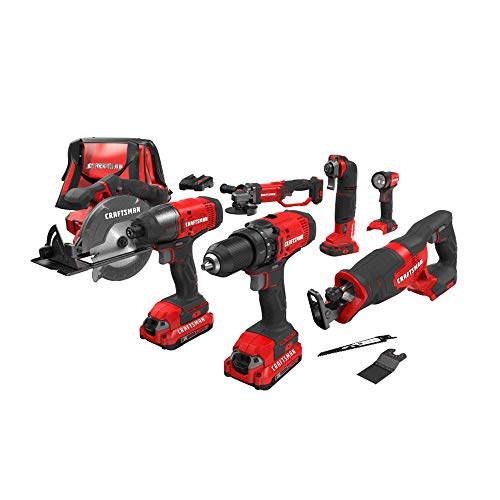
Skip the biggest kit in the store on day one. Those 8-tool and 10-tool mega kits pad the count with an oscillating tool, a work light, and a vacuum you will not use. Buy a drill, an impact driver, batteries, then add tools as specific jobs demand them.
Skip Ryobi ONE+ for production carpentry, not for everything. It is a genuinely good homeowner and punch-list platform with an accessory range nobody matches. It is not built for a framing crew’s Monday through Friday, and pretending otherwise leads to downtime.
How to actually commit to a platform
Work backward from your three most-used tools, not from a kit price. If a cordless miter saw and a framing nailer are in that list, DeWalt’s saw and FlexVolt lineup answers it. If it is an impact driver and tight-quarters drilling, Milwaukee’s M18 and M12 pairing answers it. If it is a track saw and a finish sander, Makita answers it.
Then check three practical things before you spend: whether the brand’s batteries are stocked within a reasonable drive of your usual jobsites, whether there is a service center or an authorized repair path in your metro area, and whether the specialty tool you will want in two years exists on that platform today. Warranty length matters less than warranty logistics. A three-year warranty you can walk into a store and use beats a five-year warranty that requires shipping a saw across the country.
FAQ
Is there one best power tool brand for carpenters, or does it depend on the work? For general carpentry, Milwaukee and DeWalt are the two defensible answers, and the gap between them is narrower than brand loyalists claim. For finish and cabinet work specifically, Makita’s cut and sanding tools change the calculus. Pick based on your three most-used tools, then stay put.
Can I mix DeWalt, Milwaukee, and Makita tools? Technically yes, and plenty of carpenters do it accidentally over the years. Do not plan for it. Every extra platform means more chargers, more dead packs to sort out on a Monday morning, and more money tied up in batteries that only fit two tools.
Are the cheap Amazon cordless brands ever worth it? For a tool you will use a handful of times a year, sometimes. For carpentry income, no. The failure point is not the motor, it is batteries and parts availability two or three years out, plus the absence of any real service path when something breaks mid-job.
18V and 20V cordless carpentry tool kits
Before you commit, compare current kit contents side by side rather than trusting last year’s advice. Kit lineups rotate constantly, and the same model name can ship with very different batteries depending on the bundle. Confirm the battery amp-hours in the box, not just the tool list.
Choose the platform your daily three tools point to, buy batteries early and generously, and let the rest of the kit grow one job at a time. That approach beats brand allegiance every time.
Check prices on Amazon →