What's inside
As an Amazon Associate I earn from qualifying purchases. This post may contain affiliate links at no extra cost to you.
The short answer
For compact DeWalt 20V Max tools, PowerStack batteries make the most sense when you want the smallest pack that still delivers strong bursts of power. They are particularly useful in impact drivers, drill/drivers, compact saws, oscillating tools, and lights where a bulky battery gets in the way.
Standard XR batteries are usually the better value if you already own several, need longer runtime per charge, or use tools that do not draw heavily under load. The cheapest practical choice is often to keep XR packs for general work and buy one PowerStack for compact tools that feel unbalanced or bog down with a conventional pack.
As an Amazon Associate we earn from qualifying purchases at no extra cost to you.
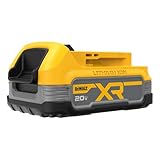


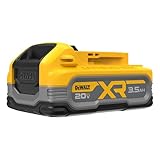
PowerStack is not a separate voltage platform. It uses the same DeWalt 20V Max tools and chargers as the company’s XR batteries. The important difference is the cell design: PowerStack uses flat pouch cells, while conventional XR packs use cylindrical cells. That construction changes size, weight, current delivery, and price.
What changes in everyday use
The biggest advantage of PowerStack is not simply longer runtime. It is the combination of a short package and strong current delivery. On a compact impact driver, the battery does not stick down as far, so the tool is easier to maneuver in a cabinet, between studs, or overhead. The lower weight also reduces wrist fatigue during repetitive fastening.
A PowerStack pack can also hold voltage better during short, demanding bursts. You may notice this when driving long structural screws, drilling large holes, or cutting dense material. The motor is less likely to sound strained, and the tool may maintain speed more effectively as the battery is loaded.
That benefit has limits. A PowerStack battery does not turn a compact tool into a high-torque grinder or a full-size saw. Tool electronics, gearing, and motor size still set the ceiling. It also does not eliminate heat. Repeated heavy cuts can still trigger the tool or battery’s thermal protection.
PowerStack versus XR at a glance
| Factor | PowerStack | Standard XR |
|---|---|---|
| Cell construction | Flat pouch cells | Usually cylindrical lithium-ion cells |
| Best advantage | Compact size, low weight, strong bursts of current | Lower cost and broad availability |
| Best tool matches | Impact drivers, compact drills, oscillating tools, compact saws | General drills, lights, fans, radios, and moderate-duty tools |
| Runtime | Depends on capacity; smaller packs finish sooner under sustained load | Higher-capacity packs generally run longer |
| Handling | Shorter and lighter in compact formats | Can be taller, longer, or heavier |
| Cost per watt-hour | Usually higher | Usually lower, especially on sale |
Choosing the right capacity
Capacity is measured in amp-hours, but it is easiest to think of it as a runtime budget. A 1.7Ah PowerStack pack is excellent for a compact impact driver or drill because it keeps the tool light. It may be enough for dozens of small fastening jobs or a short installation task, but it can be depleted quickly when driving long screws continuously.
A larger PowerStack pack gives you more working time, but some of the handling advantage disappears. Before buying, check the actual battery dimensions, not just the amp-hour rating. Two packs with similar advertised capacity can feel very different on a tool because of their height, length, and weight distribution.
For sustained work, a larger standard XR pack can be the sensible choice. Drilling many holes with a hole saw, running a fan all day, or making repeated cuts in plywood rewards capacity more than compactness. If the tool sits on the floor or a workbench between uses, the extra size matters less.
If you need a compact replacement or second battery, compare DeWalt 20V PowerStack batteries by both capacity and physical size. Do not assume the highest amp-hour rating is the best match for a small tool.
Where PowerStack is worth paying for
PowerStack earns its premium when battery balance affects the job. An impact driver with a short battery is easier to control one-handed, especially when fastening overhead or reaching into a narrow corner. The same applies to compact drills, where a long battery can catch on framing or force your wrist into an awkward angle.
It is also a reasonable upgrade when an older XR pack causes noticeable voltage sag. Warning signs include a tool slowing sharply during a hard push, the fuel gauge dropping quickly under load, or the battery shutting down even though it appears partly charged. Those symptoms can indicate an aging pack, excessive heat, or simply a battery that is too small for the task.
PowerStack is less compelling for lights, radios, inspection cameras, and light-duty screwdriving. These tools draw relatively little current, so the performance difference is small. A cheaper XR pack will usually run them well and may provide more hours between charges.
When XR is the better buy
Choose standard XR when price matters, you need several batteries, or your tools spend most of their time on moderate loads. A basic drill, reciprocating saw used occasionally, or compact blower can work perfectly well with XR packs. The money saved can buy an additional battery, which often matters more than a modest gain in peak performance.
Existing batteries are another strong reason to stay with XR. Since both battery families fit the same 20V Max tools and chargers, there is no need to replace a healthy XR collection. Use the packs you own until they lose useful capacity, then add PowerStack selectively for the tools where size and balance make a real difference.
For a general-purpose replacement, compare DeWalt 20V Max XR battery packs with current PowerStack pricing. Promotions can narrow the gap, but standard XR batteries are often the better dollar-per-watt-hour purchase.
Charging, heat, and battery life
Use a DeWalt charger intended for 20V Max lithium-ion batteries, and let a hot pack cool before charging it. A battery that is warm after heavy cutting is not automatically defective. Repeatedly charging it while hot, storing it in a hot vehicle, or leaving it fully discharged for long periods can shorten its useful life.
Keep contacts clean and stop using a pack with a cracked housing, swelling, damaged terminals, or an intermittent connection. Do not open the battery to replace cells. Pouch-cell packs in particular require proper protection circuitry and controlled assembly; a damaged or modified lithium-ion pack can create a fire hazard.
A practical buying decision
Buy PowerStack first if your priority is the lightest, shortest setup for compact tools and you regularly work in confined spaces. Buy XR if you want the lowest cost, maximum runtime per dollar, or batteries for low-drain tools. For many DeWalt owners, the most useful setup is mixed: one small PowerStack for drills and impact drivers, plus larger XR packs for sustained cutting, lighting, and general backup duty.
Related guides
- Longest Lasting Lawn Mower Battery: AGM vs Lithium vs Flooded Lifespan and Cost per Season
- Duralast Gold Lawn Mower Battery Review: U1 Fit, CCA and When to Pay for AGM
- Greenworks Pro 80V 21-Inch Mower Review: Runtime Math, Push vs Self-Propelled and Yard Fit
- Bosch High Pressure Washer Gun Replacement: Fittings, Adapters and What Fits Your Model