What's inside
As an Amazon Associate I earn from qualifying purchases. This post may contain affiliate links at no extra cost to you.
Choosing a cordless sprayer
For deck and fence treatment, a cordless sprayer is mainly a way to cover a lot of surface without repeatedly pumping by hand. The right choice depends less on advertised pressure than on the product you plan to spray: thin water-based stain is easier to handle than a thick, pigment-heavy coating, and some stains should be brushed or rolled rather than sprayed at all. Check the treatment label for application methods, thinning instructions, and required tip type before buying.
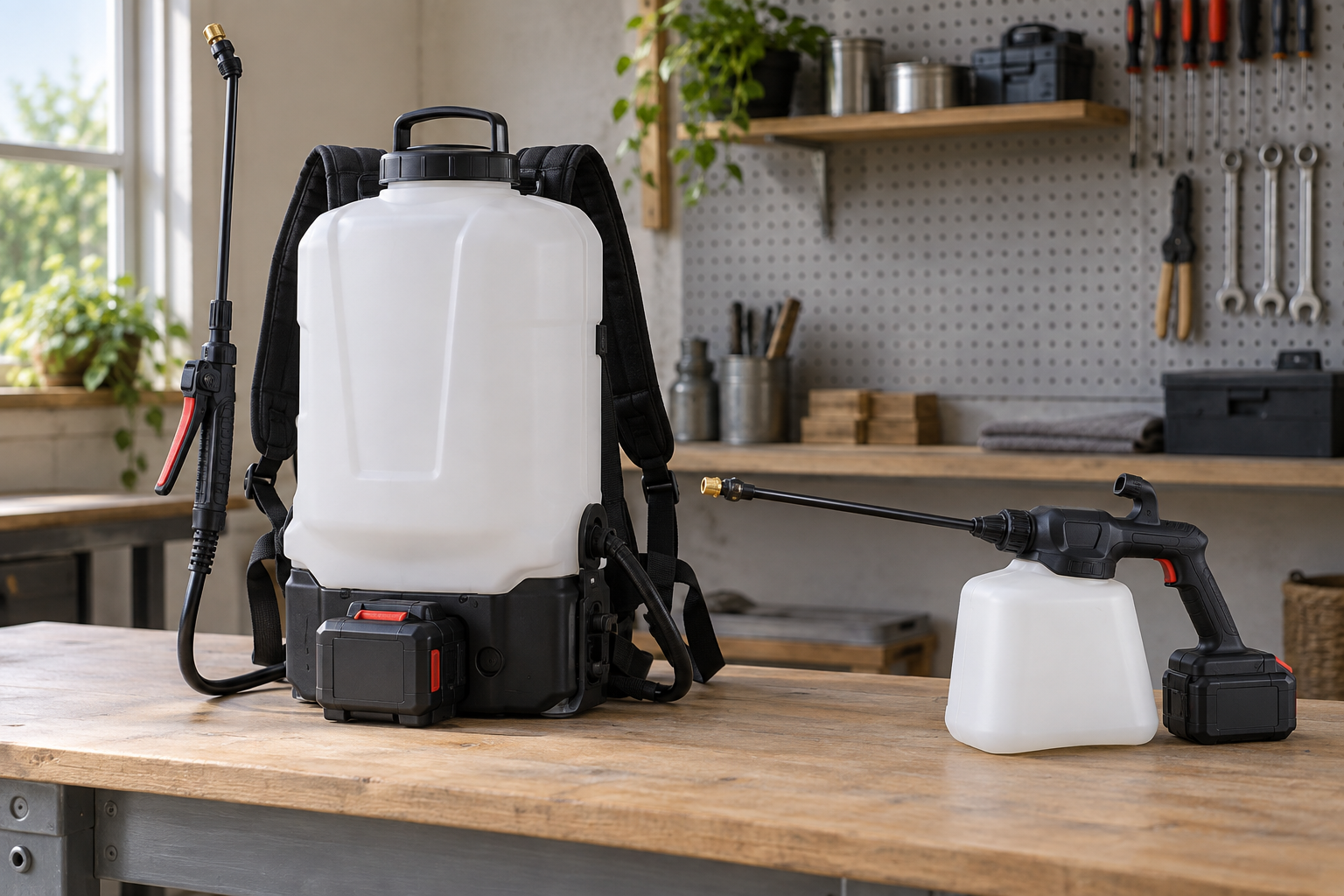
For occasional work, a battery-powered handheld sprayer can be enough. For a large fence, an existing battery platform and a backpack tank may save time and reduce trips for refills. If you already own batteries from one cordless tool brand, a sprayer that uses them can be a sensible fit—but compare the cost of the bare tool against a complete kit, and check that your batteries are approved for that sprayer.
As an Amazon Associate we earn from qualifying purchases at no extra cost to you.


Handheld, backpack, or tool-platform sprayer?
| Type | Best for | Trade-offs |
|---|---|---|
| Handheld battery sprayer | Small decks, gates, touch-ups, and occasional use | Easy to carry and store, but a small tank means more refills. Some models use built-in batteries rather than a replaceable tool battery. |
| Battery backpack sprayer | Long fence runs and larger treatment jobs | Holds more liquid and keeps the weight off one hand. A full tank can be heavy, and the unit needs careful cleaning after use. |
| Cordless tool-platform sprayer | People who already own compatible batteries and chargers | Can avoid buying another battery system. Bare-tool pricing may look attractive, but batteries, charger, and tank may be sold separately. |
| Manual pump sprayer | Small jobs or a tight budget | Often the cheapest option and perfectly workable for occasional use, but pressure drops as you spray and requires pumping. |
A cordless tool-platform sprayer is not automatically better than a dedicated backpack unit. Platform models can make battery ownership simpler, but the sprayer’s tank size, seals, hose, nozzle, and chemical compatibility matter more to the finish. Look for a product specifically rated for the wood treatment you intend to use; a sprayer intended only for garden water or dilute chemicals may not tolerate stain.
What to check before buying
Tank capacity: A 1-gallon tank weighs about 8 pounds when filled with water, before adding the sprayer itself. A 2-gallon tank is more efficient on a long fence but can be tiring to carry. Think about whether you can set the sprayer down safely while working, and how far it is from the refill point.
Flow and tip: A controllable, consistent spray is more useful than a high pressure figure. Check whether the sprayer includes interchangeable tips and whether replacement tips are easy to find. Fan-shaped patterns can cover boards quickly, but overspray is easier to control with a narrower pattern in a tight yard. Test the pattern on scrap wood or cardboard first.
Battery and runtime: Runtime varies with the tool, battery, material, and trigger use, so treat manufacturer estimates as rough guidance. A spare compatible battery helps on a long job, but a larger battery also adds weight to a handheld tool. If buying into a cordless platform for the first time, compare the price of a battery-and-charger kit with the sprayer bundle rather than assuming the battery is included.
Cleaning and seals: The biggest failure mode is letting stain dry in the pickup tube, filter, or nozzle. Confirm that the sprayer can be flushed and disassembled as directed, and that its seals are compatible with the treatment. Do not leave material in the tank overnight unless the manufacturer and treatment label specifically allow it.
Buy by job size
For a small deck or a few fence panels, a cordless handheld sprayer rated for wood stain keeps setup simple. This is the category to consider when the job is occasional and you value easy storage more than continuous coverage. A basic manual pump sprayer is also a reasonable cheaper choice for a modest area, provided the treatment label permits spraying and you accept slower work.
For a longer fence, compare battery backpack sprayers with chemical-compatible seals. The larger tank cuts refill stops, but check the filled weight and whether the harness is adjustable. If you already own batteries in a supported tool ecosystem, a bare-tool cordless sprayer for your battery platform may be the better value. Verify compatibility by exact battery series and voltage; batteries from the same brand are not always interchangeable across every tool.
How to spray without making a mess
Choose a calm, dry day, and avoid spraying in direct, hot sun if the label warns against it. Wind carries fine droplets onto siding, plants, cars, and neighboring property. Cover nearby surfaces and plants, but do not let plastic touch freshly treated wood. Wear the protective equipment specified on the product label, including eye protection and suitable gloves; spraying can create airborne droplets even outdoors.
Clean the wood and let it dry to the moisture condition required by the treatment. Mask or protect areas that should remain untreated. Stir the product thoroughly, then test the sprayer on scrap or an inconspicuous spot. Keep the nozzle at a consistent distance—often around 8 to 12 inches, unless the sprayer instructions specify otherwise—and move steadily along the board. Follow the label’s coverage rate and avoid applying a heavy wet layer that runs or pools.
Spraying can put treatment on quickly, but it does not guarantee even absorption. Back-brushing with a brush helps work the product into grain, edges, and gaps, and catches drips before they dry. On a fence, treat a manageable section at a time so you can check both sides and correct misses. A worn nozzle, clogged filter, low battery, or thick material can produce sputtering and stripes; stop, depressurize as instructed, and clean or adjust the sprayer instead of continuing with a poor pattern.
Clean up and storage
Flush the system immediately using the cleaning method specified for the treatment—water for many water-based products, or the labeled solvent for other finishes. Never assume water is enough. Clean the nozzle, filter, pickup tube, and tank, then let parts dry before storage. Remove the battery before cleaning and keep liquid away from battery contacts and the charger. If the sprayer’s seals swell, leak, or become sticky, stop using it and check the manufacturer’s service guidance.
For one small project, a manual sprayer may be the better purchase. For repeated deck and fence work, prioritize chemical compatibility, easy cleaning, and a useful tank size over a high pressure claim. A sprayer that delivers a steady pattern and can be cleaned completely is more valuable than extra capacity you rarely need.
Related guides
- Longest Lasting Lawn Mower Battery: AGM vs Lithium vs Flooded Lifespan and Cost per Season
- Duralast Gold Lawn Mower Battery Review: U1 Fit, CCA and When to Pay for AGM
- Greenworks Pro 80V 21-Inch Mower Review: Runtime Math, Push vs Self-Propelled and Yard Fit
- Bosch High Pressure Washer Gun Replacement: Fittings, Adapters and What Fits Your Model