What's inside
As an Amazon Associate I earn from qualifying purchases. This post may contain affiliate links at no extra cost to you.
Precision assembly exposes the weaknesses of a cordless platform quickly. A driver that feels powerful in construction work may be too fast, too heavy, or too inconsistent for hinges, cabinet hardware, electronics enclosures, and production fixtures. The right choice is not the battery with the highest voltage. It is a complete system that gives you controllable speed, repeatable clutch performance, manageable weight, and batteries that fit the way you work.
Start With the Fasteners and Materials
List the jobs you actually do before comparing brands. Small screws in softwood, plywood, sheet metal, plastic, and hardwood each place different demands on a tool. A 3.6- or 4-volt precision screwdriver can be excellent for cabinet pulls, electrical terminals, and small machine screws, but it may stall on a long wood screw. An 18- or 20-volt drill/driver handles a wider range, but its larger motor and battery can make delicate work tiring.
For most general assembly, look for a drill/driver with a low-speed range around 0 to 400 or 500 rpm and a high range reaching roughly 1,500 to 2,000 rpm. Low speed gives the clutch time to react and reduces stripped heads. High speed is useful for drilling pilot holes. If your work regularly involves small screws below about 1/4 inch in diameter, a compact tool with a narrow grip is usually easier to control than a full-size hammer drill.
Prioritize Control Over Maximum Torque
Manufacturers often advertise peak torque, but that number is a poor guide to assembly quality. More torque can mean more broken screws, crushed plastic bosses, and pulled threads. For precision work, useful controls include a mechanical clutch with many settings, a variable-speed trigger, a lockable forward/reverse selector, and a genuine low-speed mode.
Test the trigger with the tool unloaded. It should start smoothly without a sudden jump. A trigger that goes from stopped to fast with a tiny movement is difficult to use on small screws. The clutch should also release consistently. Some inexpensive drivers have a wide difference between adjacent settings: one setting slips too early while the next drives the screw deep into the material.
For repetitive work, consider a cordless electric screwdriver with an adjustable clutch. These tools are not replacements for a drill/driver, but they reduce overdriving when the fastener size and material stay consistent.
Choose Battery Voltage by Tool Size
Battery voltage mainly predicts the size and capability of the platform, not precision. Compact 12-volt systems are often the sweet spot for assembly. Their tools are lighter, and a 2.0Ah battery commonly weighs less than 1 pound. That matters when you are holding a driver at shoulder height or making hundreds of fasteners in a day.
18- and 20-volt systems make more sense if the same batteries will run circular saws, oscillating tools, recip saws, or larger impact drivers. They provide more headroom for drilling and heavy fastening, but even a compact battery can make a small driver feel top-heavy. The nominal difference between “18V” and “20V max” platforms is usually marketing terminology: both commonly operate around 18 volts under load.
| Platform type | Best use | Main advantage | Main compromise |
|---|---|---|---|
| 3.6–4V precision driver | Small screws, electronics, light hardware | Very light and easy to control | Limited torque, speed, and tool selection |
| 12V compact | Cabinetry, furniture, general assembly | Good balance of control and capability | Less suitable for heavy cutting or drilling |
| 18–20V compact | Assembly plus remodeling and construction | Broadest tool selection and higher output | Heavier batteries and larger tools |
| 18–20V high-capacity | Long production runs and demanding tools | Long runtime and strong sustained power | Bulky, expensive, and excessive for small fasteners |
Evaluate Runtime and Charging
Amp-hours indicate stored capacity, not guaranteed working time. A 2.0Ah battery may drive several hundred small screws, but hard material, large fasteners, cold temperatures, and drilling can reduce that figure sharply. For precision assembly, two small batteries are often better than one large pack. One can charge while the other is in use, and the tool remains balanced.
Check charger behavior before buying into a platform. A basic charger may take 60 minutes or more to refill a compact pack. A rapid charger can cut that substantially, but it may cost more and create additional heat. Heat is a failure mode: charging a hot battery immediately after heavy use can shorten its life. Let the pack cool, keep vents clear, and remove it from the charger if the manufacturer does not specify continuous storage charging.
If you already own tools, buying a bare tool is economical only when the battery and charger are compatible. Battery platforms are not interchangeable merely because they share a voltage rating. The physical rails, electronics, and low-voltage protection differ between brands and sometimes between product families.
Look at the Ecosystem, Not Just the Driver
Choose a platform based on the next three tools you are likely to buy. A system with a compact driver, light, inspection tool, and small vacuum may serve assembly work better than a brand known mainly for large saws. Also check whether the manufacturer offers narrow batteries, right-angle tools, impact drivers with low-speed modes, and replacement chargers.
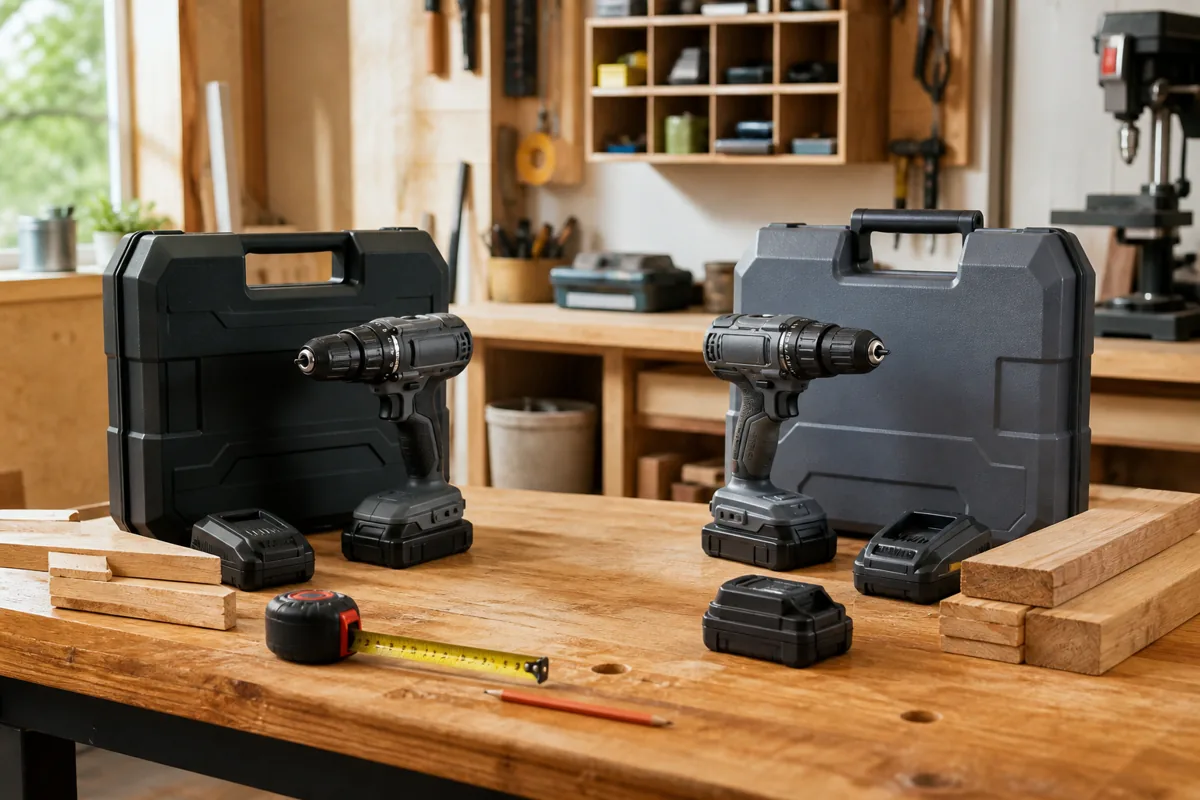
A broad 12V cordless drill driver kit is often the cheaper sensible choice for furniture and cabinet assembly. You do not need a premium 18-volt ecosystem if the only other tool you expect to buy is a light. Conversely, starting with a larger platform is cheaper over time if you will soon add a saw, grinder, or rotary hammer.
Know When an Impact Driver Is Wrong
An impact driver is compact and powerful, but its hammering action can transmit vibration into delicate work and make torque less predictable. It is useful for long screws and stubborn fasteners, not as the default tool for hinges, slides, or plastic components. If you buy one, use a low-impact setting when available and keep the clutch-like control expectations realistic; many impact drivers do not have a mechanical clutch.
For repeatable results, set the clutch on scrap material first. Drive five test screws, measure the head depth, and adjust until the fastener seats without crushing the surface. Replace worn bits promptly. A rounded bit creates cam-out, which causes more damage than a modestly underpowered tool.
Buy for Service and Replacement Cost
Compare the price of a replacement battery, charger, and bare tool—not just the first kit. Batteries commonly become the first expensive failure after several years, especially when stored fully discharged or exposed to heat. A platform with readily available packs and chargers is safer than one with a bargain kit but uncertain long-term support.
For a second battery, a compact 2.0Ah cordless tool battery usually provides the best balance for precision assembly. Move to 4.0Ah or larger only when runtime matters more than balance. The cheapest platform is fine when your fasteners are small, the work is occasional, and replacement packs are easy to find. Spend more when the tool will run daily, downtime costs money, or the ecosystem must support demanding tools later.
Related guides
- Longest Lasting Lawn Mower Battery: AGM vs Lithium vs Flooded Lifespan and Cost per Season
- Duralast Gold Lawn Mower Battery Review: U1 Fit, CCA and When to Pay for AGM
- Greenworks Pro 80V 21-Inch Mower Review: Runtime Math, Push vs Self-Propelled and Yard Fit
- Bosch High Pressure Washer Gun Replacement: Fittings, Adapters and What Fits Your Model