What's inside
As an Amazon Associate I earn from qualifying purchases. This post may contain affiliate links at no extra cost to you.
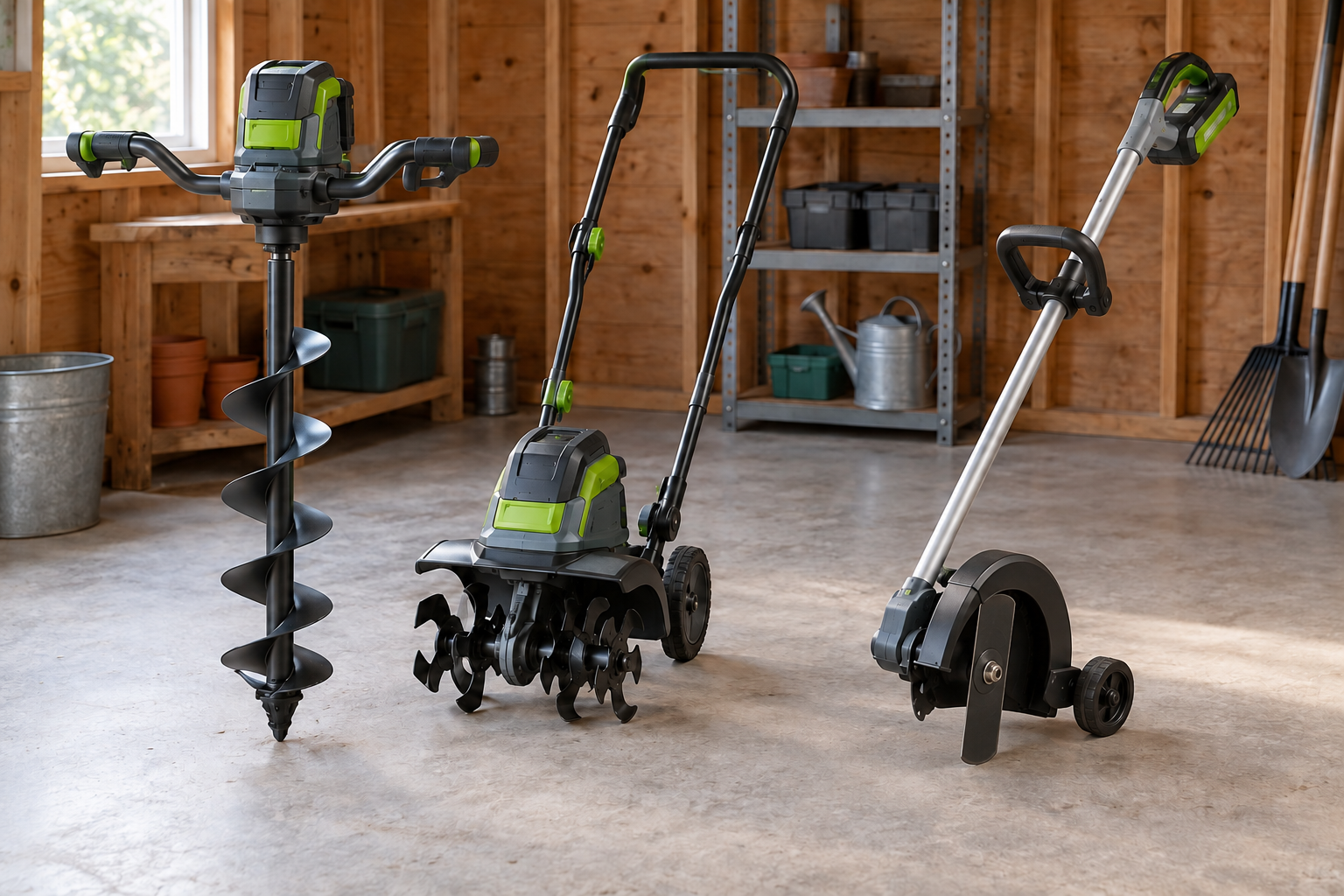
Cordless earth augers make sense for planting batches of bulbs, annuals, or small perennials in soil that a handheld drill can handle. They are not a shortcut for every hole: rocks, thick roots, and hard, dry clay can stop an auger abruptly, twist your wrists, or damage the tool. For a few shallow holes, a drill-mounted bit is usually cheaper and easier to store. For repeated holes, a dedicated auger offers a better grip and a battery system built for heavier work.
As an Amazon Associate we earn from qualifying purchases at no extra cost to you.



Choose the right tool for the job
First check the hole size and depth your plants need. A 2- to 3-inch bit is useful for bulbs and small plugs; larger nursery plants may need a 4- to 6-inch hole, depending on the root ball. Match the hole to the plant rather than buying the biggest bit available. A wide bit removes more soil and puts more load on the motor, battery, and operator.
For a handful of holes in already-loose garden beds, consider a drill-mounted earth auger bit. Use it only with a drill that has a side handle, a clutch, and enough capacity for the bit. A compact drill without a side handle is a poor match: if the bit catches, the drill can rotate suddenly. Don’t use a standard drill-mounted auger to bore deep holes in packed or rocky ground.
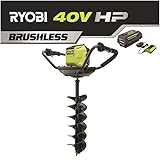
For dozens of shallow holes, a purpose-built cordless earth auger is easier to control. Its two-hand grip and dedicated gearing are better suited to repeated digging. These tools are still not mini-post-hole diggers; check the manufacturer’s limits for bit diameter, soil conditions, and duty cycle before buying.
What to compare before buying
| Option | Best for | Main trade-off | Check before purchase |
|---|---|---|---|
| Drill-mounted bit | A few shallow holes in soft, prepared soil | Less control and more strain on the drill | Side handle, chuck capacity, bit shank, and drill instructions |
| Dedicated cordless auger | Repeated planting holes and compatible auger bits | Higher cost, bulk, and battery use | Supported bit sizes, reverse function, handle design, and battery platform |
| Manual bulb planter or post-hole tool | A small number of holes or ground unsuitable for an auger | More physical effort per hole | Soil moisture, required hole depth, and your comfort with hand digging |
Battery compatibility can matter more than a small difference in advertised power. If you already own cordless tools, compare augers that use your existing battery platform. A bare tool can cost less, but only if you have the right battery and charger. If you need both, price the full kit against a dedicated garden tool. A higher-voltage label alone does not guarantee faster digging; gearing, bit design, soil, and battery condition all affect performance.
Look for a secure two-hand grip, a useful reverse function, and clear guidance on which bits are approved. Reverse can help back a stuck bit out, but it does not make it safe to keep drilling into an obstruction. A torque-limiting feature or a well-designed clutch may reduce the shock of a catch, but read the manual: features vary, and they cannot prevent every sudden bind.
Soil and battery limits
Soil condition determines how well any cordless auger works. Moist, crumbly garden soil is usually easier than bone-dry clay. A bit can also stall in wet clay that clings to its flights. Gravel, buried roots, and small rocks can jam the cutting head without warning. If you hear the motor laboring or the bit stops advancing, release the trigger and clear the hole rather than repeatedly forcing it.
There is no reliable universal count of holes per charge. A shallow hole in loose loam takes far less energy than a deep hole in dense soil, and a larger bit increases the load. If you have a large batch to plant, bring a fully charged spare battery and let hot batteries cool before charging, following the battery maker’s guidance. Cold weather and older batteries can also reduce useful runtime.
Inspect the site before digging. Check for buried irrigation lines, cables, and pipes, and avoid drilling where their location is uncertain. Clear visible stones and roots from the planting area. For hard, dry ground, watering the bed ahead of time may help, but do not turn a planting job into a muddy hole that collapses around the bit.
Use an auger without fighting it
Wear eye protection and sturdy footwear. Keep both hands on the tool, stand with a stable stance, and keep other people clear of the rotating bit. Start slowly and keep the bit as vertical as practical. Lift it periodically to clear soil from the flights; forcing a packed bit deeper can make it harder to extract. Stop if the tool catches, shifts, or becomes difficult to control. Don’t brace the handle against your body or try to hold a jammed bit in place with one hand.
For planting, depth matters as much as diameter. Measure the root ball or check the plant’s instructions, then mark the target depth on the bit if the manufacturer permits it. Keep a hand trowel nearby for trimming the hole and breaking up smooth, compacted sides. Augers can leave a slick-sided hole in some soils, which may impede drainage or root growth; roughen those sides before planting.
Which type is worth buying?
Buy a drill-mounted bit if you already have a capable drill, need only a few holes, and work in soft, prepared soil. It is the economical choice, but it is not worth risking a small drill or your wrists on a wide bit in tough ground. A cordless garden auger kit is more sensible when you plant regularly, need a dedicated two-hand tool, and can use its battery platform for other cordless tools. For a one-time job in rocky ground or a small number of holes, a manual tool may be safer and less expensive than either powered option.
FAQ
Which type is worth buying?
Related guides
- Longest Lasting Lawn Mower Battery: AGM vs Lithium vs Flooded Lifespan and Cost per Season
- Duralast Gold Lawn Mower Battery Review: U1 Fit, CCA and When to Pay for AGM
- Greenworks Pro 80V 21-Inch Mower Review: Runtime Math, Push vs Self-Propelled and Yard Fit
- Bosch High Pressure Washer Gun Replacement: Fittings, Adapters and What Fits Your Model