What's inside
As an Amazon Associate I earn from qualifying purchases. This post may contain affiliate links at no extra cost to you.
Ryobi ONE+ and Craftsman V20 are both sensible battery platforms for a home workshop, but they are not equally deep ecosystems. Ryobi has been building around its 18-volt ONE+ battery for decades and offers a much wider selection of tools. Craftsman V20 is often cheaper at the starter-kit stage and covers the common DIY jobs, but its long-term expansion choices are more limited.
The important point is that you are not just choosing a drill. You are choosing batteries, chargers, replacement costs, and the tools you may buy over the next five to ten years. Batteries are generally not interchangeable between the brands, even though the systems have similar nominal voltage.
Platform basics: 18V versus 20V Max
Ryobi ONE+ batteries are sold as 18-volt packs. Craftsman V20 batteries are marketed as 20V Max, but the underlying lithium-ion pack is typically about 18 volts under normal operating conditions. The label difference does not mean Craftsman tools are automatically more powerful.
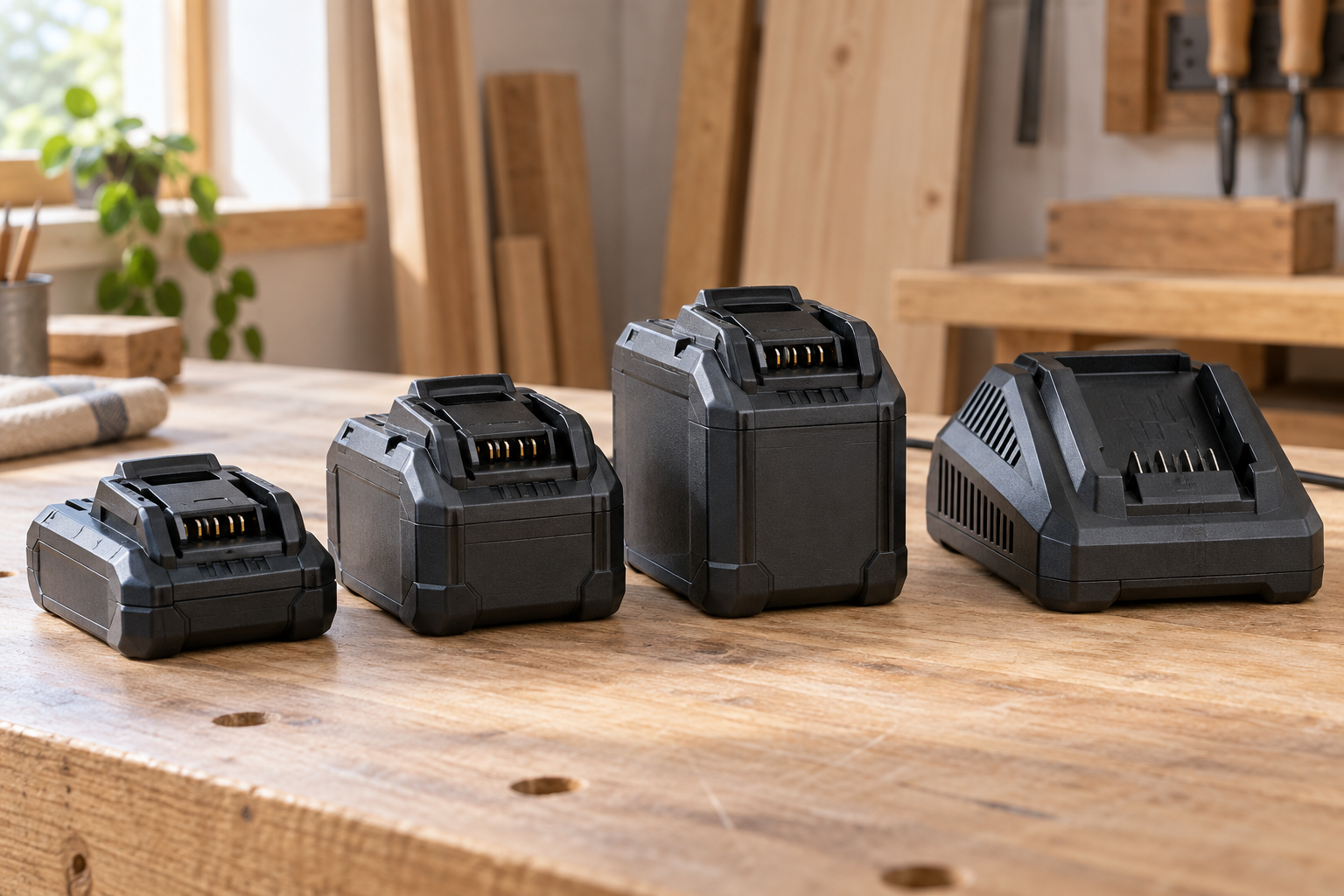
For either platform, amp-hours (Ah) are a rough measure of stored energy. A 2.0Ah pack is lighter and usually charges faster than a 4.0Ah pack, while a 6.0Ah pack can run longer but adds weight. A drill used intermittently may feel fine with a 2.0Ah battery; a circular saw, blower, or shop vacuum benefits from 4.0Ah or more.
Do not judge runtime from Ah alone. Tool efficiency, cutting resistance, battery age, temperature, and the pack’s maximum discharge capability all matter. A battery that runs a compact drill for many small holes may drain quickly in a saw cutting wet lumber.
Ryobi ONE+ versus Craftsman V20
| Factor | Ryobi ONE+ | Craftsman V20 |
|---|---|---|
| Battery format | 18V lithium-ion; broad range of capacities | 20V Max lithium-ion; broad enough for routine DIY |
| Tool selection | Much larger range, including workshop, yard, automotive, and specialty tools | Good coverage of common home and light-duty workshop tools |
| Best advantage | Long-term platform depth and easier expansion | Low-cost kits and straightforward basic tool coverage |
| Typical weakness | Some inexpensive tools use basic construction and may need realistic expectations | Fewer specialty and high-demand options; platform availability can be less consistent |
| Good fit | Homeowners who expect to add several cordless tools | Occasional DIY users who need a drill, impact driver, and a few common tools |
Ryobi’s main advantage is breadth. Beyond drills and saws, ONE+ includes tools such as inflators, glue guns, soldering tools, fans, lights, sanders, ratchets, and many lawn and garden products. That breadth reduces the temptation to buy separate batteries from several brands.
Craftsman V20 covers the essentials: drills, impact drivers, circular saws, reciprocating saws, oscillating tools, sanders, lights, and selected outdoor equipment. That is enough for shelving, trim work, furniture repairs, deck maintenance, and occasional demolition. It becomes less attractive if you want unusual tools or several cordless yard machines.
Performance, runtime, and failure modes
For drilling pilot holes, driving cabinet screws, and assembling furniture, either platform can do the job. Brushless versions usually offer better efficiency, cooler operation, and longer service life than brushed models, but they cost more. For a homeowner who uses a drill a few times per month, a brushed kit can be perfectly adequate if the price is substantially lower.
High-load tools reveal more difference. A circular saw can empty a small 2.0Ah battery after a relatively modest amount of sheet-goods or lumber cutting, especially with a dull blade. Expect better results from a 4.0Ah or larger pack. An impact driver can also overheat or trigger its battery protection when repeatedly driving long structural screws.
Common battery failures include reduced runtime after several years, packs that will not accept a charge, and terminals damaged by dust or impact. Store lithium-ion batteries indoors, avoid leaving them in a hot vehicle, and do not keep using a pack that is swollen, cracked, or unusually hot. A charger refusing a deeply discharged pack is not necessarily defective; the battery’s protection circuit may have shut it down.
Starter kits and long-term cost
Craftsman often makes a strong price argument when a kit includes a drill, impact driver, two batteries, and a charger. If you only need those tools for occasional repairs, the cheaper option is fine. The practical savings can be greater than buying two bare tools from a premium platform.
Ryobi becomes more compelling when you will buy four or more cordless tools. A single additional battery and charger can serve the entire collection, and bare-tool prices are often reasonable. Before buying, check whether the kit includes the battery capacity you actually need. A low-priced kit with two small batteries may be a poor deal if your next purchase is a saw that requires larger packs.
For a first purchase, compare the complete package: tool count, battery Ah, charger speed, warranty terms, and the price of a replacement battery. A kit with one 4.0Ah battery may be more useful than one with two 1.5Ah packs for workshop work.
If you are building a basic setup, compare current Ryobi ONE+ drill and impact driver kits with equivalent Craftsman packages rather than comparing tool-only prices. For either brand, an cordless oscillating multi-tool is one of the most useful next additions for repairs and remodeling.
Which platform fits your workshop?
Choose Ryobi ONE+ if you expect to add tools gradually, want cordless lawn equipment on the same batteries, or need specialty tools later. It is also the safer choice when you do not yet know exactly what your workshop will require.
Choose Craftsman V20 if the current tool selection already covers your needs and the starter kit is meaningfully cheaper. It makes sense for light drilling, fastening, occasional cutting, and routine homeowner maintenance. There is no practical benefit in paying more for a larger ecosystem you will never use.
Whichever system you choose, buy the battery size for the hardest job, not the easiest one. Keep a smaller pack for drills and lights, reserve a larger pack for saws and outdoor tools, and replace a damaged or swollen battery rather than trying to revive it. That approach matters more to day-to-day usability than the voltage printed on the box.
FAQ
Which platform fits your workshop?
Related guides
- Longest Lasting Lawn Mower Battery: AGM vs Lithium vs Flooded Lifespan and Cost per Season
- Duralast Gold Lawn Mower Battery Review: U1 Fit, CCA and When to Pay for AGM
- Greenworks Pro 80V 21-Inch Mower Review: Runtime Math, Push vs Self-Propelled and Yard Fit
- Bosch High Pressure Washer Gun Replacement: Fittings, Adapters and What Fits Your Model