What's inside
As an Amazon Associate I earn from qualifying purchases. This post may contain affiliate links at no extra cost to you.
Bosch 18V and DeWalt 20V MAX batteries are based on the same basic electrical idea: lithium-ion cells arranged to produce about 18 volts nominal. DeWalt calls its platform “20V MAX” because a fully charged pack reaches about 20 volts; Bosch uses the nominal 18-volt rating. In practical use, the voltage labels do not make one platform automatically more powerful.
The more important difference is breadth. DeWalt has one of the largest cordless tool ranges in North America, while Bosch has a strong professional 18V lineup with several excellent compact and specialty tools. The right choice depends less on the battery label and more on whether the tools you will need later are available in the same ecosystem.
As an Amazon Associate we earn from qualifying purchases at no extra cost to you.


Battery and charger basics
Both platforms offer compact batteries around 1.5–2.0Ah, mid-size packs around 4.0–5.0Ah, and larger packs intended for high-draw tools. A 5Ah battery stores roughly 90Wh on an 18V nominal system, although usable energy is lower because of conversion losses, temperature, and the tool’s battery cutoff.
Capacity affects runtime, not just “power.” A 2Ah pack may be ideal on a drill or inspection light, but it will run down quickly in a grinder, circular saw, or reciprocating saw. A 5Ah pack lasts about twice as long under similar conditions, but it also adds noticeable weight. On a drill used overhead, that extra weight can matter more than the added runtime.
Battery generations are not always interchangeable in performance. Older packs may physically fit newer tools but deliver less current or lack electronics used by advanced tools. High-output DeWalt packs and Bosch ProCORE batteries are designed to reduce voltage sag under heavy loads. They can improve saw and grinder performance, but they cost more and are unnecessary for light screwdriving.
How the ecosystems compare
| Category | Bosch 18V | DeWalt 20V MAX |
|---|---|---|
| Drills and impact drivers | Strong selection, including compact professional models | Very broad selection, from basic to high-performance tools |
| Saws and grinders | Good core range, with several compact options | Extensive range covering common and specialty saws and grinders |
| Oscillating tools and sanders | Solid professional coverage | Broad coverage, including more niche cordless versions |
| Outdoor equipment | Available, but generally less comprehensive in the U.S. | Large selection of blowers, trimmers, chainsaws, and other equipment |
| Specialty tools | Strong in concrete, fastening, measuring, and compact jobsite tools | Strong in plumbing, automotive, woodworking, and jobsite specialty tools |
| Cross-brand compatibility | AMPShare expands compatibility with selected professional brands | Primarily a DeWalt-centered ecosystem |
DeWalt is usually the safer choice if you want one battery family to cover construction, woodworking, automotive work, and outdoor maintenance. Its range includes multiple sizes of saws, impact wrenches, nailers, lights, inflators, vacuums, and yard tools. The selection is not identical in every country, so check local availability before committing.
Bosch’s range is smaller, but that does not mean it is thin. Its strengths include compact drills and impact drivers, rotary hammers, grinders, saws, sanders, and jobsite tools. Bosch also has a strong reputation in concrete and fastening equipment. Through the AMPShare system, selected Bosch Professional batteries can work with tools from participating brands, although compatibility is limited to clearly designated products. Do not assume every Bosch 18V battery fits every Bosch-branded tool; the Professional and consumer lines can use different battery systems.
Choosing for common jobs
For general household repairs, either platform is more than enough. A drill, impact driver, compact reciprocating saw, work light, and small vacuum cover most occasional tasks. In this situation, the cheaper option is fine. Battery availability and the price of a two-tool starter kit matter more than small differences in peak torque.
For framing, decking, or remodeling, DeWalt’s broader range makes future expansion easier. You can add a 7-1/4-inch circular saw, compact router, multiple nailers, a fan, and a jobsite radio without changing batteries. Bosch remains a good choice if you prefer its ergonomics or already own Bosch tools, but verify that the exact nailer, saw, or dust-extraction tool you expect to buy is available.
For concrete and masonry, compare the specific rotary hammer rather than the platform name. Battery runtime can fall sharply when drilling large holes. A compact 18V or 20V MAX hammer may handle occasional 1/4-inch anchor holes, but repeated larger holes can overheat the tool and consume a 5Ah battery quickly. For heavy drilling or demolition, corded equipment or a larger cordless hammer may be the better financial choice.
For yard work, DeWalt generally offers more choices in the 20V MAX line, while Bosch’s outdoor selection is more dependent on region. High-draw equipment such as chainsaws and blowers benefits from larger batteries, but those packs are expensive. If you only trim a small yard twice a month, buying a separate corded or gasoline tool can cost less than building a large battery collection.
The real cost of switching platforms
Starter kits can make either brand look inexpensive, but the batteries and chargers are the long-term cost. A bare tool may be cheaper than a kit, yet adding two batteries and a charger later can erase the savings. Before buying, price a complete setup: one compact battery, one 4Ah or 5Ah battery, a charger, and the next two tools on your list.
Chargers also vary. Basic chargers are adequate for overnight use, while rapid chargers reduce downtime but may generate more heat and cost more. Keep lithium-ion batteries away from freezing temperatures, direct sun, and damp storage. A pack that becomes unusually hot, swells, smells strange, or loses capacity suddenly should be removed from service rather than forced back into a charger.
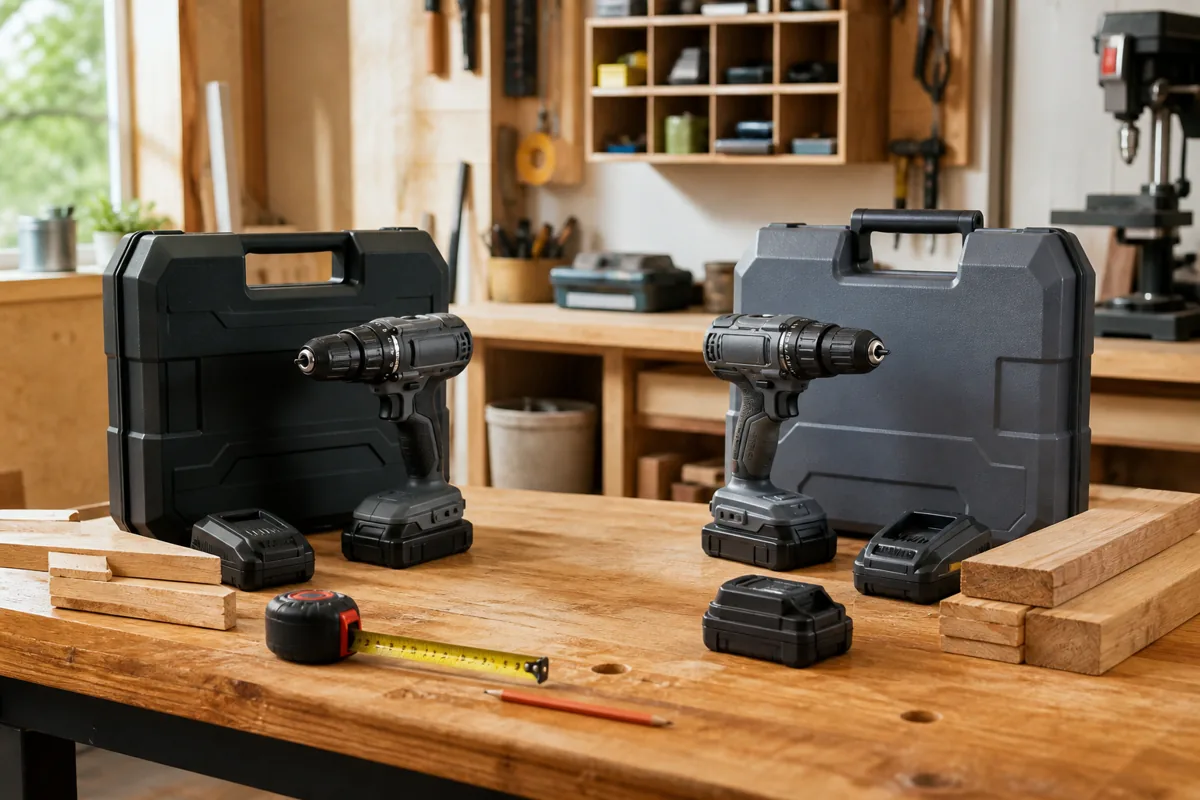
Start with Bosch 18V cordless tool kits or DeWalt 20V MAX cordless tool kits only after checking the included battery sizes. Two small batteries may look attractive but can be frustrating with saws and grinders.
Which platform makes more sense?
Choose DeWalt 20V MAX if maximum tool variety, outdoor equipment, and easy expansion are your priorities. It is particularly practical for contractors or homeowners who expect to add tools over several years.
Choose Bosch 18V if you value compact professional tools, Bosch ergonomics, concrete-focused equipment, or access to selected AMPShare partners. It is also a sensible buy when local sales make Bosch batteries and kits substantially cheaper.
The best test is simple: list the five tools you are most likely to buy next, then check battery compatibility, bare-tool prices, and local stock. If both platforms cover that list, buy the one with the better grip, balance, warranty support, and current kit price. If one platform covers twice as many likely future purchases, its higher initial price may prevent an expensive battery-system switch later.
FAQ
Which platform makes more sense?
Related guides
- Longest Lasting Lawn Mower Battery: AGM vs Lithium vs Flooded Lifespan and Cost per Season
- Duralast Gold Lawn Mower Battery Review: U1 Fit, CCA and When to Pay for AGM
- Greenworks Pro 80V 21-Inch Mower Review: Runtime Math, Push vs Self-Propelled and Yard Fit
- Bosch High Pressure Washer Gun Replacement: Fittings, Adapters and What Fits Your Model