What's inside
As an Amazon Associate I earn from qualifying purchases. This post may contain affiliate links at no extra cost to you.
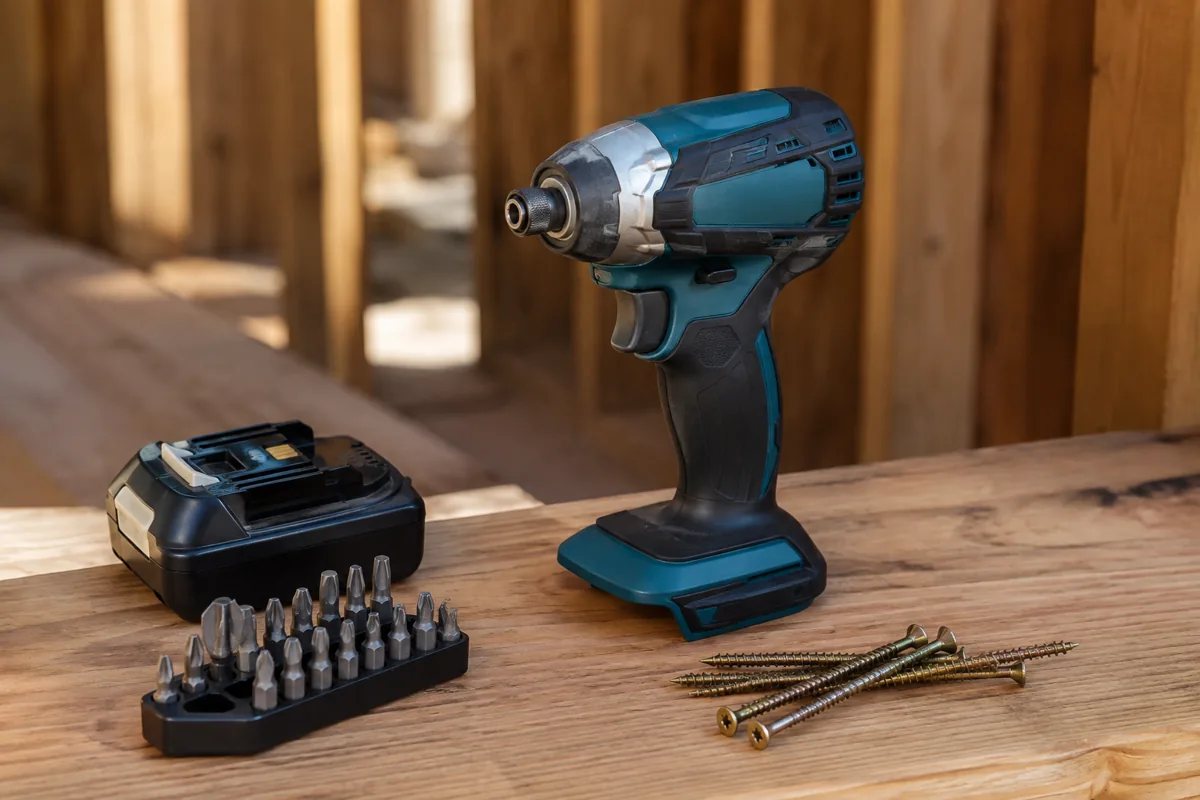
Compact and full-size cordless impact drivers use the same basic mechanism: a motor spins a bit holder, then an internal hammer-and-anvil mechanism delivers short bursts of torque. The difference is not simply “small versus powerful.” Size affects reach, balance, heat, battery use, fastening control, and how often the tool can complete a demanding job without stalling.
For most homeowners, cabinet installers, electricians, and general repair work, a compact impact driver is enough. A full-size model earns its space when you regularly drive long structural screws, large lag screws, or hundreds of fasteners in a day. The best comparison starts with the work, not the largest torque number on the package.
Size and access
A compact impact driver typically has a shorter head and a smaller grip. The exact dimensions vary, but saving roughly 1 to 2 inches in length can make a major difference between fitting a tool inside a cabinet and needing a right-angle adapter. Compact tools are also easier to hold above shoulder height or at the end of an outstretched arm.
Full-size drivers are longer and often heavier, especially with a high-capacity battery. That extra length can make it harder to keep the bit straight in a tight corner. On an open deck, shed, or framing project, however, the additional bulk may be unimportant. A larger housing can also provide more room for cooling and a stronger motor, although design and electronics matter as much as physical size.
Torque and fastening capability
Manufacturers commonly advertise torque in inch-pounds. Treat that number as a ceiling from a controlled test, not as the force you will get on every screw. Bit type, battery charge, fastener size, material, temperature, and the tool’s electronic controls all change real-world performance.
A compact driver is generally comfortable with cabinet screws, wood screws up to about 3 or 4 inches, self-tapping screws, small lag screws, and light-duty deck work. It can drive longer screws, but speed drops as the fastener gets larger. A full-size driver is a better choice for repeated 5- or 6-inch structural screws, 3/8-inch or larger lag screws, and dense lumber where a compact tool may hammer continuously without making progress.
Do not use either type as a substitute for a cordless impact wrench when working on automotive lug nuts or heavily tightened bolts. An impact driver’s 1/4-inch hex chuck limits the accessories and the amount of torque it can safely transfer. Adapters exist, but they increase breakage risk and are a poor choice for critical fasteners.
Compact versus full-size impact drivers
| Factor | Compact impact driver | Full-size impact driver |
|---|---|---|
| Typical length | About 5 to 6 inches | About 6 to 7.5 inches |
| Weight with small battery | Often around 2 to 3 pounds | Often around 2.5 to 4 pounds |
| Best work | Cabinets, electrical work, furniture, light construction | Decks, framing, structural screws, repeated heavy fastening |
| Control | Usually easier to feather at low speed | May offer more power modes, but can be harder to control at full output |
| Heat and runtime | Can heat quickly under sustained load | Often handles long fasteners better, but uses more battery |
| Typical drawback | Slower or more likely to stall on large screws | Bulkier, heavier, and easier to overdrive small screws |
Battery platform and runtime
The battery ecosystem is often more important than the difference between two tools. A compact driver with a modern brushless motor and a healthy 2.0Ah or 3.0Ah battery can outperform an older full-size brushed tool with a worn battery. If you already own compatible batteries, staying on that platform usually saves more money than switching brands for a small specification advantage.
Small batteries keep the tool light and are usually adequate for intermittent work. Larger 4.0Ah, 5.0Ah, or higher batteries extend runtime and can support higher current draw, but they add weight at the bottom of the grip. For overhead work, the small pack is often the better choice. For a day of structural fastening, keep a second charged battery available rather than expecting one pack to run continuously.
Heat is a warning sign. If the tool housing is too hot to hold comfortably, the battery is unusually warm, or the driver repeatedly stops under load, let it cool. Continuous hammering can damage the tool, drain a battery quickly, and round the screw recess. A compact tool is not defective because it struggles with a task outside its intended range.
Control and fastener damage
High torque is useful only when you can control it. Impact drivers can strip Phillips recesses, snap small screws, split cabinet parts, and bury construction screws below the surface in a fraction of a second. A variable-speed trigger helps, but multiple electronic modes are more useful because they limit speed or impact intensity before the fastener is damaged.
For hinges, drawer hardware, electrical boxes, and other small work, start slowly and finish by hand if the final depth matters. Use a drill/driver with an adjustable clutch when you need repeatable screw depth in soft materials. An impact driver is faster, but its hammer action makes precise shutoff less predictable.
What to look for when buying
Prioritize a brushless motor, a comfortable trigger, a bright but well-placed work light, a secure 1/4-inch hex chuck, and a belt hook that can be moved or removed. Check whether the tool has one basic speed or several modes. A compact tool with three useful modes may be more practical than a larger model with a higher advertised torque number.
If you are buying your first tool on a platform, compare the compact brushless cordless impact driver kits with the platform’s batteries, charger, and other tools included. Kits are often cheaper than buying those parts separately, but check battery capacity: a kit with one tiny battery may be a poor value for heavy work.
Choose a full-size brushless cordless impact driver kit when you routinely build decks, install structural hardware, or drive long screws into dense lumber. If that describes only one weekend project, renting or borrowing a larger driver may be cheaper than carrying its extra weight for years.
Making the choice for your work
Buy compact when access, low weight, and control matter most, or when your largest regular fasteners are ordinary wood and construction screws. Buy full-size when speed under heavy load matters more than reach and fatigue. Either choice should include quality bits; a worn or poorly fitting bit causes stripped fasteners long before the tool reaches its advertised limit.
When uncertain, choose the platform first, then the tool size. Batteries and chargers are the long-term investment. You can add a compact or full-size bare tool later, while keeping the same battery system and avoiding duplicate chargers.
Related guides
- Longest Lasting Lawn Mower Battery: AGM vs Lithium vs Flooded Lifespan and Cost per Season
- Duralast Gold Lawn Mower Battery Review: U1 Fit, CCA and When to Pay for AGM
- Greenworks Pro 80V 21-Inch Mower Review: Runtime Math, Push vs Self-Propelled and Yard Fit
- Bosch High Pressure Washer Gun Replacement: Fittings, Adapters and What Fits Your Model