What's inside
As an Amazon Associate I earn from qualifying purchases. This post may contain affiliate links at no extra cost to you.
Cordless tools usually fail at their battery interfaces before the motor wears out. Dust, moisture, damaged rails, and poor storage can prevent a battery from seating or interrupt the low-voltage contacts that let the tool and pack communicate. The fix is not complicated: keep battery contacts clean and dry, prevent packs from rattling around, and store chargers and tools where temperature and humidity stay moderate.
Why battery interfaces fail
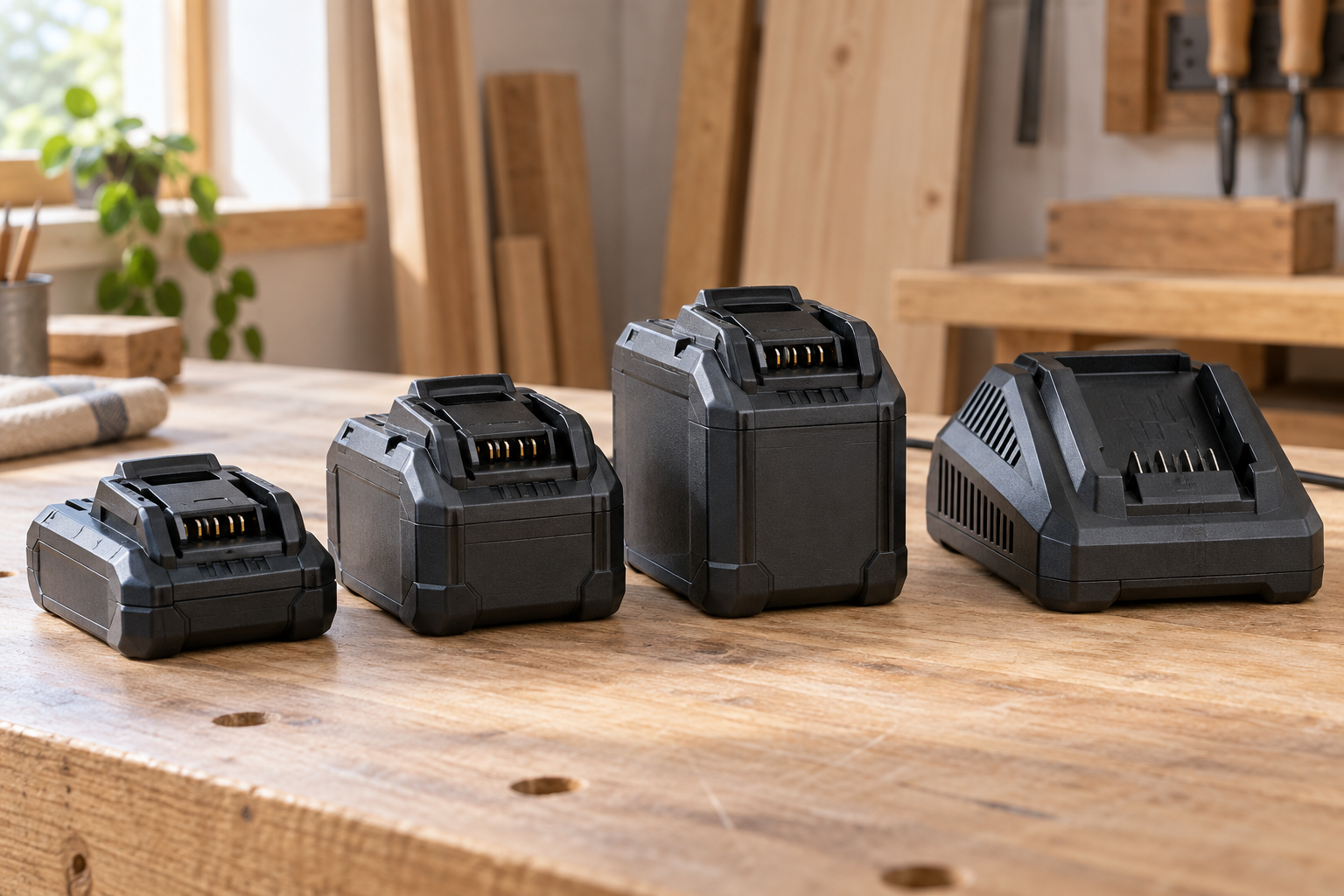
A cordless tool interface has more than two power terminals. Most current battery platforms use several contacts for positive and negative power, temperature sensing, identification, and sometimes data communication. A pack may still show a charge indicator while the tool refuses to run because one small signal contact is contaminated or not fully engaged.
The common failure modes are predictable:
- Dust and chips: Fine sawdust, drywall dust, and metal filings collect in the battery cavity and can stop the pack from locking fully.
- Moisture and condensation: Water on contacts promotes corrosion. Moving a cold battery into a warm, humid shop can create condensation even when nobody spills anything.
- Impact damage: Dropping a tool with the battery installed can bend guide rails, crack plastic around the socket, or loosen internal terminals.
- Side loading: Using the battery as a handle or setting a tool down on its pack puts stress on the interface.
- Heat: Heat accelerates battery aging and can soften or deform plastic around the connector.
Choose the right storage environment
Store cordless tools and removable batteries in a dry, enclosed area rather than a vehicle, shed, or unheated garage whenever practical. A reasonable target is roughly 50 to 80 degrees Fahrenheit (10 to 27 degrees Celsius), with low humidity and no rapid temperature swings. Occasional exposure outside that range is not automatically harmful, but months in a hot truck or freezing shed is poor treatment for lithium-ion packs.
Do not store batteries beside radiators, boilers, direct sunlight, or a running charger. Do not put them in a sealed bag while they are damp; trapped moisture is worse than ordinary shop air. If a battery comes in from a cold location, let it reach room temperature before charging. If it is wet, remove it from service until it is completely dry.
A lockable cabinet or covered tool case works well for most homeowners. If you need a more organized setup, a cordless power tool storage cabinet keeps packs away from floor dust and prevents tools from being piled on one another. The cheaper option is fine if the cabinet is dry, stable, and large enough that batteries are not crushed or wedged into place.
Store batteries separately when possible
Remove the battery from a tool before long-term storage, transport, or cleaning. This eliminates pressure on the contacts and prevents an accidental trigger pull from draining or heating the pack. It also makes it easier to inspect both sides of the interface.
Keep batteries upright or on their broad sides in a tray, with the terminals protected from metal objects. Do not throw loose packs into a toolbox with drill bits, sockets, screws, or offcuts. A short across the terminals can produce substantial heat and damage the pack. For a basic setup, lithium-ion tool battery storage cases provide separation and padding. A plastic bin with dividers is also adequate and often cheaper.
Leave a lithium-ion battery partially charged for extended storage rather than full or empty. Around 30 to 60 percent is a practical target, although the tool manufacturer’s instructions take priority. Check stored packs every few months. A pack that has dropped unusually low, swells, leaks, smells sweet or chemical, or becomes hot without a clear reason should not be charged or used.
| Storage method | Interface protection | Best use | Trade-off |
|---|---|---|---|
| Open shelf | Fair; exposed to dust | Clean, dry workshop with frequent use | Lowest cost, least protection |
| Covered cabinet | Good; limits dust and impacts | Most home shops | Needs ventilation and room around chargers |
| Divided battery case | Very good for loose packs | Transport and long-term storage | Costs more and adds packing time |
| Tool bag with loose batteries | Poor unless compartmentalized | Short trips only | Terminals can contact tools and debris |
Protect the tool-side socket
Before putting a tool away, brush or blow debris away from the battery cavity. Use a soft, dry brush or low-pressure compressed air. Hold the tool so debris falls out rather than deeper into the housing. Do not force a screwdriver, pick, or wire brush against contacts; a scratch or bent terminal can create a new problem.
Inspect the rails and locking tabs. The battery should slide in smoothly and click into place without excessive force. If it needs to be hammered in, rocked side to side, or held in position to run, stop using it until the interface is inspected. Repeatedly forcing a misaligned pack can damage both the battery and tool.
Never apply grease, oil, or ordinary contact lubricant to a battery interface unless the tool manufacturer specifically approves it. Lubricants attract abrasive dust and can interfere with the plastic latch or electrical connection. For corrosion or a damaged contact, professional repair or replacement is safer than improvising with sandpaper.
Store chargers as part of the system
Keep chargers on a clean, hard surface with open space around their vents. Do not bury an operating charger under clothing, cardboard, or a pile of batteries. Chargers need airflow, and a warm pack may already be limiting its charge rate because of temperature.
After charging, unplug the charger if the manufacturer allows and the area is unattended. Avoid using a charger with a cracked housing, bent contacts, frayed cord, or a battery bay packed with dust. Platform chargers are not interchangeable just because their batteries look similar; use the charger intended for that battery ecosystem.
A wall-mounted cordless tool organizer can keep chargers and tools off a dirty bench, but it is not automatically better than a shelf. Choose it when floor or bench space is limited. Make sure the mount supports the tool’s weight without leaving the battery hanging from its connector.
Use a short inspection routine
Once a month, remove each battery and check for cracks, swelling, discoloration, and damaged latches. Look into the tool socket for packed dust or bent terminals. Wipe the outside with a dry cloth and confirm that the pack locks securely in every compatible tool you use.
If a tool was dropped, exposed to rain, or stored in a damp vehicle, inspect it before charging. A battery that becomes hot, smokes, leaks, or produces an unusual odor belongs outside in a safe location away from combustibles while you follow the manufacturer’s disposal or service instructions. Do not puncture, open, or attempt to repair a lithium-ion pack at home.
Related guides
- Longest Lasting Lawn Mower Battery: AGM vs Lithium vs Flooded Lifespan and Cost per Season
- Duralast Gold Lawn Mower Battery Review: U1 Fit, CCA and When to Pay for AGM
- Greenworks Pro 80V 21-Inch Mower Review: Runtime Math, Push vs Self-Propelled and Yard Fit
- Bosch High Pressure Washer Gun Replacement: Fittings, Adapters and What Fits Your Model