What's inside
As an Amazon Associate I earn from qualifying purchases. This post may contain affiliate links at no extra cost to you.
Start with the work, not the tool’s battery size
A second battery is useful when the first one runs out at the wrong time: halfway through a cut, while you’re on a ladder, or before the glue, concrete, or daylight window closes. It is not automatically useful just because a tool came with one battery.
Track a few typical jobs before buying. Note how many minutes the tool runs, how long the job lasts, whether you can pause, and how far you are from a charger. A homeowner who drills a dozen pilot holes in an afternoon may be well served by one battery. Someone fastening deck boards for several hours may spend more time swapping and charging than working.
Estimate runtime and recharge time
Battery capacity, usually stated in amp-hours (Ah), is a rough guide to how long a battery can run a tool. A 5 Ah battery has about twice the rated capacity of a 2.5 Ah battery in the same voltage family, but it generally weighs more and takes longer to charge. Actual runtime varies with the tool, material, workload, battery temperature, and battery age. A drill driving small screws uses far less power than a grinder cutting metal.
Compare the time you need with the time your charger takes. If your tool drains a battery in 40 minutes of active use and the charger needs 60 minutes to refill it, one battery cannot keep pace. If the tool runs for three hours and you can charge during lunch, a second may add little value.
For a rough estimate, divide a work session into active tool time, not total time on site. A four-hour project might involve only 45 minutes of drilling, with measuring and assembly filling the rest. Battery labels and published runtime figures are not reliable enough to plan down to the minute; use them to identify a likely gap, then test on your actual material.
Compare the practical options
| Option | Best fit | Main trade-off |
|---|---|---|
| One battery | Short, occasional jobs; easy access to a charger | Work stops when the battery is empty |
| Second battery | Long sessions, remote work, or a tool that must stay ready | Upfront cost; another pack to store and maintain |
| Larger-capacity battery | Longer runtime matters more than low weight | More weight in hand; may be slower to recharge |
| Second battery plus charger | Repeated heavy use by more than one person or tool | Highest cost; often unnecessary for occasional work |
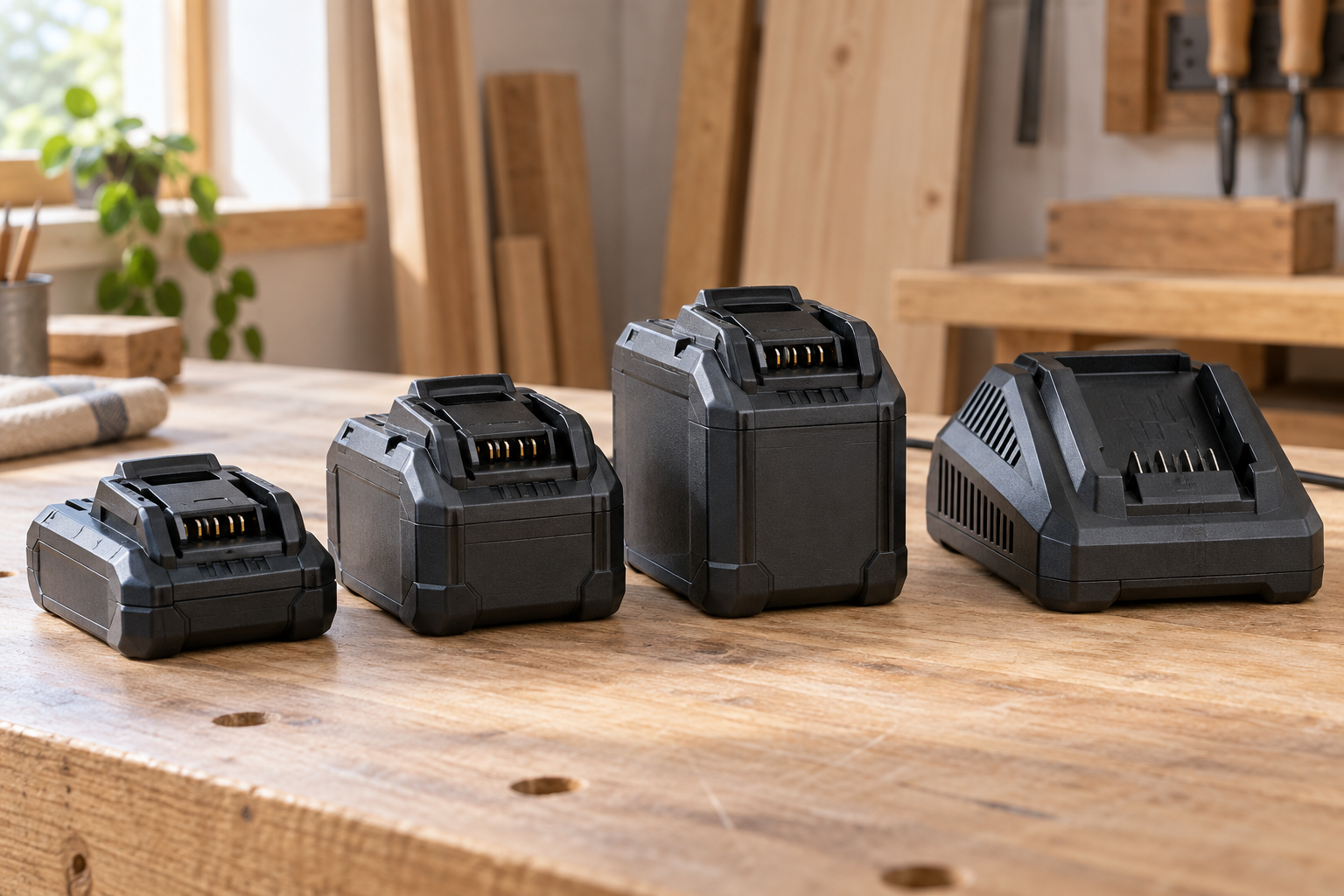
A second battery and a larger battery solve related but different problems. Two smaller packs let one run while the other charges, and can keep a drill lighter. One larger pack can reduce swaps, but adds weight for the whole job. On an impact driver or drill held overhead, that weight difference can matter more than the convenience of fewer swaps.
Check whether the battery is the real bottleneck
Repeated interruptions are a strong sign that another pack would help. So are jobs where a depleted battery forces you to leave the site, wait through a full charge, or switch to a less suitable tool. The case is weaker if battery swaps take a minute and happen once during a long project.
Also check for causes that a purchase will not fix. An old pack may have lost capacity; a battery that shuts off under load may be overheated, too cold, damaged, or mismatched to the tool’s power demands. Let a hot pack cool before charging, and use the charger and battery specified for the platform. If one pack now runs for a fraction of its former time, replacing that worn pack may be more sensible than adding a second weak one.
Match the battery to the tool. A compact pack is often comfortable in a drill or detail sander, while a high-draw saw or grinder can empty it quickly and may perform better with a higher-capacity pack designed for that platform. Check the tool maker’s compatibility guidance; voltage and connector fit alone do not guarantee that every pack is recommended for every tool.
When a second battery is worth buying
Buy another pack when the cost of downtime exceeds the cost of the battery, or when you regularly need the tool away from power. A spare is especially useful for roofing, fencing, framing, and other work where returning to a charger is inconvenient. For occasional shelf assembly, small repairs, or short drilling tasks, one battery is usually fine if the charger can keep up.
If you already own tools in a compatible platform, compare the price of a bare battery with the price of a kit. A kit may be a better deal if it includes a useful charger or another tool you planned to buy. Check that the battery is genuine and compatible with your existing tools, and compare capacity, weight, and charge time—not just the number printed in amp-hours. Browse compatible platform batteries as one option.
Plan charging before adding more packs
Two batteries do not guarantee continuous work if the charger is slow or shared between tools. For a single moderate-use tool, one charger and two packs are often enough: run one, charge the other, and swap when needed. For sustained heavy use, check the charger’s stated charge time for the capacity you plan to buy. A charger that refills a small pack quickly may take much longer with a high-capacity one.
Do not leave batteries in a hot vehicle, store them wet, or keep charging a pack that appears damaged. Store and charge them according to the manufacturer’s instructions. If several platform tools compete for the same battery, include those demands in your estimate: a spare assigned to a saw is not available for the drill. In that situation, another pack can be more useful than simply upgrading the capacity of the one you have.
Related guides
- Longest Lasting Lawn Mower Battery: AGM vs Lithium vs Flooded Lifespan and Cost per Season
- Duralast Gold Lawn Mower Battery Review: U1 Fit, CCA and When to Pay for AGM
- Greenworks Pro 80V 21-Inch Mower Review: Runtime Math, Push vs Self-Propelled and Yard Fit
- Bosch High Pressure Washer Gun Replacement: Fittings, Adapters and What Fits Your Model