What's inside
As an Amazon Associate I earn from qualifying purchases. This post may contain affiliate links at no extra cost to you.
Doorway trim is one of the jobs where a cordless tool can save time—or create a repair that takes longer than the original cut. The choice between a cordless oscillating multi-tool and a cordless jigsaw depends mainly on whether the trim is already installed, how visible the cut will be, and whether you are removing material or cutting a new piece.
As an Amazon Associate we earn from qualifying purchases at no extra cost to you.


Which tool is best for doorway trim?
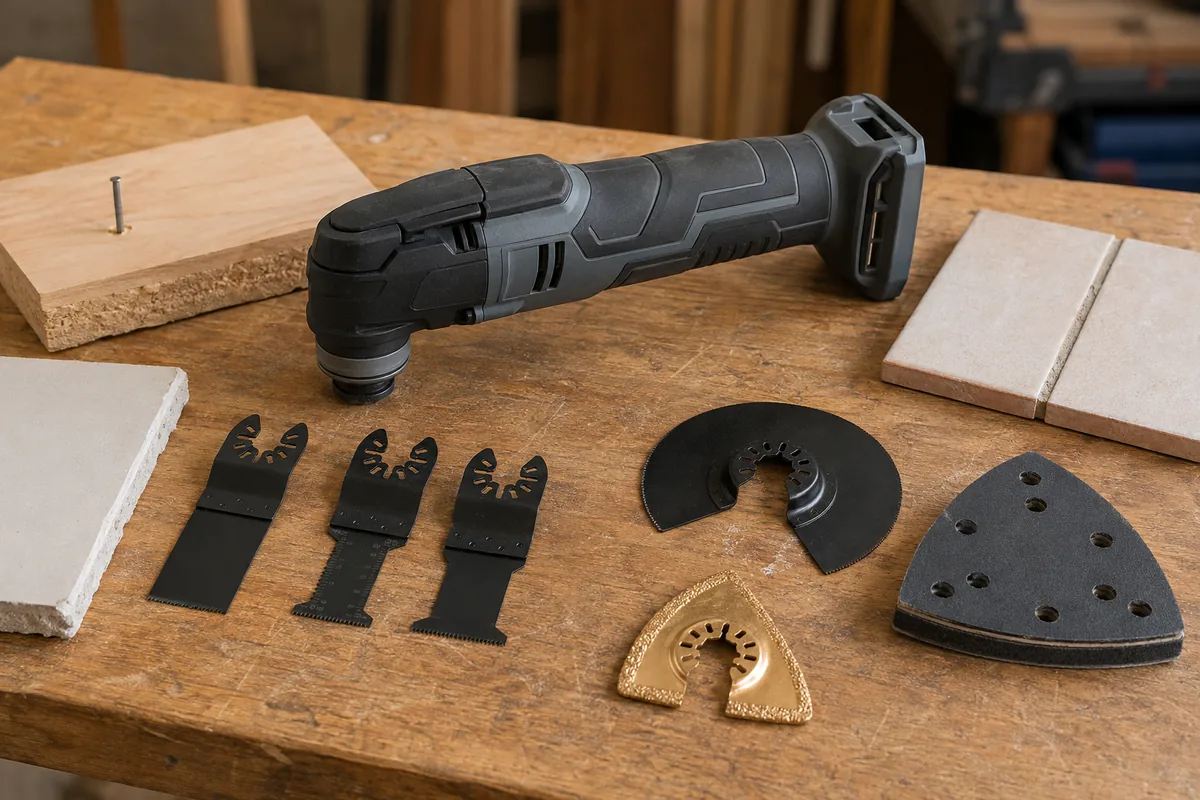
For cutting installed baseboard or door casing around flooring, the cordless oscillating tool is usually the better choice. Its short, controlled blade can make a flush cut without needing a large clearance area. You can slide the blade under casing, cut through a small section, and fit flooring or another trim piece underneath.
A cordless jigsaw is better for cutting loose trim on a workbench. It is faster for long cuts, handles thicker stock more comfortably, and can produce a cleaner edge when used with the right blade and a guide. It is less convenient in a finished doorway because its shoe needs a reasonably flat surface, and the blade cuts in a longer vertical path.
| Factor | Cordless oscillating tool | Cordless jigsaw |
|---|---|---|
| Installed trim | Excellent for flush and plunge cuts | Awkward unless access is wide and flat |
| Loose trim | Good for short notches and detail work | Better for long or shaped cuts |
| Typical cut width | About 1 to 1-1/2 inches per blade pass | Usually limited by blade length and shoe access |
| Cut control | Very good at slow, shallow cuts | Good on a supported workpiece, less so in a doorway |
| Main risk | Burning, bent blades, and wandering plunge cuts | Splintering, tipping, and overcutting the jamb |
When to use a cordless oscillating tool
Choose an oscillating tool when the trim is already nailed in place or when you need a small, precise cut. Common examples include undercutting door casing for new flooring, removing a damaged section of baseboard, trimming a doorstop, and cutting through finish nails behind molding.
The tool’s small blade movement makes it easier to work close to a wall or jamb. A flush-cut blade can be laid nearly flat against a scrap of flooring. The scrap establishes the correct height, so you do not cut the casing too high or leave a gap beneath the new floor.
For doorway undercuts, a 1-3/8-inch or 1-1/2-inch wood blade is a practical size. Mark the cut, score painted trim first if the finish tends to chip, and make several light passes instead of forcing the blade. A cut through typical pine casing may take 10 to 30 seconds. Hardwood, MDF, or trim containing hidden nails can take longer and may require a bi-metal blade.
Expect vibration. Even a good cordless oscillating tool can make your hand numb during a long series of cuts. Use the lowest speed that cuts cleanly, keep both hands on the tool when possible, and let the teeth do the work. For a small doorway job, a 2.0Ah or 4.0Ah battery is normally enough. A larger 5.0Ah pack adds runtime but makes the tool heavier in an awkward position.
If you need this category, compare cordless oscillating multi-tools within the battery platform you already own. Bare tools are cheaper only if you already have a compatible battery and charger.
When to use a cordless jigsaw
Use a jigsaw when the trim is off the wall and you need to cut a new profile, notch, or long section. It is especially useful for cutting a return around a door opening, shaping a baseboard around an uneven wall, or cutting a piece of casing to length before installation.
A jigsaw can cut through 3/4-inch pine trim quickly, but the result depends heavily on the blade. Use a fine-tooth blade for a visible finish cut and a down-cut blade when the finished face must stay on top. Down-cut blades reduce top-surface splintering but can make the saw harder to push and may burn in thick material.
Clamp the trim to a stable surface, support both sides of the cut, and keep the shoe flat. Without support, the workpiece can vibrate, causing a wandering edge or chipped veneer. Leave the blade’s orbital action at zero for a clean trim cut. Orbital action is faster in rough lumber but increases splintering and makes tight curves less controlled.
A jigsaw is a poor substitute for an oscillating tool when the casing is installed. The shoe may not sit flat against the narrow trim, and the blade can cut into drywall, flooring, or the door jamb. It also needs room behind or beside the casing for the body of the tool. If you must use one in place, remove the door if necessary, protect nearby surfaces, and test the setup on scrap first.
Battery platform and running cost
For occasional doorway work, buying into a new battery system just for this job rarely makes sense. If you already own cordless tools from a platform, a bare oscillating tool is often the economical purchase. Check that the battery does not make the tool too tall or heavy for flush cuts; compact packs are easier to control near the floor.
If you need both cutting speed and detail work, a jigsaw and oscillating tool can share one battery ecosystem. That avoids buying another charger and lets you use the same packs for a drill, impact driver, or cordless sander. Platform compatibility is not universal, even within one brand’s product range, so match the voltage and battery series exactly.
For a first tool on a budget, look at variable-speed cordless jigsaws if most of your work is loose trim. Choose an oscillating tool instead if your immediate job involves installed casing or flooring undercuts. The cheaper tool is fine when the cut will be hidden by shoe molding or a threshold; visible casing and hardwood justify better blades and more control.
A reliable doorway trim cutting method
Before cutting, locate nails with a magnet or inspect the trim edge. Mark the cut with a sharp pencil, then protect the wall and floor with painter’s tape. For an installed undercut, place a scrap of the actual flooring under the blade and keep the tool level. Cut from the finished side only when the blade is designed to minimize splintering; otherwise, plan for a small touch-up.
Do not force either tool through a nail. A wood blade can lose its teeth immediately, while a damaged blade may wander into the jamb. Switch to a bi-metal blade for suspected nails, or remove the trim and pull the fastener. After cutting, test-fit the flooring or replacement trim before applying adhesive or driving new nails. A 1/16-inch gap can usually be hidden; a 1/4-inch mistake is visible and may require replacing the piece.
In short, buy or borrow the oscillating tool for controlled cuts in installed doorway trim. Choose the cordless jigsaw for supported, off-the-wall pieces and longer shaped cuts. The right battery platform matters almost as much as the tool, because the pack you already own often determines the true cost of the job.
FAQ
Which tool is best for doorway trim?
Related guides
- Longest Lasting Lawn Mower Battery: AGM vs Lithium vs Flooded Lifespan and Cost per Season
- Duralast Gold Lawn Mower Battery Review: U1 Fit, CCA and When to Pay for AGM
- Greenworks Pro 80V 21-Inch Mower Review: Runtime Math, Push vs Self-Propelled and Yard Fit
- Bosch High Pressure Washer Gun Replacement: Fittings, Adapters and What Fits Your Model