What's inside
As an Amazon Associate I earn from qualifying purchases. This post may contain affiliate links at no extra cost to you.
Choosing a cordless oscillating tool
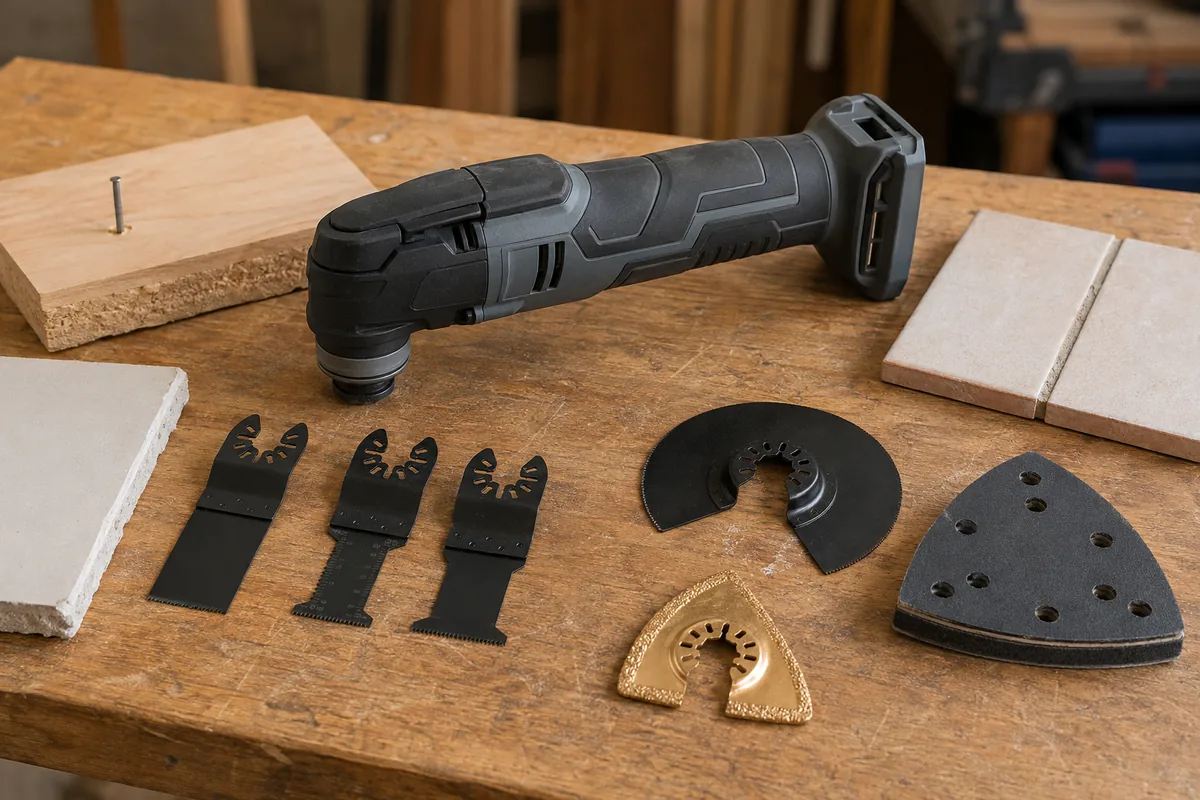
For trim work and flush cuts, an oscillating multi-tool earns its place when a saw or grinder cannot get into the corner. It can undercut a door jamb, trim a nail or screw, and remove a small section of flooring without a large cutting arc. The trade-off is speed: a multi-tool is controllable, but it is not the right choice for ripping long boards or making repeated cuts through thick stock.
Start with the battery platform you already own. A bare tool is usually the sensible buy if you have compatible batteries and a charger; if not, compare the kit price with the cost of adding both. For occasional household work, a compact 18V-class tool is generally enough. Higher-end models can be smoother, faster, or better equipped, but they do not make a dull or unsuitable blade cut well.
As an Amazon Associate we earn from qualifying purchases at no extra cost to you.


What matters for trim and flush cuts
| Feature | Why it matters | What to look for |
|---|---|---|
| Speed control | Lower speed helps limit scorching and gives better control near finished surfaces. | A variable dial or useful trigger range; fixed-speed tools are less adaptable. |
| Vibration and grip | Flush cuts often involve holding the tool against a surface, where vibration quickly becomes tiring. | Comfortable two-handed grip and a tool that feels balanced with your battery fitted. |
| Blade attachment | Changing blades can be frequent when switching between wood, nails, and grout. | A quick-change system is convenient; confirm it accepts the blades you can readily buy. |
| Battery size | A large pack adds runtime but can make overhead or close-in cuts awkward. | Use a compact pack for trim work; keep a larger pack for longer sessions. |
| Accessories | Blades wear quickly in abrasive material and can be damaged by hidden fasteners. | Budget for suitable wood, bi-metal, or carbide accessories rather than relying on a bargain assortment. |
Which tool to buy
If you already own batteries, shop within that platform first. A tool-only purchase avoids paying twice for a charger and pack, and keeps your cordless kit simpler. Compare the bare tool’s features with the kit only if you need another battery or the kit discount is substantial. Check the manufacturer’s current compatibility information before buying: batteries within a brand are not always interchangeable across every voltage or product line.
For a first tool, a kit is often better value when it includes a useful battery and charger. Look for a compact pack around 2.0Ah if the tool will mostly cut trim; it keeps the nose easier to steer than a bulky high-capacity battery. If you expect long cutting sessions, a second pack reduces downtime. A practical starting point is to compare cordless oscillating multi-tool kits against tool-only versions from your existing platform.
Pay extra for a premium tool if you will use it often, especially for finish work where vibration, control, and convenient blade changes matter. For a few door-jamb cuts a year, a less expensive tool is fine. Put the savings toward a sharp blade and a depth stop or guide if the tool supports one. Those can matter more to the result than a small difference in motor output.
Pick the blade for the material
Use a fine-tooth wood blade for clean cuts in trim and softwood, and a bi-metal blade when nails or screws may be in the cut. A carbide-edged blade is useful for abrasive materials such as grout or cement board, but it is not the best choice for a clean finish in ordinary wood. A blade that encounters a hidden nail may lose its teeth quickly, heat up, or kick the tool sideways. Stop if the cut suddenly slows; forcing it often ruins the blade and can mark the work.
To undercut a jamb, set a piece of the finished flooring next to it as a height guide, with any underlay included. Rest the blade flat on that stack and cut slowly. Check the blade length: a long blade can reach into hidden wiring or pipes behind the trim. For a flush cut against a wall or floor, keep the shoe and blade flat, and avoid twisting the tool as the cut finishes.
For a nail or screw, use a metal-rated blade and let it work at a steady pace. Cutting metal produces heat and can leave a sharp edge; wear eye protection, keep hands clear of the blade path, and let the piece cool before handling. Do not assume a fastener is harmless because it is behind trim: identify what it fixes and check for electrical or plumbing routes before cutting.
Avoiding common problems
Oscillating tools are easy to start at the wrong angle. A blade that is not square to the surface can gouge the visible face of a baseboard or door casing. Make a test cut on scrap, mark the depth, and approach the finished edge gently. If the tool has a depth guide, use it; otherwise, a strip of tape on the blade can serve as a visual reference, but it is not a physical stop.
Dust and heat are other common failures. Fine dust can obscure the cut line, while pressure and a worn blade can burn wood. Ease off, clear the dust, and replace the blade when cutting slows. For indoor work, use dust extraction if the tool supports it, or vacuum between passes. A respirator is sensible when cutting treated, painted, or engineered material, and avoid cutting material whose contents or coating you cannot identify.
Buying advice by job
For occasional trim and flush cuts, choose a basic cordless tool on the battery platform you already own, then buy one quality wood blade and one bi-metal blade. For frequent remodeling, prioritize low vibration, a comfortable grip, quick blade changes, and a usable speed adjustment. If you are starting from scratch, compare bare cordless oscillating tools only after including the cost of the battery and charger you will need.
One more useful distinction: a multi-tool is excellent for short, precise cuts, but a jigsaw, flush-cut saw, or circular saw is usually faster for longer cuts. Buy for the awkward jobs it handles well, not as a replacement for every saw in the shop.
Related guides
- Longest Lasting Lawn Mower Battery: AGM vs Lithium vs Flooded Lifespan and Cost per Season
- Duralast Gold Lawn Mower Battery Review: U1 Fit, CCA and When to Pay for AGM
- Greenworks Pro 80V 21-Inch Mower Review: Runtime Math, Push vs Self-Propelled and Yard Fit
- Bosch High Pressure Washer Gun Replacement: Fittings, Adapters and What Fits Your Model