What's inside
- Assessing Your Workflow and Space Requirements
- Top Material Choices: Wood vs. Steel vs. Composite
- Understanding Weight Capacity Ratings
- Height Adjustability: Fixed vs. Crank vs. Motorized
- Storage Integration: Drawers, Shelves, and Pegboards
- Mobility Features: Casters and Locking Mechanisms
- Common Buying Mistakes to Avoid
- When to Invest in a Premium Build
- Related Guides
- FAQ
- Related Guides
- Assessing Your Workflow and Space Requirements
- Top Material Choices: Wood vs. Steel vs. Composite
- Understanding Weight Capacity Ratings
- Height Adjustability: Fixed vs. Crank vs. Motorized
- Storage Integration: Drawers, Shelves, and Pegboards
- Mobility Features: Casters and Locking Mechanisms
- Common Buying Mistakes to Avoid
- When to Invest in a Premium Build
- Related Guides
- FAQ
- Related Guides
As an Amazon Associate I earn from qualifying purchases. This post may contain affiliate links at no extra cost to you.
Setting up a functional garage workshop requires a solid foundation, and nothing anchors a space quite like a reliable workbench. Whether you are tuning up bicycles, assembling complex woodworking joinery, or fixing small engines, the right surface makes every project safer and more efficient. As the tool and workshop market evolves into 2026, manufacturers offer everything from basic folding tables to heavy-duty modular workstations with integrated power strips and heavy-gauge steel framing.
However, wading through endless product specifications can quickly lead to paralysis by analysis. Flashy marketing materials often highlight cosmetic features while glossing over structural integrity, stability, and real-world durability. To find a bench that truly serves your workflow, you need to look past the sales pitch and focus on the core engineering elements that dictate how a bench handles daily abuse, heavy loads, and rigorous tool operations.
As an Amazon Associate we earn from qualifying purchases at no extra cost to you.

Assessing Your Workflow and Space Requirements
Before looking at a single technical specification, map out the physical footprint of your garage. Many woodworkers make the mistake of buying the largest workbench available, only to realize it blocks access to breaker panels, tool chests, or vehicle parking. Consider not just the dimensions of the benchtop, but the clearance required around it. If you plan on cutting long boards, hand planing, or walking around the unit with materials, you need at least three feet of open floor space on all active sides. Furthermore, evaluate what you actually build. A dedicated electronics repair station requires less depth and higher precision lighting, whereas a general-purpose garage hub needs a massive, deep surface to accommodate benchtop drill presses, vises, and clumsy assembly work.
Top Material Choices: Wood vs. Steel vs. Composite
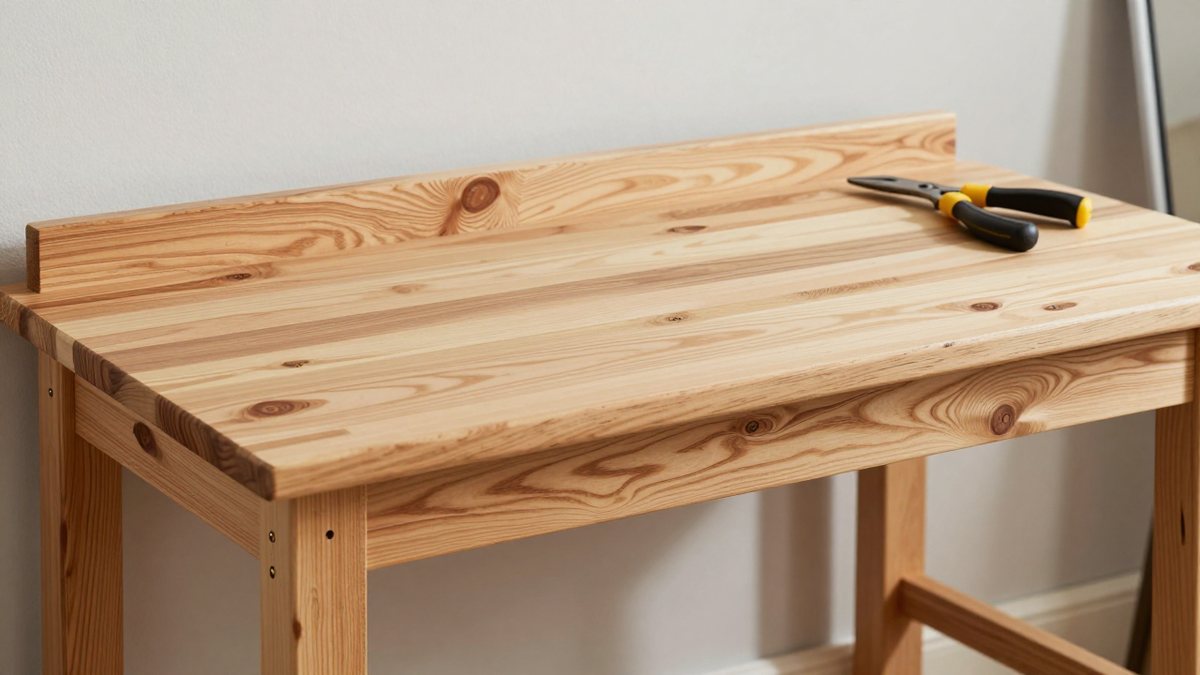
The workbench top takes the brunt of your labor, making material selection critical. Solid hardwood tops—typically European beech, hard maple, or rubberwood—are the gold standard for traditional workshops. They absorb shock, can be sanded down when scarred, and provide enough mass to keep the bench from walking across the floor during heavy pounding. Steel-skinned or stainless steel tops offer incredible resistance to heat, oil, and chemicals, making them ideal for automotive work, though they are loud and can mar softer materials. Composite materials like MDF cores wrapped in laminate or polyurethane are budget-friendly and resist moisture well, but they lack long-term durability and will delaminate or chip if subjected to heavy impact or standing water.
Understanding Weight Capacity Ratings
Manufacturers love throwing around massive weight ratings, sometimes claiming a bench can support upwards of two thousand pounds. However, you must differentiate between static load and dynamic load. Static load simply means the maximum weight the table can hold while sitting completely still, evenly distributed across the surface. Dynamic load refers to the force applied while you are actively working—pounding with a mallet, clamping down a heavy vise, or leaning your full body weight against the edge. Always look for a robust apron and cross-bracing beneath the top. A high weight capacity is meaningless if the frame racks horizontally under lateral pressure.
Height Adjustability: Fixed vs. Crank vs. Motorized
Ergonomics play a massive role in preventing fatigue and back strain during long workshop sessions. Standard fixed-height benches usually sit around thirty-four to thirty-six inches, which suits the average adult for standing work. However, if you switch frequently between delicate sitting tasks and heavy standing operations, or if multiple family members share the shop, height adjustability becomes invaluable. Hand-crank mechanisms and motorized lift legs allow you to transition smoothly from a low seating position to a comfortable standing height. Keep in mind that motorized and crank systems introduce mechanical points of failure, so prioritize heavy-duty lead screws or commercial-grade linear actuators if you choose this route.
Storage Integration: Drawers, Shelves, and Pegboards
A cluttered workspace is an inefficient workspace, which is why built-in storage features heavily influence daily usability. Under-bench shelving is great for storing bulky items like spare lumber, tool cases, or bins, but deep shelves can become black holes where tools disappear forever. Drawers offer better organization for hand tools and measuring equipment, but they must feature heavy-duty ball-bearing slides to prevent sagging and binding under load. Overhead pegboards or upright gantries keep frequently used hand tools within arm’s reach without cluttering the precious horizontal work surface. Evaluate whether you prefer integrated storage built directly into the bench frame or modular, standalone tool chests that can be reconfigured later.
Mobility Features: Casters and Locking Mechanisms
Deciding whether your workbench needs to move is one of the most defining choices in your setup. Stationary benches offer maximum stability because their sheer weight and rigid legs anchor them to the floor. On the flip side, mobile workbenches outfitted with casters let you reconfigure your garage layout instantly or roll the entire station outside for dusty sanding operations. If you opt for mobility, look for retractable caster systems rather than permanent wheels. Retractable designs allow the bench legs to rest firmly on the concrete floor when engaged, preventing the table from rolling or rocking while you work, yet lift the entire unit onto heavy-duty urethane wheels when it is time to move.
Common Buying Mistakes to Avoid
One of the most frequent mistakes woodworkers make is purchasing a workbench with thin, flimsy legs joined only by particleboard gussets. Without heavy steel cross-braces or a rigid apron, these benches will eventually develop a dangerous wobble. Another common pitfall is ignoring the clamping capability of the top. If a wooden top is too thin—under one and a half inches—you will struggle to mount traditional woodworking vises securely without cracking the material. Finally, avoid buying based strictly on extra accessories like built-in power strips or LED lights if the underlying frame is compromised; accessories can easily be added aftermarket, but a weak frame requires total replacement.
When to Invest in a Premium Build
Budget workbenches are fine for casual hobbyists who occasionally assemble flat-pack furniture or do light fix-up tasks. However, if your projects involve aggressive hand-tool woodworking, metal fabrication, engine rebuilding, or heavy clamping forces, investing in a premium, heavy-gauge steel or thick laminated hardwood bench pays off immediately. Premium models feature precision-machined joints, thicker top slabs, superior hardware, and engineered stability that eliminates racking entirely. Spending more upfront ensures your workspace grows with your skill level, saving you from the frustration and expense of upgrading a failing workbench a few years down the line.
Related Guides
To explore top-performing models currently on the market and compare expert testing metrics, check out our comprehensive Best Garage Workbenches roundup.
FAQ
How thick should a solid wood workbench top be?
A quality solid wood workbench top should be at least one and a half to three inches thick. This thickness provides the necessary mass to absorb heavy impacts, prevents warping, and gives you enough structural depth to mount robust woodworking vises securely.
Do I need to bolt my garage workbench to the wall?
Bolting your workbench to the wall is not strictly mandatory, but it is highly recommended if you perform heavy hand-planing, mortising, or aggressive sanding. Wall anchoring completely eliminates any residual rocking or forward tipping when applying heavy lateral force.
What is the ideal working height for a garage workbench?
The traditional standard height for a garage workbench is between thirty-four and thirty-six inches for standing work. A good rule of thumb is that the surface should sit roughly at the height of your wrist when your arms hang loosely at your sides.
Can I use a garage workbench outdoors?
Standard garage workbenches are not designed for outdoor use and will quickly degrade when exposed to rain, humidity, and direct sunlight. If you need an outdoor station, look for marine-grade stainless steel frames and thoroughly weather-sealed synthetic or teak tops.