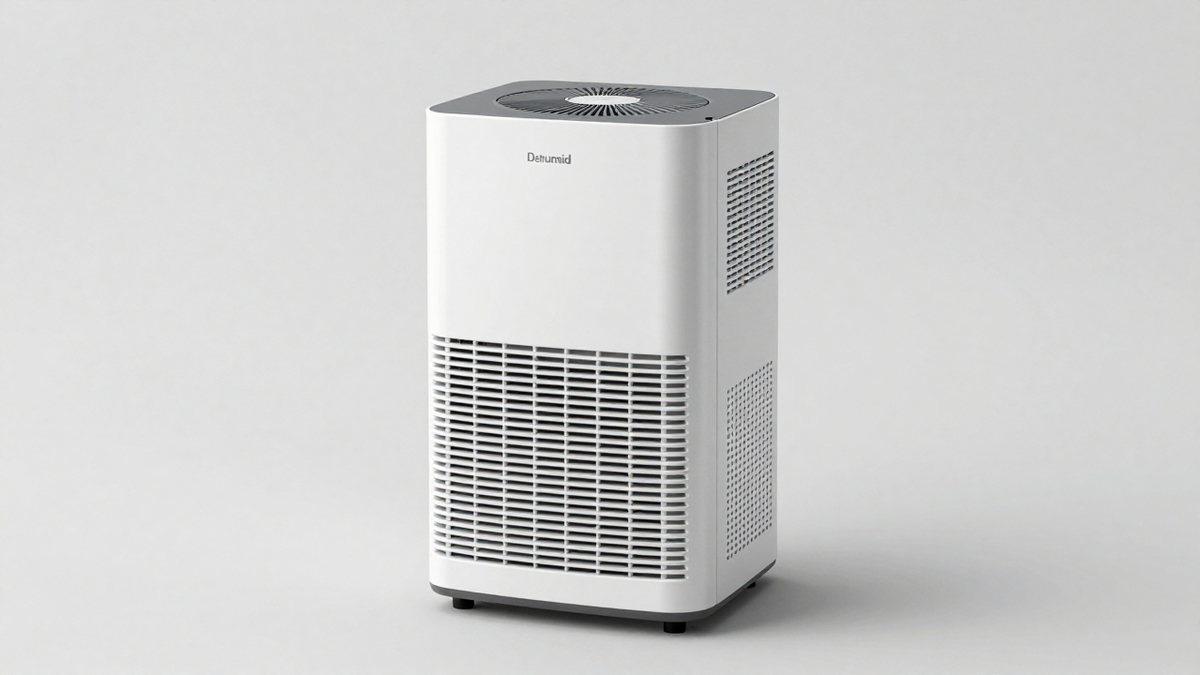
Our Top Picks
 Waykar 150 Pint 7000 Sq.Ft Dehumidifier for Basement150 Pints 7000 Sq. Ft15.47 x 11.69 x 24.37 Inches40 poundsCheck on Amazon
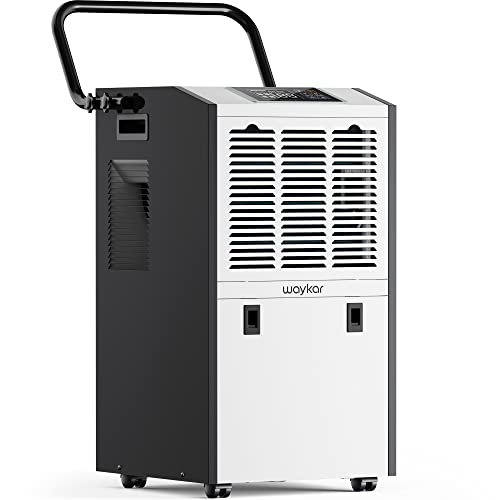 Waykar 155 Pints Large Commercial Dehumidifier with Drain155 Pints 8000 Sq. Ft13.39 x 13.39 x 24.61 inches59.52 poundsCheck on Amazon
 Waykar 150 Pint Commercial Dehumidifier with Pump &150 Pints 7000 Sq. Ft with Pump10.48 x 14.89 x 24.22 Inches38.6 poundsCheck on Amazon
 Airzentti 155 Pint Commercial Dehumidifier with Pump and14.2 x 24.3 x 15 inches59 PoundsCheck on Amazon
 Moiswell 160 Pints Commercial Dehumidifier with Pump/Drain Hose160 Pints with Pump13.3 x 13.5 x 24 inches67 PoundsCheck on Amazon
What's inside
As an Amazon Associate I earn from qualifying purchases. This post may contain affiliate links at no extra cost to you.
The best dehumidifier for a warehouse is a 150-pint-class commercial unit with a built-in pump, because the pump lets you send water to a floor drain or sink instead of emptying a tank several times a day. On paper, the Waykar 150 Pint Commercial Dehumidifier with Pump & Drain Hose is the pick to beat: its listing names warehouses and industrial use outright, rates it for up to 7,000 square feet, and lists self-drying and auto-defrost.
A warehouse is not a basement, though. Ceilings run 14 to 24 feet, dock doors cycle open all day, slabs wick ground moisture, and the stock (bare steel, bearings, cardboard cartons, paper, battery packs) corrodes or softens long before a puddle shows up. Most listings quote coverage in square feet, so this guide starts with the math listings skip: cubic feet, circuit capacity and running cost. The Editorial team then ranks eight large-capacity units from published specifications, manufacturer documentation and buyer reviews.
One clear caveat: nobody on the team used or measured these units. Anything beyond what a product title states is either flagged as “check the listing” or labeled as an estimate.
Size the job in cubic feet before you shop
Waykar 150 Pint 7000 Sq.Ft Dehumidifier for Basement with Drain Hose & Tank | 90° Auto Swing, 30%–80% Humidity Control for home, Continuous drainage support, Whole-House Dehumidification, Auto-defrost


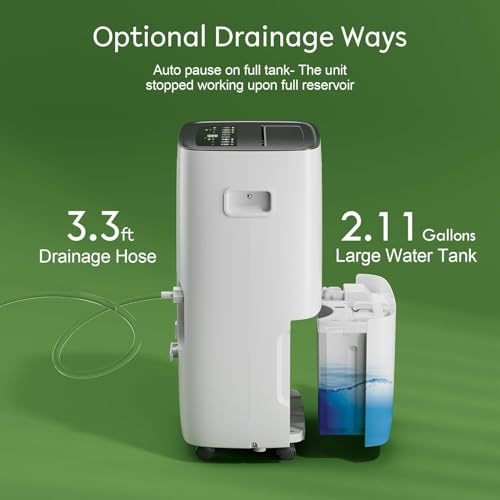
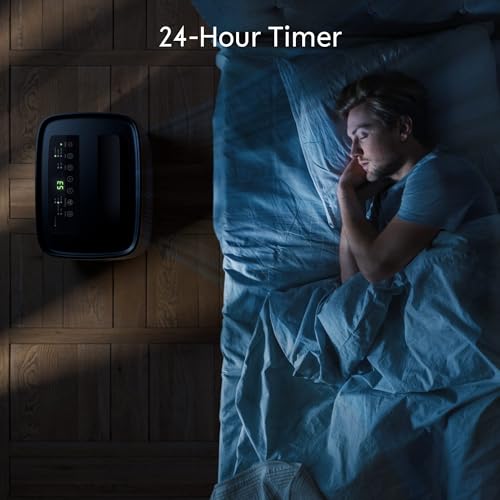

As an Amazon Associate we earn from qualifying purchases. Product prices and availability are accurate as of the date/time indicated.
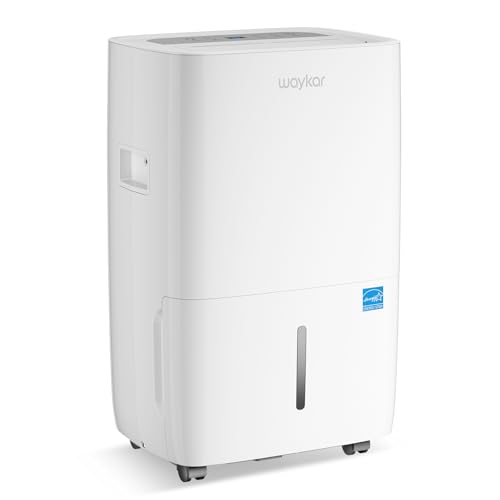
Waykar 80 Pints 5000 Sq. Ft 2025 Energy Star Dehumidifier for Basement | 90° Auto Swing, 30%–80% Humidity Control for home, Continuous drainage support, Whole-House Dehumidification, Auto-defrost


As an Amazon Associate we earn from qualifying purchases. Product prices and availability are accurate as of the date/time indicated.
Waykar 155 Pints Large Commercial Dehumidifier with Drain Hose and Water Tank, Industrial Dehumidifier in Large Space up to 8000 Sq. Ft for Home, Basements, Whole House, Library


As an Amazon Associate we earn from qualifying purchases. Product prices and availability are accurate as of the date/time indicated.
Waykar 150 Pint Commercial Dehumidifier with Pump & Drain Hose for Basement | Energy Star, Up to 7,000 Sq.Ft, Self-Drying, Auto-Defrost, 30-80% RH Control, Ideal for Industrial, Large Rooms & Warehouses


As an Amazon Associate we earn from qualifying purchases. Product prices and availability are accurate as of the date/time indicated.
Airzentti 155 Pint Commercial Dehumidifier with Pump and Drain, Energy Star | Large Space Dehumidifier for Basement, Crawl Space, Whole House, Industrial, Water Damage, Attic, Garage, Home, Auto Defrost


As an Amazon Associate we earn from qualifying purchases. Product prices and availability are accurate as of the date/time indicated.
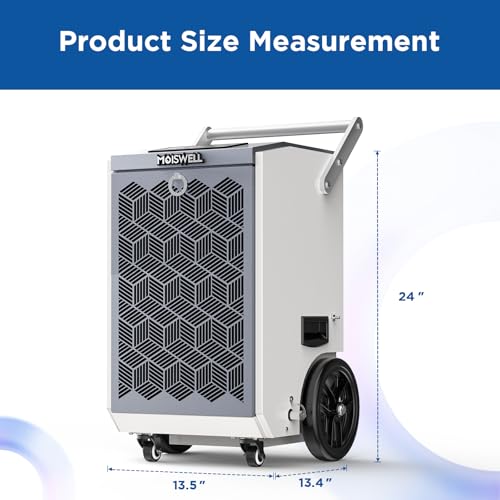
Moiswell 160 Pints Commercial Dehumidifier with Pump/Drain Hose - Basements | Heavy Duty Commercial Grade Dehumidifiers for Large Spaces, Warehouse, Industry Water Damage Unit, Auto Defrost



As an Amazon Associate we earn from qualifying purchases. Product prices and availability are accurate as of the date/time indicated.

AEOCKY 5500 Sq.Ft Energy Star Most Efficient 2025 Dehumidifier Max 80Pint/D | Dehumidifier with Drain Hose for Basement, Home, Bedroom, Bathroom, Intelligent Humidistat


As an Amazon Associate we earn from qualifying purchases. Product prices and availability are accurate as of the date/time indicated.
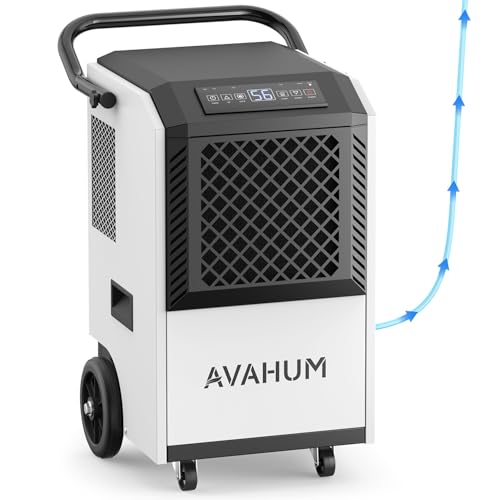
5-Year Limited Warranty 160 Pint Commercial Dehumidifier with Pump,Industrial Dehumidifier for Basement & Warehouse, 7500 Sq.Ft Large Dehumidifiers with Drain Hose,24H Timer, Auto Restart Defrost


As an Amazon Associate we earn from qualifying purchases. Product prices and availability are accurate as of the date/time indicated.
Coverage claims in this category (5,000, 7,000, 7,500 and 8,000 square feet in the titles below) are almost always written for a basement with about an 8-foot ceiling. That works out to roughly 40,000 cubic feet for a 5,000-square-foot claim and 56,000 cubic feet for a 7,000-square-foot claim. Those are our conversions from the titles, so treat them as estimates, not manufacturer figures.
Now apply them to a real building. A 12,000-square-foot warehouse with an 18-foot clear height holds 216,000 cubic feet. Dividing by 56,000 gives about 3.9, so on paper you would need nearly four 150-pint-class units to match the label logic. In practice you rarely condition the whole volume: air above 10 to 12 feet barely touches stock, and you can partition a sensitive zone. If the racked stock occupies the bottom 10 feet, the working volume drops to 120,000 cubic feet and two units become a defensible starting point, with a third added after you log humidity.
| Space (example) | Floor area x height | Approx. volume | On-paper unit count (estimate) |
|---|---|---|---|
| Tool crib or parts room | 600 sq ft x 9 ft | 5,400 cu ft | One 80-pint-class unit, with margin |
| Garage workshop | 2,000 sq ft x 10 ft | 20,000 cu ft | One 80-pint-class unit |
| Storage bay | 6,000 sq ft x 14 ft | 84,000 cu ft | Two 150-pint-class units |
| Distribution warehouse | 12,000 sq ft x 18 ft | 216,000 cu ft | Three to four, or two plus a zoning plan |
The numbers above ignore the moisture sources that actually decide the outcome: a leaking slab, a roll-up door opened 60 times a shift, a wash bay, or a forklift charging area. A building that takes on moisture continuously needs more capacity than a sealed one of the same size. If you wash equipment inside the building, read our guide to a BLACK+DECKER pressure washer and plan for the extra evaporation that rinse water adds.
Top picks at a glance
Price tiers are relative within this group (Budget, Mid-range, Premium); check each listing for the current price. Pint figures and coverage numbers come straight from the product titles.
| Model | Key spec (from title) | Price tier | Best for |
|---|---|---|---|
| Waykar 150 Pint Commercial Dehumidifier with Pump & Drain Hose | 150 pint, up to 7,000 sq ft, pump, self-drying, auto-defrost | Mid-range | Best overall for storage bays |
| Airzentti 155 Pint Commercial Dehumidifier with Pump and Drain | 155 pint, pump, Energy Star in title, crawl space to attic | Premium | Damp, irregular spaces |
| AVAHUM 160 Pint Commercial Dehumidifier with Pump | 160 pint, 7,500 sq ft, 24H timer, 5-year limited warranty | Mid-range | Long ownership horizon |
| Moiswell 160 Pints Commercial Dehumidifier with Pump/Drain Hose | 160 pint, pump or drain hose, heavy duty commercial grade | Mid-range | Maximum rated capacity |
| Waykar 155 Pints Large Commercial Dehumidifier | 155 pint, up to 8,000 sq ft, drain hose and tank | Premium | Largest stated coverage |
| Waykar 150 Pint Dehumidifier with Drain Hose & Tank | 150 pint, 7,000 sq ft, 90-degree auto swing, continuous drainage | Mid-range | Gravity-drain floors |
| Waykar 80 Pints Dehumidifier | 80 pint, 5,000 sq ft, 30%-80% control | Budget | Tool cribs and small shops |
| AEOCKY 80 Pint Dehumidifier with Drain Hose | Max 80 pint/D, 5,500 sq ft, intelligent humidistat | Budget | Spot-drying one room |
Waykar 150 Pint Commercial Dehumidifier with Pump & Drain Hose
This listing is the most warehouse-explicit of the eight: the title says “Ideal for Industrial, Large Rooms & Warehouses,” pairs a 150-pint rating with coverage up to 7,000 square feet, and adds a pump, drain hose, self-drying, auto-defrost and 30-80% RH control. Those features cover the four things a big building demands: capacity, automatic drainage, ice protection when the air cools, and an adjustable setpoint.
Read the rating with caution. Pint figures are commonly quoted at warm, humid lab conditions, and a cool concrete building will pull less. As a planning estimate only, assume 50 to 70 percent of the label at 60 degrees Fahrenheit. Even at half of 150 pints, the unit would condense about nine gallons a day, so the included pump is not a luxury here. Check the listing for pump lift height and hose length before you map the discharge route.
Because the title cites basement-style coverage, treat 7,000 square feet as about 56,000 cubic feet. In a 16-foot building that translates to roughly 3,500 square feet of floor, which is a good fit for a single storage bay or a fabrication corner. Set the humidistat near 50 percent for steel stock and let the unit cycle.
Pros
- Title names warehouses and industrial use directly
- Pump and drain hose included, so no tank-emptying routine
- Self-drying and auto-defrost listed
- 30%-80% humidity control range gives room to tune the setpoint
Cons
- Coverage figure assumes basement-height ceilings, so tall buildings need more capacity
- Voltage, wattage and maximum pump lift are not in the title; check the listing before planning the circuit
- One unit will not condition a large open warehouse by itself
Who it’s for: a shop owner with a 3,000 to 5,000 square foot bay and a drain within hose reach who wants one capable unit and no daily chores.
Airzentti 155 Pint Commercial Dehumidifier with Pump and Drain
Airzentti’s listing reads like a catalog of difficult spaces: basement, crawl space, whole house, industrial, water damage, attic, garage. It pairs a 155-pint rating with a pump and drain connection, mentions Energy Star, and lists auto defrost. The range of named environments tells you the maker expects this to be moved between jobs, which suits a facility that dries out a flooded dock corner one month and a stockroom the next.
Capacity is a notch above the Waykar 150, so on paper it removes slightly more water from the same air; the practical difference is small and probably smaller than the effect of where you place it. The title does not give a coverage figure in square feet, which makes sizing harder. Use the pint rating and your own cubic-foot estimate, and confirm coverage on the listing. If the Energy Star mention matters for your efficiency goals, verify the model on the official Energy Star product finder rather than relying on the headline.
Think about where the pump discharges. A damp-recovery job often means running the hose across a floor, over a threshold or out a door. Hose routing is a trip hazard in a working warehouse; run it along a wall and cover or flag the crossing. Also plan for restart behavior after a power cut, since an unattended building that loses power should resume on its own. The listing does not say, so check before depending on it.
Pros
- 155-pint rating with pump and drain listed in the title
- Marketed for crawl space, attic, garage and water-damage jobs, so it is flexible
- Auto defrost listed
Cons
- Premium pricing tier among the group
- No square-foot coverage figure in the title, so you must size it yourself
- Restart-after-outage behavior, noise and wattage are not stated; check the listing
Who it’s for: a facility manager who needs one mobile high-capacity unit for water-damage recovery and seasonal dampness across several rooms.
AVAHUM 160 Pint Commercial Dehumidifier with Pump
AVAHUM is the only listing in this round that leads with a warranty: “5-Year Limited Warranty.” It also names basement and warehouse use, a 7,500-square-foot coverage figure, a pump with drain hose, a 24-hour timer, and an auto-restart defrost function. In a category where a compressor is the part most likely to fail, a long stated warranty is a meaningful tie-breaker, provided you read what the warranty covers and who services it.
The 7,500-square-foot claim converts to roughly 60,000 cubic feet at an 8-foot assumption (our estimate). That is a bit more than the Waykar 150 and justifies the 160-pint rating. The 24-hour timer is useful in a building where you only want drying outside business hours, for instance to take advantage of off-peak electricity or to avoid noise on the floor. Auto restart after defrost suggests the unit resumes its cycle rather than sitting idle, though you should verify exactly how it behaves on the listing.
A practical point on ownership: the brand is not a household name, so parts and service will run through the seller. Save the order record, note the serial number, and photograph the nameplate on delivery. If a unit runs 14 hours a day for years, a five-year term is only valuable if claims are honored.
Pros
- 5-year limited warranty named in the title
- 160-pint rating with a pump and drain hose
- 24-hour timer lets you schedule drying windows
- 7,500 square feet of stated coverage
Cons
- Warranty terms and service route are not in the title; read them before relying on the headline
- Less-established brand, so verify parts availability
- Voltage, power draw and pump lift are not stated
Who it’s for: an owner planning to run a unit for years in a mid-size storage building who weighs the warranty as heavily as the pint rating.
Moiswell 160 Pints Commercial Dehumidifier with Pump/Drain Hose
Moiswell’s title uses the most industrial language of the group: “Heavy Duty Commercial Grade,” “Large Spaces, Warehouse, Industry Water Damage Unit,” plus a 160-pint rating, a pump or drain hose, and auto defrost. It gives no coverage number, so the pint figure is your only sizing handle. That is not a flaw so much as a prompt to do the cubic-foot math yourself.
A 160-pint rating on paper equals 20 gallons of water per day at the lab conditions behind the number. In a cool warehouse, a realistic planning estimate is a fraction of that, but the headroom matters for the first week after a wet spell, when the stock and slab are still releasing moisture. A larger rating also means the unit can reach the setpoint and cycle off sooner, which spares the compressor relative to a small unit that runs flat out all day.
“Heavy duty commercial grade” is marketing language. It does not tell you the compressor type, housing material, or duty cycle. Compare the listing’s weight, dimensions and wheel or handle details against your floor: a unit you cannot roll across a rough slab will end up in the wrong place. Also note the “pump/drain hose” wording: confirm whether the pump is built in or the hose is gravity-only.
Pros
- 160-pint rating, the highest in the group alongside AVAHUM
- Title lists warehouse and water-damage use
- Pump or drain hose wording suggests flexible drainage; confirm on the listing
- Auto defrost listed
Cons
- No coverage figure or warranty term in the title
- “Heavy duty commercial grade” is not a verifiable specification
- Whether the pump is built in or optional needs a close read of the listing
Who it’s for: a buyer who wants maximum rated capacity for a damp-recovery job or a storage room with a stubborn moisture source.
Waykar 155 Pints Large Commercial Dehumidifier with Drain Hose and Water Tank
The 155-pint Waykar carries the largest coverage claim in the group, up to 8,000 square feet, and its title lists a drain hose and a water tank rather than a pump. It names home, basement, whole-house and library use alongside “industrial,” so the maker is aiming at big residential and light commercial spaces more than at heavy warehousing. The Premium tier price in this group deserves a pause: you are paying for capacity and coverage, not for a pump.
No pump means gravity drainage, so the unit has to sit above a floor drain or a point where the hose can slope downhill continuously. Many warehouses have a drain at the low end of the slab, which makes this workable if you can place the unit at the high side. If you cannot, you are back to emptying the tank. Check the listing for tank size, because at a planning estimate of 9 to 12 gallons removed per day, even a 2-gallon tank would fill five or six times.
Libraries and archives are a clue about the intended duty: steady, quiet conditioning of a large room rather than rough handling. For a clean stockroom of paper goods, labels, or packaging, that profile fits. For a dusty fabrication floor, plan on regular filter cleaning; the listing should show whether the filter is washable.
Pros
- Largest stated coverage in the group at up to 8,000 square feet
- 155-pint rating
- Drain hose supplied for continuous gravity drainage
Cons
- No pump in the title, so gravity drainage is required for hands-off use
- Premium price tier for a feature set similar to cheaper pumped units
- Title leans residential; check build quality notes in buyer reviews
Who it’s for: a clean-storage operator with a floor drain and a large room of paper, textile or packaging stock.
Waykar 150 Pint Dehumidifier with Drain Hose & Tank
This is the gravity-drain cousin of the first pick. The title lists 150 pints, up to 7,000 square feet, a 90-degree auto-swing outlet, 30%-80% humidity control, continuous drainage support, whole-house dehumidification and auto-defrost, with a drain hose and tank. Its listing aims at basements and homes rather than warehouses, but the capacity class overlaps with the dedicated commercial model at a lower tier.
The auto-swing louver is a small but useful detail in a large space. Moving the discharge air across a wider arc helps the unit mix humid air from corners into the intake path, which a fixed outlet does less well. It will not replace circulation fans for a tall building, though. For a 20,000-cubic-foot work area, one or two low-speed fans moving air along the floor will improve results more than a more expensive dehumidifier.
Use the continuous-drainage feature intentionally: connect the hose, route it to a drain with a continuous downhill slope, and test the connection with a bucket of water before leaving it unattended. A tank-only workflow in a warehouse fails the first weekend nobody empties it. Buyer reviews for units in this class often mention the float switch and tank-full shutoff, which is worth checking: when a tank fills at 3 a.m., a unit that stops quietly protects the floor but also stops drying, and you will find out only when the next humidity reading comes in. The whole-house wording in the title is a reminder that this machine was designed for a single connected volume, so keep interior doors open or add circulation if you want it to reach distant corners.
Pros
- 150-pint, 7,000 square feet capacity class at a lower tier than pumped units
- Auto-swing outlet and continuous drainage listed
- Auto-defrost listed
Cons
- No pump, so hands-off drainage needs a floor drain below the unit
- Marketed for homes and basements, not warehouses specifically
- Tank size, wattage and voltage are not in the title
Who it’s for: a small business with a floor drain next to the work area and a moderate moisture load.
Waykar 80 Pints Dehumidifier
The 80-pint Waykar is the budget-friendly entry here: 5,000 square feet of stated coverage, Energy Star in the title, 90-degree auto swing, 30%-80% control, continuous drainage support and auto-defrost. At about 40,000 cubic feet by our 8-foot conversion, it is the right size for a parts room, a tool crib, a small shop or a garage, not an open warehouse.
The smart use for a unit this size in a larger facility is spot protection. Put a small enclosure around the highest-value corrosion-prone items (precision tools, bearing stock, electronics, bare steel) and condition only that volume. A 10 by 10 by 9 foot room is 900 cubic feet. An 80-pint-class unit would be heavily oversized for that, which is a good thing: it will reach 45 to 50 percent quickly and cycle off, using little electricity. Sealing the room with weatherstripping on the door matters more than adding capacity.
The trade-off is that a unit this size struggles to hold a large leaky space. If you try to cover 12,000 square feet with three of them, you pay for more compressors, more circuits and more drain lines than two larger units require. Choose by zones rather than by total square feet. One more planning note: small enclosed zones reach setpoint quickly, so the unit may cycle off for long stretches. That is fine, but it means the condensate line may sit dry for hours, so a hose left with a low spot can hold stagnant water. Slope the line fully downhill, and check the filter and coil area every month for dust or lint from cardboard.
Pros
- Lower price tier and a smaller electrical footprint
- Continuous drainage and auto-defrost listed
- Energy Star mentioned in the title (verify on the official finder)
Cons
- 80 pints will not carry a tall open warehouse
- No pump in the title
- Needs a drain within hose reach or regular tank emptying
Who it’s for: someone protecting a tool crib, parts cage or small shop of about 500 to 3,000 square feet.
AEOCKY 80 Pint Dehumidifier with Drain Hose
AEOCKY’s title stresses efficiency: “5500 Sq.Ft Energy Star Most Efficient,” “Max 80Pint/D,” a drain hose, and an “Intelligent Humidistat.” The coverage is a little higher than the Waykar 80 at 5,500 square feet, and the target rooms listed (basement, home, bedroom, bathroom) make clear it is aimed at residential spaces. In this group it is the lowest-priced option, which makes it a fair buy for a single small room, but not a warehouse solution on its own.
“Max 80 pint” is worth reading literally. It signals the top-of-range number, usually measured at warm and humid conditions, so a realistic output in a cool storage room will be lower. In a 5,500-square-foot space at an 8-foot ceiling (44,000 cubic feet by our estimate), a unit like this would run almost continuously if the slab is damp. If your room is sealed and mostly dry, it will cycle and sip power.
The intelligent humidistat is the feature worth testing against a separate hygrometer. Built-in sensors drift, and a unit that reads 50 percent while the room sits at 58 percent is not protecting your stock. Park a standalone sensor at shelf height, a few feet from the unit, and compare readings after a day. If the two disagree by more than five points, trust the standalone sensor, adjust the setpoint to compensate, and note the offset on a label stuck to the unit so the next person who changes it knows what to expect. Cheap hygrometers can also drift, so check yours in a sealed bag with table salt and a little water, where the reading should settle near 75 percent.
Pros
- Lowest price tier in the group
- 5,500 square feet stated coverage and Energy Star in the title
- Drain hose supplied and a humidistat for automatic cycling
Cons
- Marketed for homes, not commercial buildings
- “Max” pint rating likely overstates cool-room output
- No pump, no warranty term and no wattage in the title
Who it’s for: a tight-budget owner drying a single small stockroom, office or workshop.
Power and drainage: what changes when the room is not a basement
Every unit in this guide is sold as a plug-in appliance, and none of the titles mention three-phase power. That fits: three-phase dehumidifiers belong to a different product category sold through HVAC and restoration distributors. For this guide, assume single-phase and confirm the voltage on the listing and nameplate.
A standard 120-volt, 15-amp circuit can deliver up to about 1,800 watts, and electrical practice is to hold continuous loads to roughly 80 percent of that, around 1,440 watts. A large compressor dehumidifier draws a significant share of that on its own, and the compressor’s start-up surge is higher than its running draw. Two units on one circuit, or one unit sharing a circuit with a space heater, a compressor or a battery charging rack, is how breakers trip at night. That tripped breaker is also how humidity returns while nobody is watching.
Practical electrical rules:
- Give each large unit its own circuit when possible
- Avoid household extension cords; if reach is unavoidable, use a short, heavy-gauge cord rated for the load
- Ask a licensed electrician to verify outlet condition, GFCI requirements and voltage drop for long runs
- Consult an electrician for any 240-volt or three-phase installation; do not improvise
On drainage, decide between a pump and gravity before you buy. A pump (Waykar 150 with pump, Airzentti, AVAHUM, Moiswell) lifts water to a sink, a drain or the outdoors, and tolerates a drain that sits higher than the unit. Gravity models (Waykar 155, Waykar 150 with tank, Waykar 80, AEOCKY) need a downhill path. Run the hose along a wall, keep it from kinking, protect it from forklift tires, and in a building that freezes, drain the line seasonally.
How we picked these
This ranking is a desk comparison by the Editorial team. We compared the specifications stated in each product title, read manufacturer documentation that was available, and weighed patterns in buyer reviews. Nobody on the team used or measured these units, and no performance figure in this guide comes from our own measurements. The testbench behind the article is published specifications, manufacturer documentation and buyer reviews, nothing more.
We scored each unit on five questions. First, does the stated capacity (pints per day) suit a commercial-scale volume once you convert square feet to cubic feet? Second, does the title list a pump or at least a drain hose for continuous drainage? Third, does it include defrost handling, which matters in a cool concrete building? Fourth, does the listing mention a warranty, timer or humidistat that helps an unattended building? Fifth, does the maker position it for warehouse or industrial use rather than as a household basement appliance?
Where a title did not state something (wattage, voltage, tank size, minimum operating temperature, pump lift), we say “check the listing” instead of guessing. Dollar prices change daily, so the tables use relative tiers. Buyer-review complaints about leaks, noisy compressors or failed humidistats are real signals, but they are anecdotal. Always read the most recent reviews, sorted by lowest score, before purchase.
Estimating monthly running cost
You can estimate cost with three assumptions you control: average power draw, hours per day, and your electricity rate. Using placeholders for illustration only, assume an average draw of 800 watts per unit (replace with the figure on the nameplate), 14 hours of running per day, and 14 cents per kilowatt-hour.
The calculation is 0.8 kilowatts x 14 hours x 30 days = 336 kilowatt-hours, and 336 x $0.14 comes to roughly $47 per unit per month. Two units would be about $94 and four about $188. A sealed room that reaches setpoint and cycles off might run only 6 hours a day, cutting the first figure to about $20. A leaky building running around the clock could triple it. The point is that running cost over a year can rival the purchase price, which is why door seals, vapor barriers and shutting the dock doors earn their keep.
Run the same arithmetic on a drain pump (small) and the fans you add (also small), and compare the bill with the value of the stock you are protecting. A rack of $20,000 in tools that stays 25 points drier is cheap insurance at $47 a month.
Placement and airflow checklist
- Put the unit where air circulates, not behind racks; keep at least the clearance the manual specifies on the intake and outlet sides
- Close the zone: dock doors, loading bay gaps and open vents leak humid air as fast as the unit removes it
- Add a hygrometer or data logger at shelf height, away from the unit, and read it for 14 days
- Add one or two floor-level circulation fans for open spaces taller than 12 feet
- Keep the drain route short, sloped and out of forklift paths
- Clean the filter on a schedule; dusty fabrication areas may need weekly attention
- Store hand tools and power tool batteries away from cold walls and floors; our Milwaukee 7 1/4 circular saw guide covers blade and base care that matters when steel sits in humid air
If your inventory includes cordless equipment such as a battery-powered weed eater or other outdoor gear in cartons, avoid stacking boxes directly on the slab. Pallets and a few inches of air gap reduce wicking, and cardboard sitting above 60 percent humidity softens and invites mold.
Common mistakes buyers make
Trusting square feet. Coverage figures are written for basement-height rooms. Multiply floor area by your real ceiling height, then compare with the assumed 8-foot volume.
Assuming the lab rating applies. The pint figure is a ceiling, and a cool building yields much less. Plan with a margin, and prefer an auto-defrost model for unheated spaces.
Skipping the pump. A tank on a high-capacity machine fills quickly. If no drain is within gravity reach, pay for a pump.
Overloading the circuit. Two big machines on one outlet run fine until the compressors start together. Dedicated circuits and an electrician’s review prevent that night-time trip.
Ignoring the building envelope. If dock doors stay open, any dehumidifier loses. Treat door seals and slab moisture as part of the purchase.
Trusting the built-in display. Onboard humidistats drift. A separate hygrometer costs little and tells you whether the unit is working.
Verdict
For most storage bays and workshops, the Waykar 150 Pint Commercial Dehumidifier with Pump & Drain Hose is the best-balanced choice on paper: a warehouse-specific listing, a pump, self-drying and defrost handling, and a mid-range price tier. If you plan to keep a unit running for years and care about coverage terms, the AVAHUM 160 Pint with its five-year limited warranty is the strongest alternative. For maximum named capacity with a pump, look at the Airzentti 155 or the Moiswell 160.
The budget route is the Waykar 80 Pints or the AEOCKY 80 Pint for tool cribs and single rooms. Neither is a warehouse-wide answer. If you are tooling up a bigger workshop, read our Greenworks 2000 PSI electric pressure washer review to see how much water a washing station adds to your load, then size up.
Frequently asked questions
How many pints of dehumidifier capacity does a warehouse need?
Start from cubic feet, not square feet. Basement-style coverage ratings assume roughly 8-foot ceilings, so a 16-foot warehouse holds twice the air the label implies. As a planning estimate, one 150-pint-class unit per 40,000 to 56,000 cubic feet of conditioned stock zone is a reasonable first pass. Add units if doors open often, the slab is damp, or you store cardboard and bare steel. Log humidity for two weeks, then adjust.
Can I run a commercial dehumidifier on a standard outlet?
Many plug-in commercial units are designed for a standard 120-volt outlet, but you must confirm voltage, amperage and plug type on the listing and nameplate. A 15-amp circuit tops out near 1,800 watts and should carry about 1,440 watts continuously. Never chain several units onto one circuit or use light-duty extension cords. For multiple units or any 240-volt or three-phase equipment, hire a licensed electrician.
Do I need a pump, or is gravity drainage enough?
Gravity drainage works only if a floor drain or exit sits below the unit and the hose can slope continuously. Otherwise a built-in pump is far less hassle, because a high-capacity unit can condense many gallons per day and a tank fills in hours. Check the listing for maximum pump lift and hose length, and keep the discharge line from freezing or kinking.
What humidity level should I hold in a warehouse?
For bare steel, tools, electronics and cardboard, many facilities aim for roughly 40 to 55 percent relative humidity and treat sustained readings above 60 percent as the problem zone. The right setpoint depends on what you store, so read the packaging or product documentation. Use a separate hygrometer or data logger placed at shelf height, away from the unit’s own airflow, rather than trusting the built-in display alone.
Will a plug-in dehumidifier work in an unheated warehouse in winter?
Compressor-based units lose output as air cools and can ice up near freezing, which is why auto-defrost matters. Output at 50 to 60 degrees Fahrenheit is commonly far below the label rating, which is usually quoted at warmer conditions. Check the minimum operating temperature in the manual. For truly cold buildings, a desiccant-type industrial dehumidifier is a different category worth pricing.