What's inside
As an Amazon Associate I earn from qualifying purchases. This post may contain affiliate links at no extra cost to you.
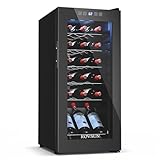
The best cheap wine refrigerators under $300 are compact thermoelectric or compressor units from brands such as Ivation, NutriChef, Antarctic Star, BLACK+DECKER, and Koolatron, with the right choice depending mainly on bottle capacity, temperature control, and how much noise your kitchen can tolerate.
As an Amazon Associate we earn from qualifying purchases at no extra cost to you.



Quick picks by situation
| Best for | Recommended type or model family | Typical capacity | Typical price range | Why it fits |
|---|---|---|---|---|
| Smallest counter space | BLACK+DECKER compact thermoelectric cooler | 8 bottles | $120–$190 | Narrow footprint and simple controls |
| Best inexpensive starter | Ivation compact thermoelectric series | 12 bottles | $150–$230 | Good balance of size, quiet operation, and adjustable temperature |
| More bottles for the money | NutriChef 12- or 15-bottle models | 12–15 bottles | $170–$280 | Often includes digital controls and removable racks |
| Two serving temperatures | Antarctic Star dual-zone compressor or thermoelectric models | 12–18 bottles | $230–$300 | Separate settings for whites and reds |
| Garage or warmer room | Compact compressor wine cooler | 12–20 bottles | $230–$300 | Usually holds temperature better than thermoelectric designs |
What matters most below $300
Capacity is less than the advertised bottle count
Wine-cooler capacity is normally measured using standard Bordeaux-shaped bottles. Burgundy bottles, sparkling-wine bottles, and wider California bottles take more space. A nominal 12-bottle cabinet may hold only 8 or 9 mixed bottles without removing a shelf.
For a small kitchen, an 8-bottle unit is usually about 10 to 11 inches wide and 17 to 19 inches deep. Twelve-bottle models commonly measure about 19 to 20 inches wide, 17 to 20 inches deep, and 25 to 30 inches high. Before buying, measure the available space with the door open, not just the shelf or countertop.
A useful rule is to buy 25 percent more stated capacity than your normal collection. If you regularly keep nine bottles chilled, choose a 12-bottle cabinet. The spare space prevents bottles from being packed tightly and makes it easier to store irregular shapes.
Single-zone or dual-zone?
A single-zone refrigerator is the better value for most occasional drinkers. One temperature setting works well when the cabinet is mainly used for whites, rosé, or short-term storage. It also gives each bottle more usable space because there is no divider between compartments.
Dual-zone models are more useful when you routinely keep both whites and reds ready to serve. Typical inexpensive dual-zone ranges are approximately 40–55°F in one compartment and 55–65°F in the other, although the exact range varies with room temperature and load. At this price, dual-zone cabinets often sacrifice capacity, run more fans or compressors, and use more electricity.
Do not choose dual-zone merely because it sounds more advanced. If you need one serving temperature, a larger single-zone unit is usually quieter, simpler, and easier to organize.
Head-to-head: thermoelectric versus compressor cooling
| Characteristic | Thermoelectric | Compressor |
|---|---|---|
| Common capacity under $300 | 8–16 bottles | 12–20 bottles |
| Approximate noise | About 25–38 dB, mostly fan noise | About 38–48 dB, with periodic compressor cycling |
| Typical electrical draw | About 60–100 watts while actively cooling | About 80–150 watts while actively cooling |
| Best room temperature | Cool, stable indoor room | Wider range, including warmer rooms |
| Vibration | Very low | Low, but noticeable during cycling |
| Likely maintenance issue | Dust-clogged fan or weakened cooling module | Dusty condenser, door seal, or compressor wear |
Thermoelectric units use a solid-state cooling module and a fan rather than a conventional compressor. They are often the best choice for a bedroom, dining area, or open-plan kitchen because the sound is steady and less intrusive. Their limitation is performance: they generally cool to roughly 25–30°F below room temperature, so a hot 80°F kitchen may not let the cabinet reach its lowest advertised setting.
Compressor models cool more decisively and are the safer choice for a garage, sunlit room, or kitchen that regularly exceeds 75°F. They tend to make a brief hum or click as the compressor starts, but the motor is not necessarily running continuously. A compressor unit also usually has better recovery after the door is opened repeatedly.
Best choices for common small-kitchen layouts
For a narrow countertop
Choose an 8-bottle thermoelectric cooler, such as a compact BLACK+DECKER-style unit. Check that the door hinge can be reversed or that the handle will not strike a cabinet. These models are convenient when width matters more than capacity, but their shallow shelves may not accept wide bottles comfortably.
For a household that drinks wine weekly
A 12-bottle single-zone Ivation or NutriChef-style cabinet is usually the strongest value. Look for removable or sliding racks, a temperature display, interior light, and a lock only if children or shared-room access make one useful. A 12-bottle layout leaves enough room for ordinary bottles without requiring the size and cost of a large dual-zone cabinet.
For whites and reds at the same time
Choose a 12- to 18-bottle dual-zone Antarctic Star-style unit if separate serving temperatures are genuinely useful. Confirm the minimum capacity in each zone: some cabinets advertise the combined bottle count but provide only four or five practical slots in the smaller compartment.
For a warm utility room
Choose a compact compressor cooler rather than the quietest thermoelectric option. Keep at least 2 inches of clearance around the ventilation area, and do not place it beside a dryer, radiator, or direct afternoon sun. A compressor may cost more initially, but poor thermoelectric performance in a hot room can make the cheaper purchase disappointing.
Energy cost: the difference is usually modest
Suppose a cooler averages 0.7 kilowatt-hours per day and local electricity costs $0.18 per kilowatt-hour:
0.7 × $0.18 × 365 = about $46 per year.
A smaller thermoelectric unit averaging 0.45 kilowatt-hours per day would cost about $30 per year at the same rate. The difference is approximately $16 annually, so capacity, temperature stability, and noise usually matter more than small wattage differences. The label’s annual energy estimate is more useful than the maximum wattage printed on the rear panel, because cooling systems cycle rather than drawing full power continuously.
Setup details that prevent common problems
- Leave the unit upright for several hours before switching on if it was transported on its side. This allows compressor oil to settle in compressor models.
- Allow ventilation clearance around the rear and sides. A cabinet pushed tightly against a wall runs longer and may struggle to reach its set temperature.
- Let bottles reach room temperature before filling the cabinet. Loading warm bottles all at once can take many hours to recover.
- Keep the racks installed unless a large bottle requires removal. Racks help maintain airflow and stop bottles from resting against the cooling wall.
- Place the cabinet on a level, solid surface. An uneven floor can make the door seal poorly and increase vibration.
- Do not use the lowest setting as a storage target without checking the actual interior temperature. A small standalone thermometer is useful because displayed settings are not the same as every shelf’s temperature.
Durability and ownership realities
The first parts to cause trouble are usually the door gasket, internal fan, control panel, or shelf coating rather than the cabinet itself. Wipe the gasket with a damp cloth every few months so dried residue does not create air leaks. Vacuum dust from the ventilation openings, but unplug the cooler first and avoid bending exposed fins.
Glass doors can collect condensation when humid air enters frequently. That is normally a sign of temperature and humidity conditions rather than a leak. Repeatedly opening the door, storing wet bottles, or blocking the interior fan makes condensation more likely.
Cheap wine refrigerators are best treated as serving appliances, not as a substitute for a dedicated cellar. They are designed for accessible, short- to medium-term storage. If you want the simplest fit for a small kitchen, select a 12-bottle single-zone thermoelectric model. If the room is hot or temperature recovery is important, spend the budget on a small compressor model. Choose dual-zone only when maintaining two separate temperatures will be part of your normal routine.
Bottom line
For most buyers, the best cheap wine refrigerators are 12-bottle single-zone cabinets in the $150–$230 range: they provide useful capacity without consuming an entire countertop and generally keep ownership costs manageable. Select an 8-bottle thermoelectric unit when every inch matters, a dual-zone model near $300 for regular red-and-white storage, and a compressor design for warm rooms or more demanding temperature control.