What's inside
As an Amazon Associate I earn from qualifying purchases. This post may contain affiliate links at no extra cost to you.
A cordless tool battery can show a full charge, run a tool normally, and then shut off the instant you lean into a cut. That behavior is usually protection working as intended—not a dead battery. The battery management system detects excessive current, heat, or an unsafe voltage drop, then disconnects the pack to prevent cell damage.
The important distinction is whether the shutdown is caused by a genuinely heavy load, a weak battery, poor electrical contact, or a tool problem. Those causes feel similar at the trigger, but they call for different fixes.
What happens when a battery is heavily loaded
A cordless tool converts battery voltage into motor power. When the motor needs more torque, it draws more current. A brushless drill may briefly pull 30 to 60 amps during a hard start, while a high-powered saw, grinder, or rotary hammer can demand considerably more. The exact figure depends on the tool, material, battery design, and motor efficiency.
Every battery has internal resistance. Under load, that resistance causes voltage to sag. A nominal 18-volt lithium-ion pack may measure close to 20 volts when freshly charged, but its voltage can drop sharply when the tool demands high current. If the battery falls below the tool’s or battery management system’s safe voltage threshold, the pack shuts down.
Heat is the other major factor. High current heats the cells, bus bars, terminals, and wiring. Battery packs use temperature sensors to stop operation if the cells get too hot. Some tools also have their own thermal protection, so the shutdown may originate in the tool rather than the pack.
The most common shutdown causes
| Symptom | Likely cause | What to try |
|---|---|---|
| Stops immediately when cutting or drilling | Low-current or worn battery; excessive load | Use a higher-output pack, reduce cutting pressure, or inspect the material |
| Runs again after a few minutes | Thermal protection | Let the pack and tool cool; improve airflow and avoid consecutive hard cuts |
| Shuts off when the tool moves or vibrates | Dirty, loose, or worn contacts | Clean contacts and check for damaged rails or terminals |
| One battery fails but others work | Aging cells or damaged pack | Replace or professionally service the battery |
| All batteries fail in one tool | Tool overload, blocked mechanism, or tool fault | Inspect the blade, bit, gearbox, and motor |
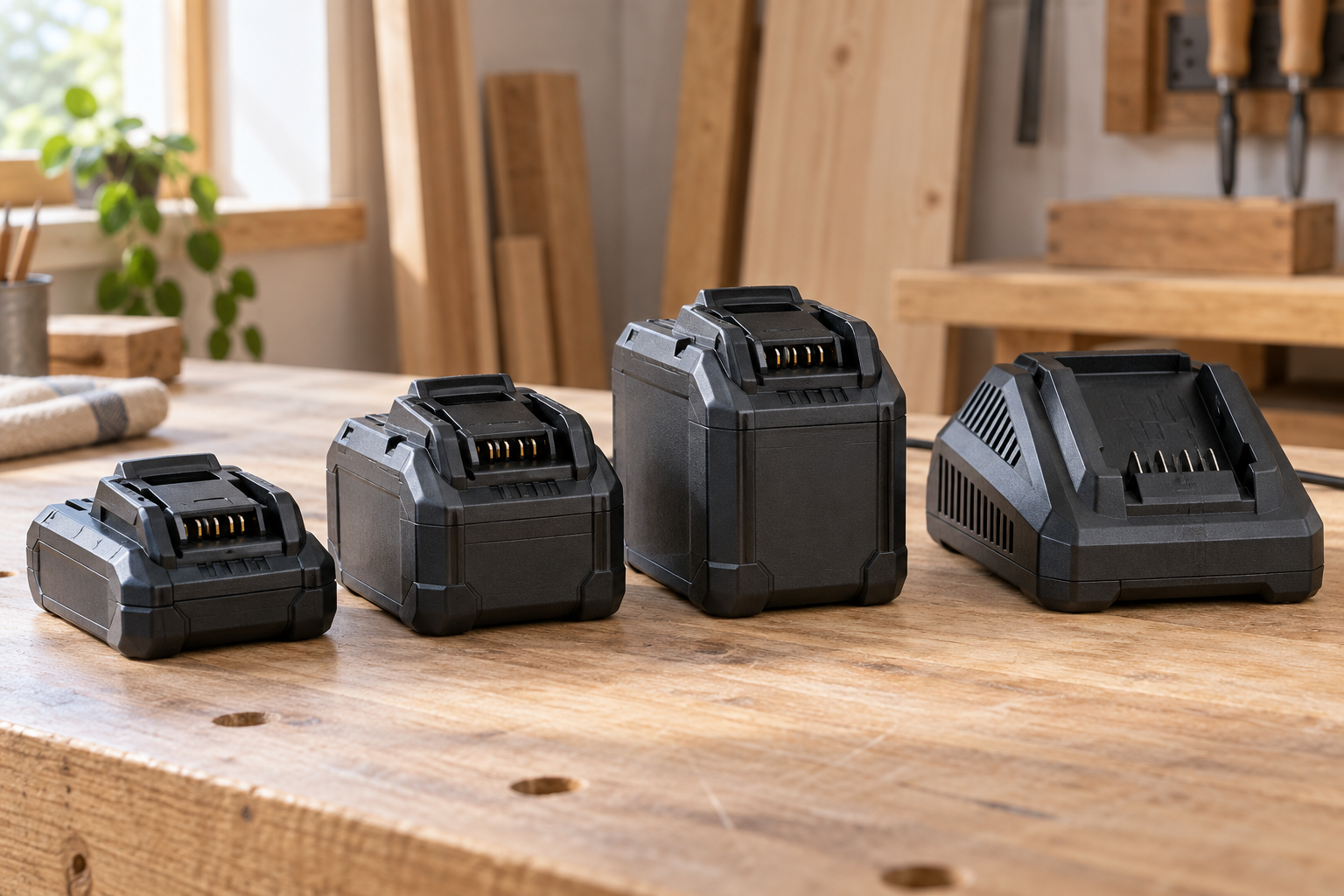
The most common mistake is using a compact battery on a tool that can consume high current. Small packs may have the same nominal voltage as larger ones, but fewer cells in parallel and less ability to deliver current. A compact 2.0Ah pack can be perfectly suitable for a drill driving screws, yet frustrating in a circular saw or grinder.
Why amp-hours do not tell the whole story
Amp-hours describe stored capacity, not maximum output. A 5.0Ah pack will generally run longer than a 2.0Ah pack, but it is not automatically better at every task. Cell chemistry, internal resistance, cell count, and the battery’s control electronics matter just as much.
For high-demand tools, look for the manufacturer’s high-output or high-performance battery category rather than choosing solely by amp-hours. These packs usually use better cells, heavier internal conductors, and improved heat management. They cost more and add weight, so they are not always the right choice for an impact driver or overhead drill.
If you are building into a platform, compare high-output cordless tool batteries for saws, grinders, and rotary hammers. For light-duty work, a cheaper compact pack is often the better buy because it is smaller, easier to handle, and less expensive to replace.
Reduce the load before replacing the battery
A battery may shut down because the tool is being asked to do work it cannot mechanically handle. A dull saw blade creates more friction and heat than a sharp one. A drill bit that is too large, a clogged vacuum filter, a pinched blade, or a gearbox with damaged bearings can produce the same electrical symptoms as a weak pack.
Use the correct accessory and let the tool maintain its speed. Pressing harder is rarely the answer with a circular saw or grinder; it usually increases current draw and slows the motor. In wood, back the blade out briefly if the kerf closes. In metal, use the correct cutting disc or bit and avoid forcing a stalled tool.
For repeated heavy cuts, a corded tool can still be the cheaper and more consistent option if you have reliable power nearby. Cordless convenience has a real operating cost: batteries, charging time, and reduced performance as packs heat up.
How to identify a bad battery
Start with a fully charged pack at room temperature. Try the same job with a second battery of the same platform. If the larger or newer pack works while the smaller one trips immediately, the first pack may simply be undersized. If a known-good high-output battery also shuts down, investigate the tool, accessory, or material.
Inspect the battery and tool contacts for sawdust, oxidation, melted plastic, or terminals that sit lower than their neighbors. Remove the battery before cleaning. Use a dry brush or a small amount of electrical contact cleaner applied to a cloth; do not scrape aggressively or bridge terminals with a screwdriver.
A pack that becomes unusually hot, swells, smells sweet or solvent-like, leaks, or shows physical damage should be removed from service. Do not open it or attempt a cell replacement unless you have the equipment and experience to manage lithium-ion batteries safely. Recycle damaged packs through a battery collection program.
Choosing the right replacement
Match the battery to the tool’s workload, not just the platform voltage. For drills, drivers, lights, and small sanders, compact packs are usually fine. For cordless circular saws with high-output batteries, grinders, recip saws, and rotary hammers, prioritize current delivery and cooling over minimum weight.
Buy batteries from the tool manufacturer or a reputable authorized source. Cheap counterfeit packs may use inferior cells, inaccurate temperature sensing, or weak protection components. They can shut down early, damage the tool, or create a serious fire risk during charging. A third-party replacement can be acceptable for low-demand use only when its safety certifications, warranty, and seller reputation are clear.
Finally, keep a second charged pack for demanding work. Swapping batteries lets a hot pack cool while you continue, and it prevents the temptation to keep forcing a tool after repeated thermal shutdowns. A shutdown is useful warning information; treating it as something to defeat usually turns a manageable limitation into an expensive failure.
Related guides
- Longest Lasting Lawn Mower Battery: AGM vs Lithium vs Flooded Lifespan and Cost per Season
- Duralast Gold Lawn Mower Battery Review: U1 Fit, CCA and When to Pay for AGM
- Greenworks Pro 80V 21-Inch Mower Review: Runtime Math, Push vs Self-Propelled and Yard Fit
- Bosch High Pressure Washer Gun Replacement: Fittings, Adapters and What Fits Your Model