
Our Top Picks
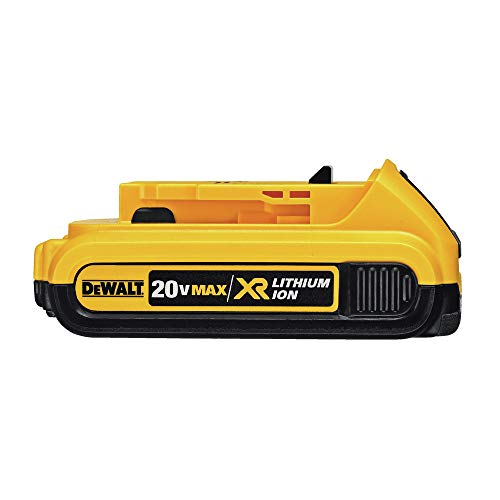
 DEWALT 20V MAX* XR Battery9.20in. x 7.00in. x 3.55in.4.5 x 3.13 x 2.63 Inches2.9 poundsCheck on Amazon

What's inside
As an Amazon Associate I earn from qualifying purchases. This post may contain affiliate links at no extra cost to you.
DeWalt PowerStack and XR batteries share the 20V MAX platform, but they are not interchangeable in every respect. Both fit compatible 20V MAX tools and chargers; PowerStack uses pouch-style cells in a compact pack, while common XR packs use cylindrical cells. That changes the pack’s size and weight, and can affect how a tool delivers power under heavy load. It does not mean every PowerStack pack lasts longer or makes every tool faster.
As an Amazon Associate we earn from qualifying purchases at no extra cost to you.


Quick comparison
| What matters | PowerStack | XR cylindrical-cell packs |
|---|---|---|
| Cell construction | Pouch-style cells | Cylindrical cells |
| Size and handling | Compact, especially useful on smaller tools | Varies by pack; larger-capacity packs are often bulkier |
| Capacity choices | Includes compact, lower-capacity options | Broad range, including high-capacity packs for longer jobs |
| Best fit | Compact tools, overhead work, and demanding short bursts | Longer work between charges and value-focused buying |
| Compatibility | Compatible with DeWalt 20V MAX tools and chargers, subject to tool requirements | Compatible with DeWalt 20V MAX tools and chargers, subject to tool requirements |
Size and weight
PowerStack’s practical advantage is its compact form. A smaller pack can make a drill or impact driver easier to control in a cabinet, above shoulder height, or between framing members. Less weight at the handle also reduces fatigue over a long day of repetitive fastening. The difference is most noticeable on compact tools, not a heavy saw where the battery is only one part of the overall weight.
XR is a product family, not one battery size. A compact XR pack can suit a similar job to a compact PowerStack, while a higher-capacity XR pack is larger and heavier but stores more energy. Compare the exact pack’s amp-hour rating and physical dimensions rather than assuming every XR battery is bulky or every PowerStack pack is lighter.
For overhead work, choose the smallest capacity that gets through the task with a reasonable reserve. A larger pack may keep you from changing batteries, but it also makes the tool more tiring to hold and can upset balance on a compact drill.
Runtime and capacity
Amp-hours (Ah) are a useful guide to stored charge: all else being equal, a 5Ah pack holds more energy than a 1.7Ah pack. In practice, runtime depends on the tool, material, bit or blade, and how hard you work it. Driving small screws in softwood uses far less energy than cutting thick framing lumber or grinding metal. A pack’s Ah figure does not promise a fixed number of cuts or screws.
PowerStack packs are often sold in compact, relatively low-capacity sizes. That makes them appealing when low weight matters more than maximum time between charges, but a small pack can run flat quickly in a high-draw tool. For a full day of sawing, repeated long cuts, or other sustained work, a larger XR pack may be the more practical buy. Keep a spare charged if stopping to recharge would interrupt the job.
Before purchasing, check what comes in the kit. Tool bundles may include different battery capacities even when the tool itself is identical. If runtime matters more than compactness, compare the cost of the bare tool plus a suitable larger pack against the kit price.
Power under load
PowerStack’s pouch-cell design is intended to deliver strong output from a compact pack, and the difference is most relevant when a tool is drawing substantial current. That can help during short, demanding bursts, such as driving large fasteners or starting a cut. It is not a guarantee that a PowerStack battery will make every tool noticeably faster. Tool design, battery condition, temperature, and the work itself all matter.
A battery can also feel less powerful as its charge falls, especially under heavy load. If a saw slows, an impact driver struggles, or a tool shuts down during a demanding task, check the charge and let a hot pack cool before continuing. A dull blade, wrong bit, binding cut, or excessive feed pressure can create the same symptoms; a new battery will not fix those problems.
For sustained heavy use, capacity matters alongside output. A compact pack may deliver strong bursts but still run out sooner than a larger pack. If the tool repeatedly cuts out under ordinary work, verify the tool’s battery requirements and try a healthy, fully charged pack with adequate capacity before deciding the tool is faulty.
Compatibility and charging
Both families are part of DeWalt’s 20V MAX system, so they fit compatible 20V MAX tools and chargers. That does not make them universal across every DeWalt cordless platform: check the tool label and manual, particularly for older equipment or tools from a different voltage family. Charger time varies with battery capacity and charger model; a larger pack generally takes longer to recharge.
Battery packs are not a fix for poor technique or a worn tool. Keep the contacts clean and dry, avoid leaving packs in extreme heat, and stop using a battery that is cracked, swollen, or unusually hot. Do not force a pack into a tool or charger if it does not seat normally.
Which should you buy?
Choose PowerStack if you value a compact, light setup for a drill, impact driver, or other tool you carry or hold overhead. It is also worth considering for demanding bursts where the smaller format suits the job. Look at the exact pack’s capacity, though: a small battery may be the wrong choice for long cuts or a shift of continuous work. Browse DeWalt PowerStack 20V batteries and compare capacity, dimensions, and kit contents.
Choose a larger XR battery if your priority is fewer battery changes during extended work. For occasional home repairs, light drilling, or short fastening tasks, a less expensive compatible XR pack is often entirely adequate. Paying extra for PowerStack is hard to justify if you will not notice the size advantage or regularly need more capacity. Compare DeWalt 20V XR batteries by Ah rating and price rather than buying the biggest pack by default.
The simple decision is compact handling versus longer runtime per pack. Match battery capacity to the tool and the work, keep a spare for jobs that cannot pause, and judge value by the full setup—not the battery label alone.
FAQ
Which should you buy?
Related guides
More from Amazon
Programs that pair well with the guide above. Offers and eligibility are set by Amazon and may change.
A free business account with business pricing and bulk-buying tools for work, shop or home office.
Create a business accountFree shipping on eligible items, Prime Video and more. Eligible new members can start with a free trial.
Start a Prime free trialAudiobooks and podcasts to listen to on the go. Eligible new members can start with a free trial.
Try Audible freeAd-free music streaming. Eligible new subscribers can start with a free trial.
Try Music Unlimited freeAs an Amazon Associate we earn from qualifying purchases.

Write Your Review
No reviews yet. Be the first to share your experience!