
Our Top Picks
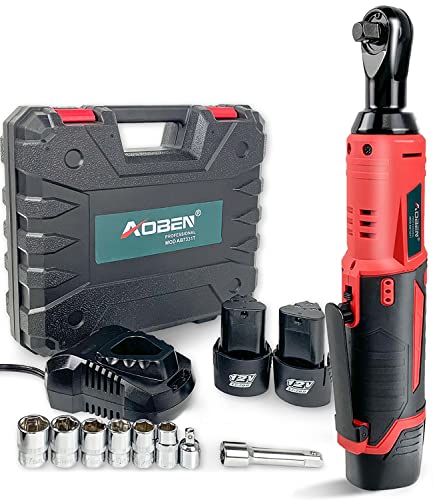 AOBEN Cordless Electric Ratchet Wrench Set3/8" 12V with 2 Batteries12 x 10 x 3.5 inches4.4 poundsCheck on Amazon
 LEXIVON Torque Wrench 1/2-Inch Drive Click 10~150 Ft-Lb/13.6~203.51/2"DR. 10-150 FT-LB2.5 x 3 x 18 inches3 PoundsCheck on Amazon
 DEWALT 20V MAX Battery XR POWERPACK™ 4Ah Lithium20 volts (Pack of 2)6 x 6.5 x 3.8 inches2.67 PoundsCheck on Amazon

What's inside
- Contents
- What a cordless ratchet is, and what it is not
- The main styles of cordless ratchet
- Drive size and socket compatibility
- Torque, speed and head size explained
- Comparison table: styles side by side
- Matching the tool to the job
- Batteries and platform choice
- Buyer checklist
- Mistakes to avoid
- Safety with powered ratchets
- Frequently asked questions
- Bottom line
As an Amazon Associate I earn from qualifying purchases. This post may contain affiliate links at no extra cost to you.
The short answer: the best cordless ratchet is the one that fits into the spaces you actually work in, offers the drive size your sockets use, and gives you enough turning force to run fasteners down fast without pretending to replace a torque wrench. For most home mechanics and DIY owners, a compact mid-size drive tool with a variable-speed trigger and a forward and reverse switch covers the bulk of jobs. Larger drive sizes suit suspension and heavy equipment work, while slim extended-reach or angle-head designs earn their place in cramped engine bays.
This guide does not rank products or quote prices. It explains how cordless ratchets work, the main styles, the specifications that deserve your attention, and the habits that keep fasteners and fingers intact. Use it to build a short list, then check current specifications and the maker’s instructions for any model you are considering.
Contents
- What a cordless ratchet is, and what it is not
- The main styles of cordless ratchet
- Drive size and socket compatibility
- Torque, speed and head size explained
- Comparison table: styles side by side
- Matching the tool to the job
- Batteries and platform choice
- Buyer checklist
- Mistakes to avoid
- Safety with powered ratchets
- Frequently asked questions
- Bottom line
What a cordless ratchet is, and what it is not
A cordless ratchet is a small powered wrench that spins a socket for you. Inside the slim body, a motor and a gear train turn a square drive, and a switch lets you pick tightening or loosening. Unlike a hand ratchet, you do not need room to swing a handle, which is the whole point. A fastener that would take dozens of tiny arc movements with a hand tool is run in or out within seconds.
It is worth separating this tool from two cousins. An impact wrench delivers short, hard rotational blows and is made for stubborn, high-torque fasteners such as lug nuts. A drill driver is designed for screws and holes, and it has a chuck rather than a square drive. A cordless ratchet sits between them, built for speed and access, usually with moderate turning force. It excels at running fasteners down quickly and breaking free ones that are only lightly stuck, while stubborn corroded bolts may still need a breaker bar or an impact tool.
Equally important, most cordless ratchets are not precision torque instruments. They help you spin a bolt quickly, but the final tightening of critical fasteners, such as wheels, brakes, suspension and engine components, usually belongs to a calibrated torque wrench, following the vehicle or equipment manual.
The main styles of cordless ratchet
Compact standard-head models
This is the category most buyers want. The body is slim, the head is reasonably low, and the tool balances in one hand. A standard-head ratchet suits general automotive, bicycle, motorcycle, appliance and furniture assembly jobs. If you can only own one, this is usually the safe choice.
Extended-reach and long-neck designs
An elongated body lets the head reach into recessed fasteners, such as bolts buried behind brackets or inside a wheel well. The extra length can make the tool a little less nimble, and it often trades some turning force for the slimmer profile. Look at these if your work involves deep holes more than open surfaces.
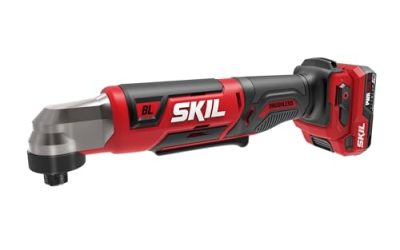
Angle-head and right-angle ratchets
Here the head sits at a right angle to the body, so the motor and handle stay out of the way of nearby parts. They shine in cramped engine bays, under dashboards, inside machinery housings and anywhere a straight tool cannot fit. They are generally more specialised, so most owners treat them as a second tool rather than a first.
Stubby and ultra-compact units
Short bodies fit tight spots but can be harder to hold steady when a fastener fights back. They suit light assembly and bicycle work well. Heavier jobs may overpower them, and the small battery can limit run time.
Higher-drive heavy models
Models with larger square drives are bigger, heavier and built for greater force. They fit machinery maintenance, trailer work and suspension jobs. Many people find them clumsy for ordinary automotive work, so match the size to the fasteners you handle most often.
Drive size and socket compatibility
The square drive is where the tool meets your sockets, so check it before you buy. Common sizes include one-quarter inch, three-eighths inch and one-half inch, and each size is paired with sockets of the same drive. Smaller drives suit smaller fasteners and tighter spaces. Larger drives handle bigger fasteners and higher forces.
- Smaller drive: light, slim and ideal for electronics, bikes, trim and small engines.
- Mid-size drive: the common compromise for general automotive and household repair.
- Larger drive: better for heavy equipment, big bolts and suspension work, but bulkier.
Adapters can step a socket between drive sizes, but every adapter adds length, play and a potential weak point. Stepping up to a larger drive is usually safer than stepping down, because a small drive forced to turn a large fastener can be overloaded. Also decide whether you need impact-rated sockets. Standard chrome sockets are designed for hand tools and can crack under repeated shock, so follow the guidance for the socket type you use with a powered tool.
Torque, speed and head size explained
Torque ratings
Listings usually describe a maximum torque figure, often with separate numbers for tightening and loosening. These are best read as a rough indicator of class, not as a promise of what you can accurately achieve. A tool that boasts a high maximum is not automatically better for your work, because a heavy tool gets in the way in tight spots. Check whether the figure refers to free-running or peak force, and consider whether the tool will actually be used at that level.
Speed and trigger control
A variable-speed trigger lets you start a nut slowly so it threads cleanly, then ramp up for the rest of the run. Some tools also offer speed modes or a low-speed setting for delicate fasteners. Fixed-speed designs are fine for repetitive work, but they risk cross-threading when you start a small bolt by machine. Faster is nice. Controllable is better.
Head profile
Head height and width decide whether the tool reaches the bolt at all. Two models with the same torque rating can differ greatly in how well they enter a tight space. Manufacturers often publish head dimensions, and comparing them against the clearance around your typical fasteners is one of the most useful checks you can make.
Forward and reverse control
Look for a switch you can flip with your thumb while holding the tool, and a clear indication of direction. A switch that is easy to knock by accident is a poor sign, since driving a fastener the wrong way can strip it or jam the socket.
Manual ratcheting backup
Some models let you use the tool as an ordinary hand ratchet when the battery is flat or when you need a final feel on a fastener. Not everything with this feature does it well, so check how smooth the manual operation is described in reviews and listings.
Comparison table: styles side by side
The table summarises general tendencies. Specific models vary, so confirm details with the maker before choosing.
| Style | Best for | Strengths | Drawbacks |
|---|---|---|---|
| Compact standard head | General automotive and household work | Balanced, versatile, widely compatible | May not fit the tightest openings |
| Extended reach | Recessed and deep fasteners | Gets into awkward holes | Longer, sometimes less force |
| Angle head | Cramped engine bays, under panels | Keeps body clear of obstacles | Specialised, often costs more |
| Stubby ultra-compact | Bicycles, light assembly, tight corners | Tiny, light, easy to store | Limited power and run time |
| Larger drive heavy model | Equipment, trailers, suspension jobs | More turning force for big fasteners | Bulky, heavier, less nimble |
Matching the tool to the job
Automotive maintenance
For oil pan bolts, brake caliper brackets, battery terminals, interior trim and the countless small fasteners under a bonnet, a compact mid-size ratchet saves a surprising amount of time. Use it to run bolts in and out, then finish critical fasteners by hand or with a torque wrench as the service manual instructs. Never use powered speed as a reason to skip that last verification step.
Bicycles and motorcycles
Smaller drives and light bodies suit cycle work, where fasteners are small and many are made of softer alloys that strip easily. Variable speed and a gentle trigger matter more than raw force. Carbon parts and aluminium components often call for exact torque figures, so rely on a proper torque tool for those.
Furniture, shelving and equipment assembly
Flat-pack frames, gym equipment, trampolines and playsets use lots of hex and nut fasteners. A cordless ratchet with the right socket collection turns a long weekend into an afternoon. Take care not to overtighten bolts threaded into wood or particleboard, which can strip out quickly.
Machinery, trailers and farm work
Heavier, larger-drive tools make sense here, particularly for repeated tasks like wheel hub covers, guard panels and implement bolts. Keep a breaker bar nearby for seized fasteners, because a ratchet that stalls is a signal to switch tools, not to push harder.
Batteries and platform choice
Many cordless ratchets are sold as bare tools that fit the same batteries as a drill, saw or light. If you already own a battery platform, a tool in that system generally offers the best value and the least clutter. Kits that include a pack and charger make sense for someone starting out, but check what size of pack is included, since a small pack gives a lighter tool and a short run time.
Battery size changes balance as well as endurance. A large pack makes a slim tool heavier and can tip the weight backward in your hand. Compact packs keep it nimble but may fade during long sessions. Think about whether you do short bursts, such as bolt-on jobs under a car, or long sessions, such as assembly lines of fasteners, and choose accordingly.
Look for built-in protection against overheating and over-discharge, and follow the manufacturer’s guidance on charging and storage. Keep spare packs charged if you rely on the tool for an entire day.
Buyer checklist
- The square drive size matches the sockets I already own, or I have budgeted for a matching set.
- Head height, body length and any angled design suit the clearances I actually face.
- A variable-speed trigger and an easy forward and reverse switch are included.
- The torque description makes clear whether it is free-running, peak or tightening force.
- The battery platform matches tools I own, or a pack and charger are included.
- The tool has a work light or clear sightline to the fastener.
- A manual ratcheting mode is available if I want a hand-feel backup.
- Impact-rated sockets are on my list if the maker recommends them.
- The manual, warranty terms and return policy are easy to find.
- I have a torque wrench for any fastener that needs a specified setting.
Mistakes to avoid
Treating it as a torque wrench
Powered ratchets do not stop at a measured setting. Overtightening stretches bolts, damages threads, and can warp parts such as brake components and engine covers. Finish critical fasteners with a calibrated tool.
Buying on maximum torque alone
High numbers can come with a bulky head and a heavy body that will not fit where you need it. Compare clearance, balance and control first, then use torque to confirm a model is in the right class.
Using the wrong sockets
Mixing in worn, cracked or unsuitable sockets is a classic way to round off fasteners and injure hands. Inspect sockets regularly and replace any that show wear or cracks.
Starting fasteners at full speed
Beginning a nut at high speed invites cross-threading. Start by hand or at a gentle trigger pull, then increase speed once it runs freely.
Ignoring battery fit and runtime
A tool that seems cheap can become expensive if it needs a whole new charging platform. Check battery compatibility before you buy.
Skipping the manual
Each tool has its own recommendations for sockets, duty cycles and maintenance. Read the manual before the first job.
Safety with powered ratchets
Powered wrenches can turn faster than your reflexes. A ratchet that grabs or kicks can twist a wrist, pinch a hand or throw a socket, so respect it even when it looks small.
- Wear eye protection. Broken sockets and flying rust are real hazards. Gloves help with grip, but keep sleeves, jewellery and long hair clear of the rotating drive.
- Brace your wrist and stand in a stable position. If the fastener binds, the body of the tool may rotate sharply. Hold it so your hand is not trapped against metal.
- Disconnect vehicle power before electrical work. A metal tool across a battery terminal can short and burn. Isolate the battery according to the vehicle manual.
- Support vehicles properly. Never work beneath a vehicle held only by a jack. Use appropriately rated stands on firm, level ground.
- Use compatible sockets and attachments. Follow the instructions for impact-rated accessories, and replace anything cracked or deformed.
- Remove the battery for accessory changes. Taking out the pack avoids accidental starts when swapping sockets or adapting the tool.
- Mind heat and pinch points. Sustained use warms the tool, and a socket on a spinning fastener can trap fingers against nearby parts.
- Read the manual. Check current instructions and warnings for your exact model before use.
Frequently asked questions
Is a cordless ratchet the same as an impact wrench?
No. A ratchet turns the socket continuously with a gear train, while an impact wrench delivers rapid rotational blows. Impact tools suit stubborn, high-force fasteners; ratchets suit speed and access in tighter places.
Which drive size is best for general use?
A mid-size drive is the common choice for mixed automotive and household work, since it handles a wide range of fasteners without becoming bulky. Choose smaller for delicate or tight tasks and larger for heavy equipment.
Can a cordless ratchet loosen stuck bolts?
Sometimes, if the bolt is only lightly seized. For rusted or over-tightened fasteners, a breaker bar, penetrating oil or an impact tool is more appropriate. Forcing a ratchet past its limits can damage its gears.
Do I still need a torque wrench?
Yes, for any fastener with a specified tightening value. Wheels, brakes, suspension and engine parts should be finished according to the vehicle or equipment manual using a calibrated tool.
Can I use ordinary sockets on a cordless ratchet?
Many people do for light work, but standard chrome sockets are designed for hand tools and may crack under repeated shock. Check the tool and socket instructions, and consider impact-rated sockets where recommended.
Are angle-head ratchets worth buying?
If you often work in cramped spaces, yes. They let you reach fasteners that a straight body cannot. If most of your fasteners are accessible, a standard compact model will probably serve you better.
How long does the battery last?
That depends on the pack size, the fastener and how hard you load the tool. Short bursts run for a long time, while continuous heavy use drains a pack quickly. Keep a spare if you plan a long project.
Can I use one for bicycle repairs?
You can for general fasteners, using a small drive and gentle trigger. Many bicycle parts have precise torque requirements, so finish those with a proper torque tool and follow the part maker’s instructions.
Bottom line
Choose a ratchet for the space you work in first, then match drive size, speed control and battery platform. A compact tool with a variable trigger handles most households, angle-head and extended models solve access problems, and heavier drives belong with equipment work. Keep your torque wrench for the fasteners that matter, wear eye protection, and check current specifications before you order.
When you are ready to compare options, you can browse cordless ratchets, look at angle-head ratchets, add a set of impact-rated sockets, pick up a torque wrench and a spare tool battery.
Disclosure: As an Amazon Associate, we earn from qualifying purchases. Links marked as sponsored may earn us a commission at no extra cost to you.
Related guides
More from Amazon
Programs that pair well with the guide above. Offers and eligibility are set by Amazon and may change.
A free business account with business pricing and bulk-buying tools for work, shop or home office.
Create a business accountFree shipping on eligible items, Prime Video and more. Eligible new members can start with a free trial.
Start a Prime free trialAudiobooks and podcasts to listen to on the go. Eligible new members can start with a free trial.
Try Audible freeAd-free music streaming. Eligible new subscribers can start with a free trial.
Try Music Unlimited freeAs an Amazon Associate we earn from qualifying purchases.
Write Your Review
No reviews yet. Be the first to share your experience!