
Our Top Picks

What's inside
- Contents
- What a cordless pruning saw is for
- Types of cordless pruning saws
- Comparison table
- Blades and cutting action
- Grip, weight and ergonomics
- Batteries and runtime
- Making a clean cut
- Pruning saw safety: blades, kickback and footing
- Cleaning, sharpening and storage
- Buyer checklist
- Mistakes to avoid
- Frequently asked questions
- Bottom line
As an Amazon Associate I earn from qualifying purchases. This post may contain affiliate links at no extra cost to you.
The short answer: the best cordless pruning saw is the one whose cutting action matches your branches and whose grip lets you keep control. A reciprocating pruning saw is a forgiving all-rounder for small to medium limbs. A compact chain-style saw cuts quickly but needs more respect. A pole-mounted saw keeps you on the ground for high work, and a manual folding saw remains a worthwhile backup when the battery runs out. Blade condition, guard design and how the tool balances in one hand matter more than any claim about cutting speed.
This guide mentions no brands and ranks no models. It explains the main saw types, how blades differ, what to check in handles and batteries, and how to cut cleanly and safely. Compare current listings and instructions with the branches you actually have to deal with.
Contents
- What a cordless pruning saw is for
- Types of cordless pruning saws
- Comparison table
- Blades and cutting action
- Grip, weight and ergonomics
- Batteries and runtime
- Making a clean cut
- Pruning saw safety: blades, kickback and footing
- Cleaning, sharpening and storage
- Buyer checklist
- Mistakes to avoid
- Frequently asked questions
- Bottom line
What a cordless pruning saw is for
A pruning saw fills the gap between hand pruners and a full-size chainsaw. Hand pruners snip small stems. A chainsaw fells trees and cuts logs. A pruning saw handles the many limbs in between, such as a stubborn branch on an apple tree, a dead limb on a shrub, or a crossing branch you want gone before it rubs a neighbor. Cordless versions save the effort of long manual sawing and spare you from dragging a cable around the garden.
Be clear about what the tool is not. It is not a substitute for a professional when a limb is large, heavy, under tension or near buildings and wires. It is also not meant for felling trees. The right job for a pruning saw is the careful removal of branches you can reach, see clearly and control. If you cannot say how a limb will behave when it comes free, that is a sign to stop and get help.
Pruning also benefits the plant when done thoughtfully. Removing dead or damaged wood and thinning crowded growth is common practice, but the right timing and cut placement vary by species. A local gardening or extension resource will give better guidance than a general buying guide can.
Types of cordless pruning saws
Four families cover most of what you will see. Each has a different feel, a different set of risks and a different sweet spot.
Cordless reciprocating pruning saw
This tool moves a pruning blade back and forth in a straight line. It is typically held in one or two hands, and the blade is often a coarse, aggressive tooth pattern meant for green wood. It is a forgiving choice for beginners because there is no chain to bind, though the blade can bounce on small, unsupported branches. It copes well with small and medium limbs and with awkward angles. You can look at cordless reciprocating pruning saws to compare handle layouts and blade guards.
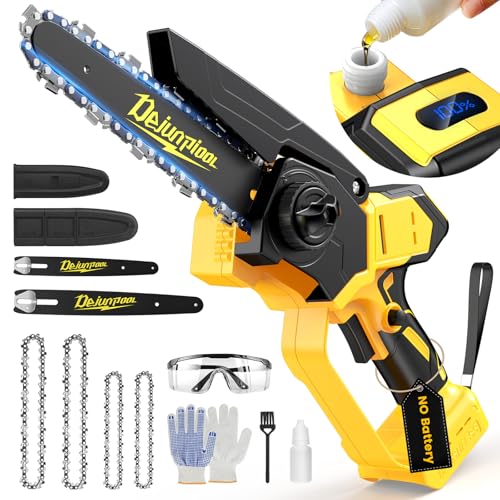
One-handed mini chainsaw
A compact chain saw designed to be held in one hand is popular for quick limb removal. It cuts fast and can be convenient for short bursts of work. It also carries the hazards of any chain tool, including kickback, and the one-handed grip gives you less control than two hands would. Many people feel more comfortable using a model that is designed to be held with two hands. Read the manual for what the maker says about safe use, and treat this tool with real caution.
Cordless pole pruning saw
A pole-mounted saw puts the cutting head on a long shaft so you can work overhead from the ground. It cuts down on ladder use, which is a major safety benefit, but the leverage makes it tiring and harder to aim. Because of the height, you should never use one near power lines. A cordless pole saw suits high branches that are otherwise out of reach.
Manual folding saw as a companion
A manual pruning saw is not battery powered, but it belongs in this guide as a companion. It never runs flat, weighs very little, and gives precise control for finishing cuts close to the branch collar. Many gardeners keep one in a pocket or tool bag for small jobs and for moments when the battery is empty. If your work is occasional and mostly light, it may be all you need.
Comparison table
Here is a general overview. Each row links to its section, and individual products vary, so verify details in the product listing.
| Type | Best for | Strength | Limitation |
|---|---|---|---|
| Reciprocating pruning saw | Small to medium limbs | Forgiving, handles awkward angles | Blade can bounce on loose stems |
| One-handed mini chainsaw | Quick limb removal | Fast cutting | Kickback risk; less control in one hand |
| Cordless pole pruning saw | High branches from the ground | Reduces ladder use | Tiring and harder to aim |
| Manual folding saw | Light work and backup | No battery, precise control | Needs effort on thicker wood |
Blades and cutting action
The blade or chain is the heart of the tool. A sharp, correctly fitted cutting edge makes everything easier, while a dull one makes the motor labor and the operator push. Think about what you will cut. Green, living wood behaves differently from dry, dead wood, and a blade designed for one may struggle with the other.
Tooth pattern and length
Coarse teeth clear sawdust quickly and cut green wood fast but leave a rougher surface. Finer teeth cut more smoothly and suit drier or harder wood, though they may clog. A longer blade reaches through thicker limbs and lets you use more of the stroke, but it is also harder to control in tight spaces. Pick a length that suits the branches you actually have, and stay within the stated capacity.
Changing and replacing blades
Look for a tool-free or simple blade change, since a fiddly clamp is tiresome in the garden. Make sure replacement blades are easy to buy and clearly matched to the model. Always disconnect the battery before changing a blade, and handle blades by their spine, not the teeth. Wear gloves for the swap.
Guards and covers
A blade guard or scabbard protects you when carrying or storing the saw, and it protects the teeth too. A saw without one is more awkward to store safely. Check that it fits securely and cannot slip off in a bag.
Grip, weight and ergonomics
A pruning saw is held awkwardly, often above shoulder height or reaching into the crown of a shrub. A tool that is nicely balanced in the shop may feel very different when you hold it at arm’s length. Look for a handle shape that suits your hand size and allows a firm, relaxed grip, and a trigger that does not require a hard squeeze for long periods.
Weight matters most for overhead work and long sessions. A heavier battery pack can improve runtime but adds fatigue, so think about the balance between the two. Rubberized grips and some vibration damping make the tool more comfortable. If possible, handle the tool before buying, or check that the seller allows returns.
Left-handed users should check that the controls work comfortably in either hand. Check also that the trigger and any safety switch are placed so you can operate them with gloves on, since you will wear them every time you cut.
Batteries and runtime
As with other cordless tools, the battery platform is a long-term decision. If you already own batteries, a bare tool that accepts them can be economical. If you are starting fresh, think about what other tools you may want to add. Check whether the battery and charger are included, and confirm compatibility before buying.
Runtime is affected by branch diameter, wood type, blade sharpness and how much force you apply. A figure in a listing reflects specific test conditions and should be used only to compare models. If you have many branches to cut, a second pack makes the job smoother. Let a warm pack cool before charging, and store batteries somewhere dry and moderate in temperature.
Making a clean cut
Good cuts help the plant recover and keep you safe. Before starting, study the branch. Which way will it fall? Is it under tension, bent against another limb? Is it supported by anything below? A branch that springs when cut can pinch the blade or swing back toward you.
For a limb of some weight, a staged approach is common. Make a shallow undercut on the underside a short way out from the trunk, then cut from the top slightly farther out so the branch drops without tearing the bark. Finally, remove the remaining stub close to the branch collar, the slightly swollen ring where the branch meets the trunk. Avoid cutting flush with the trunk, and avoid leaving a long stub. Gardening references illustrate this clearly.
Let the blade do the work. Start the saw before it touches the wood, apply gentle, steady pressure, and keep your free hand well clear. If the blade binds, stop, release the trigger, remove the battery if needed, and free it carefully.
Pruning saw safety: blades, kickback and footing
Saws cut flesh as willingly as wood. Plan every cut with that in mind, and read the manual for your specific model before using it for the first time.
Blade and chain handling
Treat the cutting edge as live whenever a battery is installed. Remove the battery before changing a blade or chain, clearing a jam, cleaning or adjusting the tool. Use the guard when carrying or storing the saw, and never carry it with the trigger accessible or your finger on it. Keep both hands on the tool, and keep your free hand and body out of the line of the blade, since a slip can drive it toward your leg or arm.
Kickback and binding
Chain-style saws can kick back when the tip of the bar contacts something or the chain pinches. Reciprocating blades can bind and jerk. Either can pull the tool toward you. Avoid cutting with the tip, keep a firm grip, stand with a balanced stance, and never cut at a height where you must reach above your shoulders. If the tool must be held overhead to reach, use a pole saw or call a professional.
Eye, head and hearing protection
Sawdust, bark and chips fly in every direction, and branches can swing or fall. Wear close-fitting eye protection, cut-resistant or sturdy gloves, long sleeves and sturdy footwear. A hard hat is wise when working beneath limbs. Hearing protection is advisable for chain-style tools and for long sessions with any powered saw.
Stable footing and overhead hazards
Never cut from an unstable ladder or while leaning out from a branch. Keep your feet on firm, level ground wherever possible. If you must use a ladder, make sure it is secure, and do not operate a powered saw from it unless the manual allows and you have a helper. Look up for overhead power lines before every job and stay well clear of them. If a limb is near or touching a line, do not touch it. Contact the utility.
Battery cautions
Use only the matching charger. Do not use or charge a pack that is swollen, leaking or damaged, and keep batteries away from heat and moisture. Do not charge on flammable surfaces, and never leave a pack in a hot vehicle.
Cleaning, sharpening and storage
Sap is sticky and builds up on blades, making cuts harder and spreading disease between plants. After each session, with the battery removed, wipe the blade clean and dry it. Some gardeners also disinfect between plants, following the guidance of a gardening resource for the species in question.
Dull blades should be replaced or professionally sharpened according to the manual. Chains need correct tension and lubrication where the design calls for it. Store the saw dry, with the guard in place and out of reach of children. Check the manual for how to store the battery.
Buyer checklist
- Do you know the thickest branch you will cut and the saw type that suits it?
- Can you hold and control the tool comfortably in the position you will use it?
- Does it have a blade guard that fits securely?
- Can you swap blades or chains easily and buy replacements?
- Does the trigger and any safety switch work with gloves on?
- Does it use a battery platform you already own, or are you committing to a new one?
- Are the battery and charger included?
- Is a second pack practical for longer sessions?
- Have you read the manual for capacity and safe operation?
- Do you have eye and hearing protection, gloves and sturdy footwear ready?
- Have you checked that no branch is close to a power line?
Mistakes to avoid
- Choosing speed over control. A fast saw that you cannot steady is a bad trade.
- Using the wrong blade. Green and dead wood often need different teeth.
- Cutting overhead by hand. Above-shoulder cuts increase the risk of losing control.
- Standing under the cut. Plan where the limb will fall and stay out of that path.
- Flush cuts. Cutting into the trunk slows healing; cut near the collar instead.
- Changing blades with the battery in. Remove the pack every time.
- Ignoring tension in a branch. A bent limb can spring and pinch the blade.
- Working near wires. Call the utility or a professional.
Frequently asked questions
What is the difference between a pruning saw and a chainsaw?
A pruning saw is designed for cutting branches and usually has a blade built for green wood. A chainsaw is typically bigger and meant for heavier cutting.
Is a reciprocating pruning saw safer than a mini chainsaw?
Neither is risk-free. A reciprocating saw has no chain to kick back, but it can bind and jerk. Follow the manual for either.
Can I cut a tree down with a cordless pruning saw?
These tools are for pruning branches, not felling trees. For large or dangerous trees, hire a qualified arborist.
How thick a branch can it cut?
Each model has a stated capacity in its manual. Stay within it, and use a more suitable tool for larger limbs.
Do I still need a manual saw?
Many gardeners keep one for finishing cuts and for times when the battery is flat. It is not essential, but it is useful.
How do I prevent the blade from binding?
Support the branch where possible, use staged cuts for heavier limbs, and avoid forcing the saw. If it binds, stop and free it safely.
When should I prune?
That depends on the plant and your region. Consult a local gardening resource for timing advice.
Can I use a pruning saw near power lines?
No. Keep well clear of overhead lines and contact your utility for branches near them.
Bottom line
Match the saw to the limb, the grip to your hands and the battery to your toolbox. A reciprocating saw is a sensible all-rounder, a chain-style saw demands extra care, a pole saw keeps you off ladders, and a manual saw is a handy backup. Stay clear of wires, wear protection and plan every cut. Features and compatibility change, so confirm current specifications before you buy. To begin comparing, browse battery pruning saws or a folding pruning saw as a backup.
Disclosure: As an Amazon Associate, we earn from qualifying purchases. Links marked as sponsored may earn us a commission at no extra cost to you.
Related guides
More from Amazon
Programs that pair well with the guide above. Offers and eligibility are set by Amazon and may change.
A free business account with business pricing and bulk-buying tools for work, shop or home office.
Create a business accountFree shipping on eligible items, Prime Video and more. Eligible new members can start with a free trial.
Start a Prime free trialAudiobooks and podcasts to listen to on the go. Eligible new members can start with a free trial.
Try Audible freeAd-free music streaming. Eligible new subscribers can start with a free trial.
Try Music Unlimited freeAs an Amazon Associate we earn from qualifying purchases.



Write Your Review
No reviews yet. Be the first to share your experience!