
What's inside
- Top Picks at a Glance
- Axial Cam vs Triplex at a Glance
- How the Two Pump Designs Work
- Lifespan, Cost and Maintenance
- 1. Simpson OEM Technologies 3400 PSI, 2.5 GPM Horizontal Kit (90029): Best Axial Cam Replacement
- 2. YAMATIC 3/4 in. Horizontal Shaft Pump (3400 PSI, 2.5 GPM): Best Budget Axial Cam
- 3. AR Annovi Reverberi RMV25G30D-EZ: Best Value Triplex
- 4. CAT Pumps 4DNX25GSI: Best Premium Triplex for 3/4 in. Shafts
- 5. AAA 3700 PSI, 2.5 GPM Horizontal Triplex Kit (90037): Best Upgrade for Boosting Output
- 6. CAT Pumps 67DX39G1I: Best High-Flow for 1 in. Shafts
- 7. AR Annovi Reverberi RRV4G40HD-F24: Best AR High-Flow Triplex
- Also Consider
- How We Chose
- Buying Guide
- Who Needs Which Pump: Decision Matrix
- Worked Example: Repair or Upgrade?
- Installation Notes and Break-In
- Spotting Pump Problems Early
- Common Mistakes When Choosing a Pump
- More Picks Worth Considering
- Frequently Asked Questions
- Which One Should You Buy?
- Sources
As an Amazon Associate I earn from qualifying purchases. This post may contain affiliate links at no extra cost to you.
A triplex plunger pump is the right choice for a pressure washer you will run for hours, service and keep for years, while an axial cam pump is the economical choice for a homeowner machine that runs a few hours a season. For a replacement on a typical 3000 to 3400 PSI gas washer, a Simpson or YAMATIC axial cam pump restores the machine at a low cost, and a triplex such as the AR Annovi Reverberi RMV25G30D-EZ or the CAT 4DNX25GSI is the upgrade when you want a pump you can rebuild. This guide compares axial cam and triplex plunger pressure washer pumps on lifespan, cost, maintenance and who needs which, with real replacement models, and it covers the best AR power washer pumps for people who want that maker.
This is a research-based guide. We did not personally use these pumps. Specifications come from the product listings and the pump makers’ documentation, and anything we could not confirm is marked “not listed.” We also do not quote hours-of-life numbers, because makers vary widely in what they publish and the real figure depends on water quality, maintenance, duty cycle and storage.
Top Picks at a Glance
- Best Overall Axial Cam Replacement: Simpson OEM Technologies 3400 PSI, 2.5 GPM horizontal kit (90029)
- Best Budget Axial Cam: YAMATIC 3/4 in. horizontal shaft pump, 3400 PSI max, 2.5 GPM
- Best Value Triplex: AR Annovi Reverberi RMV25G30D-EZ horizontal plunger pump, 3000 PSI, 2.5 GPM, easy start
- Best Premium Triplex for 3/4 in. Shafts: CAT Pumps 4DNX25GSI, 3000 PSI, 2.5 GPM, with adjustable unloader and chemical injector
- Best Upgrade for Boosting Output: AAA 3700 PSI, 2.5 GPM horizontal triplex pump kit (90037)
- Best High-Flow for 1 in. Shafts: CAT Pumps 67DX39G1I, 4000 PSI, 3.9 GPM
- Best AR High-Flow Triplex: AR Annovi Reverberi RRV4G40HD-F24, 4000 PSI, 4 GPM
Axial Cam vs Triplex at a Glance
| Factor | Axial cam pump | Triplex plunger pump |
|---|---|---|
| How it works | Pistons driven by an angled wobble plate (swash plate) on the shaft | Three plungers driven by a crankshaft with connecting rods |
| Typical speed | Runs at engine speed, around 3400 to 3600 RPM on direct-drive washers | Often geared or belt-reduced on commercial units; direct-drive versions exist and run at engine speed |
| Typical rating | 2000 to 3400 PSI, 2.0 to 2.5 GPM (consumer) | 2500 to 4400 PSI, 2.5 to 4.5 GPM (consumer to commercial) |
| Serviceability | Limited; usually replaced as a unit | Rebuildable with seal, valve and plunger kits |
| Oil | Often non-serviceable or sealed | Oil sight glass and oil changes |
| Cost | Lower | Higher |
| Best for | Seasonal home use | Frequent or commercial use |
How the Two Pump Designs Work
An axial cam pump uses a tilted plate, known as a wobble or swash plate, mounted on the pump shaft. As the shaft turns, the plate pushes a ring of pistons in and out. The design is compact, cheap to make and easy to couple directly to the engine shaft, which is why it appears on most residential pressure washers. The pistons run against the cam surface, so wear and heat build up when the pump runs for long periods, and in many designs the whole assembly is a sealed unit.
A triplex plunger pump uses a crankshaft, connecting rods and three ceramic or hardened plungers moving in sequence, with a separate crankcase that holds oil. Because the plungers are sealed by replaceable packings and the valves are separate parts, a triplex can be rebuilt over and over. Commercial units may run at lower speeds through a gearbox or belt, which reduces wear, though direct-drive triplex pumps designed for engine speed are also common.
Lifespan, Cost and Maintenance
Do not trust a single hours-of-life number from a listing. The factors that decide lifespan are oil condition, water temperature and cleanliness, running the pump without water, freeze damage and duty cycle. As a general direction, triplex pumps are built for heavier duty and are serviceable, while axial cam pumps are built to a price. A homeowner who runs a washer for ten to twenty hours a year may never wear out an axial cam pump, but a contractor running several hours daily will.
Cost is a two-part question. The purchase price of a triplex is higher. The cost over time depends on how you use it: a rebuild kit for a triplex can restore it, while an axial pump failure usually means buying a new pump. For a washer used a few days a year, the axial route is the less expensive path. For a washer running weekly, a triplex generally costs less per hour of use.
Maintenance differs too. Triplex pumps have an oil reservoir to check and change, and packings that wear out. Axial cam pumps often need no oil change, but also offer no way to renew a worn unit. Both need a pump saver in cold climates, and both are damaged when run dry.
1. Simpson OEM Technologies 3400 PSI, 2.5 GPM Horizontal Kit (90029): Best Axial Cam Replacement
- 3400 PSI, 2.5 GPM
- Horizontal axial cam pump kit
- Replacement for Simpson-family washers, per the listing
Best for: owners of washers using this pump family who need a direct replacement. Skip if: you want a rebuildable pump or higher flow.
Replacing a failed axial pump with a matching OEM-style unit is usually the quickest fix, and bolt patterns and shaft sizes are already right. Check the shaft size and orientation (horizontal or vertical) against your engine before ordering. Kit contents beyond the pump are not listed in the title, so confirm whether the unloader and fittings are included.
Pros: direct replacement, moderate cost, simple installation. Cons: not rebuildable in the usual sense, specific to its pump family.
2. YAMATIC 3/4 in. Horizontal Shaft Pump (3400 PSI, 2.5 GPM): Best Budget Axial Cam
- 3/4 in. horizontal shaft
- 3400 PSI max, 2.5 GPM
- Axial cam replacement pump kit, per the listing
Best for: budget repairs on residential gas washers with a 3/4 inch shaft engine. Skip if: you need a commercial duty cycle.
The low price is the draw, along with a design that matches a very common engine shaft. As with any generic replacement, confirm that the shaft diameter, bolt pattern and inlet and outlet positions match your original pump. Check the listing for the kit contents.
Pros: low cost, common fitment. Cons: limited service life expectations for heavy use, generic support.
3. AR Annovi Reverberi RMV25G30D-EZ: Best Value Triplex
- Horizontal plunger pump, 3000 PSI, 2.5 GPM
- Easy start valve, aluminum head, per the listing
- AR is one of the pump makers supplying pressure washer brands
Best for: owners who want a plunger pump from a recognized pump maker without paying commercial pump prices. Skip if: you need a higher flow or want a brass head.
For people searching for the best AR power washer pumps, the RMV25G30D-EZ is a sensible starting point: a 3000 PSI, 2.5 GPM pump sized for common 6.5 to 7 HP engines, with an easy start function that reduces engine load when you pull the cord. Check the engine shaft diameter and the mounting pattern before ordering.
Pros: recognized pump maker, easy start, moderate cost. Cons: aluminum head, specific shaft fitment.
4. CAT Pumps 4DNX25GSI: Best Premium Triplex for 3/4 in. Shafts
- 3000 PSI, 2.5 GPM, 3/4 in. shaft
- Triplex plunger design
- Adjustable unloader and chemical injector, per the listing
Best for: owners and contractors who want a long-service pump and are willing to pay for it. Skip if: you only want to repair a low-cost home washer.
CAT Pumps is widely used in commercial and industrial washers. The listing includes an adjustable unloader and a chemical injector, so the package is more than a bare pump. Rebuild kits and service parts are widely available for this family, which is the main advantage over generic pumps.
Pros: premium pump family, serviceable, includes unloader and injector. Cons: high cost, fitment details to verify.
5. AAA 3700 PSI, 2.5 GPM Horizontal Triplex Kit (90037): Best Upgrade for Boosting Output
- 3700 PSI, 2.5 GPM
- Horizontal triplex pump kit with PowerBoost technology named in the listing
Best for: upgrading a washer in the Simpson family to a stronger pump. Skip if: your engine is below the pump’s horsepower requirement.
Raising the pump rating without adding engine power can overload the engine, so check the maker’s horsepower requirement before upgrading. A pump rated for 3700 PSI at 2.5 GPM needs more engine power than a 3000 PSI pump at the same flow. Verify that the unloader and any nozzle match the new pressure.
Pros: higher pressure rating, triplex design. Cons: needs adequate engine power, mid to high cost.
6. CAT Pumps 67DX39G1I: Best High-Flow for 1 in. Shafts
- 4000 PSI, 3.9 GPM
- 1 in. shaft, triplex plunger pump
- Adjustable unloader and chemical injector, per the listing
Best for: commercial washers with 389cc to 420cc engines. Skip if: your engine is smaller than the horsepower the pump needs.
This is a pump for a machine you intend to run all day. Match the pump to engine horsepower by checking the maker’s requirement for the rated flow and pressure; a 4000 PSI, 3.9 GPM pump needs a large engine. The 1 inch shaft is a common size on 389cc to 420cc engines.
Pros: premium pump, high flow, serviceable. Cons: high cost, needs a large engine.
7. AR Annovi Reverberi RRV4G40HD-F24: Best AR High-Flow Triplex
- 4000 PSI, 4 GPM, triplex plunger pump
- F24 flange, listed in the model name
- Hollow shaft details: not listed in the title
Best for: machines needing an AR-brand high-flow pump. Skip if: your engine and flange do not match the F24 pattern.
AR also offers pumps for residential and commercial washers, and the F24 flange is used by several makers. Confirm hollow shaft size, flange pattern and rotation, because AR pumps are shaft-specific.
Pros: high flow, recognized maker. Cons: fitment is specific, premium price.
Also Consider
- Biswing 1 in. shaft horizontal triplex, 4400 PSI, 4 GPM: a lower-cost 1 inch shaft triplex pump with an adjustable unloader.
- VEVOR 4400 PSI, 4.0 GPM triplex pump kit: a budget high-flow option; verify engine horsepower.
- WOJET horizontal self-priming pump, 3400 PSI, 2.5 GPM: a low-cost replacement for 3/4 inch shaft engines.
- Pump saver and antifreeze (Kärcher Pump Guard, JB Industries Pump Guard, STA-BIL Pump Protector): inexpensive protection for any pump in cold climates. Follow the product label.
How We Chose
This guide is research-based. We did not personally use these pumps. We listed the replacement pumps in the product store by design, then compared the specifications in each listing with the makers’ documentation and with coverage from pump specialists and trade publications. Models were included only if they are currently sold and can be named exactly, with a limit of two per brand.
The criteria were design type, rated pressure and flow, shaft size, serviceability, included components such as the unloader, and the maker’s reputation for parts support. We omitted prices and hours-of-life claims, and the tier words are relative. Because pump fitment varies, always check shaft size, orientation and mounting pattern against your original pump.
Buying Guide
Match the pump to your engine
The first limit is engine power. As a rough guide, a 2.5 GPM, 3000 to 3400 PSI pump suits 6.5 to 7 HP engines, while a 4 GPM, 4000 PSI pump needs 13 HP or more, which is why those pumps are paired with 389cc to 420cc engines. Overloading a small engine with a bigger pump stalls it and shortens its life. Check the pump maker’s horsepower requirement, not just PSI.
Shaft size and orientation
Engines have either a horizontal or vertical crankshaft. Pumps come as horizontal (shaft goes straight into the pump) or vertical. Common shaft sizes are 3/4 inch for 6.5 to 7 HP engines and 1 inch for larger engines, with 7/8 inch used on some vertical shaft pumps. Mismatching these makes the pump impossible to mount or leaves it misaligned.
Unloader valve and accessories
The unloader valve diverts water when the trigger closes, protecting the pump from pressure spikes. A pump with an adjustable unloader, like the CAT 4DNX25GSI, lets you set operating pressure. Without a good unloader, even a premium pump can be damaged. Check what the pump kit includes: fittings, manifold, thermal relief valve and mounting hardware.
Direct-drive vs reduced speed
Direct-drive pumps run at engine speed, 3400 to 3600 RPM. They are compact and cheap. Reduced speed (geared or belt) commercial pumps run slower, usually around 1400 to 1750 RPM, and tend to be quieter and wear more slowly, but cost more and need a larger frame. If you run a washer daily, consider the reduced speed route.
Water supply and inlet
All of these pumps need a water supply that matches or exceeds their GPM rating, or they will cavitate. Check that your spigot and garden hose deliver enough flow. A short, wide inlet hose, a clean inlet screen and no air leaks are as important as the pump brand.
Who Needs Which Pump: Decision Matrix
| Your situation | Use per year | Engine | Recommended pump type |
|---|---|---|---|
| Homeowner washing decks and cars | Under 20 hours | 6.5 to 7 HP | Axial cam replacement (Simpson 90029 or YAMATIC) |
| Homeowner who wants a repairable pump | 20 to 50 hours | 6.5 to 7 HP | AR RMV25G30D-EZ or CAT 4DNX25GSI |
| Landscaper or handyman | 50 to 200 hours | 7 to 13 HP | Triplex such as AAA 90037 or Biswing |
| Pressure washing business | 200 hours and up | 13 HP and up | CAT 67DX39G1I or AR RRV4G40HD |
These hour ranges are illustrative guidance for planning, not maker guarantees.
Worked Example: Repair or Upgrade?
Imagine a 3000 PSI gas washer with a 7 HP engine whose axial cam pump has started leaking oil at the shaft seal. You have three realistic paths. First, replace the pump with a matching axial cam kit: the lowest cost, the quickest, and you get back what you had. Second, replace it with a 3000 PSI, 2.5 GPM triplex such as the AR RMV25G30D-EZ: you pay more now, but the next failure is a seal kit instead of a new pump. Third, upgrade to a bigger pump: this only makes sense if the engine can drive it, and a 7 HP engine usually cannot support a 4 GPM, 4000 PSI pump.
To decide, estimate the hours you will use the washer over the next five years. If it is under about fifty total hours, the cheapest replacement wins. If it is several hundred hours, the higher purchase price of the triplex is spread across many hours and a rebuild kit later keeps it going. Add the cost of your time: a pump swap takes an afternoon, so fewer swaps is a real saving. If the engine itself is tired, hard to start or burning oil, putting an expensive pump on it is poor value, and replacing the whole washer may be cheaper than repairing it.
Installation Notes and Break-In
Before removing the old pump, photograph the hose and fitting positions and note the orientation of the inlet and outlet. Drain the pump, remove the mounting bolts, and slide the pump off the engine shaft; many shafts have a key, so keep it. Clean the engine shaft and apply a thin coat of anti-seize or grease to the shaft, as recommended by the pump maker. Mount the new pump, tighten the bolts evenly, and reconnect the inlet and outlet using thread sealant tape where the manual specifies.
Prime the pump with water before starting the engine: connect the garden hose, squeeze the trigger to purge air, and run water through the system until a steady stream comes out. Start the engine, run it at low load for a few minutes and check for leaks. For triplex pumps, fill the crankcase with the specified oil to the sight glass mark and plan the first oil change after a short break-in period according to the manual. Never run any pump without a water supply, since seals can burn within seconds.
Check the unloader and thermal relief valve on every replacement. A pump that runs hot when the trigger is closed (a common situation if the gun is released for a long time) can be protected by a thermal relief valve that dumps hot water. Many replacement kits include one; if yours does not, confirm that the washer already has a working relief or buy one. These small parts protect an expensive pump.
Spotting Pump Problems Early
- Pulsing pressure: usually air in the inlet, a clogged inlet screen or a worn inlet valve. Check hose fittings and filters first.
- Oil that looks milky: water is entering the crankcase, which points to worn seals. Stop using the pump and service it.
- Low pressure with a good engine: worn nozzle, a stuck unloader, or worn packings or valves.
- Leaks at the base of the pump: worn seals; on a triplex they can be replaced, on many axial pumps the unit is replaced.
- Hot pump housing: running in bypass too long; release the trigger and shut off the engine, or add a thermal relief.
The earlier you catch these, the cheaper they are. A seal kit for a triplex costs far less than a new pump, and noticing milky oil early can save the crankshaft bearings.
Common Mistakes When Choosing a Pump
- Buying a higher-pressure pump without checking engine horsepower.
- Ordering the wrong shaft size or orientation.
- Skipping the unloader and fittings.
- Running the pump dry, even briefly.
- Ignoring winter care. A cracked manifold is the most common freeze damage.
- Choosing by the lowest price when the washer is a daily tool.
More Picks Worth Considering
These replacement pumps from the discussion are worth a look if you are matching a pump to your washer’s shaft size and pressure rating.
AR ANNOVI REVERBERI RMV25G30D-EZ Replacement Plunger Pump
As an Amazon Associate we earn from qualifying purchases at no extra cost to you.

The listing describes a horizontal plunger pump rated for 3000 PSI and 2.5 GPM, with an easy start feature and an aluminum build. It suits a gas washer that needs a plunger design in that pressure class. Shaft size, inlet and outlet details and warranty terms are not listed in the headline, so confirm them against your engine before ordering.
CAT Pumps 4DNX25GSI Triplex Pressure Washer Pump

This triplex pump is listed at 3000 PSI and 2.5 GPM for a 3/4 inch shaft, and it comes with an adjustable unloader and a chemical injector. That feature set makes it a fit for owners who want a more serious pump for regular use. Weight, bolt pattern and duty cycle figures are not listed, so check the maker’s sheet.
OEM Technologies 3400 PSI 2.5 GPM Horizontal Pump Kit 90029

A horizontal axial cam replacement kit for gas pressure washers, listed at 3400 PSI and 2.5 GPM with a 3/4 inch shaft. The listing says it includes hardware and a siphon tube, which helps on a straightforward swap. Compatibility with specific washer models is not listed here, so match your current pump first.
YAMATIC 3/4 Inch Horizontal Shaft Pressure Washer Pump

This axial cam replacement pump is listed at a 3400 PSI maximum and 2.5 GPM with a 3/4 inch horizontal shaft. The listing names several washer brands it is meant to replace pumps on, including Honda, Simpson, DeWalt and Generac. It is a budget-minded route for a homeowner machine, though service life figures are not listed.
AAA 3700 PSI 2.5 GPM Horizontal Triplex Pump Kit 90037
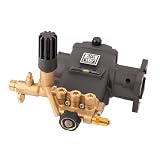
A horizontal triplex replacement kit with PowerBoost technology, listed at 3700 PSI and 2.5 GPM on a 3/4 inch shaft, with hardware and a siphon tube included. It is aimed at owners who want more output from the same shaft size. Check that your engine and hoses can handle the higher rating, since that is not covered in the listing.
Frequently Asked Questions
Is a triplex pump better than an axial cam pump?
For heavy or commercial use, yes, because a triplex is built to be rebuilt and to run for long hours. For a seasonal home washer, an axial cam pump is often enough and costs less.
How long does an axial cam pump last?
It depends on use, water, maintenance and storage. We do not quote hours, because makers rarely publish consistent numbers, but light home use can last many seasons while daily use will wear it out much faster.
Can I replace an axial cam pump with a triplex pump?
Often yes, if the shaft size, orientation, mounting pattern and engine horsepower match. Check the pump maker’s requirements, since triplex pumps can need more power for the same rating.
What are the best AR power washer pumps?
The AR RMV25G30D-EZ suits 3000 PSI, 2.5 GPM replacement and the RRV4G40HD-F24 suits 4000 PSI, 4 GPM machines. Choose by shaft, flange and engine power.
Do triplex pumps need oil changes?
Most have an oil reservoir and a service interval in the manual. Follow it, and use the oil the maker specifies.
Which is easier to rebuild?
Triplex pumps. Seal, valve and plunger kits restore them. Axial cam pumps are usually replaced as a unit.
Do I need a pump saver for either type?
If the pump may see freezing temperatures, yes. Use a pressure-washer-specific pump saver and follow the label.
Which One Should You Buy?
If your washer sees light home use and the pump has failed, an axial cam replacement from Simpson or YAMATIC is the practical answer. If you want a pump you can keep rebuilding, choose a triplex: the AR RMV25G30D-EZ for value, the CAT 4DNX25GSI for the premium route on a 3/4 inch shaft, and the CAT 67DX39G1I or AR RRV4G40HD-F24 for large engines and daily work. Whichever you choose, confirm shaft size, orientation and engine horsepower before ordering.
Sources
- CAT Pumps product documentation
- AR North America and Annovi Reverberi product pages
- Simpson Cleaning and OEM Technologies pump pages
- YAMATIC and AAA pump listings
- Pro Tool Reviews pressure washer coverage
Last updated: October 2026
Related guides
More from Amazon
Programs that pair well with the guide above. Offers and eligibility are set by Amazon and may change.
A free business account with business pricing and bulk-buying tools for work, shop or home office.
Create a business accountFree shipping on eligible items, Prime Video and more. Eligible new members can start with a free trial.
Start a Prime free trialAudiobooks and podcasts to listen to on the go. Eligible new members can start with a free trial.
Try Audible freeAd-free music streaming. Eligible new subscribers can start with a free trial.
Try Music Unlimited freeAs an Amazon Associate we earn from qualifying purchases.



Write Your Review
No reviews yet. Be the first to share your experience!