
What's inside
- What Is a Ryobi Electric Pressure Washer?
- Understanding Ryobi Electric Pressure Washer Specifications
- Which Ryobi Electric Pressure Washer Should You Choose?
- Corded Electric Pressure Washer vs. Ryobi Cordless Power Cleaner
- How to Set Up a Ryobi Electric Pressure Washer
- How to Use a Ryobi Electric Pressure Washer Effectively
- Common Ryobi Electric Pressure Washer Problems and How to Fix Them
- Ryobi Electric Pressure Washer Safety Tips
- Maintenance and Storage Tips
- Frequently Asked Questions
- Final Thoughts
As an Amazon Associate I earn from qualifying purchases. This post may contain affiliate links at no extra cost to you.
A Ryobi electric pressure washer can make routine outdoor cleaning easier without the fuel, engine maintenance, and exhaust associated with gas-powered equipment. It is a practical option for homeowners who need to clean vehicles, patios, decks, outdoor furniture, walkways, and other household surfaces.
However, choosing the right Ryobi electric pressure washer involves more than looking at its advertised PSI rating. Water flow, nozzle selection, surface sensitivity, electrical requirements, and available accessories all affect cleaning results. A machine with a higher maximum pressure is not automatically the best choice for every job.
This guide explains how Ryobi electric pressure washers work, what their specifications mean, how to set them up correctly, and how to resolve common problems. It also covers the differences between electric pressure washers and cordless power cleaners so you can choose equipment appropriate for your cleaning workload.
What Is a Ryobi Electric Pressure Washer?
A Ryobi electric pressure washer is a powered cleaning machine that uses an electric motor to drive a pump, pressurizing water supplied through a garden hose. The pressurized water travels through a high-pressure hose, spray gun, and nozzle to remove dirt and surface contaminants.
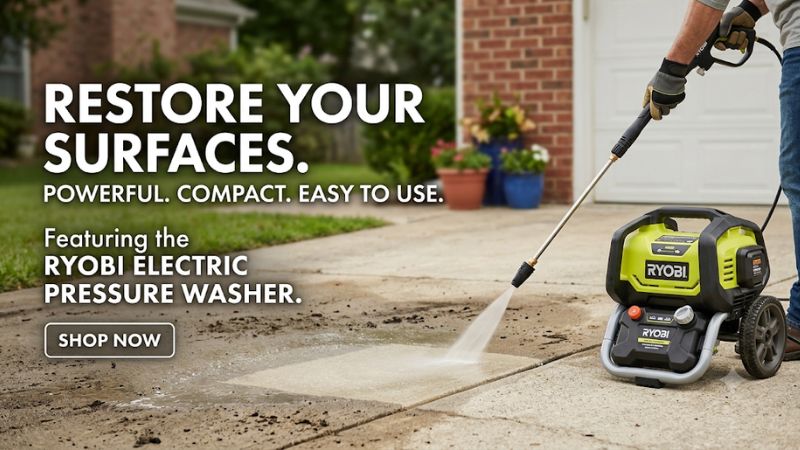
Unlike a gas pressure washer, a corded electric model does not require gasoline, engine oil, or routine combustion-engine maintenance. It generally produces less operating noise and is convenient for residential cleaning where a suitable electrical outlet and water supply are available.
Ryobi offers several pressure washer configurations, including compact corded machines, higher-pressure residential models, automotive-focused equipment, and cordless battery-powered alternatives.
These categories should not be confused. A cordless power cleaner designed for lighter cleaning is not necessarily equivalent to a corded pressure washer, even when both products carry the Ryobi name.
How Does the Cleaning System Work?
The basic operating process involves four components:
- Electric motor: Supplies mechanical power to operate the pump.
- Water pump: Increases the pressure of incoming water.
- High-pressure hose: Carries pressurized water from the machine to the spray gun.
- Spray nozzle: Controls the shape, concentration, and distribution of the water stream.
The nozzle is particularly important because it determines how concentrated the spray becomes. A narrow spray can deliver more concentrated cleaning force, while a wider spray distributes water across a larger area.
The correct combination of pressure, water flow, nozzle, and working distance determines whether a surface can be cleaned effectively without unnecessary damage.
Understanding Ryobi Electric Pressure Washer Specifications
Before buying a machine, understand the two specifications that have the greatest influence on cleaning performance: PSI and GPM.
PSI: Pounds per Square Inch
PSI measures water pressure. A higher PSI rating generally means the machine can deliver a more concentrated force against stubborn dirt, provided the nozzle and operating conditions support that output.
Ryobi’s US corded electric pressure washer lineup includes several different pressure classes:
- 1,800 PSI: Suitable for lighter residential cleaning, including walkways, windows, and general outdoor maintenance.
- 1,900–2,100 PSI: A practical middle ground for household surfaces, vehicles, decks, and moderate cleaning jobs.
- 2,500 PSI: Offers more pressure for demanding residential applications, including fencing, siding, and small driveways.
- 3,000 PSI: A higher-pressure option for users who regularly clean outdoor surfaces and want a more capable electric machine.
These figures describe advertised maximum pressure, not necessarily the pressure delivered continuously under every nozzle and operating condition.
GPM: Gallons Per Minute
GPM measures how much water the pressure washer moves in one minute.
Water flow matters because cleaning involves more than breaking dirt loose. The machine must also rinse away the loosened material.
For example, Ryobi’s RY142500 is rated at 2,500 PSI and 1.2 GPM. Its combination of pressure and flow makes it suitable for medium-duty residential cleaning, but its relatively modest water volume means it should not automatically be considered a replacement for a higher-flow commercial machine.
A higher GPM rating can help cover larger areas and rinse debris more efficiently, while PSI influences the force concentrated on the surface.
Maximum PSI Versus Working Performance
Manufacturers commonly advertise maximum PSI and maximum GPM. These figures should not be interpreted as guaranteed simultaneous operating measurements under every configuration.
Actual cleaning performance depends on:
- The nozzle installed.
- Water supply pressure and volume.
- Hose condition and diameter.
- Pump design.
- Surface material and contamination.
- Distance between the nozzle and cleaning surface.
A pressure washer with a higher advertised PSI does not automatically clean every surface faster. A wider spray pattern or appropriate detergent may produce better results than simply increasing pressure.
Which Ryobi Electric Pressure Washer Should You Choose?
Ryobi’s US product lineup includes several corded models with different pressure ratings and intended applications. The following comparison focuses on representative models rather than suggesting that every machine is interchangeable.
| Model | Advertised PSI | Advertised GPM | Intended application |
| RY141803 | 1,800 | 1.2 | Light residential cleaning |
| RY1419MT | 1,900 | 1.2 | General household cleaning |
| RY142012 | 2,100 | 1.2 | Regular residential cleaning |
| RY142500 | 2,500 | 1.2 | Medium-duty outdoor cleaning |
| RY143011 | 3,000 | 1.1 | Higher-pressure residential cleaning |
Specifications and model availability can change. Confirm the exact model and operator’s manual before purchasing, particularly when buying older inventory or a regional variant.
Ryobi RY141803: For Basic Household Cleaning
The RY141803 is an entry-level corded electric pressure washer rated at 1,800 PSI and 1.2 GPM.
Its compact configuration makes it appropriate for homeowners who need equipment for occasional cleaning rather than demanding daily workloads.
Potential applications include washing outdoor furniture, cleaning suitable walkways, rinsing garden equipment, and maintaining exterior surfaces that can tolerate pressure washing.
Its main limitation is its relatively modest cleaning capacity compared with higher-rated machines. It is not the best choice if your primary objective is quickly removing years of heavy contamination from a large concrete driveway.
Ryobi RY142012: For More Frequent Residential Use
The RY142012 offers an advertised maximum of 2,100 PSI and 1.2 GPM.
It provides a middle-ground specification for homeowners who want more pressure capacity than an entry-level machine without moving immediately into a higher-priced model.
The model is particularly relevant for users who clean multiple outdoor surfaces throughout the year.
Its nozzle selection and detergent arrangement should be checked against the exact package because accessories and included configurations can differ between product generations.
Ryobi RY142500: For Medium-Duty Cleaning
The RY142500 is a brushless electric pressure washer rated at 2,500 PSI and 1.2 GPM.
Ryobi identifies applications including decks, fences, siding, sidewalks, patio furniture, and small driveways.
Its documented configuration includes a 25-foot high-pressure hose, trigger handle, metal spray wand, and three nozzles: 15-degree, turbo, and soap.
The brushless motor is an important distinction, but it should not be interpreted as proof that the entire machine requires no maintenance or will last a specific number of years.
This model makes more sense for homeowners with several recurring cleaning tasks than for someone who only occasionally rinses patio furniture.
Ryobi RY143011: For Higher-Pressure Residential Applications
The RY143011 is advertised at 3,000 PSI and 1.1 GPM.
Its high maximum pressure makes it a more demanding cleaning option within Ryobi’s corded electric range.
However, its 1.1 GPM flow rate is relatively modest. This matters when cleaning large surfaces because water volume influences how efficiently loosened dirt can be rinsed away.
Independent testing has also highlighted the difference between high pressure and overall cleaning productivity. A machine can deliver substantial pressure without matching the surface-cleaning speed of a higher-flow gas-powered washer.
Choose this type of machine when its pressure capacity suits your intended applications, not simply because it has the largest PSI number.
Corded Electric Pressure Washer vs. Ryobi Cordless Power Cleaner
One common purchasing mistake is confusing a traditional electric pressure washer with Ryobi’s cordless power cleaners.
Both use electricity, but their intended workloads and operating characteristics differ.
Corded electric pressure washer
- Connects to a suitable AC electrical supply.
- Uses a pump to produce higher-pressure water.
- Generally better suited to extended household cleaning sessions.
- Requires access to a safe electrical outlet.
- Has a power cord that must be managed during operation.
Cordless Ryobi power cleaner
- Uses a compatible rechargeable battery.
- Offers greater mobility in locations without convenient outlets.
- Generally targets lighter cleaning applications.
- Has battery runtime limitations.
- May use different water-intake arrangements depending on the model.
For example, the Ryobi 40V RY40HPPW12B is a cordless pressure washer rated at 1,200 PSI and 1.0 GPM. It belongs to the 40V battery family and should not be confused with a corded 120V pressure washer.
The 18V ONE+ EZClean products are another category. They are designed for portable cleaning and should not be treated as direct substitutes for traditional high-pressure machines.
Which should you choose?
Choose a corded model if you regularly clean decks, walkways, fences, and other household surfaces requiring sustained pressure washing.
Choose a cordless power cleaner if portability, quick rinsing, and access to remote locations matter more than maximum cleaning force.
Remember that battery compatibility must be checked against the exact product model. A Ryobi 18V battery is not interchangeable with a 40V battery simply because both belong to the same brand.
How to Set Up a Ryobi Electric Pressure Washer
Correct setup is essential because operating a pressure washer before the pump and water line are properly supplied can cause problems.
Before beginning, check the model-specific operator’s manual and confirm that the machine, electrical cord, high-pressure hose, trigger handle, and accessories are undamaged.
What You Need
Prepare the following:
- Ryobi electric pressure washer.
- Compatible high-pressure hose and spray gun.
- Suitable garden hose with adequate water flow.
- Correctly rated electrical outlet.
- Appropriate pressure washer detergent, if needed.
- Compatible spray nozzle.
- Eye protection and suitable footwear.
For outdoor electrical operation, use the ground-fault protection specified by the manufacturer and applicable electrical requirements. Keep electrical connections away from standing water and spray.
Step 1: Position the Machine
Place the pressure washer on a stable, level surface with adequate ventilation and clearance.
Keep it away from standing water, mud, and locations where the electrical connection could become wet.
Arrange the garden hose and high-pressure hose so they are not kinked, crushed, or stretched across walking paths.
Step 2: Connect the Water Supply
Connect the garden hose to the water inlet using the appropriate connector.
Check that the connection is secure and that the inlet filter, if fitted, is correctly installed.
Turn on the water supply fully unless the manual specifies a different operating requirement.
Never operate the pump without an adequate water supply.
Step 3: Prime the Water System
Priming removes trapped air from the water line before the motor is operated.
With the machine switched off, turn on the water supply and squeeze the spray-gun trigger.
Allow water to flow until the stream becomes steady and consistent.
Ryobi’s setup guidance recommends this procedure before operation. The exact duration depends on the machine and the amount of air trapped in the system.
Step 4: Connect the Spray Gun and Nozzle
Attach the high-pressure hose and trigger handle according to the manual.
Select a nozzle appropriate for the surface being cleaned.
Make sure quick-connect fittings are fully engaged and that the nozzle is securely attached.
Never point the spray gun toward yourself or another person during setup.
Step 5: Connect Electrical Power
Check the power cord and plug for visible damage.
Connect the machine to an appropriate electrical supply matching the model’s voltage, frequency, current requirements, and protective arrangements.
US models designed for nominal 120V/60Hz AC must not be assumed compatible with 220–240V electrical systems used in other countries.
If you are using an imported Ryobi pressure washer in a different region, verify electrical compatibility before connecting it. A simple plug adapter does not convert voltage.
Step 6: Start Cleaning
Follow the model-specific startup procedure.
Hold the trigger handle securely with both hands where appropriate, point the nozzle toward the intended cleaning area, and begin at a conservative distance.
Test the spray on an inconspicuous area before treating the entire surface.
Move gradually closer only when the surface and manufacturer instructions permit it.
How to Use a Ryobi Electric Pressure Washer Effectively
Owning a pressure washer does not automatically guarantee good cleaning results. The way you select the spray pattern, control the distance, and prepare the surface can make a significant difference.
Choosing the Right Nozzle
Different Ryobi pressure washer models include different nozzle combinations. Always check the accessories supplied with your specific machine.
Common nozzle types include:
| Nozzle type | Spray pattern | Typical application |
| 0-degree | Extremely narrow | Specialized applications permitted by the manual |
| 15-degree | Narrow fan | Tougher dirt on suitable durable surfaces |
| 25-degree | Medium fan | General outdoor cleaning |
| 40-degree | Wide fan | More delicate surfaces |
| Soap nozzle | Low-pressure application | Applying compatible detergent |
| Turbo nozzle | Rotating concentrated spray | Suitable stubborn dirt on durable surfaces |
A 0-degree nozzle concentrates water into a very small area and can damage surfaces or cause injury. It should not be used casually.
A turbo nozzle produces a rotating spray pattern that combines concentrated cleaning action with a wider coverage area. It is useful for certain durable surfaces, but it is not appropriate for every material.
For beginners, a wider spray pattern is generally a more conservative starting point.
Cleaning Different Surfaces
Cars and trucks
Vehicle paint can be damaged by excessive pressure or inappropriate nozzle selection.
Use a vehicle-safe detergent approved for pressure washer applications. Begin with a suitable wide spray pattern, maintain a safe distance, and avoid directing concentrated water at damaged paint, electrical connectors, seals, or sensitive components.
For automotive detailing, a dedicated foam applicator can help distribute cleaning solution, but thick foam alone does not guarantee better cleaning.
Concrete driveways
Concrete is generally more tolerant of pressure washing than painted or wooden surfaces, but its condition matters.
Cracked, aged, previously repaired, or decorative concrete may be vulnerable to concentrated spray.
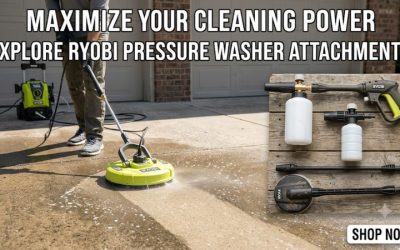
Use a compatible surface cleaner when appropriate. This attachment distributes water over a controlled cleaning area and can help produce more consistent results than repeatedly moving a narrow spray across the surface.
Wooden decks and fences
Wood requires extra caution because high-pressure water can damage fibers, remove finishes, and create visible marks.
Start with a wide spray pattern, test an inconspicuous section, and follow the wood or coating manufacturer’s cleaning recommendations.
Do not assume that a 2,500 PSI pressure washer should be operated at maximum pressure on every wooden surface.
Vinyl siding
Use an appropriate nozzle and avoid directing water upward beneath siding overlaps.
High-pressure water entering behind exterior panels can contribute to moisture problems. Keep the spray controlled around joints, vents, windows, and other openings.
Patio furniture
Plastic and metal furniture can often be cleaned effectively with a wider spray pattern.
However, inspect cushions, coatings, joints, and delicate decorative materials before applying pressure.
Using Detergent Correctly
Detergent can improve cleaning results by loosening dirt, grease, and organic contamination before rinsing.
However, pressure washers do not all use detergent in the same way.
Depending on the model, Ryobi machines may use an onboard detergent tank, a dedicated soap nozzle, or an external detergent application accessory.
Follow these basic principles:
- Use detergent specifically approved for pressure washer applications and the surface being cleaned.
- Check the manual for the correct detergent application method.
- Install the designated low-pressure soap nozzle or select the required low-pressure setting.
- Apply detergent evenly without allowing it to dry on the surface.
- Allow the recommended dwell time specified by the detergent manufacturer.
- Rinse thoroughly using the appropriate pressure and nozzle.
Do not assume that every household cleaning chemical is suitable for pressure washers. Strong solvents, incompatible chemicals, and products that can damage seals should be avoided.
After detergent use, flush the system according to the machine’s instructions to prevent residue buildup.
Common Ryobi Electric Pressure Washer Problems and How to Fix Them
Pressure washer problems do not always indicate a damaged pump or failed motor. Many common symptoms originate from restricted water flow, trapped air, blocked nozzles, or electrical supply problems.
Start with simple external inspections before considering professional repair.
1. Pressure Washer Will Not Start
If the machine does not start, check the following:
- Confirm that the electrical cord is fully connected.
- Check that the power switch is in the correct position.
- Inspect the GFCI protection device and reset it only if safe and appropriate.
- Check whether the household circuit breaker has tripped.
- Inspect the power cord and plug for visible damage.
Some Ryobi models include GFCI protection at the electrical plug.
If the GFCI repeatedly trips, stop using the machine. Do not bypass the protective device or continue resetting it without identifying the underlying problem.
A repeated trip may indicate moisture intrusion, damaged wiring, a faulty appliance, or an electrical circuit issue requiring qualified inspection.
2. Pressure Washer Has Low Water Pressure
Low pressure is one of the most common operating complaints.
Possible causes include:
- Insufficient water supply.
- A kinked garden hose.
- A blocked inlet filter.
- Air trapped inside the pump.
- A partially blocked spray nozzle.
- A damaged high-pressure hose.
- A worn or malfunctioning pump.
Start by checking the water supply.
Disconnect the garden hose from the machine and confirm that water flows steadily. Inspect the hose for restrictions and check the inlet filter for debris.
Next, switch off the pressure washer and relieve pressure through the trigger handle.
Follow the manufacturer’s priming procedure. Ryobi’s troubleshooting guidance recommends removing the nozzle, supplying water with the machine off, and allowing water to flow through the trigger handle for approximately one to two minutes to clear trapped air.
If pressure remains inconsistent after these checks, professional inspection may be necessary.
3. Pressure Washer Pulses During Operation
Pulsing means the spray alternates between stronger and weaker output rather than maintaining a consistent stream.
Possible explanations include:
- Restricted incoming water.
- Air entering the water system.
- A partially blocked nozzle.
- A kinked hose.
- An unstable water source.
Inspect the garden hose and connections first.
Then check the nozzle and inlet filter with the machine switched off and pressure safely relieved.
If the pulsing continues despite adequate water supply and unobstructed accessories, the pump or internal pressure-control components may require service.
Do not disassemble the pump while the machine is connected to electricity or pressurized.
4. Detergent Is Not Dispensing
When detergent fails to enter the spray stream, the problem may be related to nozzle selection or the detergent feed system.
Check these items:
- Confirm that the detergent container has sufficient solution.
- Inspect the detergent pickup tube.
- Make sure the tube is correctly positioned.
- Check for visible blockages.
- Confirm that the correct low-pressure soap nozzle or setting is selected.
Ryobi’s support guidance also notes that some detergent systems may require additional time before soap begins dispensing.
If the machine continues spraying water without drawing detergent, check the model-specific manual before replacing any components.
5. Water Leaks Around Connections
Leaks can occur at garden hose fittings, high-pressure hose connections, spray guns, or sealing components.
First, turn off the machine, disconnect electrical power, shut off the water supply, and release trapped pressure using the trigger handle.
Inspect the connection for:
- Loose fittings.
- Damaged O-rings.
- Cross-threaded connections.
- Cracked hose fittings.
- Worn seals.
Replace damaged components only with compatible parts approved for the specific model.
Never use an ordinary low-pressure garden hose as a replacement for the high-pressure hose.
Ryobi Electric Pressure Washer Safety Tips
Pressure washers can cause serious injuries even when used for ordinary household cleaning. A narrow, high-pressure water stream can penetrate skin and cause severe tissue damage.
Electrical hazards are particularly important with corded machines because water and electricity are being used in the same working area.
Follow these precautions every time you operate the equipment.
Protect Yourself From High-Pressure Water
- Never point the spray gun toward people or animals.
- Keep hands and feet away from the nozzle.
- Never attempt to locate a leak using your hand.
- Never spray electrical equipment or energized connections.
- Do not use a damaged spray gun, hose, or nozzle.
- Release pressure before changing accessories.
A high-pressure injection injury can look relatively minor on the surface while causing serious internal damage. Seek immediate emergency medical assessment if a water jet penetrates the skin, even if the opening appears small.
Follow Electrical Safety Practices
Before using the machine:
- Inspect the cord, plug, and GFCI protection.
- Use the electrical supply specified by the manufacturer.
- Keep connections protected from water.
- Avoid standing in water while operating the equipment.
- Never handle electrical connections with wet hands.
- Do not operate equipment with damaged insulation.
Do not assume that an extension cord is acceptable simply because it fits the plug. If the manual permits one, its gauge, length, outdoor rating, and electrical capacity must meet the manufacturer’s requirements.
If the machine’s electrical protection repeatedly trips, stop operation and seek qualified assistance.
Wear Appropriate Protective Equipment
Recommended protection includes:
- Safety glasses or suitable eye protection.
- Closed-toe, slip-resistant footwear.
- Hearing protection when required by the operating environment.
- Appropriate work clothing.
Avoid loose clothing that could interfere with handling the equipment.
Be especially careful when cleaning slippery surfaces because detergent, loosened algae, and water can create hazardous walking conditions.
Maintenance and Storage Tips
Routine maintenance helps keep a Ryobi electric pressure washer operating correctly and reduces the likelihood of preventable problems.
The exact maintenance requirements depend on the model, so always prioritize the operator’s manual.
Clean the Water Inlet Filter
The inlet filter helps prevent debris from entering the pump.
Periodically inspect it for dirt, mineral deposits, and other obstructions.
Before removing the filter, switch off the machine, disconnect electrical power, shut off the water supply, and relieve pressure.
Clean or replace the filter according to the manufacturer’s instructions.
Inspect Hoses and Connections
Check the high-pressure hose for cuts, abrasions, leaks, and damaged fittings.
Inspect the garden hose for kinks and restrictions.
A damaged high-pressure hose should be replaced with a correctly rated compatible replacement. Never attempt to repair a damaged pressure hose with ordinary tape or household sealant.
Clean the Spray Nozzles
Dirt and mineral deposits can obstruct nozzle openings and affect spray performance.
Remove the nozzle after shutting down the machine and releasing pressure.
Use the supplied nozzle-cleaning tool or another method specifically permitted by the manufacturer.
Rinse the nozzle thoroughly before reinstalling it.
Avoid enlarging the nozzle opening with sharp objects because this can permanently change its spray characteristics.
Protect the Pump During Storage
If the pressure washer will remain unused for an extended period, follow the manufacturer’s storage instructions.
Depending on the model and climate, appropriate storage preparation may include:
- Disconnecting and draining the water supply.
- Removing detergent residue.
- Draining water from hoses and accessories.
- Protecting the pump against freezing temperatures using an approved procedure.
- Storing the machine in a dry, protected location.
Freezing water can damage internal pump components and connections.
Some Ryobi models support dedicated pump-protection products. Only use products approved for the exact machine and follow their instructions.
Keep Accessories Organized
Store the spray gun, wand, nozzles, hose, and power cord in their designated positions.
Avoid tightly bending hoses or placing heavy equipment on top of them.
Keeping accessories organized makes setup easier and helps prevent accidental damage during storage.
Frequently Asked Questions
1. Is a Ryobi electric pressure washer good for cleaning cars?
Yes, a suitable Ryobi electric pressure washer can clean cars effectively when used with an appropriate nozzle, safe working distance, and vehicle-compatible detergent. Avoid concentrated spray around paint damage, seals, sensors, and electrical components. A dedicated automotive cleaning accessory can make detergent application easier.
2. How many PSI do I need for a Ryobi electric pressure washer?
The appropriate PSI depends on the surface and cleaning task. An 1,800 PSI model can handle many light household applications, while 2,100–2,500 PSI models offer additional capacity for more demanding residential cleaning. Higher pressure is not always better, particularly on wood, vehicle paint, and delicate exterior finishes.
3. Can a Ryobi electric pressure washer draw water from a bucket?
Not every Ryobi pressure washer supports bucket-fed water. Some cordless power cleaners and specific pressure washer models offer alternative water-intake arrangements, while conventional corded models generally require an adequate pressurized water supply. Check the exact model’s manual before connecting a bucket or siphon hose.
4. Why does my Ryobi electric pressure washer keep losing pressure?
Common causes include inadequate water supply, trapped air, blocked nozzles, restricted inlet filters, and kinked hoses. Check the water supply first, clean accessible filters and nozzles, and follow the manufacturer’s priming procedure. If pressure remains unstable, contact an authorized service provider to inspect the pump and internal components.
Final Thoughts
A Ryobi electric pressure washer is a practical choice for homeowners who want convenient outdoor cleaning without maintaining a gasoline engine. Its suitability depends on choosing the correct pressure rating, water flow, nozzle configuration, and accessories for the intended workload.
For occasional household cleaning, an 1,800 PSI model such as the RY141803 can be a sensible starting point. Homeowners with more demanding cleaning requirements may prefer the RY142012 or brushless RY142500. The RY143011 offers a higher advertised pressure rating, although its relatively low water flow should be considered when cleaning larger areas.
Before purchasing, verify the exact model specifications, included accessories, electrical requirements, and availability in your region. After purchase, prioritize correct priming, appropriate nozzle selection, electrical protection, and routine maintenance.
The best Ryobi electric pressure washer is not necessarily the one with the highest PSI. It is the machine that delivers the right combination of pressure, water flow, portability, and control for the surfaces you actually need to clean.
Related guides
More from Amazon
Programs that pair well with the guide above. Offers and eligibility are set by Amazon and may change.
A free business account with business pricing and bulk-buying tools for work, shop or home office.
Create a business accountFree shipping on eligible items, Prime Video and more. Eligible new members can start with a free trial.
Start a Prime free trialAudiobooks and podcasts to listen to on the go. Eligible new members can start with a free trial.
Try Audible freeAd-free music streaming. Eligible new subscribers can start with a free trial.
Try Music Unlimited freeAs an Amazon Associate we earn from qualifying purchases.


Write Your Review
No reviews yet. Be the first to share your experience!