
What's inside
- What Are Left Hand Drill Bits?
- What Are Left Hand Drill Bits Used For?
- Left Hand Drill Bits vs. Right Hand Drill Bits
- How to Choose the Right Left Hand Drill Bits
- How to Use Left Hand Drill Bits to Remove a Broken Bolt
- Common Mistakes When Using Left Hand Drill Bits
- Safety Tips for Left Hand Drill Bit Applications
- Frequently Asked Questions
- Final Thoughts
As an Amazon Associate I earn from qualifying purchases. This post may contain affiliate links at no extra cost to you.
Left hand drill bits are specialized cutting tools designed to rotate counterclockwise and drill into metal, particularly when removing broken bolts, studs, and screws. Unlike conventional drill bits, which cut while rotating clockwise, left hand drill bits work in reverse. This unusual design gives them an important advantage: they can sometimes loosen and extract a damaged fastener while creating a pilot hole.
For mechanics, maintenance technicians, DIY enthusiasts, and workshop professionals, these bits can make difficult fastener removal jobs easier. They are especially useful when a bolt breaks below its head or snaps inside a threaded hole. However, they do not guarantee successful extraction. Corrosion, thread damage, fastener hardness, and drilling alignment all affect the outcome.
Understanding how left hand drill bits work, which materials to choose, and how to use them correctly will help you avoid damaging the surrounding components and make better decisions during repairs.
What Are Left Hand Drill Bits?
Left hand drill bits are twist drill bits manufactured with cutting edges and spiral flutes designed for counterclockwise rotation. They are also called reverse drill bits or left-hand cutting drill bits.
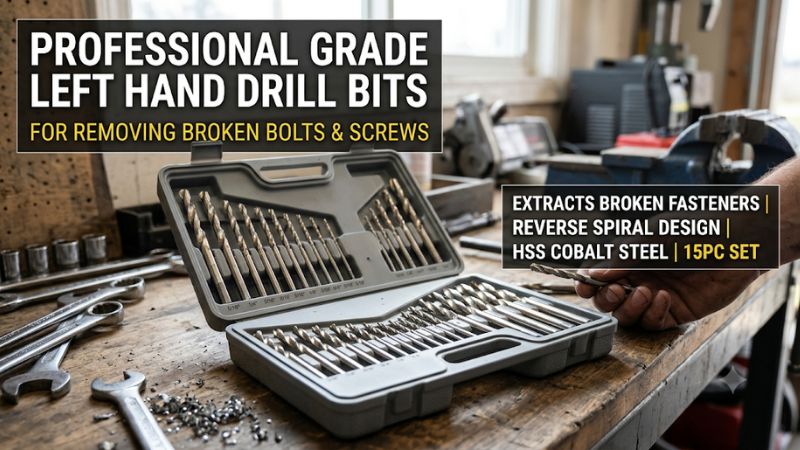
A conventional drill bit normally rotates clockwise when viewed from the chuck end toward the workpiece. Its cutting geometry is designed to remove material in that direction.
A left hand drill bit uses the opposite cutting direction. It must be installed in a compatible drill and operated in reverse to cut properly.
These bits are commonly manufactured from high-speed steel (HSS) or cobalt-alloy high-speed steel. Their construction makes them suitable for drilling metal and preparing holes in damaged fasteners.
The most distinctive application is removing broken right-hand-threaded fasteners. Because most conventional bolts loosen counterclockwise, the drilling action can help turn the broken fastener in the loosening direction.
How Do Left Hand Drill Bits Work?
The operating principle is relatively straightforward.
A left hand drill bit has cutting geometry that removes material during counterclockwise rotation. When the bit contacts a broken bolt, it gradually creates a hole while applying rotational force in the direction that normally loosens the fastener.
If the bit gains enough cutting engagement, friction and cutting resistance may cause the broken bolt to rotate with it.
When this happens, the bolt can begin backing out of its threaded hole before drilling is complete.
This is the main advantage over conventional right-hand drill bits. A standard bit rotating clockwise may create drilling resistance in the same direction used to tighten a typical right-hand-threaded fastener.
However, extraction is not automatic. A heavily corroded bolt, a fastener secured with thread-locking compound, or a badly seized stud may remain in place even when using a left hand bit.
If the fastener does not loosen, the drilled hole can still serve as a starting point for a compatible screw extractor.
What Are Left Hand Drill Bits Used For?
Although broken fastener removal is their best-known application, left hand drill bits can perform other metal-drilling tasks when their specifications match the material and machine.
1. Removing Broken Bolts and Studs
This is the primary reason many mechanics purchase reverse drill bit sets.
Bolts can break because of corrosion, excessive tightening, fatigue, or damaged threads. When the bolt head separates, the remaining threaded section may become difficult to remove.
A left hand drill bit provides an opportunity to loosen the remaining fastener while drilling a pilot hole.
This approach is particularly useful when the broken bolt is accessible and its center can be accurately located.
2. Preparing Holes for Screw Extractors
Some broken fasteners will not turn during drilling.
In these situations, a left hand drill bit can create a correctly sized pilot hole for a screw extractor.
The extractor is inserted into the prepared hole and engages the internal surface of the damaged fastener. Turning the extractor counterclockwise can then remove the remaining threaded section.
The pilot-hole diameter must match the extractor manufacturer’s instructions. A hole that is too large may prevent proper engagement, while an undersized hole can increase the risk of damaging the extractor.
3. Removing Damaged Machine Fasteners
Left hand drill bits are useful in automotive repair, agricultural equipment maintenance, machinery servicing, and general metalworking.
They can help technicians work on broken mounting bolts, threaded studs, and other conventional right-hand-threaded fasteners.
They are not limited to automotive applications. Workshop machinery, brackets, equipment housings, and metal fixtures can also contain damaged fasteners that require reverse drilling.
4. General Metal Drilling
A left hand drill bit can also drill ordinary holes in compatible metal materials.
However, purchasing reverse bits solely for routine drilling is not always necessary. Conventional right-hand drill bits are generally more widely available for everyday drilling applications.
Left hand bits make the most sense when reverse cutting is useful for the particular operation.
Left Hand Drill Bits vs. Right Hand Drill Bits
The main difference between these two accessories is their cutting direction.
| Feature | Left Hand Drill Bits | Right Hand Drill Bits |
| Cutting direction | Counterclockwise | Clockwise |
| Drill setting | Reverse | Forward |
| Primary application | Broken fastener removal and reverse drilling | General drilling |
| Fastener removal | Can help loosen right-hand threads | Usually not intended for this purpose |
| Availability | More specialized | Widely available |
| Typical materials | Compatible metals | Wood, metal, plastic, and other specified materials |
Neither design is universally better. The correct choice depends on the application.
For everyday drilling into wood or metal, conventional drill bits are usually the practical option.
For removing broken right-hand-threaded fasteners, left hand drill bits offer a useful advantage because their cutting direction matches the fastener’s normal loosening direction.
It is important to remember that thread direction matters. A left-hand-threaded fastener normally loosens clockwise, so a counterclockwise-cutting drill bit does not provide the same directional advantage.
How to Choose the Right Left Hand Drill Bits
Choosing the correct bit involves more than selecting a diameter. Material, construction, length, point geometry, and compatibility with your drill all affect performance.
1. Choose the Right Bit Material
The two most common material categories are HSS and cobalt-alloy HSS.
High-Speed Steel (HSS)
HSS left hand drill bits are suitable for many general metal-drilling applications.
They provide a practical option for ordinary steel fasteners and workshop repairs when used within their intended operating conditions.
They are generally a sensible choice for occasional DIY work and routine maintenance.
Cobalt-Alloy HSS
Cobalt-alloy drill bits, such as M35 and M42 grades, are designed for applications requiring greater heat resistance and wear resistance.
M35 commonly contains approximately 5% cobalt, while M42 commonly contains approximately 8%.
These grades can be useful when drilling tougher alloys, including certain stainless steels and hardened fasteners. However, cobalt content alone does not guarantee successful drilling.
A hardened fastener may still be too difficult for a standard workshop drilling setup. The actual hardness, bit geometry, cutting conditions, and equipment capabilities all matter.
2. Select the Correct Diameter
Drill diameter is particularly important when removing broken fasteners.
A left hand drill bit that is too small may not create a suitable pilot hole. A bit that is too large may damage the internal threads or surrounding component.
Before drilling, identify:
- The original fastener diameter.
- The approximate diameter of the remaining threaded section.
- The required pilot-hole size.
- The recommended drill size for the screw extractor, if one will be used.
Always consult the extractor’s size chart rather than estimating the hole diameter.
3. Consider Drill Bit Length
Left hand drill bits are available in different lengths, including standard jobber-length and shorter mechanics-length designs.
Jobber-length bits provide additional reach and are useful when the fastener is recessed or difficult to access.
Shorter mechanics-length bits can offer improved rigidity because their shorter unsupported length reduces deflection under appropriate drilling conditions.
For fastener extraction, a shorter bit may be easier to control when there is sufficient access.
4. Check the Point Geometry
The point angle affects how the bit engages the workpiece.
Common configurations include 118-degree and 135-degree points.
A 118-degree point is a common general-purpose geometry.
A 135-degree split point can help reduce walking and improve initial engagement on suitable materials.
Neither angle is automatically appropriate for every fastener. Consider the manufacturer’s intended application and the material being drilled.
5. Check Chuck and Machine Compatibility
Most conventional left hand twist drill bits use straight shanks.
Before purchasing, confirm that the shank diameter fits your drill chuck and that the drill can operate in reverse.
A variable-speed drill with a properly functioning reverse setting is useful because it allows controlled operation.
For drill presses, verify that the machine and its spindle configuration support the required rotation direction. Do not assume every drill press is designed to operate continuously in reverse.
Also check whether the accessory is approved for the machine type. Ordinary reverse drill bits should not automatically be used with impact drivers or impact wrenches.
How to Use Left Hand Drill Bits to Remove a Broken Bolt
Using reverse drill bits correctly can reduce the likelihood of damaging the threaded hole or surrounding component.
The following procedure applies to accessible, conventional right-hand-threaded metal fasteners. More complicated repairs may require specialized extraction equipment.
Tools and Materials Required
Prepare the following equipment before starting:
- Compatible left hand drill bits.
- Variable-speed drill with reverse operation.
- Center punch.
- Hammer.
- Suitable drill chuck.
- Penetrating oil, when appropriate.
- Compatible screw extractor if needed.
- Clamps or a suitable workholding fixture.
- Safety glasses or appropriate eye protection.
- Cutting fluid suitable for the material and drilling operation.
- Brush or suitable chip-removal tool.
If working on installed machinery or a vehicle, ensure the equipment is safely shut down and isolated from relevant electrical, hydraulic, pneumatic, or mechanical energy sources.
Step 1: Inspect the Broken Fastener
Start by examining the broken bolt.
Determine whether it is above the surface, flush with the surrounding material, or recessed inside the threaded hole.
Look for corrosion, damaged threads, and signs that the fastener may have been installed with thread-locking compound.
If the broken section is accessible, determine whether it can be removed using a less invasive method before drilling.
For example, a bolt with enough exposed material may be removable with suitable gripping tools.
Do not begin drilling until you understand the surrounding component and the approximate depth of the fastener.
Step 2: Prepare the Fastener Surface
If the broken bolt is uneven, the drill bit may wander away from the center.
Where appropriate, carefully dress the exposed surface to create a reasonably flat starting area.
Use a center punch to create a small indentation in the middle of the broken fastener.
Accurate centering is essential. Drilling off-center can damage the original threaded hole and make the repair significantly more difficult.
If the fastener is deeply recessed or difficult to align, a guided drilling fixture may be more appropriate than freehand drilling.
Step 3: Select the Correct Left Hand Drill Bit
Choose a diameter suitable for the fastener and the intended extraction method.
If the goal is to remove the bolt directly, select a suitable bit that can create sufficient engagement without unnecessarily enlarging the hole.
If a screw extractor will be used afterward, follow its manufacturer’s pilot-hole sizing instructions.
Inspect the bit for visible damage, dull cutting edges, and excessive wear before installing it.
Step 4: Install the Bit and Set the Drill to Reverse
Secure the left hand drill bit in the chuck.
Confirm that it is properly tightened and that the drill is configured for counterclockwise rotation.
Select a suitable low-speed operating range and use controlled pressure. The appropriate speed depends on the bit diameter, fastener material, and manufacturer’s recommendations.
Do not assume that the highest drill speed provides the fastest or safest result.
Step 5: Begin Drilling Carefully
Position the drill squarely against the center-punched surface.
Start slowly and maintain alignment as the bit begins cutting.
Apply steady, controlled pressure rather than forcing the bit into the fastener.
Use suitable cutting fluid when recommended for the material and operation. Periodically stop to inspect the hole and remove accumulated chips safely.
Watch for signs of poor cutting, including excessive heat, unusual vibration, and a bit that begins wandering.
If the bit catches and starts rotating the broken bolt, stop drilling and assess whether the fastener is backing out.
Do not continue applying force against a fastener that is already loosening.
Step 6: Use a Screw Extractor if Necessary
If the left hand drill bit creates a pilot hole but does not remove the fastener, a compatible screw extractor may be needed.
Check that the hole diameter and depth meet the extractor manufacturer’s requirements.
Install the extractor as instructed and apply controlled counterclockwise turning force using the specified tool.
Avoid excessive torque. Many screw extractors are relatively hard but brittle, and a broken extractor embedded in a bolt can make subsequent machining much more difficult.
If the fastener remains seized, stop rather than increasing force indefinitely.
Step 7: Inspect and Clean the Threads
After removing the broken fastener, inspect the threaded hole.
Remove loose metal chips using an appropriate brush or chip-removal method.
Check for damaged, stretched, or missing threads.
If necessary, use a correctly sized thread-cleaning tool or have the component professionally repaired.
Do not assume that successful bolt removal means the original threads are still in good condition.
Common Mistakes When Using Left Hand Drill Bits
Even a high-quality bit can produce poor results when used incorrectly.
Using the wrong rotation direction: A left hand drill bit must cut in reverse. Running it forward can prevent proper cutting and increase the risk of damage.
Drilling off-center: Poor alignment can damage internal threads or surrounding components. Center punching and suitable drilling guides help improve accuracy.
Applying excessive pressure: Forcing the bit can cause overheating, premature wear, or breakage. Allow the cutting edges to remove material at a controlled rate.
Choosing the wrong diameter: An oversized pilot hole can compromise the threaded component and prevent a screw extractor from gripping correctly.
Ignoring fastener hardness: Some fasteners are hardened beyond what ordinary HSS bits can effectively drill. Confirm the material and choose an appropriate accessory and process.
Using an impact wrench with an ordinary extractor: Conventional screw extractors are not automatically impact-rated. Sudden impact loading can break them. Use only accessories specifically approved for the intended impact application.
Safety Tips for Left Hand Drill Bit Applications
Reverse drilling involves rotating equipment, sharp metal chips, heat, and the possibility of a suddenly released fastener.
Follow these precautions:
- Wear suitable safety glasses or eye protection against flying chips.
- Secure the workpiece with a vise, clamps, or an appropriate fixture.
- Keep hands away from the rotating chuck and drill bit.
- Avoid loose clothing, jewelry, and unsecured long hair.
- Do not wear gloves around exposed rotating drill press spindles or other rotating machinery.
- Remove metal chips with a brush or suitable tool after the machine has stopped.
- Never touch a hot drill bit or freshly drilled metal surface.
- Disconnect or isolate the tool before changing accessories or performing adjustments.
- Keep guards and other manufacturer-provided safety systems in place.
When drilling a broken bolt inside a vehicle component or machine housing, consider what lies behind the fastener. Drilling too deeply can damage internal passages, electrical components, or other critical surfaces.
If the fastener is part of a safety-critical assembly or the repair requires precision machining, professional assistance may be the safer option.
Frequently Asked Questions
Can left hand drill bits remove broken bolts?
Yes, left hand drill bits can remove some broken bolts because they cut counterclockwise, which is the loosening direction for most conventional right-hand-threaded fasteners. If the bit catches the fastener, it may turn the broken section out while drilling. However, heavily seized or corroded bolts may require a separate extraction method.
Do left hand drill bits need a reverse drill?
Yes, conventional left hand drill bits require a compatible drill operating in reverse to cut correctly. Check the drill’s operating instructions and the accessory manufacturer’s requirements before use.
Are cobalt left hand drill bits better than HSS bits?
Cobalt-alloy HSS bits generally offer better heat resistance and wear resistance for demanding metal-drilling applications. Standard HSS bits remain suitable for many ordinary drilling tasks. The best option depends on the fastener material, hardness, drilling conditions, and frequency of use.
Can I use left hand drill bits with an impact driver?
Not automatically. Most conventional left hand twist drill bits are designed for rotary drilling and should not be used with an impact driver unless the manufacturer specifically approves that accessory and application. Use an appropriate chuck, adapter, and compatible drill whenever required.
Final Thoughts
Left hand drill bits are valuable workshop accessories for removing broken bolts, extracting damaged studs, and preparing pilot holes for screw extractors. Their counterclockwise cutting action provides an advantage that conventional right hand drill bits cannot offer in many fastener-removal situations.
For occasional repairs, a suitable HSS set may provide sufficient versatility. For more demanding metalworking applications, cobalt-alloy options can offer improved heat and wear resistance.
The most important factors are selecting the correct diameter, maintaining accurate alignment, using the proper reverse rotation, and avoiding excessive drilling pressure.
A well-chosen left hand drill bit will not remove every seized fastener, but it can make many difficult repairs more manageable while reducing the need for aggressive extraction methods. Invest in a quality set, follow the manufacturer’s instructions, and use the correct safety precautions for every drilling operation.
Related guides
More from Amazon
Programs that pair well with the guide above. Offers and eligibility are set by Amazon and may change.
A free business account with business pricing and bulk-buying tools for work, shop or home office.
Create a business accountFree shipping on eligible items, Prime Video and more. Eligible new members can start with a free trial.
Start a Prime free trialAudiobooks and podcasts to listen to on the go. Eligible new members can start with a free trial.
Try Audible freeAd-free music streaming. Eligible new subscribers can start with a free trial.
Try Music Unlimited freeAs an Amazon Associate we earn from qualifying purchases.

Write Your Review
No reviews yet. Be the first to share your experience!