What's inside
As an Amazon Associate I earn from qualifying purchases. This post may contain affiliate links at no extra cost to you.
Choosing a 12V battery for a compact drill or driver
A 12V cordless drill or impact driver is only as useful as the battery that fits it. For most users, the practical choice is between a compact pack that keeps the tool light and a higher-capacity pack that lasts longer but adds bulk. Start by matching the battery to your tool’s brand and platform: 12V packs are not interchangeable across brands, and a 12V battery generally will not fit a brand’s 18V tools.
Check the tool manual or the label on the existing battery for the platform name and compatible pack types. Within one platform, newer batteries may fit older tools, but compatibility can vary. Confirm it with the manufacturer before buying, especially for discontinued tools or third-party packs. A battery that clicks in is not necessarily approved for every tool or charger.
As an Amazon Associate we earn from qualifying purchases at no extra cost to you.


Capacity, runtime, and weight
Battery capacity is usually listed in amp-hours (Ah). A 2.0Ah pack can, in theory, supply half the charge of a 4.0Ah pack at the same voltage. In practice, runtime depends on the task: driving small screws into softwood uses far less energy than drilling large holes or driving long fasteners into dense material. Battery age, temperature, tool condition, and how hard you lean on the trigger also matter.
Compact 1.5Ah to 2.0Ah packs are a good fit for overhead work, cabinet installation, and quick repairs. They keep a small drill balanced and reduce hand fatigue. A 3.0Ah to 4.0Ah pack makes more sense for repeated drilling, a full day of punch-list work, or a driver used for many fasteners. The trade-off is weight: the larger pack can make a compact tool noticeably less nimble and may get in the way in tight spaces.
Don’t buy capacity on the assumption that more Ah automatically means more power. Capacity primarily describes stored charge. Some platforms have different battery designs with different current-delivery limits, but a larger Ah label alone does not guarantee better performance under heavy load.
Which battery type suits your work?
| Battery type | Best use | Main trade-off |
|---|---|---|
| Compact 1.5Ah–2.0Ah | Light assembly, overhead work, short jobs | Less runtime between charges |
| Mid-size 2.0Ah–3.0Ah | General home repairs and mixed drill/driver use | More weight than a compact pack |
| Higher-capacity 3.0Ah–4.0Ah | Longer sessions and repeated drilling or fastening | Bulkier; can unbalance a small tool |
| Third-party replacement | Budget replacement for a compatible tool | Quality, fit, protection, and support vary |
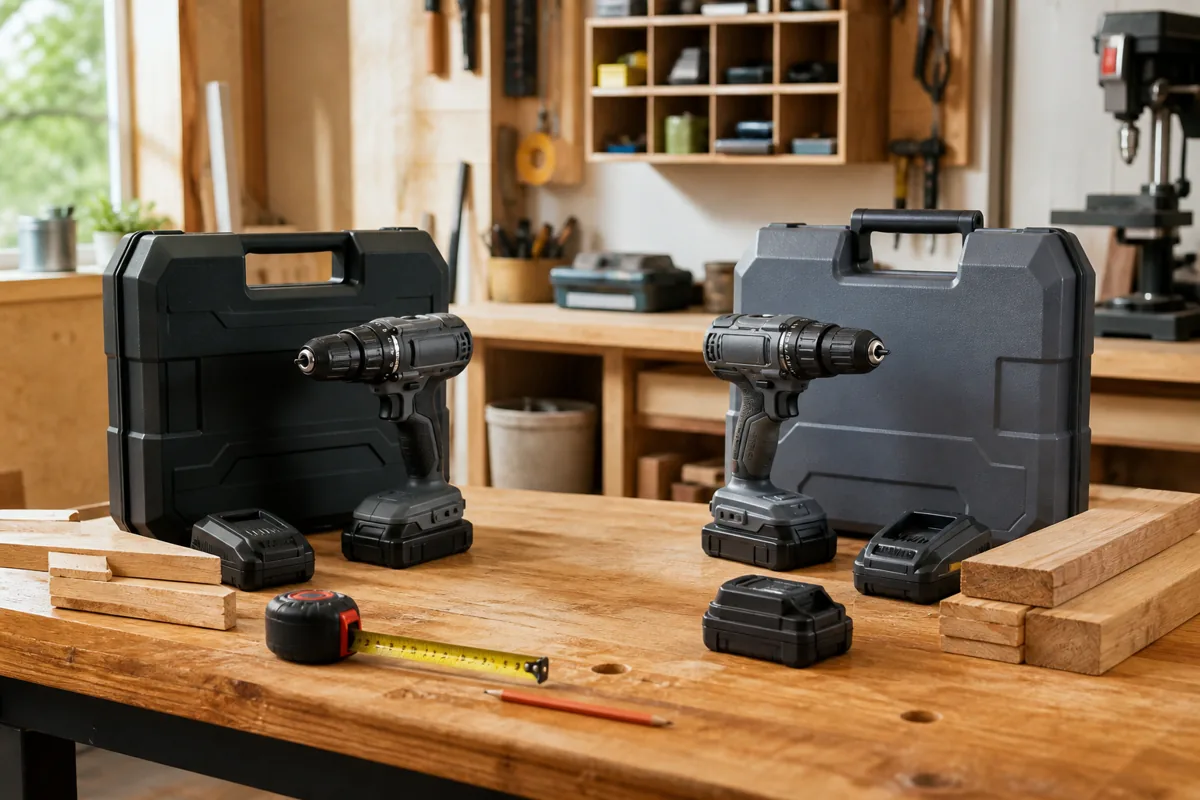
For one compact drill used occasionally, an original-equipment compact pack is usually the simple choice. If you already own several tools on the same 12V platform, a second pack can be more useful than one oversized battery: keep one in the tool and one charged. Compare the price of a bare battery with a kit, since a charger bundled with a pack may be worthwhile if you are starting from scratch.
Buying a replacement or spare
Choose a battery by platform compatibility first, then by capacity and price. A replacement should match the tool’s voltage and be explicitly listed for that platform. Look for clear manufacturer identification, warranty terms, and safety protections such as over-temperature, over-current, and overcharge protection. Avoid packs with vague compatibility claims, missing labeling, or a price that seems implausibly low. A poorly made pack can fail to communicate properly with the tool or charger, overheat, or lose capacity quickly.
If you want an original-brand spare, search by the exact platform and capacity shown on your existing pack, such as 12V 2.0Ah original-brand batteries. Check the product listing against the manufacturer’s compatibility information rather than relying only on customer photos or a seller’s broad “fits” claim.
Third-party batteries can cost less and may be reasonable for an older tool used lightly, provided the seller is reputable and the pack is specifically compatible. The savings matter less if the battery is used daily, supports an expensive tool, or has no dependable warranty. For that situation, an original-brand pack is the safer bet. Browse compatible 12V replacement batteries, then verify the manufacturer, platform, and return policy before ordering.
Charger, storage, and common failures
Use a charger approved for the battery platform. A charger from another brand or voltage family may not fit, charge correctly, or provide the protections the pack expects. If a battery stops charging, check the manual for indicator-light codes and let a pack that is unusually hot or cold return to room temperature before trying again. Don’t open a lithium-ion pack or try to revive one with improvised wiring.
Store batteries dry, away from direct sun, heaters, and freezing conditions. For long storage, follow the manufacturer’s guidance; many lithium-ion packs are better stored partly charged than left completely empty for months. Remove a pack from a tool when it will sit unused, and keep the contacts clean and free of metal debris. A pack that swells, leaks, smells unusual, or becomes hot while idle should be taken out of service and handled according to local battery-recycling guidance.
A practical buying check
For light repairs and overhead work, buy the smallest compatible pack that gives enough runtime—often 1.5Ah or 2.0Ah. For longer sessions, choose a mid-size or higher-capacity pack, accepting the added weight. If your current battery still works but runs short, a spare compact pack may be more comfortable than one large pack. Confirm platform compatibility, charger support, warranty, and return terms before paying; those details matter more than a small difference in advertised Ah.
Related guides
- Longest Lasting Lawn Mower Battery: AGM vs Lithium vs Flooded Lifespan and Cost per Season
- Duralast Gold Lawn Mower Battery Review: U1 Fit, CCA and When to Pay for AGM
- Greenworks Pro 80V 21-Inch Mower Review: Runtime Math, Push vs Self-Propelled and Yard Fit
- Bosch High Pressure Washer Gun Replacement: Fittings, Adapters and What Fits Your Model