What's inside
As an Amazon Associate I earn from qualifying purchases. This post may contain affiliate links at no extra cost to you.
A cordless rotary tool is useful for small jobs that call for a light touch: trimming a plastic edge, cleaning rust from a screw, sharpening a mower blade, or sanding a detail that a full-size sander cannot reach. It is not a substitute for an angle grinder, drill, or oscillating tool. The right choice depends less on headline speed than on how the tool feels at low speed, what accessories it accepts, and whether its battery fits tools you already own.
Match the tool to the work
Start with the jobs you expect to do. For occasional crafts, light deburring, and small repairs, a compact rotary tool with a flexible range of speed settings is usually enough. A larger, heavier cordless model may run longer or handle sustained cutting better, but weight makes it tiring to hold like a pencil.
For repeated cutting of metal or thick material, a rotary tool can be slow and its small wheels wear quickly. A compact angle grinder is a better fit for larger cuts. For flush cuts in wood or trim, an oscillating tool is generally easier to control. Choose a rotary tool when access, detail, and small accessories matter more than fast material removal.
Prioritize speed control and handling
Rotary tools commonly run from roughly 5,000 to 35,000 revolutions per minute, though the exact range varies. Low-speed control matters for polishing, some plastics, and delicate work. Too much speed can melt plastic, burn wood, or make a small accessory chatter. For cutting, you may need higher speed, but pushing harder is not a good way to speed the job up: it can stall the motor or break a wheel.
If possible, hold the tool before buying. Check whether the grip is comfortable in both pencil and palm positions, whether the speed control is easy to reach, and whether the tool balances with its battery attached. A battery at the back can make a compact tool feel tail-heavy. Variable speed is more useful than a handful of preset speeds if your projects involve different materials.
Choose the battery platform deliberately
Battery compatibility can be the deciding factor. If you already own cordless tools, a rotary tool that uses the same battery and charger can be a sensible addition. Check the exact platform and battery type: brands sometimes have several incompatible cordless lines, and a tool sold “bare” may not include a battery or charger.
A compact battery keeps the tool lighter, but it may not last through extended cutting. A larger pack can add runtime while making detail work less comfortable. For occasional five- or ten-minute repairs, using a battery you already own is often better value than buying into a separate platform. If you have no compatible batteries, compare the complete kit price—not just the bare tool—and consider whether you will use other tools in that ecosystem.
Compare the main buying options
| Option | Best for | Main trade-off |
|---|---|---|
| Corded rotary tool | Bench work and longer sessions near an outlet | No battery interruptions, but the cord can snag or limit reach |
| Cordless tool on your existing platform | Small repairs and portable work | Good value if batteries fit; pack weight and runtime still matter |
| New cordless kit with battery and charger | Buyers without a compatible platform | Costs more up front, but includes the power source and charging gear |
A corded tool remains a reasonable cheaper option if your work stays at a bench and sessions are long. If cordless is important, compare a bare cordless rotary tool with a complete kit with battery and charger. The bare tool is only the bargain if you already have the right battery.
Check collets, accessories, and storage
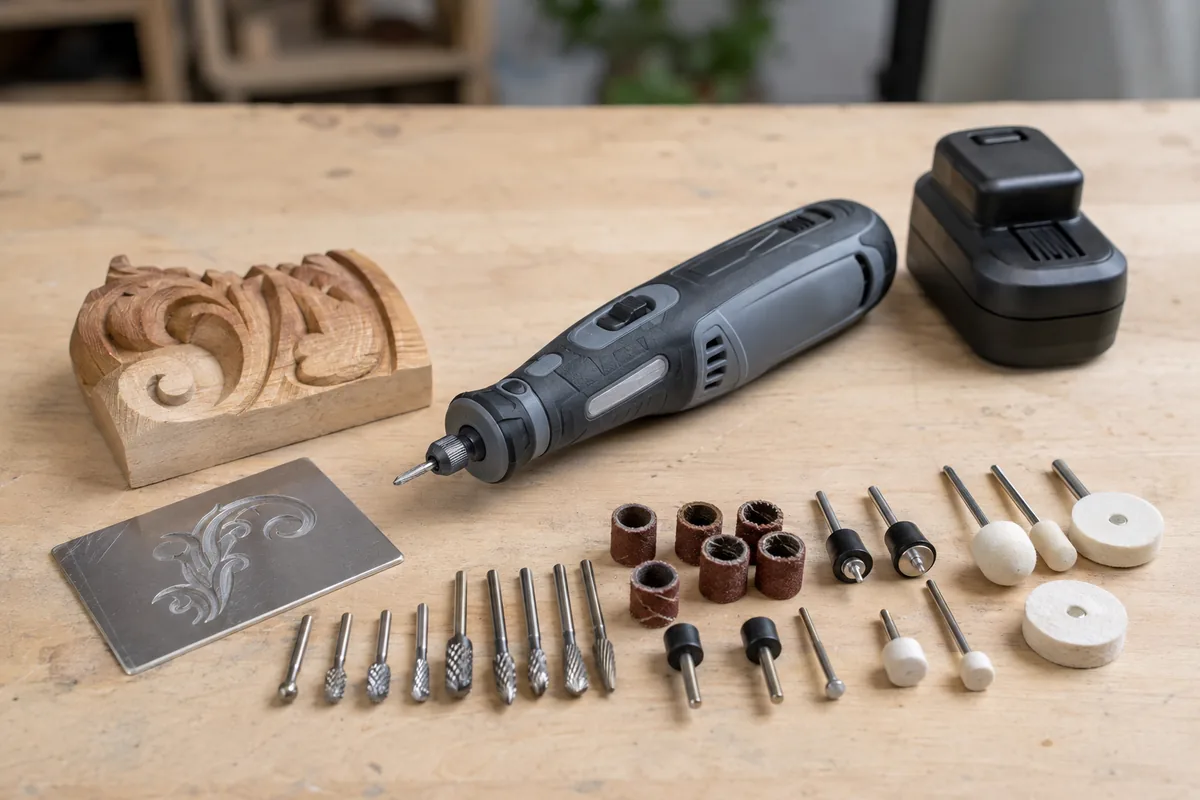
Many rotary tools use a 1/8-inch shank for common accessories, but kits may also include collets for other shank sizes. Confirm that the tool can hold the accessories you plan to use, and check whether replacements are easy to find. A chuck that accepts a range of shanks can be convenient, but it does not make every accessory suitable for the tool.
Starter kits often advertise a large accessory count. Look past that number: cutting wheels, sanding bands, polishing points, and grinding stones are consumables, and some low-cost assortments include duplicates or pieces you will not use. If your job needs one specific accessory, check its size and material rating. Keep accessories within their marked maximum speed.
For small repairs, useful extras include a case that keeps accessories sorted, a guard for cutting, and a wrench or quick-change system that you can operate without frustration. A flexible shaft can improve control for fine work, but adds setup and can feel awkward if it is poorly supported.
Avoid common failure modes
Small cutting wheels are easy to overload. Let the accessory cut at its own pace, use light pressure, and keep the workpiece secured. A wheel can shatter if it binds, is damaged, or is run beyond its rating. Wear eye protection, use a guard where provided, and keep hands out of the wheel’s path. For dusty work, use suitable respiratory protection and clear debris without blowing it toward your face.
Heat is another warning sign. If plastic starts to smear or wood darkens, reduce speed or pressure, pause, and check that the accessory is appropriate. If the tool repeatedly stalls, the material may be too thick or the accessory too small. Forcing it can drain the battery quickly and overheat the motor. Make several light passes instead of one aggressive cut.
A practical buying checklist
Before buying, verify the battery platform, whether the listing includes a battery and charger, the accessory shank sizes, the low and high speed range, and the tool’s weight with a battery installed. Look for a comfortable grip and a guard if cutting is part of the plan. Do not pay extra for a large accessory bundle unless it contains pieces you will actually use.
For occasional detail work, a lower-cost tool is fine if it has usable speed control, accepts common accessories, and fits a battery you own—or comes as a complete kit at a fair price. Spend more when you need better balance, longer sustained use, or a well-supported battery platform. The best tool is the one that can do your small jobs without making them slower, heavier, or less controlled than they need to be.
Related guides
- Longest Lasting Lawn Mower Battery: AGM vs Lithium vs Flooded Lifespan and Cost per Season
- Duralast Gold Lawn Mower Battery Review: U1 Fit, CCA and When to Pay for AGM
- Greenworks Pro 80V 21-Inch Mower Review: Runtime Math, Push vs Self-Propelled and Yard Fit
- Bosch High Pressure Washer Gun Replacement: Fittings, Adapters and What Fits Your Model