What's inside
As an Amazon Associate I earn from qualifying purchases. This post may contain affiliate links at no extra cost to you.
A cordless charger can look dead when the battery is the problem, and a battery can appear dead when the charger is at fault. Before buying either, check the outlet, contacts, temperature and battery condition. Most useful tests take only a few minutes; the key is to change one thing at a time.
Start with the basics
Unplug the charger and inspect its cord, plug, case and battery bay. Stop using it if the cord is cut, the plug is bent or scorched, the case is cracked, or you smell burning. Don’t open a charger: its internal components can retain hazardous voltage even after it is unplugged.
Plug the charger directly into a known-working wall outlet, rather than a power strip or extension cord. Test the outlet with another device. Check that the battery is seated fully and that the charger’s contacts are clean and dry. Dust can be removed with a soft, dry brush. Don’t scrape contacts with metal or spray cleaner into the charger.
Let a battery that has just been used, left in a hot vehicle or stored in freezing conditions return to room temperature. Many chargers pause charging when a pack is too hot or cold; some indicate this with a flashing light. The exact light pattern varies by brand, so check the label or manual for your charger.
Test with a known-good battery
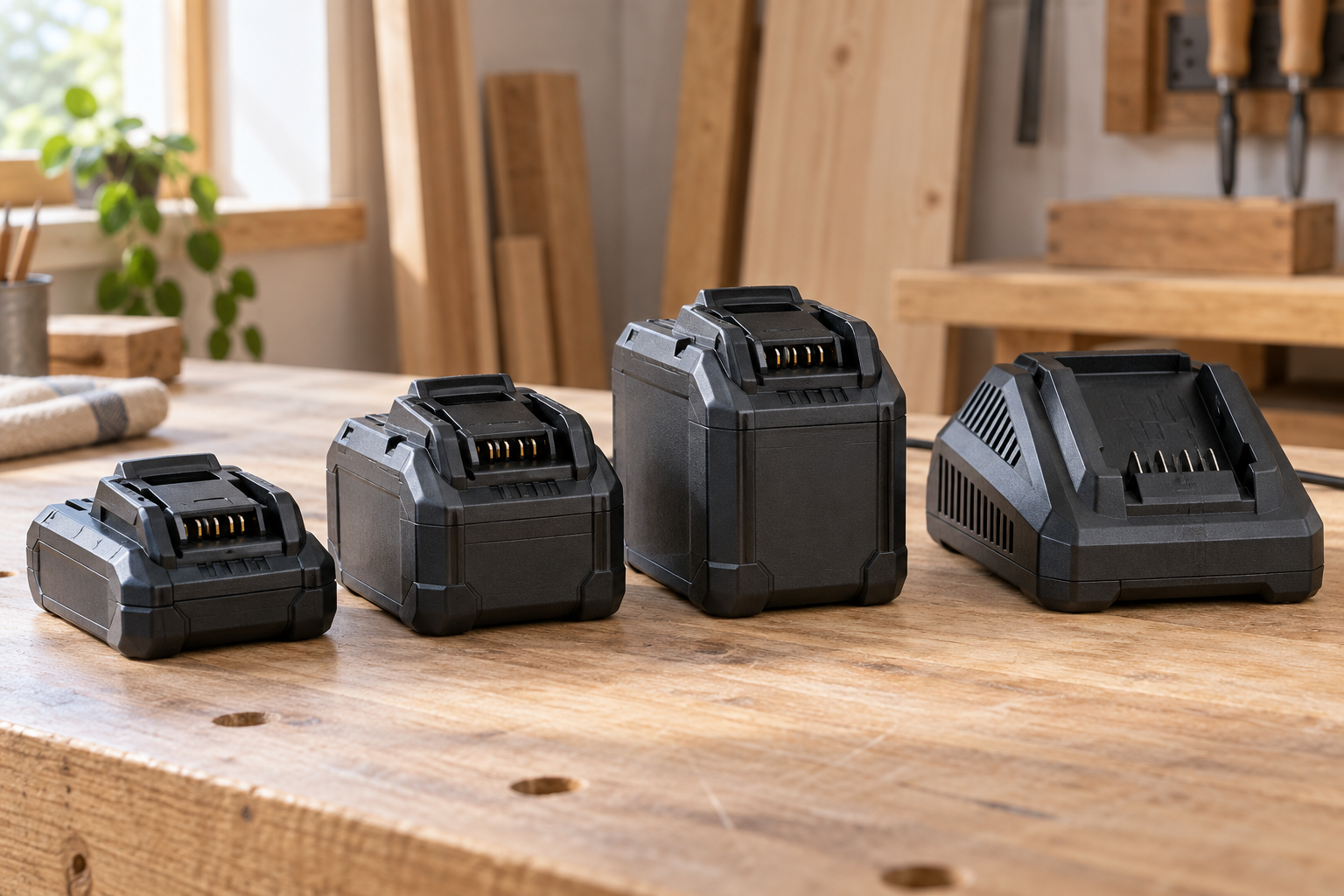
The best basic check is to use a second battery that fits the same charger and is known to charge normally. If that pack charges, the original battery is the likely problem. If neither pack charges, suspect the outlet, charger, or a condition affecting both batteries, such as temperature.
If possible, also try the suspect battery in a compatible tool. A tool that runs normally suggests the battery has at least some charge, but it does not prove the pack is healthy: a worn battery may run a light-duty tool and still shut down under a heavy load. Likewise, a battery that won’t run a tool may simply be deeply discharged or protecting itself.
Only test packs and chargers designed for the same battery platform. Similar-looking batteries are not necessarily interchangeable, and adapters do not make an unsupported charger safe. If you need a replacement, a charger matched to your tool brand and battery platform is the straightforward option.
Read the indicators
Indicator lights are useful clues, not a universal diagnostic code. A steady charging light usually means the charger has recognized the pack. A full-charge light means it believes charging is complete. Rapid flashing, alternating colors or no light at all can mean different things on different platforms.
Look up the pattern in the charger manual, using the charger’s exact product number if available. A flashing warning may indicate a pack that is too hot, too cold, damaged or not recognized. Remove the battery, wait several minutes, then reseat it once. Repeatedly pulling and reinserting it rarely fixes a failed pack and can wear the contacts.
| What you observe | Likely causes | Next check |
|---|---|---|
| No lights with a battery installed | Dead outlet, loose cord, failed charger, or a pack the charger cannot recognize | Verify the outlet; try a known-good compatible battery |
| Temperature warning or flashing light | Battery too hot or cold; sometimes a pack fault | Let the pack reach room temperature and consult the manual |
| Charger says full, but tool quickly stops | Worn battery cells, poor battery contacts, or tool trouble | Try the pack in another compatible tool or compare with a known-good pack |
| Battery charges, then drains unusually fast | Battery capacity loss, especially after many charge cycles or long storage | Compare runtime with a healthy pack under the same workload |
Check charging time and heat
Charging time depends on battery capacity, charger output and how much charge the pack needs. A small pack may finish much sooner than a high-capacity one, so compare the result with the manual rather than expecting every battery to charge in an hour. If a pack remains in a charging state far beyond the stated time, try another compatible battery before blaming the charger.
Some warmth during charging is normal. A battery or charger that becomes painfully hot, smells unusual, makes a crackling sound or shows melted plastic is not normal. Unplug it if safe to do so, move it away from combustible materials, and don’t use it again. Never leave a suspect pack charging unattended.
Decide what to replace
If a known-good battery charges normally but one pack repeatedly fails, the battery is the stronger suspect. If two compatible, room-temperature batteries fail in a verified outlet, the charger is more likely at fault. If you cannot borrow a battery, a repair counter or tool retailer may be able to test the pack and charger; ask about the fee before making a trip.
For an older tool platform, compare the cost of a genuine replacement charger with the value of the tools and batteries you already own. A replacement is sensible if the charger is the only failed item and the batteries still deliver useful runtime. A replacement charger for the existing platform can be cheaper than replacing a whole kit, but check compatibility by battery series and charger part number—not just brand name.
Third-party chargers can cost less, and may be adequate for an occasional-use tool if they are explicitly listed as compatible with the exact battery platform. The trade-off is that fit alone does not confirm correct charging behavior or protection features. For expensive, high-capacity packs or daily use, a genuine charger is the lower-risk choice. Don’t buy a used charger with damaged wiring, a modified plug or no readable identification.
Avoid risky fixes
Don’t bridge battery terminals, bypass temperature sensors, or try to “jump-start” a pack with wires or another battery. Lithium-ion tool packs can deliver very high current; a short circuit can cause burns, fire or cell damage. Don’t keep charging a swollen, cracked, wet or unusually hot battery.
If the charger and batteries are under warranty, record the indicator pattern and take photos of any damage before contacting the manufacturer. A clear description—battery temperature, outlet tested, charger lights and whether a second pack works—helps support staff distinguish a faulty charger from a pack that has reached the end of its service life.
Related guides
- Longest Lasting Lawn Mower Battery: AGM vs Lithium vs Flooded Lifespan and Cost per Season
- Duralast Gold Lawn Mower Battery Review: U1 Fit, CCA and When to Pay for AGM
- Greenworks Pro 80V 21-Inch Mower Review: Runtime Math, Push vs Self-Propelled and Yard Fit
- Bosch High Pressure Washer Gun Replacement: Fittings, Adapters and What Fits Your Model