What's inside
As an Amazon Associate I earn from qualifying purchases. This post may contain affiliate links at no extra cost to you.
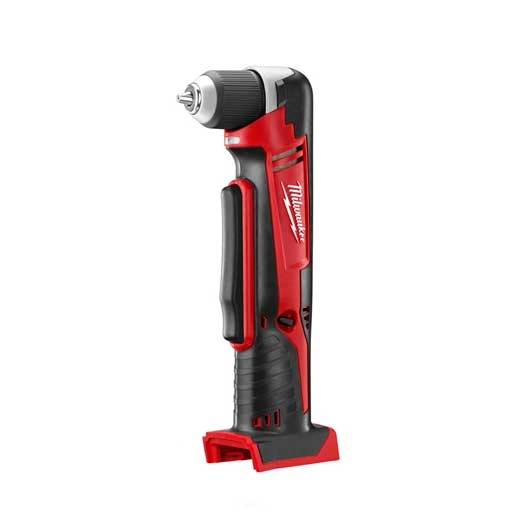
A right-angle drill earns its place when a standard drill cannot fit between studs, joists, or cabinets. For plumbing and electrical rough-in, the useful differences are not just voltage and price: head length, torque control, speed under load, and battery size all affect whether the tool can bore a clean hole without twisting your wrist or stalling halfway through.
As an Amazon Associate we earn from qualifying purchases at no extra cost to you.


What to look for in a rough-in drill
Check the tool’s head-to-back length first. A compact head may fit between framing members where a larger drill will not, but it can give you less leverage and may be harder to hold steady with a large hole saw. A side handle, if included or supported, helps control reaction torque. For repeated boring, look for a clutch or another way to manage torque, plus a low-speed setting for larger bits.
Match the tool to the holes you actually make. A 1-inch auger bit through studs is a different load from a 2- or 2-1/8-inch hole saw through cabinet panels. Large bits can grab suddenly, especially when they break through material. Keep both hands on the drill, brace yourself, and avoid drilling near hidden wiring or plumbing. Use the framing and electrical rules that apply to your job; a powerful drill does not make an oversized or misplaced hole acceptable.
Right-angle drill categories compared
| Category | Best fit | Trade-off |
|---|---|---|
| Compact 12V right-angle drill | Small holes, tight cabinets, occasional service work | Less reserve for large bits or long runs of repeated boring |
| 18V/20V right-angle drill | Regular rough-in and mixed-size holes | Heavier, and bulkier batteries can reduce access |
| High-torque stud-and-joist drill | Frequent large holes in framing | Cost, weight, and reaction torque are harder to justify for light work |
| Right-angle attachment | Infrequent access to a small space | Not a substitute for a dedicated drill under sustained heavy load |
Best for tight spaces: compact 12V tools
A compact 12V right-angle drill is a sensible choice for cabinet work, smaller holes, and occasional rough-in where access matters more than speed. It is usually lighter in hand than an 18V tool, and a small battery can help the head reach into crowded areas. The trade-off shows up when a large bit bites: the drill may slow, stall, or drain a small pack quickly. It is also tiring to repeat the same heavy hole if you have to push hard and wait for the tool to recover.
If most of your work is holes for small cable or pipe runs, and you already own compatible 12V batteries, the cheaper platform can be enough. Compare compact 12V right-angle drills by head clearance, speed range, and battery availability rather than assuming every tool in the category is equally capable.
Best for regular rough-in: 18V/20V drills
For a contractor or serious remodeler boring many holes across a day, an 18V/20V right-angle drill is generally the more versatile buy. It has more headroom for larger bits and sustained work, though platform labels such as 18V and 20V Max do not, by themselves, tell you how the drill performs. Tool design, gearing, and battery condition matter too. A high-capacity battery can improve runtime, but its extra size may make an already awkward tool harder to maneuver.
Look for a low-speed range, a secure auxiliary handle, and a clearly stated maximum capacity that fits your bits. A drill that accepts a large bit is not necessarily comfortable or safe to use at its limit. For repeated holes in framing, compare 18V/20V stud-and-joist drills and check whether the bare tool works with batteries you already own. Buying into a new battery system just for one drill can cost more than the tool itself.
When a high-torque model is worth it
A dedicated high-torque stud-and-joist drill makes sense when large holes through framing are routine, not occasional. These tools are built to maintain progress under heavy load, but that power brings a real hazard: a jammed bit can rotate the drill body abruptly. A side handle and controlled stance are essential. Do not use a high-torque model one-handed, and do not rely on a clutch to prevent every bind. If the bit catches, release the trigger rather than trying to muscle through it.
For a homeowner making a few small holes, this class is usually more weight and expense than the job needs. For a crew running pipe or cable through many joists, reduced stalling and better pace can justify it. Consider a high-torque cordless right-angle drill if large-hole boring is a regular part of the workload, and verify that the tool’s handle arrangement suits your working position.
Battery, bit, and job considerations
Battery choice is a balance between runtime and access. A larger pack can keep a drill working longer, but it may press against a stud or cabinet and prevent the head from reaching the hole. Keep a charged spare rather than forcing a nearly empty pack through a large bit. If a tool repeatedly slows, check for a dull or damaged bit, excessive feed pressure, and a battery that is cold or depleted before blaming the drill.
Use sharp bits suited to the material, and clear chips when the bit design and work position allow it. A dull bit makes the motor work harder and increases heat; a hole saw packed with debris can bind. Mark hole locations before drilling and check the opposite side when practical. For electrical work, protect cable from sharp edges with approved bushings or other required protection. For plumbing, account for the pipe’s diameter and the framing restrictions before cutting.
Choosing without overspending
Buy the lightest tool that handles your common hole size and daily volume—not the largest drill you can justify. Occasional small holes favor a compact 12V tool or, in a pinch, an attachment for work that is genuinely light. Routine rough-in favors an 18V/20V drill on a battery platform you already use. Frequent large holes are the case for a high-torque model. Before ordering, compare head clearance, included handle, speed range, bare-tool price, and the cost of batteries and charger if you are entering a new ecosystem.
Related guides
- Longest Lasting Lawn Mower Battery: AGM vs Lithium vs Flooded Lifespan and Cost per Season
- Duralast Gold Lawn Mower Battery Review: U1 Fit, CCA and When to Pay for AGM
- Greenworks Pro 80V 21-Inch Mower Review: Runtime Math, Push vs Self-Propelled and Yard Fit
- Bosch High Pressure Washer Gun Replacement: Fittings, Adapters and What Fits Your Model