What's inside
As an Amazon Associate I earn from qualifying purchases. This post may contain affiliate links at no extra cost to you.
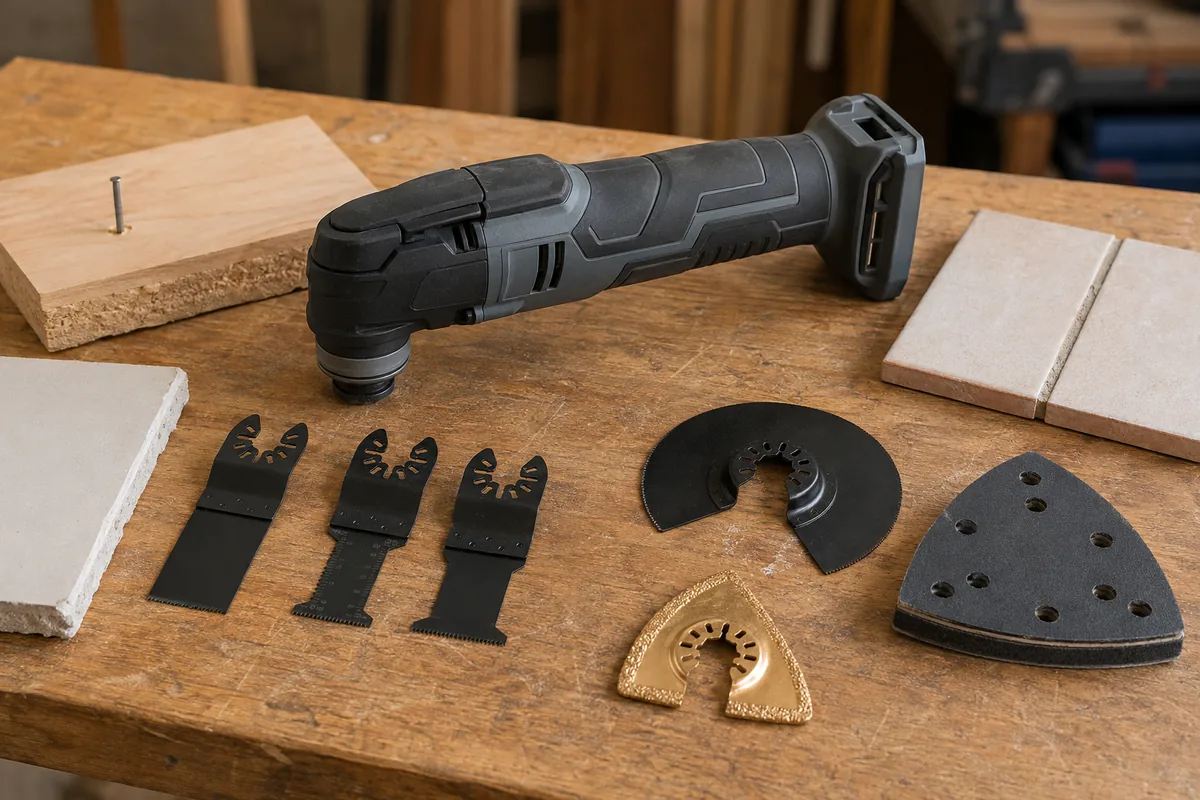
The right oscillating multi-tool blade depends on two things: what the edge must do and how much room you have to work. A flush cut needs a blade that can lie flat against the surface without gouging it. Scraping needs a stiff edge that can push under a bond without bending or tearing up the material below. One blade can manage both jobs in a pinch, but the results are usually slower and less controlled.
Check the tool and connection first
Oscillating tools use different blade mounts. Many accept universal open-back blades; others need a brand-specific interface or an adapter. Check the manual or the tool maker’s compatibility chart before buying. A blade that appears to fit but does not lock securely can slip, vibrate, or damage the mount.
Blade shape and oscillation angle matter, too. A compact tool is easier to control in a cabinet or beside trim, while a larger tool may cut faster but be harder to keep flat. Wear eye protection, secure the workpiece, and remove the battery before changing blades. The blade and nearby material can get hot during use.
Choose by task and material
For flush-cutting wood, plastic, or drywall, a wide, flat-segment blade gives more support against the surface than a narrow plunge blade. A bi-metal blade is a sensible general choice when the cut might encounter a nail or screw. It costs more than a basic high-carbon-steel blade, but is less likely to lose teeth on incidental metal. If you are certain the work is clean wood, a cheaper wood blade is usually fine.
For scraping adhesive, caulk, paint, or flooring residue, use a scraper blade rather than trying to scrape with a saw blade. A flexible scraper follows shallow curves and is useful for soft adhesive; a rigid scraper puts more force into stubborn residue but can gouge wood or dent soft flooring. For thinset or hard, brittle material, a carbide-grit scraper can last longer, but it is slower and can remove the surface beneath the residue if you lean on it.
To cut metal, choose a blade labeled for metal, commonly bi-metal or carbide-toothed, according to the material and thickness. A wood blade forced through a nail can burn, dull quickly, or lose teeth. If a flush cut includes metal, slow down and let the teeth work; forcing the tool increases heat and can make the cut wander.
Blade comparison
| Blade type | Best use | Main trade-off |
|---|---|---|
| High-carbon-steel wood blade | Clean wood, plastic, or drywall | Low cost; teeth can be damaged by hidden fasteners |
| Bi-metal flush-cut blade | Wood with possible nails or screws | More durable around metal, but costs more |
| Flexible scraper | Soft adhesive, caulk, labels, and residue on slightly curved surfaces | Conforms to the surface; can bend or chatter under heavy pressure |
| Rigid scraper | Stubborn adhesive on a flat, durable surface | Transfers force efficiently; easier to gouge the work |
| Carbide-grit scraper | Hard, brittle deposits such as thinset | Abrasive and durable, but can remove underlying material |
Tooth shape and width affect control
Wide blades make straight flush cuts easier because more of the edge stays supported. They can also bind in a narrow opening or heat up if buried too deeply. Narrow blades fit tight spaces and are easier to steer around a corner, but demand a steadier hand. For a long trim cut, a blade around 1 to 1-1/4 inches wide is a practical starting point; for cramped work, consider a narrower blade around 3/4 inch.
Coarse teeth remove material quickly in wood, but leave a rougher edge and are more prone to grabbing. Fine teeth cut more slowly and can give better control in thin material or metal. Do not use blade width as a substitute for patience: a broad blade pushed hard can still wander or overheat.
Keep the blade flat for flush cuts
Test the cut where a small mark will not matter, and check what is behind the surface before starting. Set the tool to a moderate speed and let the blade reach its operating rate before touching the work. Hold the shoe or blade body against the reference surface, then feed slowly. A slight change in angle can leave a groove, especially in soft pine, veneer, or finished flooring.
Use short strokes and pull back if the blade starts to bind. A hot blade, burning smell, darkened wood, or a cut that suddenly slows are signs to stop and inspect. Resin and dust can pack into the teeth; clear debris with the battery removed. If the cut is too deep for the blade’s usable length, switch to a longer blade rather than levering the tool.
Scrape in controlled passes
Start with the least aggressive scraper that can do the job. Hold it at a shallow angle, keep the edge moving, and use light pressure. On wood or vinyl, test an inconspicuous patch first. A rigid blade held steeply can dig in; a flexible blade pressed hard can bow, then snap back and gouge the surface.
For dried adhesive, score thick ridges by hand or soften the residue if the material and adhesive allow it. Then make several light passes instead of trying to remove everything at once. Stop if the surface starts to peel, discolor, or shed fibers. Scraping old paint can create hazardous dust, so identify the coating before disturbing it and follow local lead-safe guidance where applicable.
Buy for the job, not the biggest assortment
A small set matched to your likely work is more useful than a large assortment of unknown quality. For mixed repair jobs, a bi-metal flush-cut blade is a reasonable first purchase. Add a scraper blade set if adhesive removal is a regular task. For clean wood-only cuts, a basic wood flush-cut blade often costs less and performs well.
Replace a blade when it takes noticeably longer to cut, needs more pressure, or leaves burn marks despite a clean edge and sensible speed. Dull blades waste battery charge and make it harder to control the tool. If you are doing repeated cuts, keep a spare ready and let hot blades cool before handling them. A sharp, correctly matched blade—and a light touch—usually matter more than buying the most expensive option.
Related guides
- Longest Lasting Lawn Mower Battery: AGM vs Lithium vs Flooded Lifespan and Cost per Season
- Duralast Gold Lawn Mower Battery Review: U1 Fit, CCA and When to Pay for AGM
- Greenworks Pro 80V 21-Inch Mower Review: Runtime Math, Push vs Self-Propelled and Yard Fit
- Bosch High Pressure Washer Gun Replacement: Fittings, Adapters and What Fits Your Model