What's inside
As an Amazon Associate I earn from qualifying purchases. This post may contain affiliate links at no extra cost to you.
Door-jamb undercuts are a demanding job for a cordless oscillating tool: the blade must fit beneath the jamb, cut flooring cleanly, and stay square without chewing up the surrounding trim. For occasional cuts, a compact tool from a battery platform you already own is usually the sensible buy. If you cut several doorways at once, prioritize a comfortable grip, low vibration, and a quick blade-change system over headline speed.
As an Amazon Associate we earn from qualifying purchases at no extra cost to you.


What matters for flush-cutting jambs
Blade clearance comes first. A short, narrow wood blade is easier to guide close to a wall or casing than a wide plunge-cut blade. For a typical undercut, use a blade around 1 to 1¼ inches wide; wider blades cover more ground but are harder to steer in tight corners. Check that the blade and tool body can lie flat on a flooring offcut without the housing hitting the jamb.
Control matters more than raw speed. Variable speed helps when starting a cut or working near delicate casing. Too much pressure or speed can burn the wood, deflect the blade, or leave a cut that slopes upward. A tool with a comfortable, narrow grip and modest vibration is easier to hold level through a short cut than a heavier tool with more power.
Expect dust and hidden obstacles. MDF jambs cut quickly but make fine dust; hardwood takes longer and may scorch if the blade is dull. Nails, screws, and staples can wreck a wood-only blade. If you suspect fasteners, use a suitable bi-metal blade and slow down when you feel an unexpected change in resistance.
Cordless options by job size
| Option | Best fit | Trade-off |
|---|---|---|
| Compact 12V multi-tool | One or two doorways, tight spaces, light trim work | Less reserve for long cuts in dense hardwood; smaller batteries may need a recharge sooner |
| 18V/20V platform multi-tool | Several rooms, mixed materials, regular renovation work | Often bulkier; weight and vibration vary substantially between tools |
| Existing-platform tool with basic blade clamp | Occasional undercuts on a budget | Slower blade changes and more fiddling when the cut angle or blade needs adjustment |
Voltage alone is not a reliable ranking: battery capacity, tool design, blade sharpness, and how hard you push all affect runtime and cutting pace. For a single room, even a small battery is generally adequate. For repeated cuts, a second charged battery is more useful than buying a larger tool solely for this task.
Choosing a tool and battery
Start with your existing cordless system. If you already own batteries and a charger, a bare tool usually costs less and avoids adding another battery type. Compare the tool’s weight with a battery installed, the ease of changing blades, and whether the grip lets you hold the blade flat. If you are choosing a platform from scratch, consider its broader range of cordless drills, saws, lights, and chargers—not just one undercutting job.
A compact tool is a good choice for occasional doorway work, especially if it shares batteries with a drill or impact driver you already use. Browse 12V cordless oscillating multi-tools if low weight and access matter more than speed through repeated hardwood cuts. For frequent renovation work, a full-size tool on a platform you own is usually the more flexible purchase; compare 18V cordless multi-tools sold as bare tools.
Do not assume a more expensive blade-change system will improve the cut itself. It saves time when you swap between a wood blade and a bi-metal blade, or adjust a blade to reach a corner. If you only undercut a few jambs, a slower clamp is acceptable. Put the savings toward a sharp blade and eye protection instead.
How to make a clean undercut
Set a flooring offcut next to the jamb, with an underlayment sample beneath it if the finished floor will have one. Rest the multi-tool blade flat on the flooring stack, teeth facing the jamb, and make a pencil mark at blade height if you need a visible guide. The offcut establishes the intended clearance; cutting too high can leave a conspicuous gap, while cutting too low can make the floor bind beneath the trim.
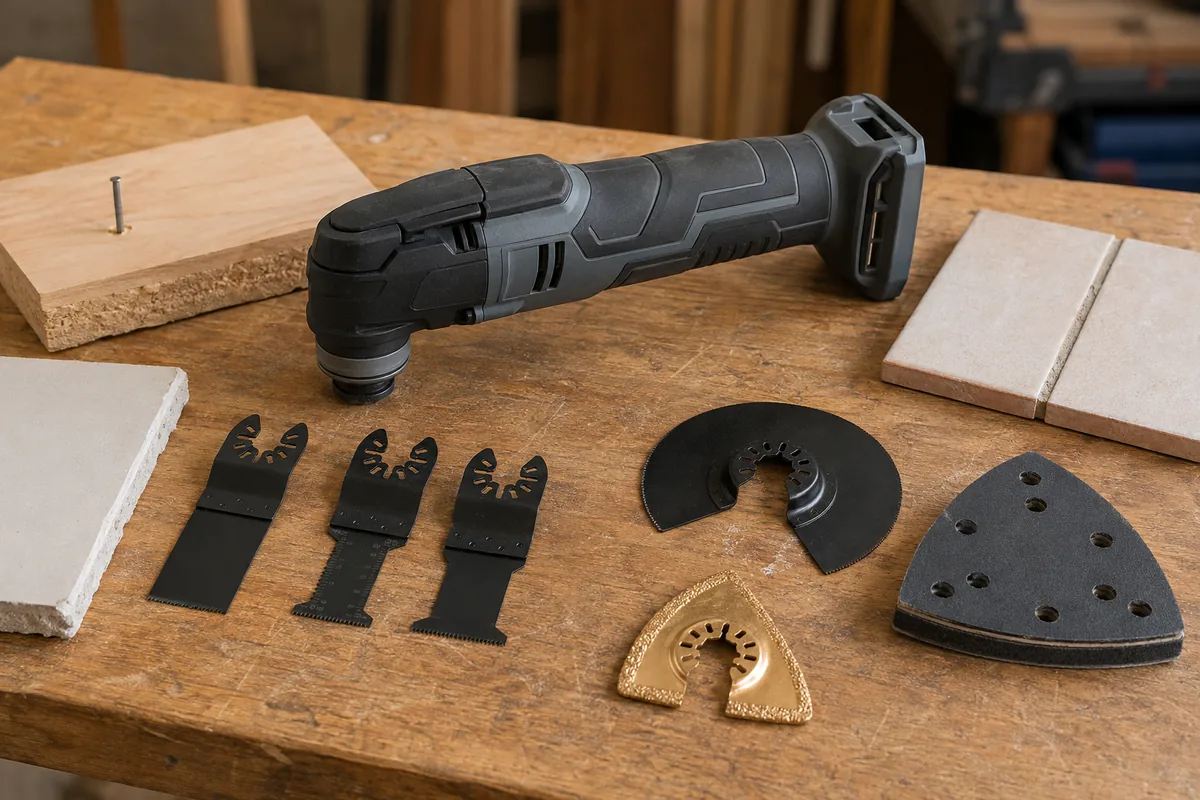
Use a sharp wood blade for clean, fast cuts in wood or MDF. If fasteners are likely, switch to a bi-metal blade rather than forcing a wood blade through them. Start the tool before touching the jamb, keep the blade flat against the flooring guide, and let the teeth work. Rocking the tool or levering the blade sideways widens the kerf and can bend or break it. Finish corners with short, controlled strokes rather than twisting a wide blade into the wall.
Test the clearance with the actual flooring offcut before cutting the whole doorway. Remove the cut strip with a thin pry tool, taking care not to damage the casing, then vacuum the dust. If the blade wanders, stop and check its sharpness, the tool angle, and whether a nail is deflecting it. Do not compensate by pushing harder.
Common failure modes
Blade burn or a ragged edge: usually caused by a dull blade, excessive pressure, or dwelling in one spot. Replace the blade and use a steadier pace. Cut too high: the flooring may slide underneath but leave a visible gap. Repeat the height check with a flooring sample before cutting more jambs. Battery slowdown: a small, nearly empty pack may bog down in hardwood; swap batteries rather than leaning harder on the tool. Unexpected blade damage: hidden metal or a sideways bind can strip teeth or bend the blade. Stop, inspect, and choose a metal-capable blade when needed.
For a few standard doorways, a basic cordless multi-tool on your current battery platform is enough. Spend more only if the job count, material, or cramped access makes better balance and faster blade changes worthwhile.
Related guides
- Longest Lasting Lawn Mower Battery: AGM vs Lithium vs Flooded Lifespan and Cost per Season
- Duralast Gold Lawn Mower Battery Review: U1 Fit, CCA and When to Pay for AGM
- Greenworks Pro 80V 21-Inch Mower Review: Runtime Math, Push vs Self-Propelled and Yard Fit
- Bosch High Pressure Washer Gun Replacement: Fittings, Adapters and What Fits Your Model