What's inside
As an Amazon Associate I earn from qualifying purchases. This post may contain affiliate links at no extra cost to you.
What a cordless drill can handle
A cordless drill can mix a small batch of thinset mortar, grout, drywall joint compound, or similar material, but it is not a substitute for a dedicated mud mixer. The useful range is roughly a gallon or less at a time, in a bucket with enough room for the paddle to move without striking the sides. Thick mortar, repeated batches, and large buckets put more strain on the drill, battery, and operator.
For mixing, low speed and steady torque matter more than a high maximum RPM. A compact 12-volt drill may manage a small batch of premixed compound, but it can stall or overheat in stiff mortar. A good 18- or 20-volt drill is the safer choice for occasional small batches. If mixing is a regular part of the work, buy a dedicated mixer or a drill designed for mixing.
As an Amazon Associate we earn from qualifying purchases at no extra cost to you.


What to look for
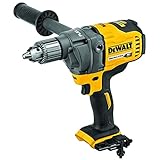
Choose a drill with a low-speed range around 0–500 RPM, a substantial side handle, and a chuck that accepts the paddle shaft. A two-speed drill with a mechanical low gear is preferable to relying on a variable-speed trigger alone: it helps keep the paddle slow when the material is dense. A side handle is important because a paddle can catch suddenly and twist the drill in your hands.
Brushless motors generally run more efficiently and tolerate sustained work better than brushed motors, but they do not make a small drill immune to overheating. Battery capacity helps too: a 4.0Ah or 5.0Ah pack usually runs longer than a compact 2.0Ah pack, though it adds weight. Use the battery platform you already own if it has a suitable drill and a healthy pack; buying into a new ecosystem for occasional mixing is hard to justify.
Drill types compared
| Type | Good use | Main limitation |
|---|---|---|
| 12V drill/driver | Small batches of thin compound | More likely to stall or heat up in mortar |
| 18/20V drill/driver with low gear | Occasional small batches of compound or mortar | Can overheat with long mixing sessions |
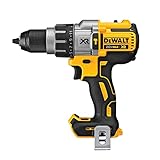
| 18/20V hammer drill | Mixing when it also serves as a regular drill | Hammer mode is not for mixing; leave it off |
| Dedicated mixing drill | Frequent or larger batches | Extra cost and a tool with less everyday drilling use |
A hammer drill is not automatically more suitable because of its impact function. The hammer setting should be off while mixing. Its value is that some models have a sturdy low gear and side handle, not that they hammer the material.
Cordless drills to consider
For homeowners who already own an 18- or 20-volt battery system, a full-size drill/driver with a two-speed gearbox is the practical starting point. Look for a bare tool in the brand’s established platform, then check the manual for sustained-use guidance. If you need a new kit, compare what comes with it: a charger and a 4.0Ah-class battery can matter more for mixing than a small price difference in the drill itself. Browse 18- or 20-volt drill/drivers with side handles and confirm the chuck capacity and low-speed range before buying.
A compact 12-volt drill is a reasonable low-cost choice if the job is a few small batches of lightweight compound, not stiff tile mortar. It is easier to control and often already on hand, but stop if the motor housing gets hot, the speed drops sharply, or the drill repeatedly trips its overload protection. The lower purchase price is no bargain if the tool is being pushed beyond its intended workload.
If you mix frequently, a cordless dedicated mixer is more comfortable and is built around the job. Its larger handle arrangement and mixing-oriented speed control make it easier to manage paddle torque. The trade-off is cost and another battery tool to store. Compare cordless paddle mixers if you are mixing several batches on most projects.
Paddle and bucket matter
Use a paddle intended for the material and batch size. A small paddle needs less torque than a large one; an oversized paddle can bog down even a powerful drill. Check that its shaft fits the chuck securely, and tighten the chuck fully. A loose shaft can slip, damage the chuck, or whip against the bucket. For a drill with a keyed chuck, keep the key out of the work area and remove it before starting.
Use a sturdy bucket with enough clearance around the paddle. Keep the paddle submerged before pulling the trigger to reduce splashing, but do not press it hard against the bottom. Follow the compound or mortar maker’s water ratio and mixing time. Adding extra water to make a weak drill cope can spoil the mix and reduce performance.
Safe mixing and battery care
Set the drill to its lowest gear and start slowly. Hold the side handle with one hand and the main grip with the other; stand with a stable stance and keep the bucket from sliding. A paddle catching on a lump or bucket edge can rotate the drill abruptly. Wear eye protection and gloves, and avoid loose clothing near the paddle.
Mix in short intervals—about 30 to 60 seconds at a time—then pause to scrape the bucket and let the drill cool if it is warm. Do not force the trigger when the motor slows. Repeated stalls can overheat the motor, battery, or electronic controls. A hot battery should be allowed to cool before charging, according to the manufacturer’s instructions. If the drill smells hot, cuts out repeatedly, or remains too hot to hold comfortably, stop and switch to a more suitable tool.
For one small repair, an existing full-size cordless drill may be enough. For regular mortar work, choose a mixer instead of treating a drill as one. Match the tool to the batch, use a modest paddle, and keep the speed low; that is safer for your hands and easier on the battery platform.
Related guides
- Longest Lasting Lawn Mower Battery: AGM vs Lithium vs Flooded Lifespan and Cost per Season
- Duralast Gold Lawn Mower Battery Review: U1 Fit, CCA and When to Pay for AGM
- Greenworks Pro 80V 21-Inch Mower Review: Runtime Math, Push vs Self-Propelled and Yard Fit
- Bosch High Pressure Washer Gun Replacement: Fittings, Adapters and What Fits Your Model