
What's inside
- What Is a Belt Sander and When Should You Use One?
- Belt Sander Options Available at Home Depot
- Notable Belt Sander Models to Compare at Home Depot
- How to Choose the Right Belt Sander at Home Depot
- Choosing the Right Sanding Belt
- How to Use a Belt Sander Safely
- Common Belt Sander Buying Mistakes
- Frequently Asked Questions
- Final Thoughts
As an Amazon Associate I earn from qualifying purchases. This post may contain affiliate links at no extra cost to you.
Looking for a belt sander at Home Depot means choosing more than a brand or price. The right tool depends on the size of your workpieces, how much material you need to remove, the type of wood you are sanding, and how frequently you plan to use it. Home Depot carries several types of belt sanders, including compact handheld models, larger heavy-duty machines, combination belt-and-disc sanders, and cordless options.
For most homeowners and DIY woodworkers, a handheld 3-inch belt sander is a practical starting point for flattening rough boards, removing old finishes, and preparing large wooden surfaces. However, a narrow detail sander or stationary combination machine may be more appropriate for specialized work.
This guide explains how to compare belt sanders available through Home Depot, understand their specifications, choose compatible sanding belts, and avoid common purchasing mistakes. The goal is to help you select a machine that matches your actual workload rather than simply buying the most powerful or expensive option.
As an Amazon Associate we earn from qualifying purchases at no extra cost to you.


Our Top Picks

What Is a Belt Sander and When Should You Use One?
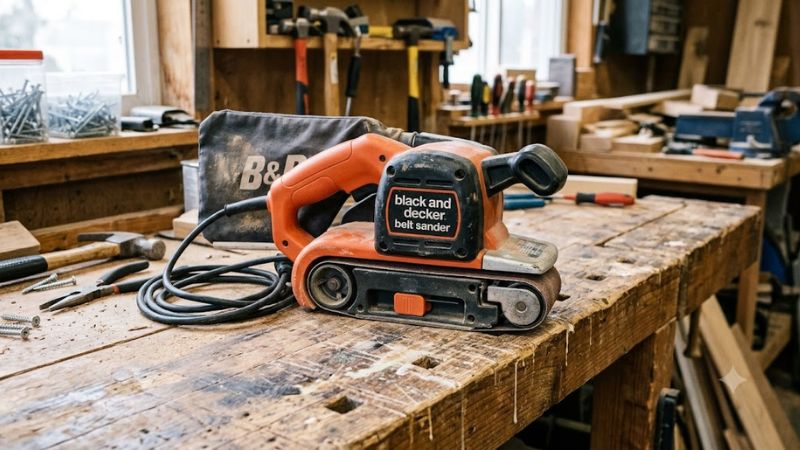
A belt sander is a power tool that moves a continuous loop of abrasive material around two rotating rollers. The moving belt removes material through friction, making the tool particularly useful for relatively aggressive sanding.
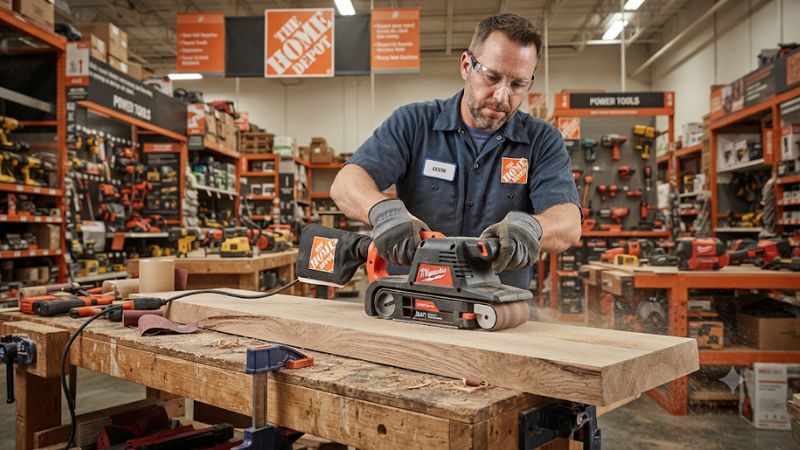
Unlike random orbital sanders, which use a circular sanding pad, belt sanders are designed primarily for faster material removal and leveling larger surfaces.
Typical applications include:
- Removing old paint, varnish, and other finishes when the coating and dust hazards have been properly assessed.
- Smoothing rough-sawn lumber before finer sanding.
- Leveling uneven wooden boards and edges.
- Removing surface imperfections from doors, tabletops, and wooden panels.
- Preparing wood for additional sanding and finishing.
- Shaping or adjusting wooden components during furniture and renovation projects.
A belt sander is not automatically the best choice for every finishing job. Its aggressive abrasive action can remove too much material, leave visible scratches, or create uneven areas if the operator holds it in one position.
For fine finishing, a random orbital sander or finishing sander is generally easier to control.
Belt Sander Options Available at Home Depot
Home Depot’s belt sander selection includes several configurations. The important distinction is whether you need a portable machine for working on large surfaces or a stationary machine for shaping smaller workpieces.
Its catalog includes models from RIDGID, RYOBI, Makita, WEN, and other manufacturers. Product selection, regional availability, and pricing can change, so check the exact model number and current listing before purchasing.
The Home Depot+1
1. Handheld belt sanders
Handheld models are designed to move across a workpiece rather than requiring the material to be fed through a stationary machine.
They are useful for:
- Sanding wooden doors and tabletops.
- Removing material from wide boards.
- Smoothing rough lumber.
- Leveling relatively large wooden surfaces.
- Renovation work where portability matters.
Common belt sizes include 3 x 18 inches, 3 x 21 inches, and 4 x 24 inches.
A 3 x 18-inch model is generally easier to manage for smaller projects, while a 4 x 24-inch model offers a wider sanding area and is suited to more demanding stock-removal work.
2. Stationary belt sanders
Stationary belt sanders remain in one position while you guide the workpiece against the abrasive belt.
These machines are useful for shaping smaller components, sanding edges, and performing repeatable workshop tasks.
They are worth considering if you regularly work with furniture components, wooden blocks, or small DIY projects.
However, they are not a direct substitute for handheld models. A stationary machine may be inconvenient when sanding an installed door, large tabletop, or wooden floor.
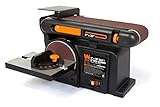
3. Combination belt-and-disc sanders
Combination machines include a belt sanding surface and a circular sanding disc.
The belt is useful for straight edges and flat surfaces, while the disc can help with shaping and finishing suitable smaller pieces.
For example, Home Depot lists the WEN 6502T, a corded combination machine with a 4 x 36-inch belt and 6-inch disc. Its cast-iron base makes it a stationary workshop option rather than a portable handheld sander.
The Home Depot+1
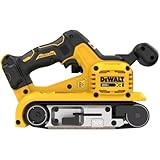
4. Cordless belt sanders
Cordless models eliminate the need to manage a power cord while working around larger workpieces or in locations without convenient outlets.
They can be useful for mobile repair work and projects where moving around the workshop is important.
However, check the exact battery platform and package contents. A tool-only listing does not necessarily include a battery or charger, and batteries from different voltage families should never be assumed compatible.
Also consider battery weight, runtime requirements, and the availability of replacement packs before choosing a cordless model.
Notable Belt Sander Models to Compare at Home Depot
If you are comparing specific products, the following models provide useful examples of different belt sander configurations.
The specifications below are based on manufacturer information and Home Depot’s product listings, not independent performance testing.
| Model | Belt size | Power | Intended application |
| RYOBI BE319 | 3 x 18 in. | 6-amp corded | General DIY sanding |
| RIDGID R27401 | 3 x 18 in. | 6.5-amp corded | Variable-speed material removal |
| Makita 9403 | 4 x 24 in. | 11-amp corded | Heavy-duty stock removal |
| Makita 9404 | 4 x 24 in. | 8.8-amp corded | Variable-speed sanding |
| WEN 6321 | 3 x 21 in. | 7-amp corded | Budget-oriented DIY projects |
| WEN 6502T | 4 x 36 in. belt, 6-in. disc | Corded | Stationary workshop sanding |
The Home Depot+4
RYOBI BE319: A practical DIY option
The RYOBI BE319 is a 6-amp corded handheld belt sander with a 3 x 18-inch belt.
Its relatively compact belt format makes it worth considering for homeowners who need a conventional portable sander for occasional woodworking and renovation projects.
Its main limitation is that it does not offer the wider sanding surface of a 4-inch machine.
Consider it if: You want a conventional corded sander for general household woodworking.
Look elsewhere if: You regularly remove substantial material from wide boards or need a larger sanding surface.
RIDGID R27401: Variable-speed control
The RIDGID R27401 uses a 6.5-amp motor and a 3 x 18-inch sanding belt.
According to RIDGID, it has an adjustable speed range of 400–950 feet per minute, electronic feedback, and an AIRGUARD dust collection system. The manufacturer also specifies a standard 1-1/4-inch vacuum hose connection.
RIDGID
Variable speed is useful when you want to adjust material removal for different tasks, although the appropriate setting depends on the material, abrasive, and manufacturer’s instructions.
Consider it if: You want a compact handheld machine with adjustable speed.
Look elsewhere if: Your projects consistently require the wider belt format of a heavy-duty machine.
Makita 9403: For demanding material removal
The Makita 9403 is a heavier-duty corded belt sander featuring an 11-amp motor and a 4 x 24-inch belt.
Makita specifies a belt speed of 1,640 feet per minute. The manufacturer also identifies its dust bag, low-noise design, and motor protection features as key characteristics.
Product Details -9403+1
The wider belt is useful when working across larger surfaces, but the machine’s size and aggressive sanding action may be excessive for occasional small household projects.
Consider it if: You regularly sand large wooden surfaces and need substantial material-removal capability.
Look elsewhere if: You primarily work on small components or delicate finishing tasks.
Makita 9404: Adjustable sanding speed
The Makita 9404 uses a 4 x 24-inch belt and an 8.8-amp motor.
Its variable-speed capability makes it an alternative for users who want a wider sanding area while retaining more control over belt speed.
Makita’s documentation lists the 9404 as part of its 4 x 24-inch belt sander family. Always consult the exact model’s manual for operating instructions and specifications.
cdn.makitatools.com
Consider it if: You need a wider belt and adjustable speed for different woodworking applications.
Look elsewhere if: A compact and inexpensive machine is sufficient for your workload.
WEN 6321: A budget-friendly alternative
The WEN 6321 is a corded handheld model with a 7-amp motor and a 3 x 21-inch sanding belt.
Its belt dimensions distinguish it from shorter 3 x 18-inch machines. Replacement belts must match the specified dimensions and be suitable for the machine.
Consider it if: You want a basic handheld belt sander for occasional DIY work.
Look elsewhere if: You need advanced speed control, specialized dust extraction, or a wider professional-style sanding surface.
Model specifications and availability should be reconfirmed against the current manufacturer documentation and retailer listing before purchase.
How to Choose the Right Belt Sander at Home Depot
Choosing the right belt sander becomes easier when you compare the specifications against the actual work you intend to perform.
1. Match the belt size to your workpiece
Belt dimensions determine the width and length of the abrasive loop the machine uses.
Common configurations include:
| Belt size | Best suited for |
| 3 x 18 in. | Smaller boards and general DIY work |
| 3 x 21 in. | Versatile handheld sanding |
| 4 x 24 in. | Wider surfaces and demanding material removal |
| 4 x 36 in. | Stationary workshop sanding |
These are general application categories, not performance rankings.
A wider belt covers more surface area with each pass, but it does not automatically produce a better finish. Operator control, abrasive grit, belt speed, and workpiece condition also matter.
Most importantly, replacement belts must match both the specified width and length. A belt that is close in size is not an acceptable substitute.
2. Understand motor amperage
Most corded handheld belt sanders sold in the US advertise motor current in amps.
For example, the RYOBI BE319 has a 6-amp motor, while the Makita 9403 has an 11-amp motor.
Amperage indicates electrical current draw under specified conditions. It is not a direct measurement of sanding performance or mechanical output power.
A higher amp rating can indicate a more demanding motor design, but it does not independently establish how quickly a machine will remove material.
Consider motor specifications alongside belt speed, belt dimensions, intended workload, and machine handling.
3. Look for variable-speed control
Variable-speed control allows you to adjust the belt’s movement rather than operating at one fixed speed.
This can be useful when moving between different sanding tasks.
For example, aggressive material removal may require a different approach from preparing a surface for finishing.
However, a slower speed does not automatically prevent sanding damage. Excessive pressure, unsuitable abrasive grit, or poor control can still produce grooves and uneven surfaces.
4. Check dust collection
Dust collection is particularly important because belt sanders can produce substantial amounts of fine wood dust.
Depending on the machine, dust may be collected through an onboard bag, a vacuum adapter, or a compatible extraction system.
Before purchasing, check:
- Whether a dust bag is included.
- Whether the tool accepts a vacuum hose.
- The exact hose diameter required.
- Whether the collection system is suitable for your intended material.
- Whether the manufacturer specifies restrictions for particular sanding applications.
For example, RIDGID specifies a 1-1/4-inch vacuum hose connection for the R27401. This is a useful detail to check before purchasing an extraction accessory.
RIDGID
Dust bags should not be treated as complete protection against airborne particles. Appropriate dust extraction, ventilation, and respiratory protection remain important.
5. Consider weight and ergonomics
A belt sander needs to remain stable while moving across the workpiece.
Important handling features include:
- Two-hand grips: Help maintain control during operation.
- Balanced body design: Can make it easier to maintain consistent contact with the surface.
- Lock-on switch: Reduces the need to continuously hold the trigger, but requires extra attention when switching the machine off.
- Cord placement: A poorly positioned power cord can interfere with movement across larger workpieces.
A heavier machine is not necessarily better. If you are sanding overhead surfaces or working for extended periods, weight and grip comfort become especially important.
6. Compare total purchase cost
The cheapest belt sander is not always the least expensive option over time.
Consider the cost of:
- Replacement sanding belts.
- Additional abrasive grits.
- Dust bags or compatible vacuum accessories.
- Replacement batteries and chargers for cordless models.
- Storage and maintenance accessories.
For occasional DIY work, a basic corded model may provide better value than purchasing an expensive cordless platform solely for sanding.
Choosing the Right Sanding Belt
The sanding belt is just as important as the machine. Selecting the wrong abrasive can damage the workpiece or make the sanding process unnecessarily difficult.
Understanding sanding grit
Grit describes the relative coarseness of an abrasive. Lower numbers generally indicate coarser abrasives, while higher numbers indicate finer abrasives.
| Grit | Typical application |
| 40–60 | Aggressive material removal |
| 80 | General rough sanding |
| 100–120 | Intermediate sanding |
| 150–180 | Refining a wooden surface |
| 220 | Fine preparation before finishing, where appropriate |
These are general starting points, not universal requirements. The correct grit depends on the wood species, existing coating, surface condition, and finish manufacturer’s recommendations.
For example, starting with 40-grit abrasive on a relatively smooth tabletop may remove too much material. Beginning with a finer grit on heavily damaged lumber may make the job unnecessarily slow.
Check abrasive compatibility
Before buying replacement belts at Home Depot, verify:
- Belt width and length match the tool.
- The belt is designed for the intended material.
- The abrasive construction is suitable for the workload.
- The belt’s directional markings match the machine’s required installation direction, if applicable.
- The belt is rated and approved for the intended sander.
Aluminum oxide and ceramic abrasives are common choices for woodworking applications, but their suitability depends on the task and product construction.
Do not assume that every belt with matching dimensions is suitable for every sanding application.
How to Use a Belt Sander Safely
A belt sander removes material quickly, so correct handling is essential.
Follow these general steps while observing the instructions in your specific tool’s manual.
Step 1: Prepare the work area.
Secure the workpiece using appropriate clamps or a stable workholding arrangement. Remove loose objects and make sure the power cord cannot enter the sanding area.
Provide suitable ventilation and dust extraction.
Step 2: Inspect the machine.
Disconnect the power supply before inspecting or changing the abrasive belt.
Check the belt for tears, excessive wear, incorrect installation, or damaged edges. Inspect the power cord, housing, grips, and dust collection components.
Step 3: Install the correct sanding belt.
Follow the manufacturer’s belt replacement procedure. Check the belt’s directional markings and tracking requirements.
Never install a belt that is damaged or incompatible with the machine.
Step 4: Wear appropriate protective equipment.
Use safety glasses or goggles, suitable hearing protection, and respiratory protection appropriate to the dust exposure.
Avoid loose clothing, jewelry, and accessories that could become caught in moving parts.
Step 5: Start sanding carefully.
Hold the machine with both hands and ensure the abrasive belt is not touching the workpiece when starting.
Once the machine reaches operating speed, lower it carefully onto the surface according to the manufacturer’s instructions.
Step 6: Maintain consistent movement.
Move the machine steadily without applying excessive downward pressure.
Avoid keeping the belt in one position because this can create depressions and remove too much material.
Inspect the surface regularly rather than assuming that additional sanding will always improve the result.
Step 7: Switch off and disconnect the tool.
Allow the belt to stop completely before putting the machine down or performing an inspection.
Disconnect the power before replacing belts, clearing obstructions, or performing maintenance.
OSHA identifies contact with moving abrasive surfaces and entanglement at belt rollers as significant hazards. Woodworking dust also requires appropriate exposure controls.
Occupational Safety and Health Administration+2
Common Belt Sander Buying Mistakes
Even experienced DIY users can choose an unsuitable machine when they focus exclusively on price or motor power.
Avoid these common mistakes:
Buying based on amperage alone: Motor current does not tell you everything about material removal, speed control, or handling.
Ignoring replacement belt availability: An unusual belt size may make consumable replacement less convenient.
Choosing a handheld model for stationary work: If most of your projects involve shaping small components, a stationary belt-and-disc machine may be more practical.
Ignoring dust collection: A dust bag is useful, but it should not be considered a substitute for effective dust control.
Overlooking included accessories: Check whether the package includes a sanding belt, dust bag, vacuum adapter, or other accessories. Do not assume every listing includes the same items.
Buying a cordless tool without checking the battery package: Tool-only and complete-kit configurations have different ownership costs.
Frequently Asked Questions
1. Does Home Depot sell belt sanders?
Yes. Home Depot carries handheld, stationary, combination belt-and-disc, corded, and cordless belt sanding equipment. Selection varies by model and location.
2. What is the best belt sander size for home DIY projects?
A 3 x 18-inch or 3 x 21-inch handheld belt sander is a practical starting point for many home woodworking projects. Choose a larger machine when you regularly work with wider surfaces or need more substantial material removal.
3. Can you use a belt sander to remove paint?
Yes, belt sanders can remove certain coatings from suitable surfaces, but the process creates potentially hazardous dust. First identify the coating, especially on older painted materials where lead may be present. Do not dry-sand suspected lead-containing paint with an ordinary belt sander. Use an appropriate, legally compliant lead-safe removal method.
4. Is a belt sander better than a random orbital sander?
A belt sander is generally better for aggressive material removal and leveling larger wooden surfaces. A random orbital sander is usually more suitable for controlled finishing and reducing visible sanding marks. Many woodworking projects benefit from using both tools at different stages.
Final Thoughts
Finding the right belt sander at Home Depot starts with understanding your workload rather than choosing a machine based on its advertised motor amperage.
For general home improvement, a 3-inch handheld model is a sensible starting point. RIDGID R27401 is worth considering if adjustable speed is important, while the RYOBI BE319 offers a conventional corded configuration. For larger woodworking projects, the Makita 9403 provides a wider 4 x 24-inch belt and an 11-amp motor.
If your work mainly involves shaping small components, consider a stationary belt-and-disc machine instead.
Before purchasing, confirm the exact model, belt dimensions, included accessories, dust collection compatibility, and replacement abrasive availability. A properly matched belt sander will make woodworking more efficient while helping you maintain better control over material removal and surface preparation.
Related guides
More from Amazon
Programs that pair well with the guide above. Offers and eligibility are set by Amazon and may change.
A free business account with business pricing and bulk-buying tools for work, shop or home office.
Create a business accountFree shipping on eligible items, Prime Video and more. Eligible new members can start with a free trial.
Start a Prime free trialAudiobooks and podcasts to listen to on the go. Eligible new members can start with a free trial.
Try Audible freeAd-free music streaming. Eligible new subscribers can start with a free trial.
Try Music Unlimited freeAs an Amazon Associate we earn from qualifying purchases.


Write Your Review
No reviews yet. Be the first to share your experience!