What's inside
As an Amazon Associate I earn from qualifying purchases. This post may contain affiliate links at no extra cost to you.
Why battery weight matters overhead
When a tool is held above shoulder height, battery weight is not just a number on the box. It adds to the load on your wrists and shoulders, and it can make a tool harder to control as fatigue sets in. That matters when trimming branches, driving fasteners overhead, or drilling into joists. A battery that adds only a pound can feel significant after several minutes with your arms raised.
Runtime matters too. A smaller, lighter pack may need changing more often; a larger pack can keep you working but make the tool tiring to hold. The right choice depends on how long each overhead task lasts, how much the tool itself weighs, and whether you can rest or swap batteries between tasks.
Compare the whole tool, not just the battery
Battery weight is only part of the working load. Check the bare-tool weight and battery weight separately, then add them. If a tool weighs 4 pounds without a battery and the pack weighs 2 pounds, you are supporting 6 pounds—not counting a bit, blade, or accessory. For overhead work, hold the assembled tool in the position you’ll use it before buying, if possible. Balance matters: a tool that is nose-heavy may feel more tiring than a similarly weighted tool with a better grip and balance.
Battery labels can also mislead. Amp-hours (Ah) indicate charge capacity within a battery platform, not a universal runtime guarantee. A higher-Ah battery often has more cells and weighs more, but actual runtime depends on tool power, material, workload, temperature, and battery condition. A pruning saw cutting small, dry branches may run much longer per charge than the same saw cutting thick, green wood.
A practical weight-versus-runtime comparison
The figures below are broad examples, not specifications for every brand. Pack weights and runtimes vary by platform and tool. Use them to frame the trade-off, then check the manufacturer’s published battery weight and compare runtime reports for your specific tool and workload.
| Battery class | Typical trade-off | Often suits overhead work when… |
|---|---|---|
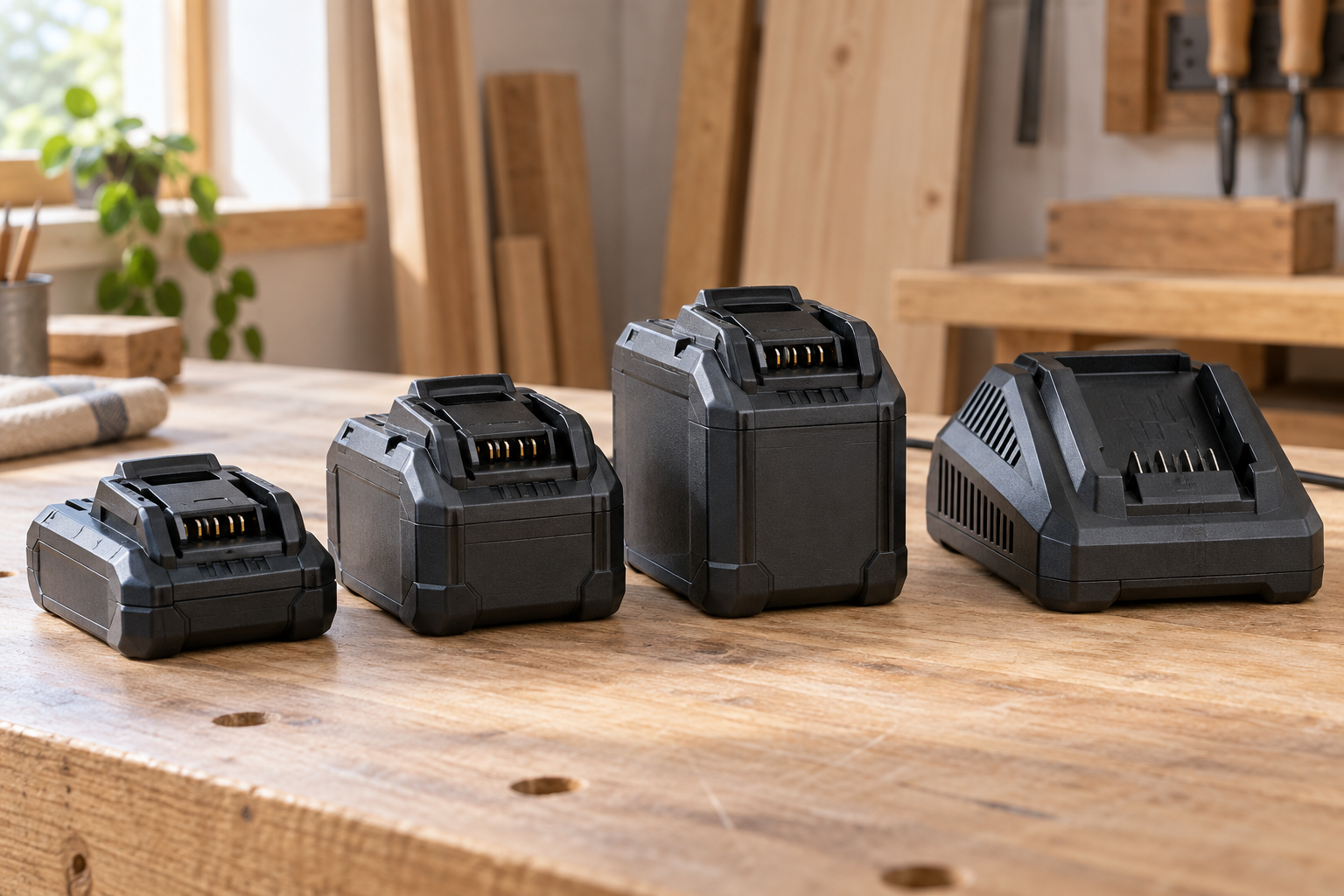
| Compact, roughly 2 Ah | Lightest option; shorter runtime under heavy load | Tasks are brief, such as a few cuts or fasteners, and a charged spare is nearby |
| Mid-size, roughly 4–5 Ah | More runtime with a noticeable increase in weight | You need a practical balance for repeated cuts or drilling and can tolerate the added load |
| Large, roughly 8 Ah or more | Longest potential runtime; often substantially heavier and bulkier | The tool is used in short bursts, or runtime is more important than holding comfort |
These capacity ranges are not interchangeable across brands, and battery design affects weight. A compact pack from one platform may not weigh the same as another pack with a similar Ah rating. Compare the actual pack weights, not just the labels.
Estimate runtime for your job
Start with the tool’s likely duty cycle. A cordless drill used for occasional holes may spend most of its time idle; a reciprocating saw cutting continuously draws power much more steadily. If you already own a battery for the platform, use it for a timed trial on representative work. Note how long it runs and whether the pack becomes uncomfortably heavy before it runs down. This is more useful than treating an advertised maximum runtime as a promise.
For repeatable work, record the number of cuts, holes, or fasteners completed per charge. Then estimate how many charged packs you need for a work session. For example, if a pack completes 30 comparable cuts and you expect 75, plan on at least three packs’ worth of charge, with some reserve for tougher material. Cold weather, aging cells, and demanding cuts can reduce output.
Do not assume a larger pack automatically makes a tool more powerful. Some tools can deliver higher output with certain battery designs, but compatibility and performance claims are platform-specific. Check the tool’s manual and battery chart rather than buying a heavy pack on capacity alone.
Choose a battery setup for overhead use
For occasional overhead jobs, a compact pack and a spare are often more comfortable than one large pack. You can swap batteries during a natural pause, and the tool stays lighter for most of the task. A compact battery in your tool’s platform is a sensible starting point if the work is short and the tool does not stall under load.
For longer sessions, compare the added runtime against the extra weight. A mid-size battery is often the practical compromise for a drill or impact driver used overhead. If you need several hours of intermittent work, buying a second battery may be more comfortable than carrying the biggest pack. A mid-capacity replacement battery can make sense when it fits tools you already own; avoid starting a second battery ecosystem just to gain a small capacity difference.
For heavy, continuous work, a large battery may be worthwhile if frequent swaps would interrupt the job. But test the balance first. A high-capacity battery is a poor choice if its extra weight causes you to lower the tool repeatedly or lose control near the end of a task.
Plan charging, breaks, and safe handling
A spare battery only helps if it is charged when you need it. Check charger compatibility and charge time for the specific pack; larger batteries can take longer to refill, especially on basic chargers. For a full workday, two batteries and a suitable charger may be more useful than one oversized pack. Let hot batteries cool before charging, and follow the manufacturer’s temperature guidance.
Fatigue is a failure mode, not a minor inconvenience. If your grip weakens, the tool starts wandering, or your shoulders begin to shake, stop and rest. Use the lightest pack that can complete the work without excessive swapping, keep both hands on the tool where its instructions call for it, and use a ladder or platform that lets you work close to shoulder level rather than reaching at full extension. A lighter battery can improve control, but it cannot make an unsafe overhead position safe.
When a cheaper setup is enough
If overhead work is limited to a few minutes at a time, an existing compatible battery may be perfectly adequate. There is little reason to pay for the highest capacity if the tool finishes the task comfortably and you can recharge between jobs. Buy another pack when measured runtime, not guesswork, shows that interruptions are a real problem. For occasional DIY use, a standard charger and a spare compact or mid-size battery are often a better-value setup than a fast charger and the heaviest pack in the lineup.
Related guides
- Longest Lasting Lawn Mower Battery: AGM vs Lithium vs Flooded Lifespan and Cost per Season
- Duralast Gold Lawn Mower Battery Review: U1 Fit, CCA and When to Pay for AGM
- Greenworks Pro 80V 21-Inch Mower Review: Runtime Math, Push vs Self-Propelled and Yard Fit
- Bosch High Pressure Washer Gun Replacement: Fittings, Adapters and What Fits Your Model