What's inside
As an Amazon Associate I earn from qualifying purchases. This post may contain affiliate links at no extra cost to you.
What a small crew needs from a drill kit
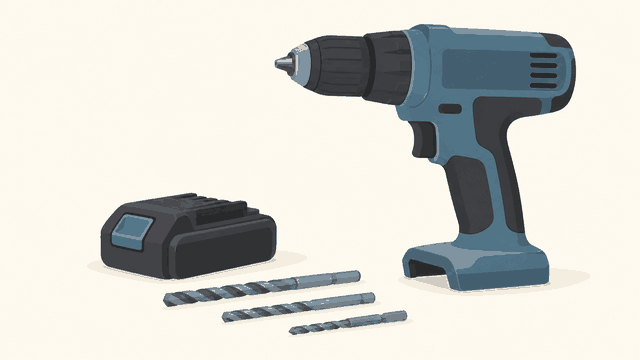
For residential electrical work, a cordless drill spends more time driving screws, drilling framing and making holes for cable than doing heavy-duty concrete work. A useful kit needs a compact drill, batteries that can cover a workday, and a charger that fits the crew’s routine. The best choice is usually the battery platform your crew already owns—not the drill with the biggest torque number on its box.
For a crew starting from scratch, an 18V or 20V-class platform is a sensible default. These tools have broad battery and accessory support, and most can handle ordinary wood drilling and device-box installation. A 12V kit can be lighter and easier to maneuver in cabinets or above ceilings, but may bog down sooner with larger bits. Voltage labels are not directly comparable across brands; battery capacity, tool design and workload matter too.
As an Amazon Associate we earn from qualifying purchases at no extra cost to you.


Cordless drill kit comparison
| Kit type | Good fit | Main trade-off |
|---|---|---|
| 12V compact drill kit | Frequent overhead work, tight spaces, lighter screw driving | Less reserve for large auger bits or long runs of heavy drilling |
| 18V/20V drill kit with two batteries | Most small residential crews and mixed daily tasks | Heavier than 12V; actual runtime varies with bit and material |
| Brushless drill kit | Regular use, longer work sessions, buyers keeping a platform for years | Higher upfront cost; not essential for occasional light use |
| Hammer drill kit | Occasional holes in brick or masonry, if the kit includes hammer mode | Still slower and less suitable than a rotary hammer for repeated concrete drilling |
Choose the drill for the work, not the spec sheet
A compact drill is often the better daily tool for electricians. Shorter length helps between studs and inside cabinets, and lower weight matters when drilling overhead. A larger drill may have more power, but can be awkward in a crowded panel area. Check the tool’s actual length and weight with a battery attached; published bare-tool weight can understate what you carry.
Brushless models generally use battery energy more efficiently and can be a worthwhile upgrade for frequent daily use. Brushed drills remain a reasonable lower-cost choice for a new helper, a backup kit or occasional drilling. In either case, a two-speed gearbox and a clutch make the tool more useful: use low speed for controlled screw driving and higher speed for ordinary drilling. Set the clutch low enough to avoid stripping device screws, then increase it only as needed.
For a new platform, compare 18V brushless compact drill kits with two batteries. That search is a starting point, not a claim that every kit includes the same charger or battery sizes; check the package contents before buying.
Batteries and charging: avoid the mid-job stop
Two batteries are more useful than one large battery when one can run while the other charges. For a small crew, a kit with two batteries around 2.0–5.0Ah is a practical range, though a high-capacity pack adds weight. Smaller packs suit overhead work; larger ones can reduce swaps during repeated drilling. Runtime cannot be predicted from amp-hours alone: large bits, dull bits, dense lumber and cold batteries all increase drain.
Check the charger’s output and whether it can charge the crew’s other tools’ batteries. A charger that takes several hours to replenish a depleted pack may be fine for light service calls, but is a poor fit for continuous drilling with only two batteries. If the crew regularly runs short, buying another compatible battery can be cheaper than replacing the whole kit. Keep packs out of extreme heat, and don’t assume a hot battery will accept a charge immediately; let it cool first.
Buy into a platform deliberately
Battery compatibility is one of the biggest long-term costs. Pick a platform with the cordless tools the crew is likely to add—such as an impact driver, work light or reciprocating saw—and compare bare-tool prices as well as kit prices. Batteries generally work only within their manufacturer’s compatible system, and adapters can introduce fit or performance issues. Before buying, verify that the battery included in the drill kit fits the other tools you plan to use.
A value-priced kit is fine when the drill is a backup or the crew does not use it every day. Don’t pay extra for a large collection of bundled tools the crew won’t use. On the other hand, an extra battery and a second charger can be more valuable than a free tool that duplicates equipment already in the van. Compare two-battery cordless drill kits with chargers and confirm the included pack capacity, charger type and warranty terms.
Common failure modes and safe use
Most avoidable trouble comes from forcing a dull or unsuitable bit. If the drill slows sharply, the bit overheats, or the battery shuts down, stop and check the bit, material and speed rather than leaning harder. Use a sharp bit suited to the material, secure the work where possible, and keep the drill square. A side handle is useful for larger holes because a bit can bind suddenly and twist the tool against your wrist.
Do not use a standard drill as a substitute for a rotary hammer when making repeated holes in concrete. Hammer-drill mode can manage occasional small masonry holes with the right bit, but it is slower and can wear the drill and operator out on sustained work. For residential electrical installations, also verify what is behind a wall before drilling and follow site lockout and electrical-safety procedures; a cordless tool does not make a live or concealed service safe.
For most small crews, the practical buy is a compact brushless 18V/20V-class drill kit with two batteries and a compatible charger. Choose 12V if low weight and access matter more than drilling reserve, and choose a cheaper brushed kit when use is occasional. The right kit is the one that matches the crew’s existing batteries, workload and charging access.
Related guides
- Longest Lasting Lawn Mower Battery: AGM vs Lithium vs Flooded Lifespan and Cost per Season
- Duralast Gold Lawn Mower Battery Review: U1 Fit, CCA and When to Pay for AGM
- Greenworks Pro 80V 21-Inch Mower Review: Runtime Math, Push vs Self-Propelled and Yard Fit
- Bosch High Pressure Washer Gun Replacement: Fittings, Adapters and What Fits Your Model