What's inside
As an Amazon Associate I earn from qualifying purchases. This post may contain affiliate links at no extra cost to you.
What cabinet hardware installation asks of a drill
Installing knobs and pulls is a small job, but it rewards control more than raw power. You need to drill clean holes through cabinet doors and drawers, then drive short screws without stripping them, snapping a screw head, or letting the bit skate across a finished surface. A compact cordless drill/driver is usually the right tool; a heavy high-torque model is rarely an advantage.
For most homeowners, a 12-volt drill has enough power for hardware holes and screws, while a compact 18- or 20-volt drill offers more headroom if it will also handle general household work. Voltage labels do not tell the whole story: chuck size, low-speed control, clutch adjustment, weight, and battery availability matter more for this job.
Drill/driver or impact driver?
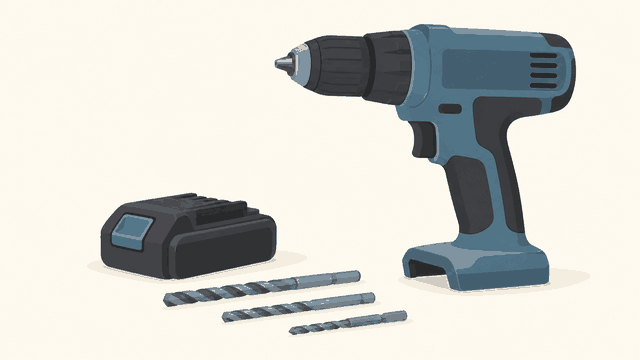
Choose a drill/driver as your primary tool. Its three-jaw chuck holds ordinary round-shank drill bits, and its clutch lets you set a limit on screw-driving force. Those features make it easier to drill accurately and seat hardware screws gently. A drill with a 3/8-inch chuck is adequate for typical cabinet hardware bits; a 1/2-inch chuck is more versatile but often comes on a larger tool.
An impact driver can drive screws quickly, but it is a poor first choice for drilling precise holes with standard twist bits, and its bursts of torque make it easier to damage a screw, pull a knob crooked, or crush a soft cabinet face. If you already own one, reserve it for loosening stubborn fasteners or other jobs. For cabinet installation, a compact cordless drill/driver is the more controlled buy.
Features worth paying for
| Feature | Useful target | Why it matters |
|---|---|---|
| Speed control | Variable trigger; low gear around 0–400 rpm | Helps start holes cleanly and drive screws without rushing. |
| Clutch | Adjustable settings plus a drill mode | Limits screw torque; drill mode bypasses the clutch for drilling. |
| Weight | About 2–3 lb with a small battery | Less tiring when working across many doors or overhead. |
| Battery | 1.5–2.0 Ah is ample for occasional installation | A smaller pack keeps the tool balanced and is sufficient for a few dozen holes and screws. |
| Chuck | Keyless, 3/8-inch or 1/2-inch | Accepts common bits; a keyless chuck makes bit changes quick. |
A built-in work light is handy inside a dim kitchen, but it cannot compensate for poor alignment. A belt hook and brushless motor are nice extras, not requirements. Brushless tools may run longer per charge and last longer under heavy use, but a brushed drill is fine for occasional hardware installation and can cost less.
Choose the battery platform, not just the drill
If you already own cordless tools, buying a drill that uses the same battery system is usually the sensible choice. You can share packs and chargers, and avoid paying for another platform. If you are starting fresh, compare the cost of a drill kit with battery and charger against the bare tool price; a bare tool is only a bargain if you already have a compatible pack and charger.
For one cabinet project, a single small battery is enough. For a wider home tool collection, consider whether the brand offers the cordless tools you expect to use later, such as a light, sander, or saw. Battery systems are generally not interchangeable across brands, even when the packs look similar. Check the exact platform and voltage before buying. A 12-volt drill kit is a practical starting point when compact size and lower cost matter more than future heavy-duty work.
Bits, layout, and preventing damage
Buy a sharp bit sized to the screw’s shank, not its threads; the screw package or hardware instructions may specify a pilot-hole size. For a clearance hole through a drawer front or door, measure the screw diameter and check the handle maker’s instructions. Common cabinet pulls often use screws around 8-32 size, but do not assume every handle does. A brad-point bit can start more cleanly in wood than a general-purpose bit, while a standard twist bit works if you mark and support the work carefully.
Use a drilling template or a rigid jig to keep hole spacing consistent. Measure twice, mark the center, and check that the handle will clear nearby trim and drawer edges. Clamp a scrap piece of wood firmly against the back of the panel where the bit will exit. This backing board reduces tear-out, especially on painted or veneered faces. Drill straight through at moderate speed; pushing hard can make the bit wander, overheat, or break through suddenly.
Before driving screws, set the clutch low and test on scrap of similar thickness. Increase it only until the screw seats snugly. Stop before the handle or screw head digs into the finish. If the screw spins without tightening, the pilot hole may be oversized or the material may be stripped; use the correct screw length and avoid trying to fix a loose hole by applying more force. A hand screwdriver is often the safest final tool for snugging a stubborn or delicate fastener.
A practical buying shortlist
For a few knobs and pulls, the cheapest complete drill kit from a reputable cordless platform is usually enough. Look for a compact drill/driver, a small battery, a charger, a variable-speed trigger, and an adjustable clutch. You do not need a premium high-torque kit or multiple batteries solely for this task. If you will use the drill for furniture assembly, shelving, or frequent home repairs, spending more for a better-balanced tool and a larger battery ecosystem can make sense.
Skip sets that bundle many low-quality bits if you already have a suitable bit, and do not buy an impact driver as a substitute for a drill. If you want one tool for cabinet hardware and broader DIY work, compare compact 18- or 20-volt kits with 12-volt kits: the larger platform has more capacity for demanding tasks, but adds weight and cost. A compact 18-volt drill kit is a reasonable middle ground for a growing household tool collection.
Before buying, check the kit contents, battery compatibility, and the tool’s weight with the included battery attached. For this job, a drill that feels steady in your hand and can turn slowly is more useful than a bigger number on the box.
FAQ
Drill/driver or impact driver?
Related guides
- Longest Lasting Lawn Mower Battery: AGM vs Lithium vs Flooded Lifespan and Cost per Season
- Duralast Gold Lawn Mower Battery Review: U1 Fit, CCA and When to Pay for AGM
- Greenworks Pro 80V 21-Inch Mower Review: Runtime Math, Push vs Self-Propelled and Yard Fit
- Bosch High Pressure Washer Gun Replacement: Fittings, Adapters and What Fits Your Model