What's inside
As an Amazon Associate I earn from qualifying purchases. This post may contain affiliate links at no extra cost to you.
A shared workshop needs more than a pile of cordless tools. It needs batteries that fit the tools people actually use, enough chargers to keep work moving, and rules that prevent a pack from disappearing into someone’s truck. Picking one battery platform can simplify all three. The catch is that no brand has the best tool, battery price, and service coverage in every category.
As an Amazon Associate we earn from qualifying purchases at no extra cost to you.


Start with the work, not the brand
List the jobs the workshop handles most often: drilling and driving, cutting lumber, metalwork, installation, or yard maintenance. Then identify the tools that will be used weekly. Those should drive the platform choice; an occasional specialty tool is usually cheaper to buy corded than to commit the whole shop to a second battery system.
For general woodworking and maintenance, prioritize a drill/driver, impact driver, circular saw, work light, and perhaps an oscillating multi-tool. Check that the platform also offers the less common tools your group needs, such as a sander or compact router. If the shop regularly runs high-draw saws, grinders, or vacuums, compare the manufacturer’s larger-capacity batteries and tool compatibility—not just the entry-level kit.
Compare the platform trade-offs
| Platform type | Best fit | Trade-off to check |
|---|---|---|
| Broad, professional lineup | A busy shop that wants many cordless tool categories on one system | Tool and battery prices can be high; budget for spare packs |
| Value-focused lineup | Light-to-moderate use where purchase cost matters most | Confirm local availability, warranty support, and the exact tools offered |
| Compact or specialty system | Installers or users with a clear need for small, light tools | May not cover larger saws or heavy-duty work without another platform |
These are buying patterns, not guarantees of performance. Tool quality and battery design vary within a brand’s lineup, and a platform’s tool count can include niche products the workshop will never use. Compare current kits and bare tools in the categories you need, and verify that the batteries are compatible with each tool generation before buying.
Choose batteries and chargers for the workload
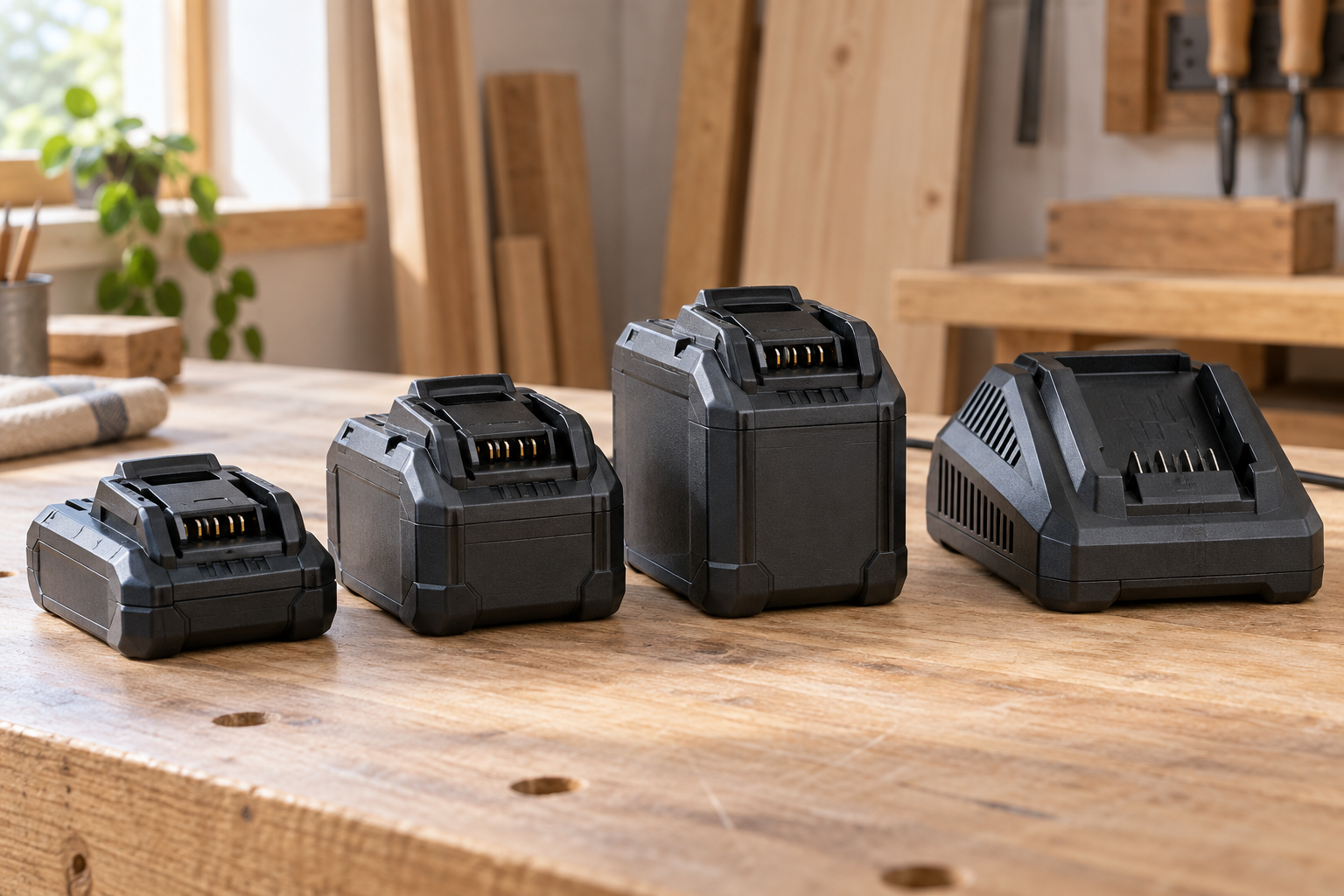
Voltage alone does not tell you how long a battery will run or how much power a tool can deliver. Amp-hours (Ah) indicate capacity: a 5 Ah pack stores more energy than a 2 Ah pack of the same voltage, though it is usually heavier and may cost more. High-draw tools such as circular saws can benefit from larger packs, while a drill used for pilot holes may feel better with a compact battery.
A practical shared-shop starting point is two batteries per frequently used tool, plus at least one spare for the bench. For example, a shop with one drill and one saw might start with three or four packs, rather than buying a large stack before it knows its daily usage. Adjust after a few weeks: if tools regularly stop while every battery is charging, add packs or a charger; if batteries sit idle for months, the initial investment was too large.
Check charger time against battery capacity. A small charger may take several hours to refill a large pack, and a “rapid” charger can be noisy or create more heat. Heat, sawdust, and metal filings are common causes of trouble: keep chargers on a clean, dry shelf, allow hot batteries to cool before charging, and don’t charge damaged or swollen packs. Avoid leaving batteries in freezing vehicles or in direct sun.
Buy a kit, then fill gaps
A drill-and-impact-driver kit is often the cheapest way to get started because it includes batteries and a charger. Compare the kit’s battery sizes and charger against what you will use: a bargain kit with two small packs may be a poor fit if the first additional purchase is a large battery and a faster charger. For a workshop that uses saws, favor a kit with at least one mid-size pack, then add a compact pack for drills and lights.
Shop current cordless drill and impact-driver kits against the cost of buying tools and batteries separately. If you already own compatible packs, bare tools can save money. If you own none, the kit is usually the better value—provided its battery sizes suit the work.
For a shared space, label packs and chargers with durable tags or paint-marker initials. Set a return point and a charging rule, such as “return every pack to the shelf after use.” This prevents the predictable failure mode of a full tool cabinet and no charged batteries when a job starts.
When a second platform is worth it
One platform is simpler, but it is not always cheaper. A second system can make sense if a specialty tool you use often is substantially better or less expensive elsewhere, or if the shop already owns several batteries and tools from another brand. Count the cost of batteries and chargers, not just the tool. A low-priced bare tool that requires two new packs may not be a bargain.
Battery adapters can sometimes run one brand’s battery on another brand’s tool, but they can defeat electronic protections, prevent proper battery communication, and complicate warranty claims. They are a poor default for a shared workshop, where different users may not know which combinations are safe. If you choose a second platform, keep its packs, chargers, and tools clearly separated.
Make the final choice
Choose the platform with the strongest match for your most-used tools, good access to replacement batteries, and chargers that fit your expected pace. Before committing, price a realistic bundle: drill, impact driver, saw, two or three batteries, and a charger. Check repair and warranty support in your area, too; downtime can cost more than a modest difference in tool price.
If the workshop is just getting started, a value-priced cordless tool combo kit with batteries and charger is a reasonable first purchase for occasional use. For heavier work, spend more where it matters: a suitable saw, larger-capacity packs, and a second charger. Keep the system as small as practical, then expand only when real jobs expose a gap.
Related guides
- Longest Lasting Lawn Mower Battery: AGM vs Lithium vs Flooded Lifespan and Cost per Season
- Duralast Gold Lawn Mower Battery Review: U1 Fit, CCA and When to Pay for AGM
- Greenworks Pro 80V 21-Inch Mower Review: Runtime Math, Push vs Self-Propelled and Yard Fit
- Bosch High Pressure Washer Gun Replacement: Fittings, Adapters and What Fits Your Model