Our Top Picks


What's inside
- Quick comparison: what each class of nailer actually unlocks
- 1. A pneumatic 21-degree framing nailer: buy this one first
- 2. A cordless framing nailer for deck building without a hose
- 3. A metal connector nailer: the one most people skip and regret
- Nails, PSI, and the settings that actually matter outdoors
- What to skip
- Frequently asked questions
- Related Guides
- Quick comparison: what each class of nailer actually unlocks
- 1. A pneumatic 21-degree framing nailer: buy this one first
- 2. A cordless framing nailer for deck building without a hose
- 3. A metal connector nailer: the one most people skip and regret
- Nails, PSI, and the settings that actually matter outdoors
- What to skip
- Frequently asked questions
- Related Guides
As an Amazon Associate I earn from qualifying purchases. This post may contain affiliate links at no extra cost to you.
Most deck framing problems are not framing problems. They are fastener problems. You bought a nailer, loaded whatever strip the store had on the shelf, sank 400 nails into pressure treated joists, and eighteen months later the heads are bleeding rust down the ledger board. A framing nailer for deck building has one requirement that indoor framing does not: it has to run hot dip galvanized or stainless collated nails reliably, in wet lumber, outdoors, all day. Everything else is secondary.
This is a ranking, and it is ordered by what to buy first rather than by price. The top pick is the tool that unlocks the most deck work with the fewest excuses. Further down are the tools you add when the first one hits a wall. There is also a section on what to skip, because the deck nailer aisle is full of tools that are perfectly good for something else.
As an Amazon Associate we earn from qualifying purchases at no extra cost to you.



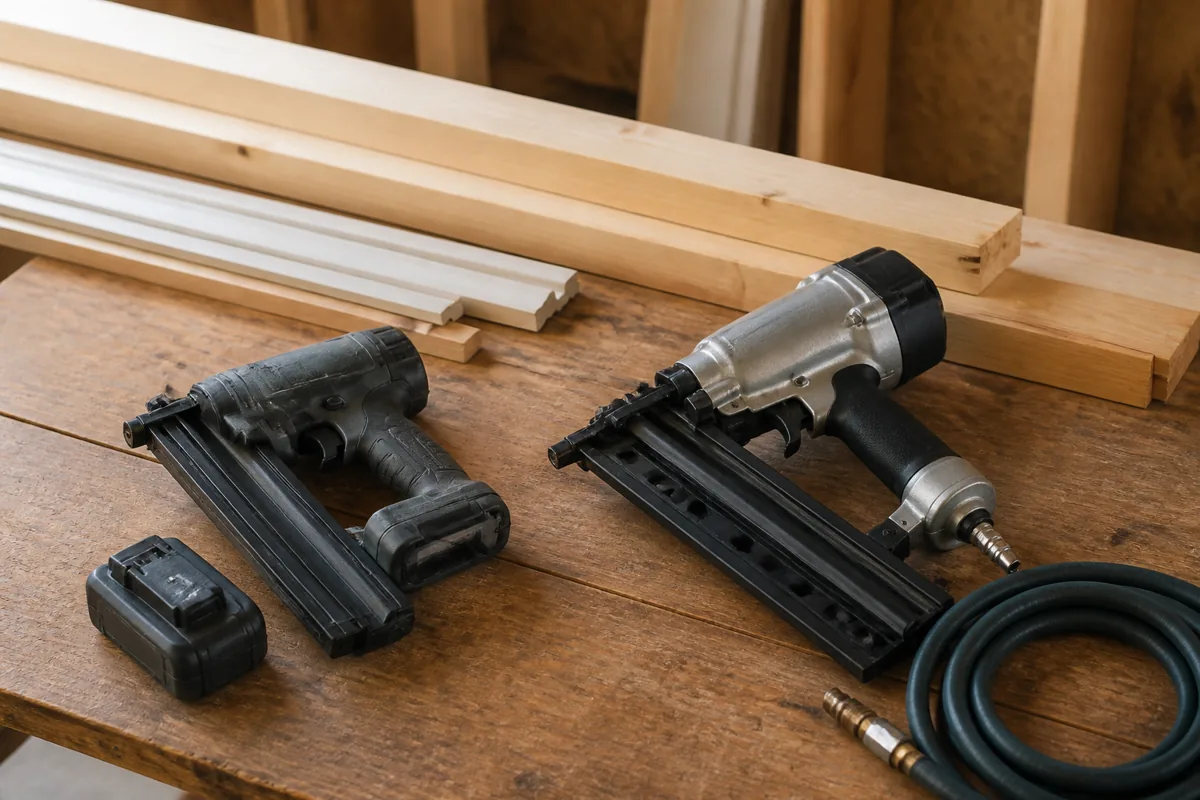
Quick comparison: what each class of nailer actually unlocks
| Tool class | The job it unlocks | Nail range | Buy it when |
|---|
| Tool class | The job it unlocks | Nail range | Buy it when |
|---|---|---|---|
| Pneumatic 21-degree plastic collated | Full-frame joists, beams, ledger blocking in HDG | 2 in to 3-1/2 in | This is your first deck nailer |
| Cordless 30-degree paper collated | Punch list, remote posts, stair stringers | 2 in to 3-1/2 in | You are done dragging hose |
| Metal connector nailer (positive placement) | Joist hangers, hurricane ties, post bases | 1-1/2 in to 2-1/2 in | The inspector reads your hangers |
| 15-gauge angled finish nailer | Fascia, skirt boards, trim | 1-1/4 in to 2-1/2 in | Cosmetics, not structure |
1. A pneumatic 21-degree framing nailer: buy this one first
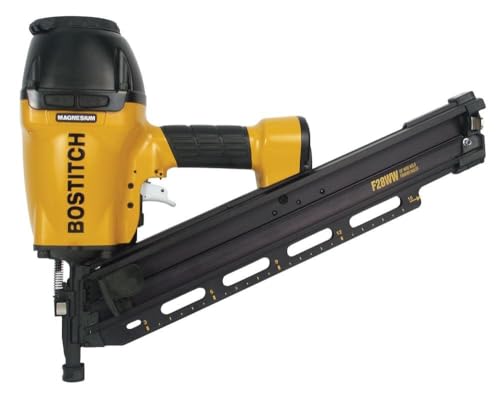
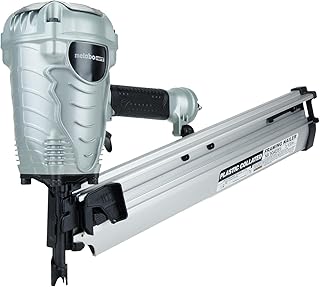
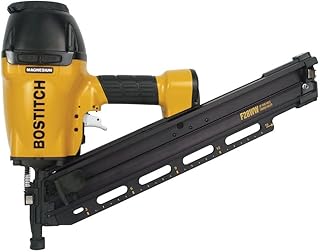
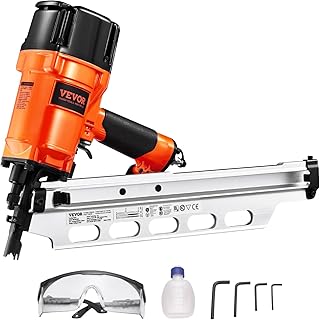
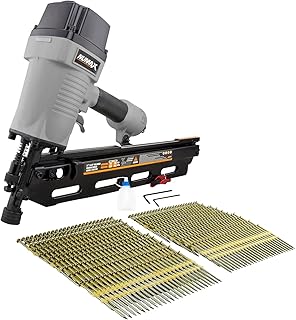
If you own one deck nailer, own a 21-degree full round head pneumatic gun. The reason is not power or price. It is nail availability. Hot dip galvanized and stainless collated framing nails are far easier to find in 21-degree plastic collated strips than in any other collation, at every big box store and every real lumberyard in the country. That single fact decides more deck projects than any spec on the box.
Full round head also matters for code. Many jurisdictions restrict clipped head nails in structural framing, and a deck ledger or beam is exactly the place an inspector will look. Twenty-one degree guns are almost universally full round head, so you sidestep the argument entirely.
What to look for: a tool-free depth adjustment you can turn with wet gloves, a selective trigger so you can switch between single actuation for careful ledger work and bump fire for deck boards and blocking, and a dry fire lockout so you stop hammering the driver blade into nothing. Weight in the 8 to 9 pound range is normal and fine. You are working at waist height on joists, not overhead on rafters.
The downside is real: plastic collation shatters and sprays. You will find shards in your knees, in the grass, and inside the magazine. Blow the gun out at the end of the day and it is a non-issue.
Pneumatic 21-Degree Full Round Head Framing Nailer
This is the workhorse, and honestly the spread between a good mid-priced gun and a premium one is smaller than the spread in nail availability. Filter for full round head, selective trigger, and a magazine rated to 3-1/2 inches. Skip any listing that will not clearly state collation angle and head type.
2. A cordless framing nailer for deck building without a hose
The second tool to own is a cordless framing nailer, and the job it unlocks is everything that happens away from the compressor. Setting posts at the far corner of the yard. Rebuilding stair stringers on the driveway. Coming back three weeks later to add blocking under a bouncy spot. Dragging 100 feet of hose and a compressor across a lawn for eleven nails is why those jobs never get done.
The current generation of cordless framing guns from the major platforms, DeWalt XR, Milwaukee FUEL, and Makita LXT among them, are genuinely good tools. They fire fast enough for punch list work, they need no gas cartridges, and they will sink 3-1/2 inch nails into wet pressure treated lumber. Ramp-up time on the first shot is the honest tradeoff, along with weight. These guns are heavy and nose-heavy, and you feel it after a few hundred nails.
Nail supply is the catch. Most cordless framing nailers run 30 to 34 degree paper collated strips, and hot dip galvanized options in that collation are thinner on the ground than 21-degree. Check what your local supplier actually stocks before you commit, not what a website says is available.
Buy cordless second, not first, unless you already own batteries on that platform and your deck work is mostly small repairs.
Cordless 30-Degree Framing Nailer (Bare Tool)
Buy the bare tool if you already own the battery platform. Match your existing batteries rather than shopping specs across brands, because a high capacity pack you already own is worth more than a marginal spec advantage. Confirm your supplier carries galvanized paper collated strips first.
3. A metal connector nailer: the one most people skip and regret
A framing nailer cannot properly fasten a joist hanger. The nose is too wide to sit in the hanger holes, the nails are too long, and the shanks are the wrong diameter for what the connector was tested with. Hangers are engineered assemblies, and the manufacturer specifies the fastener. Driving a 3-inch framing nail through a hanger hole is not the same connection and an inspector who knows the product will call it.
A positive placement, or metal connector, nailer has a probe nose that drops into the hole so the nail lands centered every time. It runs short thick shank nails in the 1-1/2 to 2-1/2 inch range, and on a deck with a dozen hangers plus post bases and hurricane ties, it turns a knuckle-busting afternoon of palm nailing into twenty minutes.
Third place, not first, because a palm nailer and a box of the correct connector nails will get a single small deck done. But if you build more than one deck, this is the tool that pays for itself in aggravation avoided.
- ✔ Probe nose centers every nail in the hanger hole
- ✔ Runs the thick shank nails hangers are actually rated for
- ✔ Reaches into tight hanger throats a framing nailer cannot
- ✔ Turns hurricane ties and post bases into fast work
- ✘ Single purpose tool, it does nothing else
- ✘ Connector nails cost more per nail than framing strips
- ✘ Adds another nail SKU to keep stocked
- ✘ Not needed for a one-off small platform deck
Nails, PSI, and the settings that actually matter outdoors
Match the nail coating to the lumber. Modern pressure treated lumber uses copper-based preservatives that eat electro-galvanized and bright nails. Use hot dip galvanized at minimum. Near salt water, or with western red cedar and redwood where staining shows, step up to stainless. This is not an upsell, it is the difference between a deck frame that lasts and rust streaks in year two.
For air pressure, start around 90 to 100 PSI for 3-inch and 3-1/2 inch nails in wet treated lumber and adjust from there. Set depth on scrap from the same bundle, not on dry pine, because wet lumber drives differently. You want the head flush or a hair proud on structural connections. Overdriven nails crush fibers and reduce holding power, and a countersunk head in a ledger is a place for water to sit.
Compressor sizing is where people underbuy. A small pancake compressor will run one framing nailer for careful single-shot work, but it will fall behind the moment you bump fire a row of blocking. If two people are nailing, you want more tank and more CFM. Also swap in a 3/8 inch air hose instead of the 1/4 inch coil that came in the kit. Pressure drop over 50 feet of narrow hose is a real cause of underdriven nails that people blame on the gun.
Cold weather: pneumatic guns get sluggish and O-rings stiffen. Cordless guns lose punch on a cold battery. Keep a spare pack in the truck cab, and add a few drops of pneumatic tool oil to an air gun before a cold start unless the manufacturer says it is oil-free.
What to skip
Skip the coil roofing nailer for framing. Different nail length, different shank, wrong tool, and yes, people try it.
Skip clipped head guns for deck structure unless you have confirmed your local code allows them. The nail savings are not worth a failed inspection.
Skip gas-actuated framing nailers for homeowner deck work. Fuel cells expire, cost money per shot, and the cordless battery guns caught up.
Skip using a framing nailer on the deck boards themselves. Framing nails hold poorly in withdrawal, the heads look terrible, and popped nails are the classic reason old decks feel dangerous. Screw your decking down, or use hidden fasteners.
Skip the giant 6-nail-per-second industrial production guns unless you frame for a living. You are paying for cycle speed you will never use on a 300 square foot deck.
Skip bargain no-name nailers with unlabeled collation angles. The gun might be fine. Finding nails for it in hot dip galvanized will not be.
Frequently asked questions
Can I use a framing nailer for the deck boards too? No, and this is the most common mistake. Framing nails have poor withdrawal resistance, so board ends lift and heads pop as the wood cycles wet and dry. Use exterior rated deck screws or a hidden fastener system for the walking surface. Reserve the nailer for joists, beams, blocking, and stair stringers.
What size nails do I need for deck framing? Common structural framing calls for 3-inch to 3-1/2 inch nails for face nailing and toe nailing joists and blocking, in hot dip galvanized or stainless. Joist hangers and other metal connectors take short thick shank connector nails, typically 1-1/2 to 2-1/2 inch, specified by the connector manufacturer. Check your local code and your plan, since span and connection requirements vary by jurisdiction.
Is cordless or pneumatic better for a framing nailer for deck building? Pneumatic first, for nail availability and lower weight during long sessions. Cordless second, for punch list work, remote posts, and repairs where hauling a compressor kills the job. If you already own a battery platform and your deck work is small and occasional, cordless first is a defensible choice.
Buy in that order. One 21-degree pneumatic gun and a box of hot dip galvanized nails covers the structure. Add cordless when the hose becomes the reason you are not working. Add the connector nailer when hangers start outnumbering patience.
Check prices on Amazon →