What's inside
As an Amazon Associate I earn from qualifying purchases. This post may contain affiliate links at no extra cost to you.
Long screws put more stress on an impact driver bit than ordinary cabinet screws do. The bit has to fit the recess closely, resist repeated impacts and stay engaged while the screw advances through a long stretch of material. The right choice depends less on a “heavy-duty” label than on the screw’s drive style, the material and how many fasteners you plan to install.
Start with the screw and its drive
Match the bit to the screw’s drive type and size before considering coatings or price. A Phillips bit in a Pozidriv screw can slip even if both look similar. Torx (star) and square-drive screws also need the exact size; a bit that is one size too small may cam out, round the recess or damage the screw head.
Check the screw packaging or head markings. If you already have the screws, test the bit by hand: it should seat fully and have little side-to-side movement. For long structural or exterior screws, use the drive size specified by the manufacturer. A tight fit matters more than a premium bit’s advertised impact rating.
Long screws commonly use Torx or another high-engagement drive, but do not assume. For example, a T25 bit is not a substitute for a T30 just because it nearly fits. If you are buying a new box of screws, choosing a screw with a common, well-fitting drive can make installation easier and reduce stripped heads.
Choose the right bit style
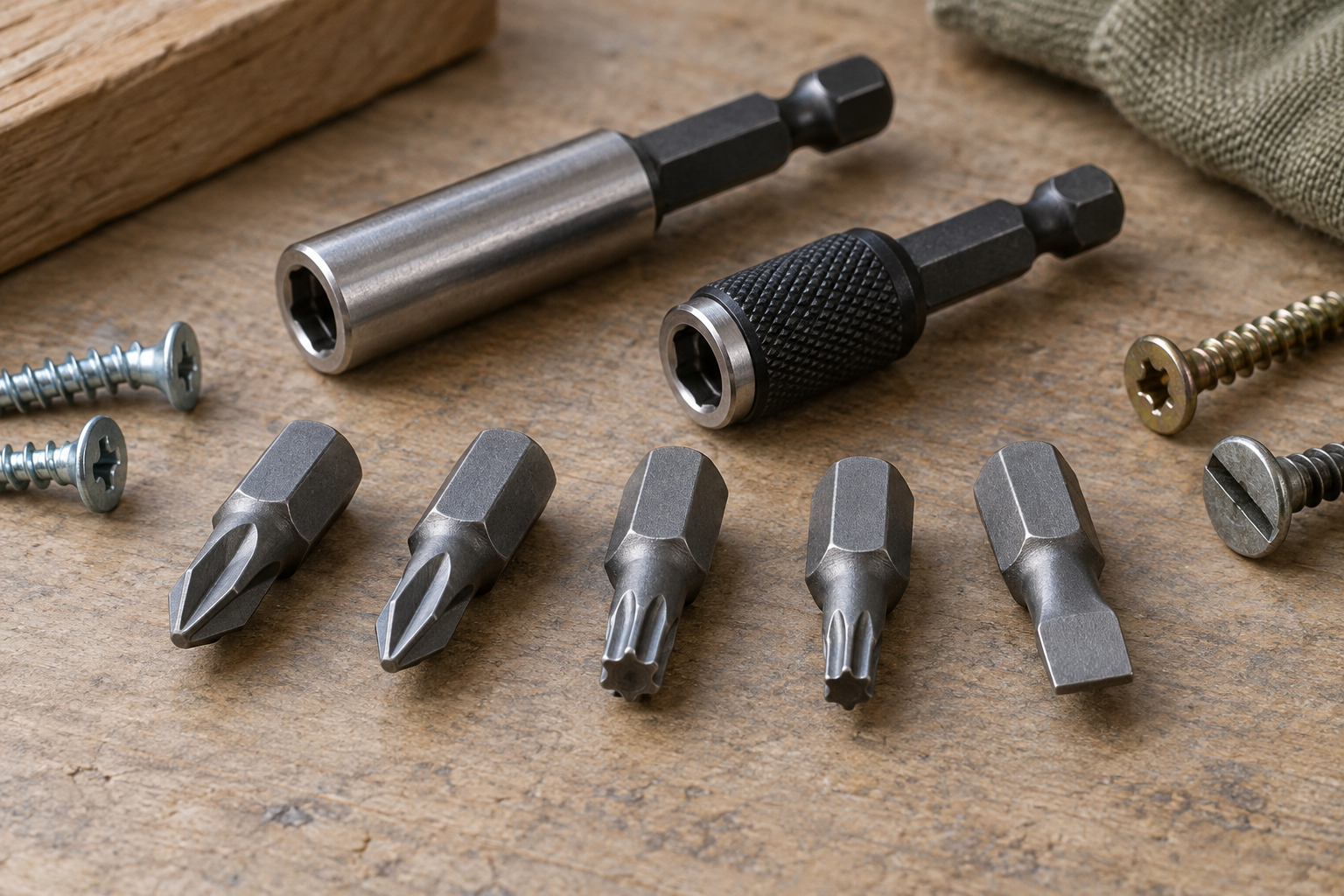
For most long screws, start with a 1-inch impact-rated insert bit in the correct size. It is inexpensive, compact and works with a magnetic bit holder or directly in a compatible quick-change chuck. A holder adds reach and makes bit swaps convenient, but it introduces another connection that can wobble or loosen.
If the screw head sits in a tight recess or you need better control, use a longer, one-piece bit. A 2- or 3-inch impact-rated bit can reach past an obstruction without stacking a bit and holder. Longer bits are less rigid, though, so keep the driver aligned with the screw. A bit extension is useful for access, not a cure for poor alignment.
Look for packaging that explicitly says “impact rated” or “for impact drivers.” These bits are designed to handle repeated torsional loading. A standard hard bit may work for a few screws, especially in softwood, but can snap under impact. Replace any bit with a cracked tip or visibly twisted shaft.
Compare common bit choices
| Bit setup | Best for | Trade-off |
|---|---|---|
| 1-inch impact-rated insert bit | Routine driving and quick changes | Needs a holder for extra reach |
| 2- to 3-inch impact-rated bit | Recessed screws or narrow access | More flex; keep the driver straight |
| Standard non-impact bit | Occasional, light-duty driving | More likely to twist or break under sustained impacts |
| Magnetic bit holder with insert bit | Fast bit swaps and holding short screws | Extra length and another point that can wobble |
A small set of impact-rated driver bits in the sizes your screws use is usually better value than a large assortment filled with profiles you will never need. If you drive only a handful of screws into softwood, a basic impact-rated bit is enough; you do not need an expensive specialty bit.
Understand material and bit life
Bits are often made from tool steel, with different heat treatments and surface finishes. Titanium-colored coatings are not proof that a bit is titanium or that it will last longer in impact use. For long screws, fit and heat treatment matter more than color. Premium bits can be worthwhile when you install many fasteners, but no bit is immune to wear or misuse.
A worn tip is a common cause of cam-out. If the bit starts climbing out of the screw head, stop and inspect it rather than pressing harder. More pressure may damage the recess and make the remaining drive shallow. Replace the bit if its edges are rounded, chipped or no longer seat firmly.
Drive long screws without abusing the bit
Use a charged battery and set the driver straight with the screw before pulling the trigger. Start slowly until the threads bite, then increase speed. Keep steady forward pressure, but do not lean your full weight into the tool. If the bit slips repeatedly, check the size and alignment before trying again.
Long screws can bind as they pass through dense wood, knots or several layers of material. If the driver labors, back the screw out and inspect the hole and bit. A pilot hole can help, especially near board ends or in hardwood; follow the screw maker’s guidance for pilot-hole diameter. Do not keep hammering a stalled screw, since that can overheat the bit, strip the head or stress the driver.
Use a clutch setting if your tool offers one and the application allows it. For structural screws, follow the manufacturer’s installation instructions rather than guessing at a torque setting. The screw should seat securely without being driven so far that the head damages the surface or the material splits.
What to buy for your job
For a deck, framing project or other repeated work, buy a few matching impact-rated Torx bits in the screw sizes you actually use. Keep a spare nearby: a bit can wear out or get lost partway through a job. Confirm the size from the screw packaging rather than ordering based on appearance alone.
For occasional repairs, a single correct-size impact-rated bit is fine. Choose a longer one only if the screw is recessed or access is awkward. Buy a holder if you need quick swaps or want to retain short screws, but remove it when its extra length makes alignment difficult. Whatever the price, a correctly sized, undamaged bit driven straight will usually outperform a premium bit that does not fit the screw.
Related guides
- Longest Lasting Lawn Mower Battery: AGM vs Lithium vs Flooded Lifespan and Cost per Season
- Duralast Gold Lawn Mower Battery Review: U1 Fit, CCA and When to Pay for AGM
- Greenworks Pro 80V 21-Inch Mower Review: Runtime Math, Push vs Self-Propelled and Yard Fit
- Bosch High Pressure Washer Gun Replacement: Fittings, Adapters and What Fits Your Model