What's inside
As an Amazon Associate I earn from qualifying purchases. This post may contain affiliate links at no extra cost to you.
What matters when driving long structural screws
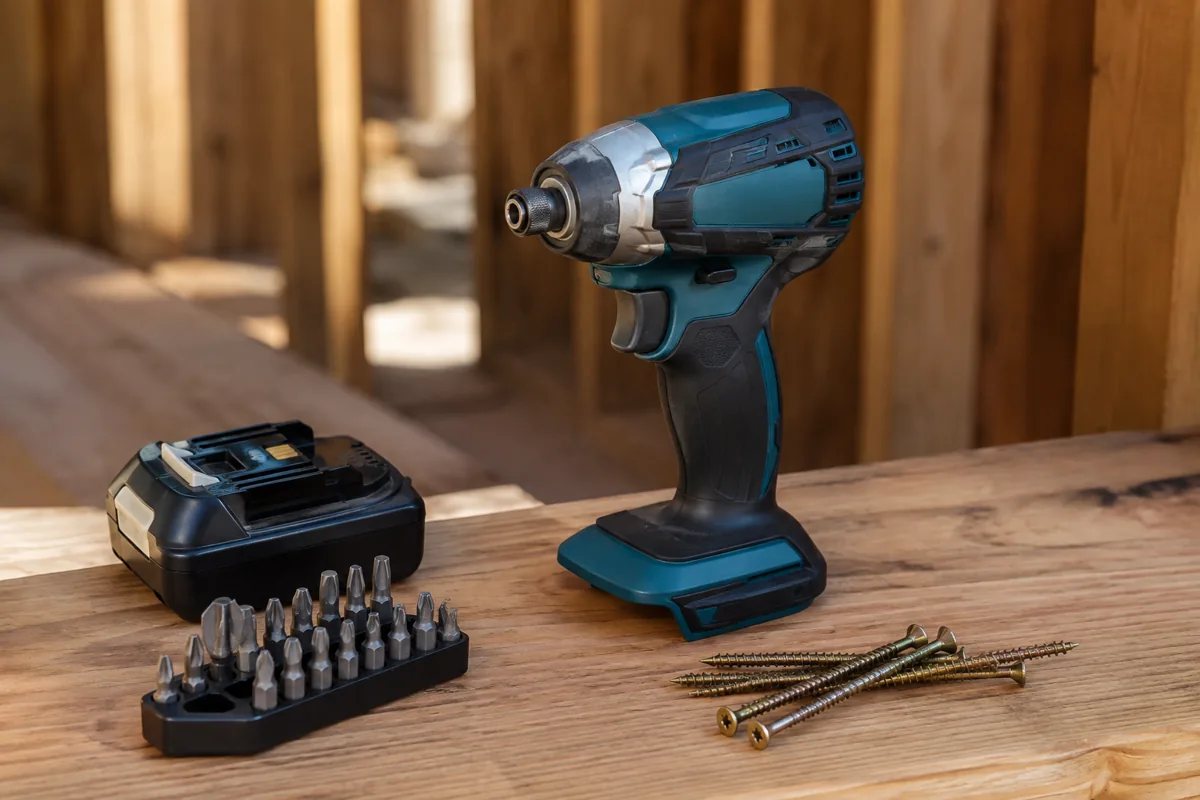
Long structural screws ask more of an impact driver than ordinary deck screws do. The driver has to deliver enough rotational force to keep the screw moving, while the bit stays seated and the fastener follows its path without snapping or stripping. For occasional work in framing lumber, a modern 18V-class driver is usually enough. For repeated large fasteners, dense wood, or overhead work, a compact but stronger driver and a larger battery make the job less frustrating.
Impact drivers are rated in impacts per minute and often in torque, but those figures do not tell you exactly how quickly a particular screw will go in. Screw diameter and length, wood species, knots, pilot holes, bit condition, and how squarely you hold the tool all matter. Treat published torque as a rough comparison, not a promise that a driver will install every fastener without slowing down.
As an Amazon Associate we earn from qualifying purchases at no extra cost to you.



How to choose a driver
Look first for a current brushless model in a battery platform you already own. Brushless motors generally make better use of battery charge and tend to cope well with repeated demanding work. A compact 18V or 20V-max tool is a sensible starting point; those voltage labels describe comparable nominal platform classes, not a meaningful guarantee of more power by themselves.
Speed settings are useful. A lower setting can help start a screw straight and reduce the chance of snapping a smaller fastener, while a higher setting can finish a long screw faster. A trigger you can feather matters just as much: full speed from the first turn encourages cam-out and crooked starts. If you expect to drive many large screws, look for a driver with a comfortable grip, a belt hook, and a work light that actually illuminates the fastener.
Battery size affects both runtime and handling. A 2.0Ah pack keeps the tool lighter for a few screws or work above shoulder height. A 4.0Ah or larger pack is a better choice for a long framing session, but it adds weight and may make the driver less balanced. Buy into a platform with batteries and chargers suited to your other cordless tools, rather than choosing by a single headline specification. Compare brushless 18V impact drivers if you already have compatible batteries, or look at a kit if you need a battery and charger too.
Which setup fits the job?
| Setup | Best for | Trade-off |
|---|---|---|
| Compact brushless 18V driver, 2.0Ah battery | Repair work and a modest number of structural screws | Lighter in hand; less runtime and sustained pace |
| Brushless 18V driver, 4.0Ah battery | Repeated long screws in framing or decking | Better runtime, but heavier and bulkier |
| Higher-output driver with a large battery | Frequent large fasteners or demanding site work | Costs more; unnecessary for occasional household projects |
| Drill/driver with a pilot hole | Careful work in hardwood or near an edge | Slower, but gives more control over the hole and reduces splitting risk |
For most homeowners, the middle option is the useful balance: a brushless tool with a 4.0Ah-class battery for repeated work, or the smaller pack if you value low weight and already have a spare. The cheapest brushed driver can still be fine for a handful of screws a year. It may run warmer and drain its battery faster under sustained load, but replacing it with a premium tool is hard to justify if it rarely leaves the toolbox.
Bits, screws, and setup
Use the bit specified by the screw manufacturer, in good condition and fully seated in the recess. A worn bit can cam out even with a powerful driver, damaging the head and making the screw difficult to remove. For a long screw, keep the driver and fastener aligned; leaning on the tool sideways increases the chance of stripping the recess or bending the screw. A magnetic bit holder is convenient, but a short, solid bit often gives better control than a long extension.
Structural screws are engineered fasteners, not interchangeable with ordinary drywall or deck screws. Follow the fastener maker’s instructions for size, spacing, edge distance, and whether a pilot hole is recommended. In dense lumber, near an end, or when a large screw starts to bind, a properly sized pilot hole can reduce splitting and the load on the driver. Do not use a pilot hole that is wider than the fastener’s intended core unless the instructions call for it.
Drive without stripping or snapping
Start slowly with the screw perpendicular to the surface. Once the threads have engaged and the screw tracks straight, increase speed while maintaining steady forward pressure. Ease off as the head reaches the surface. Continuing to hammer after the head is seated can damage the wood, strip the drive recess, or overdrive the fastener. If the driver bogs down, stop rather than holding the trigger and forcing it; check alignment, battery charge, bit fit, and whether the screw needs a pilot hole.
Heat is another warning sign during repeated heavy driving. Let the tool cool if the housing or battery becomes unusually hot, and follow the battery maker’s charging and temperature guidance. Keep spare batteries charged, but avoid swapping a hot pack straight onto a charger that rejects it until it cools. A larger battery can reduce interruptions, not eliminate the need for sensible duty cycles.
When a stronger tool is worth it
Step up from a basic driver if you regularly install large-diameter structural screws, drive fasteners into dense or wet lumber, or need to complete many connections in a day. A high-output model can maintain pace better under load, but it will not fix a dull or incorrect bit, poor alignment, or an unsuitable fastener. For a few dozen screws in ordinary framing, a competent brushless driver and a charged battery are usually enough. If you are buying your first tool, compare impact driver kits with a 4.0Ah battery against tool-only prices on the platform you already use; the battery and charger can make the kit the better value.
Related guides
- Longest Lasting Lawn Mower Battery: AGM vs Lithium vs Flooded Lifespan and Cost per Season
- Duralast Gold Lawn Mower Battery Review: U1 Fit, CCA and When to Pay for AGM
- Greenworks Pro 80V 21-Inch Mower Review: Runtime Math, Push vs Self-Propelled and Yard Fit
- Bosch High Pressure Washer Gun Replacement: Fittings, Adapters and What Fits Your Model