What's inside
As an Amazon Associate I earn from qualifying purchases. This post may contain affiliate links at no extra cost to you.
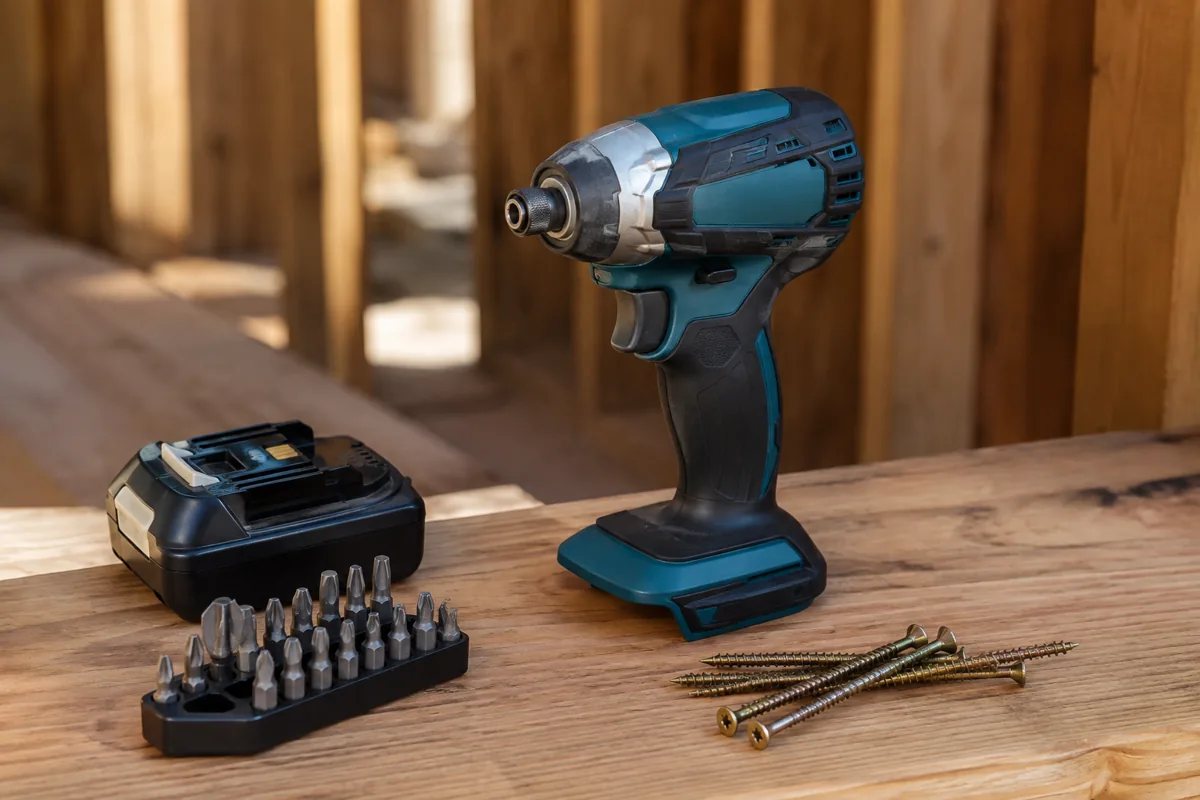
Long structural screws put more demand on an impact driver than ordinary deck screws do. The driver has to deliver sustained torque without overheating, the battery has to keep up, and the bit must stay seated in the screw head. A larger impact driver is not automatically better: control, fit, and a suitable screw often matter just as much as peak torque claims.
As an Amazon Associate we earn from qualifying purchases at no extra cost to you.


What matters for long screws
For screws roughly 3 to 6 inches long, look for a 1/4-inch hex impact driver with a brushless motor, multiple speed settings, and a comfortable trigger. Brushless models generally use battery energy more efficiently and tend to handle repeated demanding work better than brushed models. A mode that limits speed or torque can help prevent a screw from snapping near the end of the drive.
Published torque figures are not a reliable way to rank drivers across brands. Manufacturers may use different test methods, and a tool’s ability to drive one screw depends on the wood, screw design, bit, battery, and operator. A compact 12-volt driver can handle occasional structural screws in suitable lumber, but a brushless 18- or 20-volt platform is a safer choice for frequent work or larger fasteners.
Quick comparison
| Driver category | Best fit | Trade-off |
|---|---|---|
| Compact 12V impact driver | Occasional screws, tight spaces, lighter framing work | Less reserve for repeated long drives; may slow or overheat sooner |
| Brushless 18V/20V impact driver | Regular structural screws and general job-site use | Heavier and usually more expensive than a compact kit |
| High-output 18V/20V driver | Frequent large fasteners or demanding work in dense lumber | More weight, cost, and potential to overdrive or break screws |
Choosing a driver and battery
For most homeowners and remodelers, a brushless 18V/20V driver from a battery platform they already own is the practical middle ground. If buying into a platform, compare the bare tool and kit prices, but also check battery capacity, charger speed, and what other cordless tools you expect to use. A small battery keeps the driver lighter; a 4.0- or 5.0-Ah pack is more useful for long sessions and repeated heavy drives. The voltage label alone does not tell you how long a pack will last.
Compare brushless 18V impact driver kits if you need both the tool and batteries. If you already have compatible batteries, a bare tool usually costs less and avoids duplicating chargers. Do not assume batteries are interchangeable across brands or even across every product family within one brand; confirm the platform and voltage before ordering.
A 12V driver is a reasonable cheaper option if you drive only a few structural screws at a time, work mostly in softer lumber, or value a small tool for overhead work. Step up to 18V/20V if the tool will see repeated long screws, larger diameters, or dense material. For sustained heavy fastening, compare high-output brushless impact drivers, but consider whether their added weight and cost are justified by your workload.
Match the screw, bit, and material
Use structural screws intended for the connection, not drywall screws or generic brittle fasteners. Follow the screw maker’s guidance for diameter, length, edge distance, and whether a pilot hole is recommended. A pilot hole can reduce splitting in hardwood, near board ends, or when using a thick screw; it is not always required in softwood. Do not substitute a longer screw for the specified fastener without checking the connection requirements.
Use the exact driver bit type and size specified by the screw maker. A worn or mismatched bit cams out, damages the recess, and can leave a screw only partly seated. Keep a spare bit nearby: impact action can wear tips, especially during repeated heavy drives. If the screw has a washer head, keep the bit straight and stop when the head reaches the intended seating depth. Driving until the driver stalls can crush wood fibers or damage the connection.
Drive with control
Start slowly and hold the driver in line with the screw. Let the threads pull the fastener into the wood rather than leaning hard on the tool. If the screw stops advancing, the driver labors, or the bit begins to jump, stop. Back the screw out if possible, check for a knot, split, misalignment, or wrong bit, and follow the fastener maker’s guidance on a pilot hole. Continuing to hammer can round the recess, break the screw, or overheat the tool.
Use a lower-speed mode for smaller screws and close-to-flush finishes; reserve full speed for fasteners that need it. A long screw can shear if it binds, and a powerful driver can twist your wrist when the bit slips. Keep a firm two-handed grip where practical, especially with large fasteners. Allow the tool and battery to cool if the housing gets unusually hot or the driver slows sharply. Repeatedly pushing a hot tool through stalled drives can shorten battery life and damage the tool.
Buy for the work you actually do
If structural screws are occasional, a compact driver you already own may be sufficient when paired with the correct screw and bit. For regular framing or fastening, a brushless 18V/20V driver with a mid-size battery offers a sensible balance of runtime and control. Choose a high-output model only when heavy fastening is routine. In every category, good technique and the right fastener prevent more failed drives than an impressive torque number on the box.
Related guides
- Longest Lasting Lawn Mower Battery: AGM vs Lithium vs Flooded Lifespan and Cost per Season
- Duralast Gold Lawn Mower Battery Review: U1 Fit, CCA and When to Pay for AGM
- Greenworks Pro 80V 21-Inch Mower Review: Runtime Math, Push vs Self-Propelled and Yard Fit
- Bosch High Pressure Washer Gun Replacement: Fittings, Adapters and What Fits Your Model