What's inside
As an Amazon Associate I earn from qualifying purchases. This post may contain affiliate links at no extra cost to you.
Brick and concrete need different drilling strategies, even though both are masonry. A cordless hammer drill can handle many household holes, but only when you use the right mode, bit, speed, and pressure. Choosing the wrong combination leads to slow progress, overheated bits, damaged chucks, stripped screws, or a drill that simply cannot make the hole.
Choose the right drill category
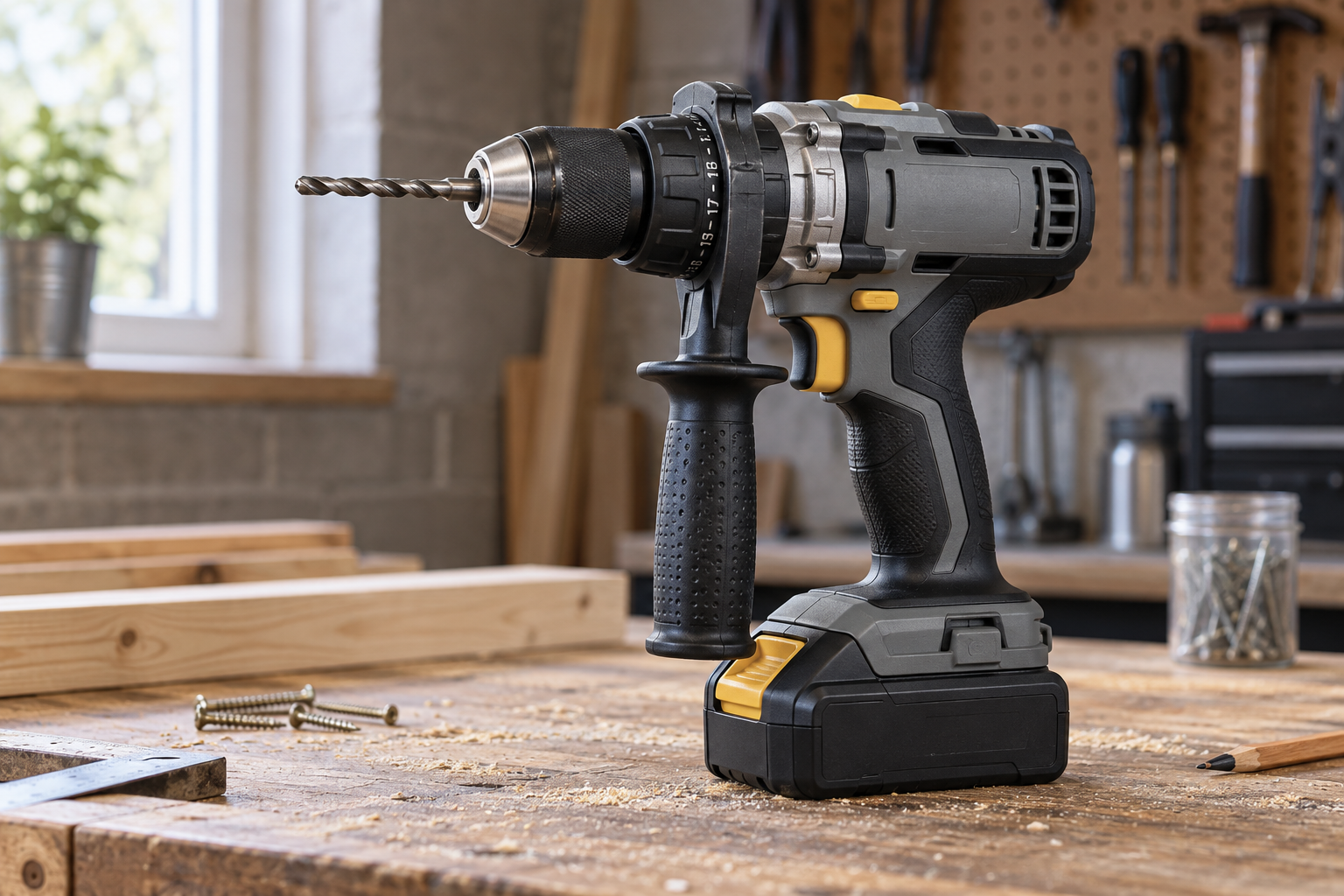
For occasional holes in brick, block, or relatively soft concrete, a conventional cordless drill with a hammer-drill mode is usually the sensible choice. It spins the bit while adding a rapid forward impact. This is enough for wall plugs, small anchors, cable clips, and brackets, especially with holes from 5/32 to 3/8 inch in diameter.
For frequent concrete drilling, larger holes, or tough reinforced masonry, use a cordless rotary hammer with an SDS-Plus chuck. A rotary hammer delivers a much stronger pneumatic impact than a standard hammer drill. It is faster, less tiring, and more likely to survive repeated drilling. The trade-off is size, cost, weight, and the need for SDS bits rather than ordinary round-shank bits.
If you are buying into a battery platform, compare the cordless hammer drill bare tools available for that system. A bare tool is often cheaper if you already own compatible batteries and a charger. Starting from scratch may make a kit with two batteries and a charger the better value.
| Job | Best tool | Typical bit size | What to expect |
|---|---|---|---|
| Small holes in brick or block | 12V or 18V hammer drill | 5/32–1/4 inch | Good for plugs and light fixings |
| Repeated holes in concrete | 18V or 20V rotary hammer | 1/4–1/2 inch | Much faster and easier on the operator |
| Large anchors or deep holes | Higher-output SDS-Plus rotary hammer | 1/2–1 inch | Use short bursts and clear dust often |
| Driving masonry screws | Drill mode, not hammer mode | Pilot hole as specified | Hammer action can damage the screw and clutch |
Understand the three modes
Hammer mode is for drilling masonry. The mechanism vibrates or impacts the bit as it rotates. Select the hammer symbol only after the bit is installed and positioned. Start slowly to create a clean entry point, then increase speed once the bit is tracking straight.
Drill mode turns off the impact mechanism. Use it for wood, metal, and some masonry accessories that specifically require rotation only. It is also the correct mode for driving masonry screws with a hex or impact-rated driver bit, though the drill’s clutch should be set low enough to avoid snapping the fastener.
Driver mode engages the adjustable clutch. It is intended for screws, not for drilling concrete. The clutch slips when resistance reaches the selected setting. In hammer mode, the clutch may not protect the tool or fastener in the same way, so do not use the clutch ring as a substitute for selecting the proper mode.
Match power and battery size to the hole
A 12V hammer drill is compact and convenient for a few small brick holes, but it has limited reserve when the bit binds or the material is hard. An 18V or 20V-max drill is the practical all-round choice for general masonry work. Voltage labels are not directly comparable across brands, so also consider torque, impact rate, chuck quality, and the manufacturer’s stated drilling capacity.
Battery size affects both runtime and balance. A compact 2.0Ah pack keeps a drill light for overhead work. A 4.0Ah or 5.0Ah pack gives more runtime and usually handles repeated masonry drilling better, but adds weight. High-output battery packs can improve performance in demanding tools, although they are unnecessary for two or three small holes.
For a rotary hammer, avoid the smallest battery if you need to drill several deep holes. A larger pack reduces charging interruptions, but keep a spare available because masonry work can consume power quickly. Buying into a common platform also lets the same batteries run an impact driver, light, reciprocating saw, or compact vacuum.
Use the correct bit and technique
Use carbide-tipped masonry bits in a standard hammer drill. A cheap bit may be fine for soft brick, but poorly ground carbide dulls quickly in concrete. For SDS rotary hammers, buy SDS-Plus masonry bits matched to the chuck. Do not force a round-shank bit into an SDS adapter for serious drilling; the connection wastes impact energy and can wobble.
Mark the hole with a pencil, then place the bit at a right angle to the surface. Start at low speed with light pressure. Once the tip has formed a shallow seat, apply firm, steady pressure. Let the hammer mechanism do the work. Excessive force can stall the motor, overheat the gearbox, or polish the carbide edge instead of cutting.
Withdraw the bit every few seconds in deep holes to clear dust. Packed dust increases friction and can lock the bit. For a 2-inch hole, drill in stages rather than pressing continuously. Stop if the bit becomes too hot to touch; allow it to cool naturally instead of dipping it in water, which can damage the carbide or create thermal shock.
Avoid drilling directly above or below electrical outlets, switches, and plumbing unless you know the cable and pipe routes. Use a detector where appropriate, but remember that detectors are not reliable through every wall covering. Wear eye protection and hearing protection, and use a dust extractor or suitable mask when drilling concrete.
Know when a hammer drill is not enough
If a 1/4-inch hole in ordinary concrete takes more than about 30 to 60 seconds with reasonable pressure, the tool, bit, or technique is probably wrong. A dull bit is the cheapest problem to fix. If a sharp bit still struggles, switch to an SDS-Plus rotary hammer rather than leaning harder on the drill.
Do not use a standard hammer drill for chiseling, tile removal, or repeated holes larger than its rated capacity. A rotary hammer with hammer-only mode is designed for those jobs. Conversely, an SDS rotary hammer is excessive for a couple of small brick holes: it costs more, weighs more, and can damage soft brick if you apply too much pressure.
For most homeowners, the best value is an 18V hammer drill kit if the work is occasional and the holes are small. Choose a cordless rotary hammer when concrete is a regular material, hole diameter exceeds roughly 3/8 inch, or you need more than a handful of holes at a time. If you need that category, compare cordless SDS-Plus rotary hammers within a battery platform you already use. That decision matters more than a small difference in advertised impact rate.
Related guides
- Longest Lasting Lawn Mower Battery: AGM vs Lithium vs Flooded Lifespan and Cost per Season
- Duralast Gold Lawn Mower Battery Review: U1 Fit, CCA and When to Pay for AGM
- Greenworks Pro 80V 21-Inch Mower Review: Runtime Math, Push vs Self-Propelled and Yard Fit
- Bosch High Pressure Washer Gun Replacement: Fittings, Adapters and What Fits Your Model