What's inside
As an Amazon Associate I earn from qualifying purchases. This post may contain affiliate links at no extra cost to you.
Choose the right drill for the hole
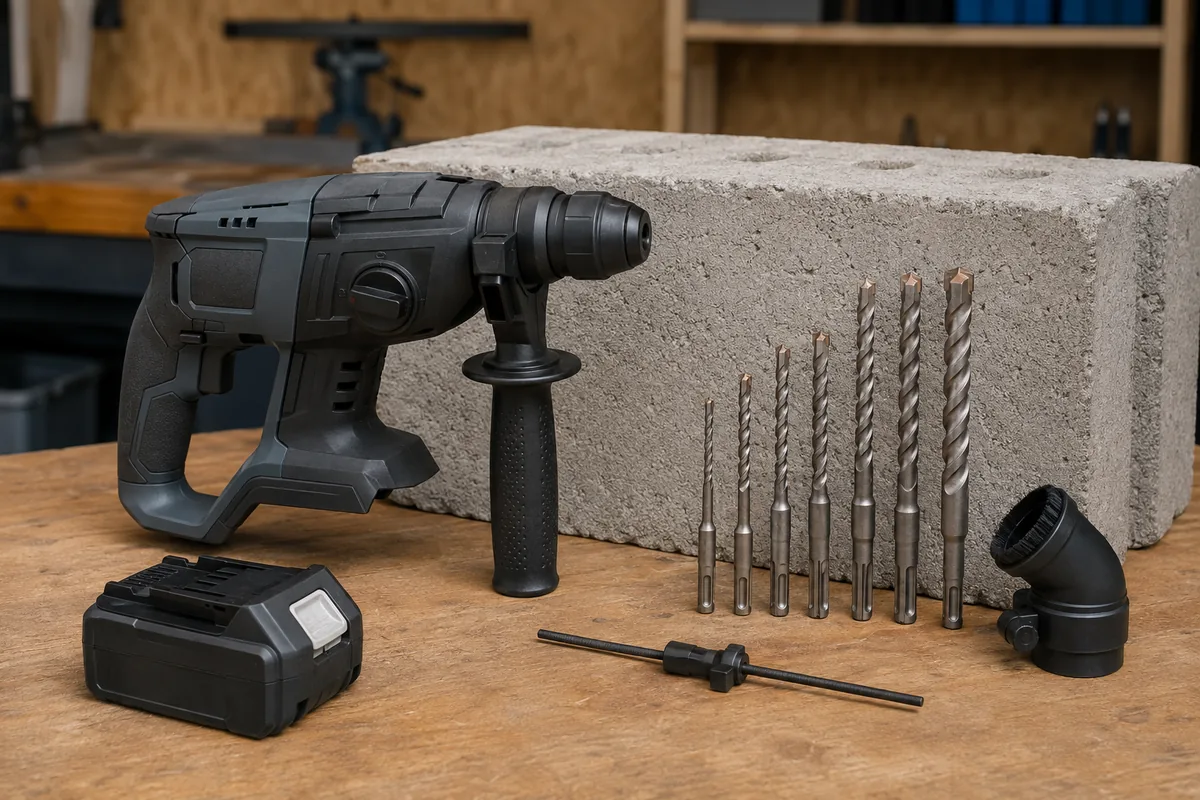
For common masonry anchors in concrete block, a cordless rotary hammer is usually the best tool—not a standard drill, and not necessarily a heavy-duty hammer drill. Rotary hammers drive the bit with a piston mechanism, which makes holes in masonry faster and with less pressure from the user. Most use SDS-Plus bits and suit typical anchor holes from about 1/4 to 1/2 inch in diameter.
A cordless hammer drill is a reasonable lower-cost choice for a handful of small holes, especially in hollow block or softer mortar. Its hammering action comes from ridged discs in the chuck, so it needs more downward pressure and tends to drill more slowly. For repeated holes, dense block, or larger anchors, that difference becomes tiring. If you already own a capable 18V or 20V hammer drill, try it before buying another tool; just use a sharp masonry bit and avoid leaning hard enough to lose control.
As an Amazon Associate we earn from qualifying purchases at no extra cost to you.



What to buy
For recurring anchor work, look for an 18V/20V SDS-Plus rotary hammer with a light-duty mode, a side handle, and an energy rating around 1.5 to 2 joules. That is ample for many common holes in block and much easier to handle overhead or from a ladder than a large SDS-Max tool. Compare the cordless SDS-Plus rotary hammers that fit your existing battery platform before buying a bare tool.
Check what the kit includes. A bare tool is a good value if you already have compatible batteries and a charger; it can be poor value if you need to start a platform from scratch. A 4.0Ah battery is a useful middle ground for routine drilling. A compact 2.0Ah battery keeps the tool lighter but may run down sooner, particularly with larger bits or lots of holes. If you need a battery and charger too, compare complete kits rather than assuming the tool-only price tells the whole story.
Compare the main options
| Tool type | Best for | Main trade-off |
|---|---|---|
| Cordless SDS-Plus rotary hammer | Repeated holes and typical anchors in block or concrete | Costs more; SDS bits are a separate system from ordinary round-shank bits |
| Cordless hammer drill | A few small holes, especially when you already own one | Slower in masonry and demands more pressure |
| Cordless drill/driver | Wood, metal, and screw driving | No masonry hammer action; poor choice for routine anchor holes |
For a small project, a cordless hammer drill kit may be the sensible buy if it will also handle your usual driving and drilling jobs. If masonry is occasional, paying extra for a rotary hammer can mean owning a tool you rarely use. But if you have many holes to drill, or the hammer drill stalls and overheats, the SDS-Plus tool is the better match.
Match the bit to the anchor
Follow the anchor maker’s instructions for hole diameter and depth; the correct size varies by anchor. A 3/8-inch anchor, for example, does not automatically call for a 3/8-inch hole. Use a sharp carbide-tipped masonry bit of the specified diameter, and drill slightly deeper than the embedment so dust at the bottom does not stop the anchor seating. About 1/4 inch of extra depth is a common allowance, but the anchor instructions take priority.
Most cordless SDS-Plus rotary hammers accept SDS-Plus bits directly; they do not use the three-jaw chuck found on a standard drill. Some models include a removable chuck or an adapter for round-shank bits. That adds versatility, but it is not a replacement for a dedicated drill/driver when accuracy in wood or metal matters. Avoid forcing an SDS bit into a regular chuck unless the bit is designed for it.
Drill block without damaging it
Check for wiring, plumbing, and the location of the block’s hollow cores before drilling. Don’t assume the visible face tells you what is behind it. Mark the hole, hold the tool square to the wall, and start at a controlled speed. Let the bit cut; heavy pressure can make a bit bind, overheat, or break the thin face of a hollow block. If the bit wanders on a smooth surface, begin slowly or use a small pilot hole only if the anchor instructions allow it.
Use rotary-hammer mode for masonry, but turn off hammering when drilling through metal or wood with an appropriate bit. Clear dust from the hole as directed by the anchor maker—dust left in the hole can keep an anchor from seating or reduce its holding performance. Wear eye protection, and hearing protection when drilling several holes. A hammer drill or rotary hammer can twist sharply if a bit catches, so keep both hands on the tool and use its side handle.
Battery and platform considerations
Do not choose solely by the highest advertised voltage or a large maximum hole-size figure. For anchor work, tool weight, balance, trigger control, and access to replacement batteries matter more. If you already own several tools from one cordless platform, staying with it usually saves money and avoids another charger. Check compatibility carefully: batteries within a brand may not fit every generation or tool family.
For occasional work, a compact battery and a modest rotary hammer are easier to control. For a long run of holes, a larger battery reduces swaps but adds weight. If you are drilling overhead or on a ladder, that extra weight is noticeable; plan battery capacity around the job, not around the largest pack you own.
Related guides
- Longest Lasting Lawn Mower Battery: AGM vs Lithium vs Flooded Lifespan and Cost per Season
- Duralast Gold Lawn Mower Battery Review: U1 Fit, CCA and When to Pay for AGM
- Greenworks Pro 80V 21-Inch Mower Review: Runtime Math, Push vs Self-Propelled and Yard Fit
- Bosch High Pressure Washer Gun Replacement: Fittings, Adapters and What Fits Your Model